
军事扩张

Search documents
突发!美国,大举增兵!
券商中国· 2025-11-02 01:55
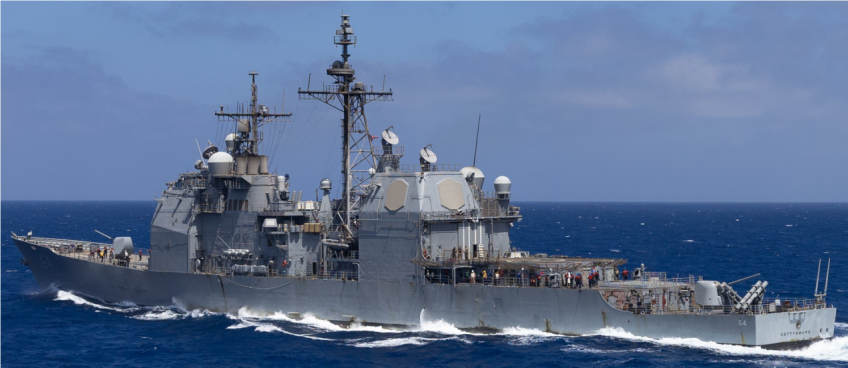
Core Viewpoint - The article discusses the escalation of military tensions in the Caribbean region, particularly involving the U.S. Navy's increased presence and potential military actions against Venezuela, alongside Venezuela's efforts to seek military support from Russia. Group 1: U.S. Military Deployment - The U.S. Navy has been increasing its military presence in the Caribbean, with the arrival of the "USS Gettysburg," a Ticonderoga-class guided missile cruiser, marking the second cruiser involved in operations in the region [1][2] - The "USS Iwo Jima," an amphibious assault ship, and the "USS Gravely," a destroyer, have also been deployed to areas capable of striking targets within Venezuela [2][3] - The deployment signifies a significant escalation in military readiness, with the Pentagon evaluating potential strike and blockade options against Venezuela [2][3] Group 2: Military Capabilities and Threats - The "USS Gettysburg" is equipped with various capabilities, including support for carrier strike groups and independent operations, featuring Tomahawk cruise missiles for long-range strike capabilities [2] - The U.S. military's deployment in the Caribbean is reported to be the largest in over 30 years, with President Trump threatening ground strikes against Venezuela [3] - A target list has been prepared by the Trump administration, potentially including Venezuelan ports, airports, and other facilities [3] Group 3: Venezuela's Response and International Relations - Venezuelan President Maduro is reportedly in contact with Russian President Putin to seek military assistance, including defense radar and aircraft maintenance [4][5] - Maduro's requests to Russia include enhancing Venezuela's air defense capabilities and repairing previously purchased military aircraft [5] - Additionally, there are indications of coordination with Iran for military equipment and drones, highlighting Venezuela's efforts to bolster its military capabilities amid perceived threats [5]


美委局势持续紧张之际,美军又一艘巡洋舰抵达加勒比海地区
Huan Qiu Wang· 2025-11-01 04:33
Group 1 - The U.S. Navy is increasing its military presence in the Caribbean, with the arrival of the Ticonderoga-class guided missile cruiser USS Gettysburg as the second cruiser in the region [1][3] - President Trump has not yet decided on airstrikes against Venezuelan ground targets, despite previous threats to conduct military action [3] - The USS Gettysburg is equipped with Tomahawk cruise missiles and has capabilities to support carrier strike groups and amphibious forces, as well as operate independently [3] Group 2 - The U.S. government claims to have sunk 15 drug trafficking vessels in the Caribbean and Eastern Pacific since September, resulting in at least 61 deaths [4] - The U.S. Drug Enforcement Administration reports that Venezuela is not a major source of drugs entering the U.S., contradicting the military actions taken [4] - The Venezuelan government accuses the U.S. of using military threats to instigate regime change and expand its military presence in Latin America [4]
美军发动三次“致命打击”
中国能源报· 2025-10-29 02:07
Core Viewpoint - The U.S. Department of Defense conducted airstrikes against four drug trafficking boats in the Eastern Pacific, resulting in 14 deaths among traffickers, as part of a broader strategy to combat drug-related terrorism [3]. Group 1: Military Actions - The airstrikes were executed under the directive of President Trump, targeting boats operated by drug trafficking terrorist organizations [3]. - The operations were carried out in international waters, with no U.S. personnel casualties reported [3]. - A survivor from the strikes has been rescued, with efforts coordinated by U.S. Southern Command and Mexican rescue agencies [3]. Group 2: Context and Implications - The Trump administration has classified the conflict with recognized terrorist drug groups as a non-international armed conflict [3]. - Since September, the U.S. has claimed to have sunk multiple "drug boats" off the coast of Venezuela, despite reports indicating that Venezuela is not a major source of drugs entering the U.S. [3]. - The Venezuelan government has accused the U.S. of using military threats to instigate regime change and expand military presence in Latin America [3].
美防长宣布:发动空袭
第一财经· 2025-10-29 00:14
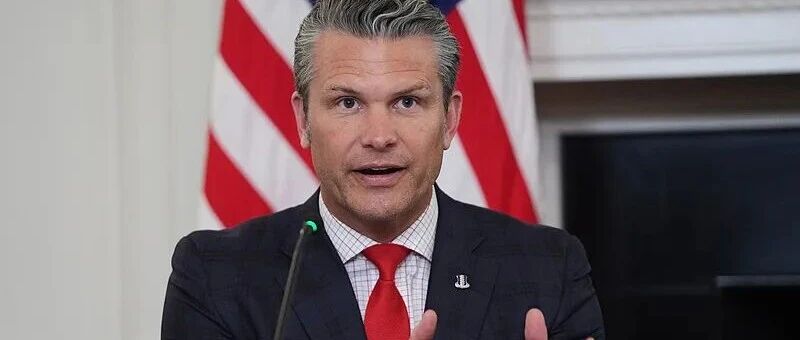
Core Viewpoint - The article discusses the recent military actions taken by the U.S. against drug trafficking organizations in the Eastern Pacific, highlighting the implications of these actions on U.S. foreign policy and regional stability [3][4]. Group 1: Military Actions - On October 28, U.S. Defense Secretary Mark Esper announced three "lethal strikes" against four vessels operated by drug trafficking terrorist organizations, resulting in 14 deaths and one survivor, with no U.S. casualties [3]. - The strikes were conducted in international waters, indicating a significant escalation in U.S. military involvement in drug enforcement operations [3][5]. Group 2: Political Context - The Trump administration has characterized the conflict with drug trafficking organizations as a "non-international armed conflict," which may justify military actions under international law [4]. - The U.S. has recently deployed multiple naval vessels in the Caribbean under the pretext of combating drug trafficking, suggesting a broader military strategy in the region [5]. Group 3: Regional Implications - Venezuela has been identified as a target in these operations, despite reports indicating it is not a major source of drugs entering the U.S., raising concerns about U.S. intentions in the region [5]. - The Venezuelan government has accused the U.S. of using military threats to instigate regime change, reflecting the geopolitical tensions in Latin America [5].
美防长:美军空袭东太平洋四艘“贩毒船”,致14人死亡
Yang Shi Xin Wen· 2025-10-28 14:59
Core Viewpoint - The U.S. Department of Defense conducted three airstrikes against four drug trafficking boats operated by terrorist organizations in the Eastern Pacific, resulting in 14 deaths among traffickers and one survivor, with no U.S. casualties reported [2][2][2] Group 1: Military Actions - The airstrikes were executed under the directive of President Trump, targeting boats identified through intelligence as part of established drug trafficking routes [2] - The operations took place entirely in international waters, emphasizing the U.S. military's engagement in combating drug trafficking [2][2] - The U.S. Southern Command initiated rescue efforts for the survivor, which were later coordinated with Mexican rescue agencies [2] Group 2: Political Context - The Trump administration submitted a memorandum to Congress earlier this month, stating that the U.S. is in a non-international armed conflict with drug trafficking groups recognized as terrorist organizations [2] - Since September, the U.S. has deployed multiple naval vessels in the Caribbean under the pretext of combating drug trafficking [2] - The Venezuelan government has accused the U.S. of using military threats to instigate regime change in Venezuela and expand military presence in Latin America [2]

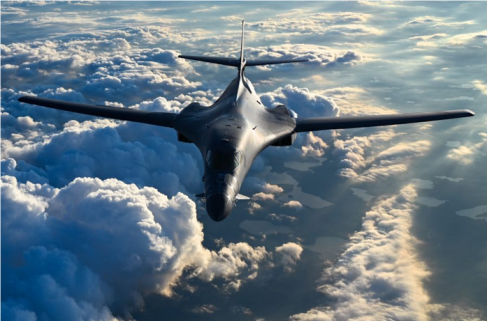
美媒:“距离仅约20英里”,美军B-1B轰炸机再度抵近委内瑞拉实施“攻击演示”
Huan Qiu Wang· 2025-10-28 05:35
Core Points - The article discusses the recent military flights of U.S. Air Force B-1B bombers near Venezuela as part of a "counter-narcotics operation" [1][3] - This marks the third such flight since October 15, with increasing proximity to Venezuelan shores [3] - The U.S. government claims to have sunk 10 "drug trafficking boats" and killed over 40 "drug traffickers" since September [4] Group 1 - Multiple B-1B bombers flew near Venezuela on October 27, showcasing U.S. military presence in the region [1][3] - The bombers took off from North Dakota and were tracked openly, indicating no attempt by the Pentagon to conceal the flights [3] - The B-1B bombers flew as close as 20 miles (approximately 32 kilometers) from the Venezuelan coast during this mission, the closest of the three recent flights [3] Group 2 - The U.S. military has conducted similar flights on October 15 and October 23, with B-52H bombers and F-35B fighters also involved [3] - The Venezuelan government has accused the U.S. of using military threats to instigate regime change and expand military presence in Latin America [4] - Reports indicate that Venezuela is not a major source of drugs entering the U.S., contradicting the U.S. government's narrative [4]
美或将扩大对委军事行动?美参议员:特朗普计划亚洲之行后通报
Xin Hua She· 2025-10-27 08:38
Group 1 - The U.S. government is planning potential military actions against Venezuela and Colombia, as indicated by Senator Lindsey Graham's disclosure of President Trump's intentions to inform Congress after his visit to Asian countries [1] - The U.S. Navy destroyer USS Gravely has docked in Trinidad and Tobago, conducting joint training exercises with the Trinidad and Tobago Defense Force, which is seen as a move to exert military pressure on Venezuela [1] - Venezuelan Vice President Rodriguez condemned the U.S. military exercises in the Caribbean, labeling them as provocative and a threat to regional peace, asserting that these actions are part of a colonial military aggression [1] Group 2 - The U.S. has deployed multiple naval vessels in the Caribbean under the pretext of drug enforcement, including the USS Iwo Jima amphibious assault ship and the USS Gravely destroyer, alongside the Marine Expeditionary Unit [2] - The Pentagon announced the deployment of the USS Gerald R. Ford aircraft carrier strike group to the Southern Command area, indicating an escalation in military presence [2] - Despite claims of drug interdiction, reports suggest that Venezuela is not a major source of drugs entering the U.S., raising concerns about the true motives behind the military actions [2]
委内瑞拉谴责美国!导弹驱逐舰逼近委领土
Guo Ji Jin Rong Bao· 2025-10-27 00:55
Group 1 - The Venezuelan government condemned the provocative military exercises conducted by the U.S. military in the Caribbean, labeling them as a colonial military aggression aimed at destabilizing the region [1][3] - The U.S. Navy destroyer "Gravely" docked in Port of Spain, Trinidad and Tobago, with 300 U.S. soldiers onboard, and is scheduled to remain until the 30th [1][3] - The Venezuelan government accused the U.S. of attempting to create a violent environment in the Caribbean and claimed that the military exercises pose a serious threat to peace in the region [3] Group 2 - Venezuela reported the arrest of a group of mercenaries directly linked to the CIA, allegedly involved in a "false flag" operation aimed at provoking a military conflict between Venezuela and the U.S. [3] - The U.S. has deployed multiple naval vessels in the Caribbean under the pretext of drug enforcement, including the amphibious assault ship "Iwo Jima" and the "Gravely" destroyer [3] - The Pentagon announced the deployment of the "Gerald R. Ford" aircraft carrier strike group to the Southern Command area, indicating an escalation in military presence [3]
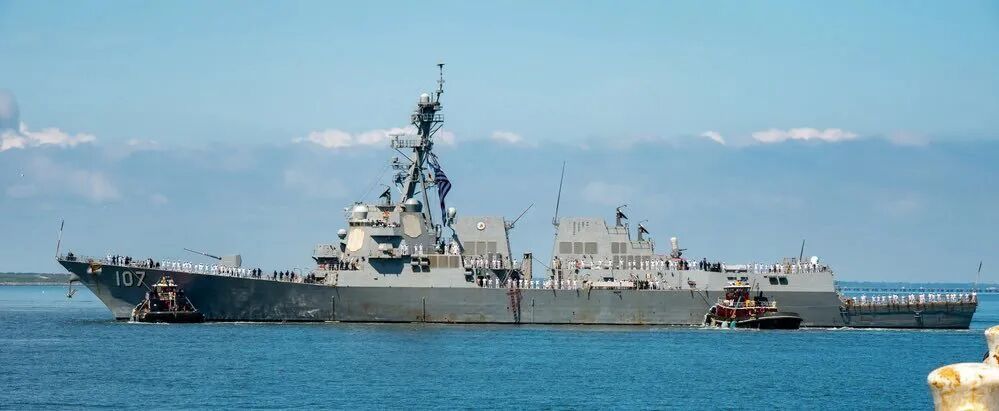
委内瑞拉谴责美国在加勒比地区挑衅性军演
Xin Hua Wang· 2025-10-27 00:31
Group 1 - The Venezuelan government condemns U.S. military exercises in the Caribbean as provocative and a form of colonial military aggression aimed at controlling the region [1] - The U.S. Navy's deployment of the USS Gravely and the 22nd Marine Expeditionary Unit for joint training with Trinidad and Tobago's defense forces is seen as an escalation of military pressure on Venezuela [1][2] - Venezuela claims to have arrested a group of mercenaries linked to the CIA, allegedly involved in a "false flag" operation to provoke military conflict with the U.S. [1] Group 2 - The U.S. has deployed multiple naval vessels in the Caribbean under the pretext of drug enforcement, including the USS Iwo Jima and USS Gravely [2] - The Pentagon has announced the deployment of the USS Gerald R. Ford carrier strike group to the Southern Command area [2] - Despite U.S. claims of drug interdiction, reports indicate that Venezuela is not a major source of drugs entering the U.S., raising suspicions about the true motives behind the military presence [2]
美国宣布:对两国总统实施制裁!
Zhong Guo Ji Jin Bao· 2025-10-26 03:24
Core Points - The U.S. has imposed sanctions on Colombian President Petro and Venezuelan President Maduro, both of whom have responded critically to these actions [1][2][3][4] - The U.S. military has increased its presence in the Caribbean, deploying the USS Gerald R. Ford carrier strike group to enhance its capabilities against drug trafficking and transnational crime [1] Group 1: Colombia's Response - President Petro condemned the U.S. sanctions as a "complete paradox," emphasizing Colombia's long-standing efforts to combat drug trafficking and reduce cocaine consumption in the U.S. [2] - Petro has hired a U.S. lawyer for defense against the sanctions and stated that he will not back down, advocating for the rights and democracy of the Colombian people [2] - The Colombian Foreign Ministry strongly criticized the sanctions as "unfounded," highlighting the recent deterioration in U.S.-Colombia relations [3] Group 2: Venezuela's Position - President Maduro accused the U.S. of "manufacturing a new war" and asserted that Venezuela will strive to prevent any conflict [4] - Maduro emphasized the desire for peace and prosperity among the peoples of South America and the Caribbean, urging regional mobilization against U.S. threats [4] - The U.S. has claimed to have sunk multiple "drug boats" off the coast of Venezuela, while the Venezuelan government argues that it is not a major source of drugs entering the U.S. [4]