
军事威胁

Search documents
特朗普发出威胁:下一个是古巴
第一财经· 2026-03-28 04:17
Core Viewpoint - The article discusses the escalating tensions between the United States and Cuba, following military actions against Venezuela and Iran, with President Trump threatening military action against Cuba next [1]. Group 1: U.S. Military Actions - The U.S. has recently conducted large-scale military strikes against Venezuela, increasing pressure on Cuba through new oil restrictions [1]. - President Trump indicated that after addressing issues with Iran, Cuba would be the next target for U.S. military focus [1]. Group 2: Cuban Response - The Cuban Deputy Foreign Minister stated that the Cuban military is preparing for a potential military invasion by the U.S. [1].

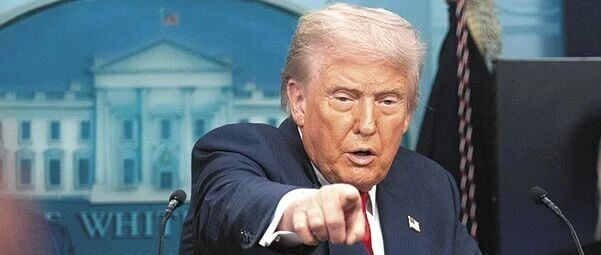
特朗普:下一个是古巴
财联社· 2026-03-28 03:23
Group 1 - The core viewpoint of the article highlights the escalating tensions between the United States and Cuba, following military actions against Venezuela and Iran, with President Trump indicating that Cuba is next on the list for potential military action [1][2]. - President Trump, during a meeting in Miami, explicitly stated that "Cuba is next," following the U.S. military strikes in Venezuela and the imposition of new oil restrictions on Cuba [2]. - The Cuban Deputy Foreign Minister, in an interview, mentioned that the Cuban military is preparing for a possible military invasion by the United States, indicating heightened military readiness in response to U.S. threats [3].
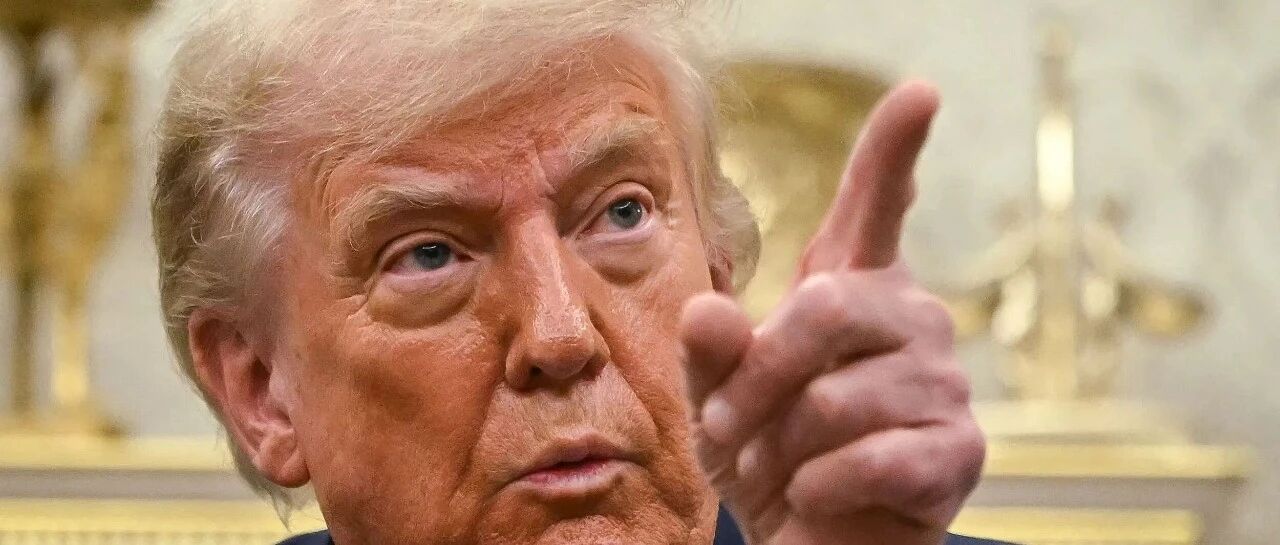
特朗普感到好奇:伊朗为何还没有“屈服”,此前伊朗总统表态:伊朗人民绝不会向霸凌屈服
Xin Lang Cai Jing· 2026-02-22 11:30
Group 1 - The core viewpoint of the article highlights the increasing tension between the United States and Iran, with U.S. President Trump's special envoy expressing curiosity about Iran's lack of compliance under pressure [1][4] - The U.S. has been ramping up military threats against Iran, leading to a heightened risk of military conflict as negotiations stall [6] - Iranian President Pezeshkian stated that the Iranian people will not yield to bullying and coercion, emphasizing resilience in the face of challenges [6][4] Group 2 - Trump's envoy, Witkoff, noted that despite significant military presence, Iran has not approached the U.S. to negotiate, raising questions about their strategy [3][6] - Pezeshkian compared the determination of the Iranian people to that of athletes, asserting that both the nation and government will not succumb to external pressures [6][4] - The article indicates that the ongoing diplomatic stalemate is contributing to the potential for increased military confrontation in the region [6][1]
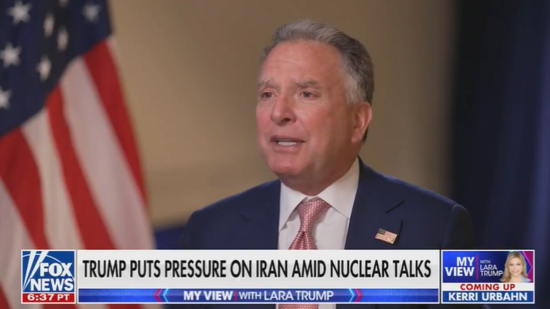
以媒:以色列针对美伊谈判提出“三不”要求
Huan Qiu Shi Bao· 2026-02-03 22:51
Core Viewpoint - Iran's President Pezeshkian has instructed Foreign Minister Araqchi to engage in "fair and just negotiations" with the United States, emphasizing the need for a suitable environment free from threats and unreasonable expectations [1] Group 1: Negotiation Initiatives - Pezeshkian has ordered the initiation of nuclear negotiations with the U.S., with a meeting scheduled between U.S. Special Envoy Wittekopf and Araqchi in Istanbul on June 6 to discuss a potential nuclear agreement [1] - The U.S. President has expressed hope for reaching an agreement with Iran, indicating that failure to do so could lead to negative consequences [1] Group 2: Military and Political Context - U.S. Defense Secretary Esper has warned that if negotiations do not yield results, Iran will face "other options," and the U.S. military is well-prepared for such scenarios [1] - There are indications that Washington may prefer a political solution with Iran rather than a military option, raising concerns in Israel [1] Group 3: Israel's Position - The Israeli government is set to present "three no" demands to Wittekopf, which include Iran's agreement not to develop its nuclear program, refrain from ballistic missile development, and not support armed "proxies" threatening Israel [1] - The Israeli Defense Forces have conducted joint exercises with a U.S. Navy destroyer in the Red Sea, highlighting military cooperation amid rising tensions [1]
高层会商 撤离警告 关税大棒……
Xin Lang Cai Jing· 2026-01-13 18:48
Core Viewpoint - The U.S. is intensifying pressure on Iran through potential military actions and economic sanctions, with President Trump planning discussions on further measures against Iran [3][4]. Group 1: U.S. Actions and Statements - President Trump is set to meet with senior officials on January 13 to discuss the next steps regarding Iran, which may include military options and increased sanctions [4]. - The U.S. State Department issued a "security warning" on January 12, advising American citizens to leave Iran immediately due to escalating domestic protests [5]. - Trump announced a 25% tariff on any country that engages in business with Iran, stating this decision is "final" and "immediate" [3][4]. Group 2: Iran's Response - Iranian Supreme Leader Khamenei stated that the Iranian people have thwarted foreign attempts to exploit internal unrest [7]. - Iranian Foreign Minister Zarif expressed that Iran is prepared for any potential U.S. military action and hopes for a "wise choice" from the U.S. [7]. - Zarif also indicated that Iran's military readiness is extensive compared to previous conflicts, emphasizing that any attack on Iranian interests would be met with retaliation [8][9].
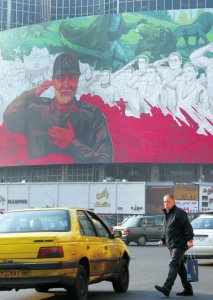
伊朗:已做好应对战争的全面准备
Xin Lang Cai Jing· 2026-01-13 00:20
Core Viewpoint - The Iranian government is responding to recent protests and violence, attributing the unrest to foreign interference, particularly from the U.S. and Israel, while asserting its readiness for negotiations under fair terms [1][2][3][4] Group 1: Iranian Government's Position - Iranian Foreign Minister Zarif stated that peaceful protests since December 28, 2025, escalated into violence due to the involvement of armed groups and terrorists [1][3] - Zarif emphasized that Iran possesses evidence of U.S. and Israeli involvement in the recent terrorist activities [1][3] - The Iranian government is prepared for war but prefers serious negotiations with the U.S. based on mutual respect [1][3] Group 2: Domestic Response and Public Sentiment - Iranian Foreign Ministry spokesman Baghaei condemned U.S. and Israeli statements as interference aimed at creating chaos in Iran [2][4] - Supreme Leader Khamenei praised the Iranian people for thwarting foreign plots and called for an end to deceitful actions by U.S. politicians [2][4] - Large public gatherings occurred in Tehran and other cities, condemning the violence and expressing national unity against foreign influence [2][4]
特朗普,关税大消息
Zhong Guo Ji Jin Bao· 2026-01-12 23:49
Group 1 - President Trump announced a 25% tariff on any country that conducts business with Iran, effective immediately [2][3] - Trump emphasized that this decision is "final and non-reversible" [3] - The White House stated that diplomacy is the preferred approach to address the situation with Iran, although military options are also being considered [11][12] Group 2 - Iranian officials warned that any attack on Iran would result in severe retaliation against U.S. and Israeli military targets in the region [5] - Iran's Foreign Minister claimed there is substantial evidence of U.S. and Israeli involvement in recent unrest within Iran [8] - Iran's Supreme Leader praised the Iranian people for thwarting foreign conspiracies and warned U.S. politicians to cease deceptive practices [9][10]
美国对委内瑞拉军事威胁和打击时间线
Xin Lang Cai Jing· 2026-01-03 14:04
Core Viewpoint - The article discusses the escalation of military actions by the United States against Venezuela, culminating in the capture of President Maduro and the declaration of a national emergency in Venezuela. Timeline of Events - On August 7, 2025, the U.S. offered a $50 million reward for the capture of Maduro, doubling the previous amount, citing his involvement in drug trafficking [1] - On August 20, 2025, the U.S. deployed an amphibious fleet near Venezuela under the pretext of combating drug trafficking [1] - On September 2, 2025, U.S. military forces attacked a drug trafficking vessel from Venezuela, resulting in 11 deaths [1] - On October 6, 2025, the U.S. decided to close all diplomatic channels with Venezuela [2] - On October 15, 2025, President Trump authorized the CIA to conduct covert operations in Venezuela [2] - On November 11, 2025, the U.S. Navy's largest aircraft carrier group arrived in the Caribbean [2] - On December 16, 2025, Trump ordered a complete blockade of all oil tankers entering or leaving Venezuela, labeling Maduro's government as a "foreign terrorist organization" [5] - On December 29, 2025, the U.S. conducted drone strikes against a port facility in Venezuela, marking the first known attack on a target within Venezuelan territory [7] - On January 3, 2026, Trump announced the successful military operation against Venezuela, confirming the capture of Maduro and his wife [8]
委内瑞拉首都遭袭,委驻外使馆证实:美国干的
Xin Lang Cai Jing· 2026-01-03 09:01
Core Viewpoint - Multiple explosions occurred in Caracas, Venezuela, on January 3, with reports of suspected U.S. military helicopters in the area, raising concerns about U.S. involvement in the incident [1][3][4]. Group 1: Incident Details - The first explosion was reported around 1:50 AM local time, with videos showing two columns of smoke rising into the night sky, one accompanied by orange flames [1]. - Witnesses reported hearing a loud explosion followed by the sound of aircraft flying overhead [1]. - Explosions were also reported near military bases and an oil refinery, indicating a broader area of impact beyond Caracas [8][10]. Group 2: U.S. Government Response - U.S. military officials acknowledged the reports of explosions but did not comment on the U.S. role in the events [3][4]. - The Pentagon redirected inquiries about the explosions to the White House, which declined to comment [3]. Group 3: Social Media and Public Reaction - Social media platforms showed videos of dozens of suspected U.S. military helicopters circling over Caracas [6]. - Colombian President Petro called for an immediate meeting of the Organization of American States and the United Nations, labeling the situation as an attack on Venezuela [13]. Group 4: Military Context - The U.S. has been deploying significant naval and air forces in the Caribbean under the pretext of combating "drug terrorism," which Venezuela claims is a military threat aimed at regime change [15].
马杜罗:委内瑞拉愿与美国讨论禁毒协议
Zhong Guo Xin Wen Wang· 2026-01-02 02:41
Core Viewpoint - Venezuela's President Maduro expresses willingness to engage in serious discussions with the United States regarding a drug trafficking agreement, emphasizing the need for a serious dialogue [1]. Group 1: Venezuela's Position - Maduro indicates that the U.S. government is aware of Venezuela's readiness to discuss drug control agreements, having communicated this to several U.S. representatives [1]. - The Venezuelan government has repeatedly accused the U.S. of attempting to instigate regime change through military threats and expanding military presence in Latin America [1]. Group 2: U.S. Actions - President Trump has designated the current Venezuelan government as a "foreign terrorist organization" and ordered a comprehensive blockade on all sanctioned oil tankers entering or leaving Venezuela [1]. - Trump has publicly stated that the U.S. will begin land strikes against "drug traffickers" in the Caribbean region, mentioning Venezuela specifically [1].