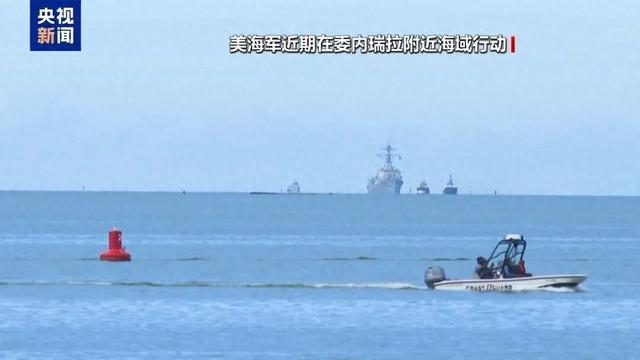
军事扩张

Search documents
视频丨日本多地市民团体集会 反对部署“战斧”导弹
Xin Lang Cai Jing· 2026-02-20 02:10
Core Viewpoint - Japan plans to procure approximately 400 U.S.-made Tomahawk cruise missiles from FY2025 to FY2027, which has sparked significant public opposition in various cities, including Yokosuka and Kure, where citizens are concerned about the implications of military expansion and the potential alteration of Japan's pacifist constitution [1][3][4]. Group 1: Public Opposition - Citizen groups in Yokosuka have collected over 30,000 signatures opposing the deployment of Tomahawk missiles, emphasizing a desire for peaceful resolutions to conflicts and a rejection of military expansion [1][3]. - Representatives from local citizen groups express concerns that the deployment of Tomahawk missiles indicates a shift back to a military-focused stance, reminiscent of Japan's pre-World War II era [3][4]. Group 2: Defense Budget and Military Expansion - The Japanese Ministry of Defense reports that defense spending has increased for 13 consecutive years, with the FY2026 budget focusing on acquiring long-range missiles and developing coastal defense systems, including attack drones [3]. - There is a growing fear among local groups that the current government may amend the constitution to allow Japan to engage in warfare, which they consider a serious issue [4]. Group 3: Personal Perspectives - Local representatives express personal concerns about the militarization trend, highlighting the desire for future generations to live in a peaceful environment, contrasting with the current trajectory towards military buildup [6].

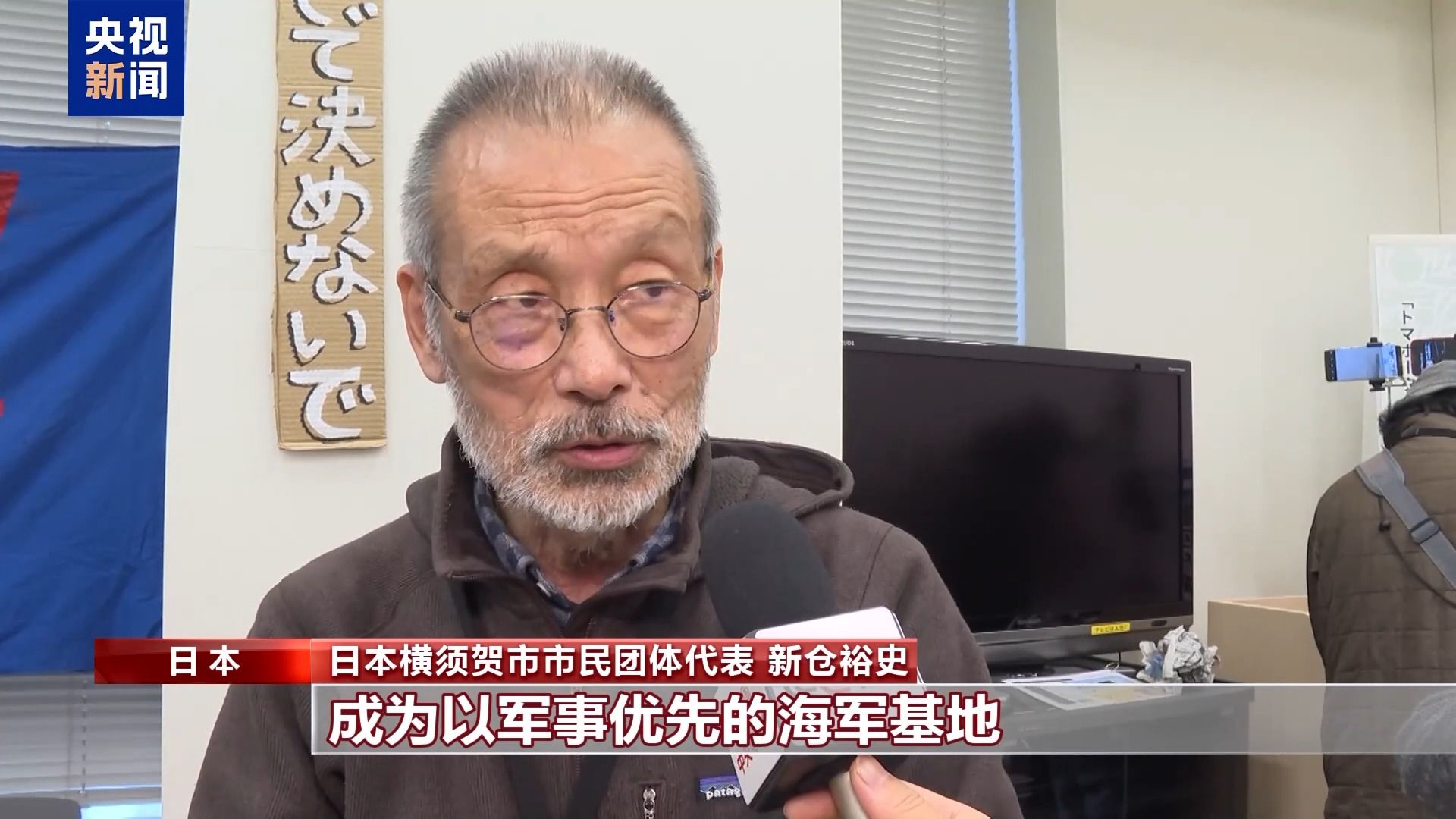
视频丨日本民间团体:反对日本政府军事扩张路线
Yang Shi Xin Wen Ke Hu Duan· 2026-01-13 13:14
Core Viewpoint - A civil group in Nagaoka City, Niigata Prefecture, Japan, held a peace study meeting opposing the government's military expansion policy, arguing it contradicts post-war peace principles and may escalate regional tensions [1]. Group 1: Opposition to Military Expansion - Participants emphasized that Japan's constitution advocates for non-aggression and disarmament, urging adherence to these principles [3]. - The "Three Non-Nuclear Principles" should remain unchanged, asserting Japan must not possess or manufacture nuclear weapons [5]. - Organizers argued that relying solely on military expansion does not enhance security but may deepen confrontational sentiments, advocating for dialogue and cooperation instead [6]. Group 2: Criticism of Political Statements - The vice president of the Niigata Peace Committee criticized remarks made by a political figure, calling for their retraction [8]. - The president of the Niigata Peace Committee expressed a desire for citizens' movements and elections to prompt the government to reconsider its current policies [9]. - Participants condemned the political figure's statements as interference in China's internal affairs, highlighting the historical context of Japan's acknowledgment of Taiwan as part of China [10].
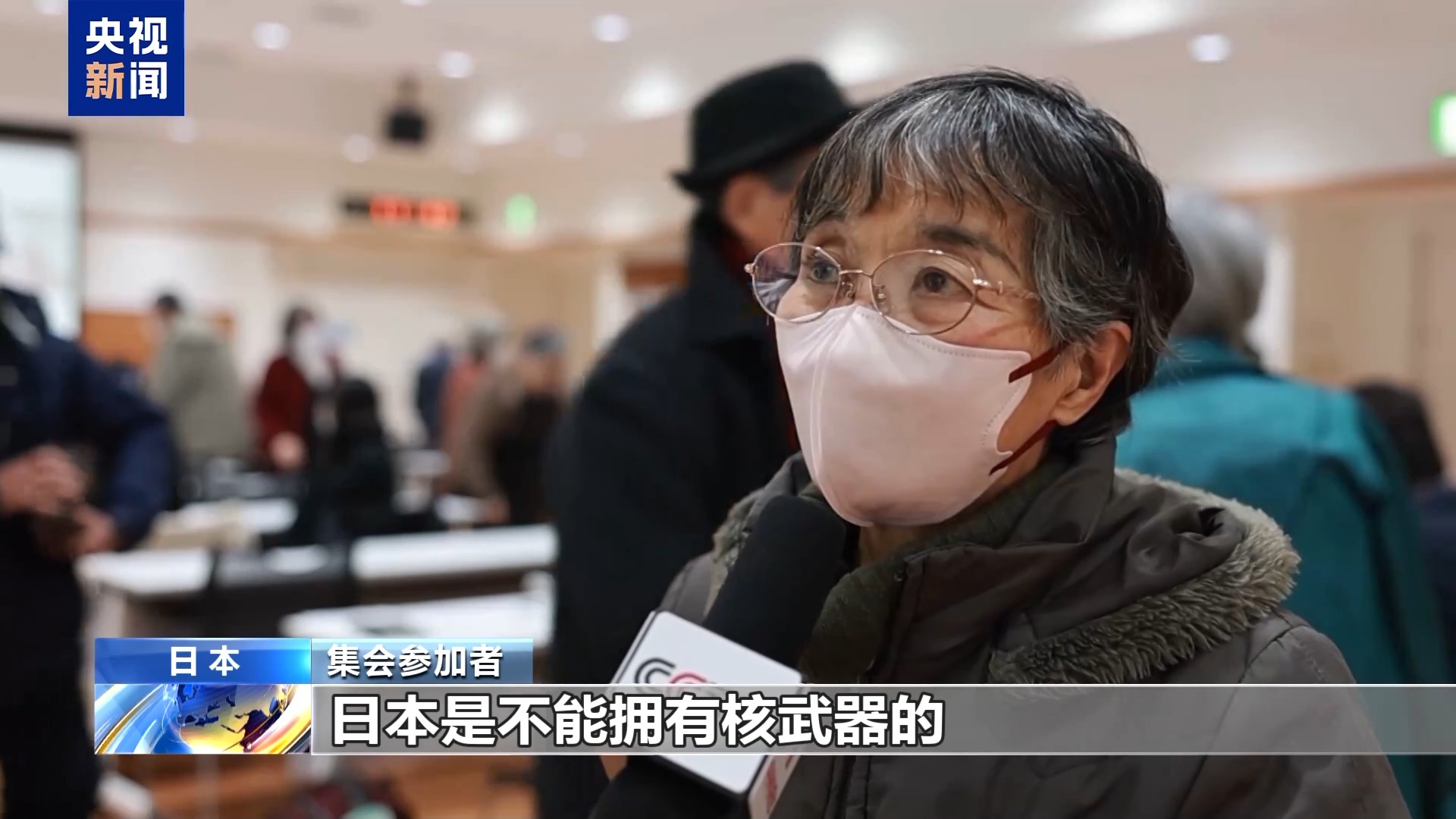
日本民间团体:反对日本政府军事扩张路线
Xin Lang Cai Jing· 2026-01-13 10:28
Core Viewpoint - The article discusses a peace meeting held by a civic group in Nagaoka City, Niigata Prefecture, Japan, opposing the government's military expansion policy, which is seen as a deviation from the post-war peace principles and a potential source of regional tension [1][3]. Group 1: Opposition to Military Expansion - Participants at the meeting emphasized that Japan's constitutional spirit is to refrain from aggression and not to possess military arms, advocating for adherence to these principles [1]. - The "Three Non-Nuclear Principles" must not be altered, and Japan should not possess nuclear weapons, as efforts should focus on preventing war rather than provoking it through military means [3]. Group 2: Call for Dialogue and Cooperation - Several organizers pointed out that relying solely on military expansion does not genuinely enhance security but may deepen confrontational sentiments, advocating for stability through dialogue and cooperation instead of military provocations [3]. Group 3: Criticism of Political Statements - The Vice President of the Niigata Peace Committee criticized the remarks made by Japanese Prime Minister Sanna Takagi as alarming and called for their retraction [5]. - The President of the Niigata Peace Committee expressed a desire to influence the government to reconsider and correct its current policies through elections or civic movements [5]. Group 4: Impact on Japan-China Relations - Participants noted that the relationship between Japan and China, which had taken decades to restore post-World War II, is being jeopardized by Takagi's statements, which are viewed as absurd and alarming [7].
将启动地面打击!特朗普,突发威胁!
Zheng Quan Shi Bao Wang· 2026-01-10 15:17
Group 1: Military Actions and International Relations - President Trump announced that military actions against drug cartels in Mexico will "soon" commence, highlighting the increasing tension in U.S.-Mexico relations [2][3] - Trump emphasized that drug cartels are controlling Mexico and are responsible for the deaths of 250,000 to 300,000 people annually in the U.S. [2] - Mexican President López Obrador opposes U.S. military actions in Mexico, advocating for cooperation rather than subordination [2] Group 2: Greenland Island Controversy - Trump stated that the U.S. needs to acquire Greenland and warned of taking "difficult measures" if a simple agreement cannot be reached [3][4] - The U.S. has previously expressed intentions to acquire Greenland, with Trump indicating that military options are on the table [3][4] - European officials, including those from Denmark and the EU, have expressed strong opposition to U.S. threats regarding Greenland, calling for respect for international law [4][5] Group 3: Investment in Venezuela's Oil Industry - Trump met with executives from about 20 major U.S. oil companies to discuss potential investments in Venezuela's oil sector, but many executives expressed caution [5] - ExxonMobil's CEO stated that Venezuela is currently "not investable" without significant changes to its legal and business framework [5] - Trump proposed that U.S. oil companies invest at least $100 billion to rebuild Venezuela's oil infrastructure, promising "full" security guarantees for these companies [5]
将启动地面打击!特朗普,突发威胁!
券商中国· 2026-01-10 15:06
Group 1: Trump's Actions on Drug Cartels and Venezuela - Trump announced that military actions against drug cartels in Mexico will "soon" commence, highlighting the severe impact of these groups, which reportedly kill between 250,000 to 300,000 people annually in the U.S. [2] - The relationship between the U.S. and Mexico is increasingly tense, with Mexican President AMLO opposing U.S. military actions on Mexican soil, advocating for cooperation rather than subordination [2][3]. - Trump is pushing for U.S. military intervention, asserting that drug cartels are the actual rulers of Mexico, coinciding with recent U.S. military actions in Venezuela [2]. Group 2: Greenland Acquisition Threats - Trump reiterated the U.S. need for Greenland, stating that if a simple agreement cannot be reached, he may resort to "harder" methods [3][4]. - The U.S. has faced strong opposition from Denmark and other European nations regarding Trump's threats to acquire Greenland, with discussions about potential military options being raised [4][5]. - European officials are considering how to respond to U.S. threats, emphasizing the need for respect for international law [5]. Group 3: U.S. Oil Companies' Investment in Venezuela - During a meeting with major oil executives, Trump sought to secure at least $100 billion in investments to rebuild Venezuela's oil infrastructure, promising full security for the companies involved [5]. - Executives from major oil companies expressed caution regarding investments in Venezuela, citing the need for significant changes in the country's legal and business framework before considering investment [5]. - Chevron remains the only major U.S. oil company currently operating in Venezuela, with other companies hesitant due to past losses and the unstable political environment [5].
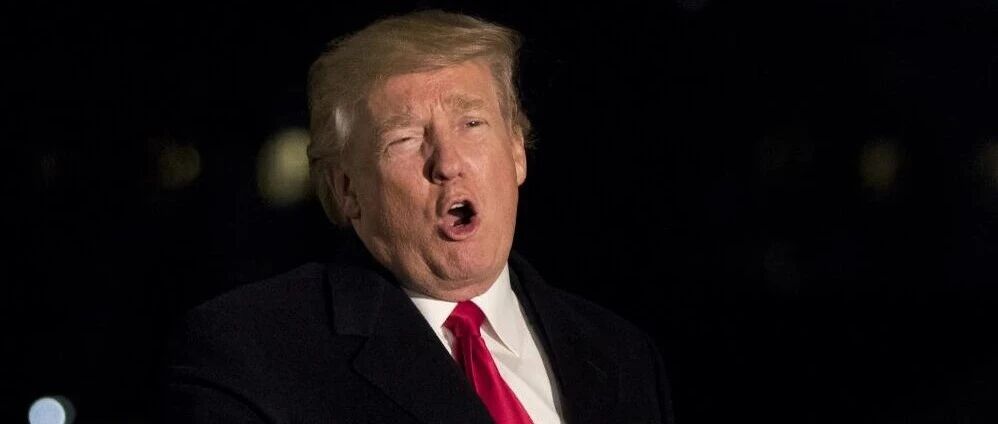
委内瑞拉,重大宣布!特朗普:取消第二波打击!
券商中国· 2026-01-09 09:52
Core Viewpoint - The article discusses the escalating tensions in Venezuela following a U.S. military operation that resulted in the capture of President Maduro and his wife, with significant implications for U.S.-Venezuela relations and potential military actions by the U.S. [1][2][9] Group 1: U.S. Military Actions and Responses - On January 3, the U.S. launched a large-scale military operation in Venezuela, capturing Maduro and his wife, which drew widespread international condemnation [2][4] - The Venezuelan National Assembly passed a resolution to honor the victims of the U.S. military actions, declaring them national heroes and calling for international condemnation of the U.S. actions [4] - Trump indicated plans for ground operations against drug trafficking in Venezuela, claiming a 96% reduction in drug transport via sea routes [5][7] Group 2: Political Reactions and Legislative Actions - The U.S. Senate passed a resolution requiring Trump to seek congressional approval before using military force in Venezuela, reflecting a significant political pushback against unilateral military actions [9][10] - Trump criticized Republican senators who supported the resolution, asserting that their actions undermined U.S. military authority [10] Group 3: Economic Implications - Trump mentioned plans for U.S. oil companies to invest at least $100 billion to rebuild Venezuela's oil infrastructure, indicating a strategic interest in Venezuela's oil reserves [7][8] - He claimed that the U.S. would gain access to 30 to 50 million barrels of heavy Venezuelan crude oil, although he acknowledged that restoring the oil industry would take years [8]
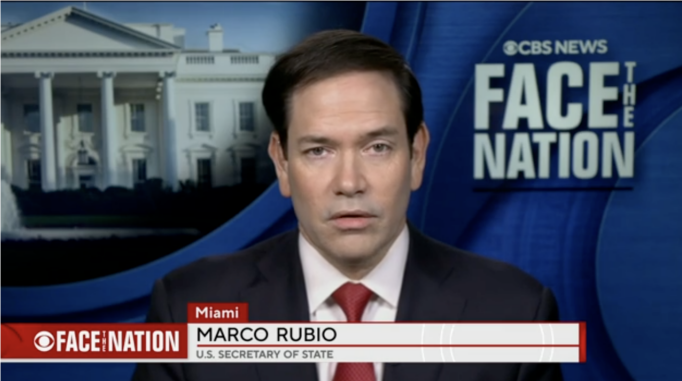
美国是否存在“占领”委内瑞拉计划?鲁比奥回应
Huan Qiu Wang· 2026-01-05 02:40
Core Viewpoint - The U.S. government, led by Secretary of State Rubio, has indicated that various options, including military action, remain on the table regarding Venezuela, following the U.S. military's forceful control of President Maduro and his wife [1][3]. Group 1: U.S. Military Actions and Statements - The U.S. military conducted a large-scale operation against Venezuela on January 3, forcibly taking control of Maduro and transferring him to the U.S. [3] - Rubio stated that President Trump retains the option of military action, although no such actions have been taken yet [3]. - Trump has expressed willingness to manage Venezuela until a "safe" transition occurs, with plans for U.S. oil companies to invest in the country [3]. Group 2: International Reactions - Multiple governments, political figures, and regional organizations have condemned the U.S. military actions in Venezuela, urging adherence to the United Nations Charter [1][3]. - There are concerns that U.S. aggressive actions could lead to another prolonged overseas intervention or a failed nation-building attempt [3]. Group 3: Ongoing Military Operations - The U.S. has been conducting large-scale military deployments in the Caribbean near Venezuela under the pretext of anti-drug operations, with significant military actions reported since September 2025 [4]. - The U.S. has not provided evidence to support claims that its targets are involved in drug trafficking, despite over a hundred reported deaths from these operations [4]. - In December, Trump ordered a comprehensive blockade of all sanctioned oil tankers entering or leaving Venezuela, with two tankers already seized [4].
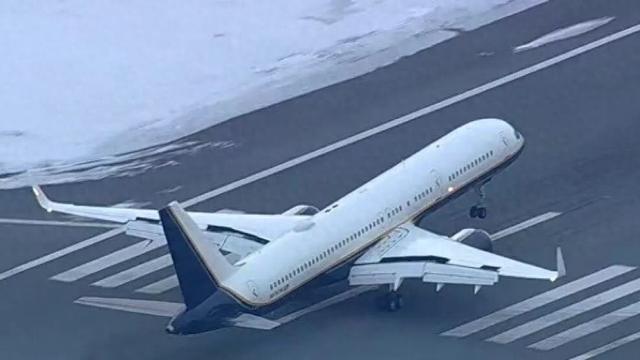
载有马杜罗的飞机抵达美国纽约!特朗普:美国将“管理”委内瑞拉
Xin Lang Cai Jing· 2026-01-04 00:24
Group 1 - Venezuelan President Maduro and his wife were captured by U.S. military forces during a raid in Caracas and transported to a U.S. Navy ship before arriving in New York [3][4] - U.S. President Trump announced that the U.S. will "manage" Venezuela until a "safe" transition can occur, indicating a significant shift in U.S. foreign policy towards Venezuela [3][8] - The military operation involved over 150 aircraft and lasted approximately 2 hours and 20 minutes, with no U.S. casualties reported [3][4] Group 2 - Trump stated that U.S. oil companies will invest billions of dollars to repair Venezuela's oil infrastructure, despite ongoing oil sanctions [8] - The U.S. has been conducting military operations in the Caribbean since August 2022, citing the need to combat "drug terrorism" linked to the Venezuelan government [9] - A Venezuelan official reported that the U.S. military actions resulted in at least 40 deaths, including both military personnel and civilians [10][12]
特朗普披露马杜罗被抓细节,称美国将“管理”委内瑞拉
21世纪经济报道· 2026-01-03 22:57
Core Viewpoint - The article discusses the U.S. military operation in Venezuela that resulted in the capture of President Maduro and his wife, with President Trump stating that the U.S. will "manage" Venezuela until a safe transition can occur [1][3][5]. Military Operation Details - The U.S. military operation took place from the night of February 2 to the early morning of February 3, involving all branches of the military and over 150 aircraft [3]. - The operation lasted approximately 2 hours and 20 minutes, with one aircraft being hit but remaining operational [3]. - No U.S. military personnel were killed, and no military equipment was lost during the operation [3]. U.S. Plans for Venezuela - Trump indicated that if necessary, a "larger" second wave of strikes could be launched against Venezuela, but currently, it may not be needed [5]. - A working group will be established to manage Venezuela, with Secretary of State Rubio overseeing the details [5]. - Trump expressed skepticism about the ability of opposition leader Maria Corina Machado to manage the country, stating that the Venezuelan people neither support nor respect her [5]. Economic Implications - Trump announced that major U.S. oil companies would enter Venezuela to invest billions of dollars in repairing the country's severely damaged oil infrastructure, aiming to generate revenue [5]. - The U.S. oil embargo against Venezuela remains fully effective [5]. International Reactions - Following the military operation, various governments and regional organizations condemned the U.S. actions and called for adherence to the United Nations Charter [6]. - Since August of the previous year, the U.S. has conducted significant military deployments in the Caribbean near Venezuela under the pretext of combating "drug terrorism" [6]. - The Trump administration has threatened to escalate military actions against what it labels as "drug trafficking groups" in Venezuela [6].
美军突然发动袭击
Xin Lang Cai Jing· 2026-01-02 03:05
Core Viewpoint - The U.S. Southern Command conducted a kinetic strike against three drug trafficking boats operated by designated terrorist organizations in international waters, raising questions about the legitimacy of the military actions in the region [1][3]. Group 1: Military Actions - On December 30, 2025, the "Southern Sword" joint task force, under the command of U.S. Secretary of Defense, targeted three drug trafficking boats, resulting in the death of three "drug terrorists" [1]. - The Southern Command reported that intelligence confirmed the boats were operating along known drug trafficking routes and were involved in drug transfers prior to the attack [1]. Group 2: Regional Context - The U.S. has deployed multiple warships in the Caribbean near Venezuela under the pretext of drug enforcement, initiating the "Southern Sword" military operation on November 13, 2025, to exert pressure on Venezuela [3]. - The U.S. Drug Enforcement Administration's recent reports indicate that Venezuela is not a major source of drugs flowing into the U.S., contradicting the justification for military actions [3]. - Venezuela has accused the U.S. of attempting to instigate regime change through military threats and expanding its military presence in Latin America [3].