Physical AI

Search documents
QNX Hypervisor 8.0 for Safety Powers the Industry Shift Toward Physical AI through Deterministic, Safety-Certified Virtualization
Accessnewswire· 2026-03-10 08:00
Core Insights - QNX Hypervisor 8.0 for Safety is a next-generation, safety-certified embedded virtualization platform designed for safety-critical systems, meeting stringent functional safety requirements [1][1] - The hypervisor enhances developer workflows by providing predictable timing, fault-tolerant isolation, and faster certification processes [1][1] - The platform is essential for the development of autonomous and intelligent software-defined systems across various industries, including automotive, robotics, medical, and industrial markets [1][1] Industry Impact - The shift towards Physical AI necessitates strict functional safety guarantees, making safety-certified hypervisors crucial for system design [1][1] - QNX Hypervisor 8.0 for Safety supports multiple guest operating systems, including QNX, Linux, and Android, allowing for the integration of diverse software ecosystems on a single hardware architecture [1][1] - Leading customers, including a major Chinese automaker and a European healthcare company, are already committed to deploying the QNX Hypervisor 8.0 for Safety to modernize their systems and ensure regulatory compliance [1][1] Company Overview - BlackBerry Limited, through its division QNX, provides intelligent software and services that enable enterprises and governments to drive new revenue streams and innovative business models while maintaining safety and security [1][1] - QNX technology has been deployed in over 275 million vehicles globally, showcasing its trust across various industries such as automotive, medical devices, and aerospace [1][1] - The company emphasizes operational resiliency with a comprehensive portfolio for mobile fortification and mission-critical communications [1][1]



Ceva Launches Next-Generation UWB IP with Extended Range and Higher Throughput
Prnewswire· 2026-03-10 07:00
Core Insights - Ceva, Inc. has launched its next-generation Ceva-Waves UWB IP, which is the first IEEE 802.15.4ab-compliant UWB IP, offering up to 30 times extended range and 4 times faster data rates for various applications [1] Industry Overview - The Ultra-Wideband (UWB) technology is transitioning from proximity-based applications to longer-range positioning, radar sensing, and high-performance data applications [1] - UWB adoption is rapidly increasing, with shipments exceeding 563 million units in 2025 and projected to surpass 1.4 billion annually by 2030 according to ABI Research [1] Product Features - The Ceva-Waves UWB IP supports seamless ecosystem compatibility, being fully backward compatible with IEEE 802.15.4z while adding support for enhanced sensing and data communications [1] - It offers up to 4 times higher data rates, enabling richer protocol stacks and applications such as high-accuracy RTLS and low-latency wireless peripherals [1] - The product features improved link budget and ultra-low power operation, enhancing channel utilization and reducing overall system power consumption [1] - Advanced multi-millisecond ranging techniques allow for secure ranging in more complex scenarios, extending capabilities from traditional proximity interactions to infrastructure-scale positioning [1] Collaboration and Market Readiness - Ceva is collaborating with LitePoint to ensure early validation and test readiness for the IEEE 802.15.4ab standard, which is crucial for achieving interoperability and rapid commercialization [1] Strategic Importance - UWB technology is identified as a key enabler for Physical AI systems, which are essential for applications ranging from autonomous robots to intelligent access control [1] - The Ceva-Waves UWB IP integrates with Ceva's broader wireless connectivity portfolio, facilitating the development of highly integrated multi-protocol SoCs for next-generation Physical AI applications [1]


Arbe Introduces HD Imaging Radar for Off-Highway Applications, Addressing Unique Challenges of Markets Such as Agriculture, Mining, and Construction
Prnewswire· 2026-03-09 13:00
Core Insights - Arbe Robotics Ltd. has introduced a high-definition 4D Imaging Radar specifically designed for off-highway applications, targeting industries such as agriculture, mining, and construction [1] - The new radar technology aims to enhance safety and operational efficiency in challenging environments where traditional sensing technologies may fail [1] Company Overview - Arbe Robotics is a global leader in perception radar solutions, headquartered in Tel Aviv, Israel, with additional offices in the United States, Germany, and China [1] - The company’s radar chipset offers up to 100 times more detail than existing radar systems, facilitating advancements in both assisted driving and full autonomy [1] Product Features - The 4D Imaging Radar provides ultra-high resolution, native false-alarm elimination, precise elevation and Doppler accuracy, and a wide field of view for continuous 360° environmental awareness [1] - Key components include a high-density radar antenna optimized for size, weight, power, and cost (SWaP-C), a radar processing chip capable of real-time data processing at high frame rates, and a proprietary RF chipset for enhanced object detection [1] Market Applications - In agriculture, the radar supports precision workflows and extended operating hours, while in mining and construction, it reduces risks and improves productivity [1] - The technology is designed to operate effectively in unstructured environments with low visibility and harsh conditions, addressing the limitations of conventional sensing systems [1] Future Engagements - Arbe will showcase its 4D Imaging Radar at the 6th Autonomous Off-Highway Machinery Technology Summit, with speaking sessions scheduled to discuss the impact of AI on the off-highway machinery sector and the role of ultra-high-resolution radar in enhancing autonomy [1]



GlobalFoundries Announces Availability of AutoPro150 eMRAM Technology on Enhanced FDX Platform for Advanced Automotive Applications
Globenewswire· 2026-03-09 12:30
Core Insights - GlobalFoundries has launched Auto Grade 1 ready embedded magnetic RAM (eMRAM) technology on its ultra-low power FDX™ platform, enhancing its non-volatile memory portfolio and automotive solutions [1][2] Technology Advancements - The new FDX+AutoPro150 eMRAM technology offers significant advantages, including endurance of up to 500,000 cycles, read speeds under 10 nanoseconds, and scalability for larger memory densities [2] - This technology is designed to operate reliably in harsh environments up to 150°C, making it suitable for high-performance system-on-chip (SoC) solutions in critical automotive applications [2] Market Applications - eMRAM technology is currently utilized by Tier 1 OEMs for microcontroller units in software-defined vehicles (SDVs) and advanced driver assistance systems (ADAS), facilitating real-time processing for safety-critical functions and over-the-air updates [3] - As Physical AI systems evolve, eMRAM's fast access times and low power consumption support future designs for autonomous vehicles and humanoid robots [3] Strategic Positioning - The introduction of the FDX+AutoPro150 eMRAM platform positions GlobalFoundries as a leader in embedded memory performance for demanding automotive and industrial environments [4] - The company emphasizes its commitment to delivering innovative, automotive-ready solutions at scale, enabling customers to design future-ready products efficiently [4] Production and Support - A process design kit for FDX+AutoPro150 eMRAM is available through GF's self-service GF Connect portal to facilitate the design process [4] - Volume production is expected to begin in the second half of 2026 at GF's manufacturing site in Dresden, driven by key customer engagements [4]



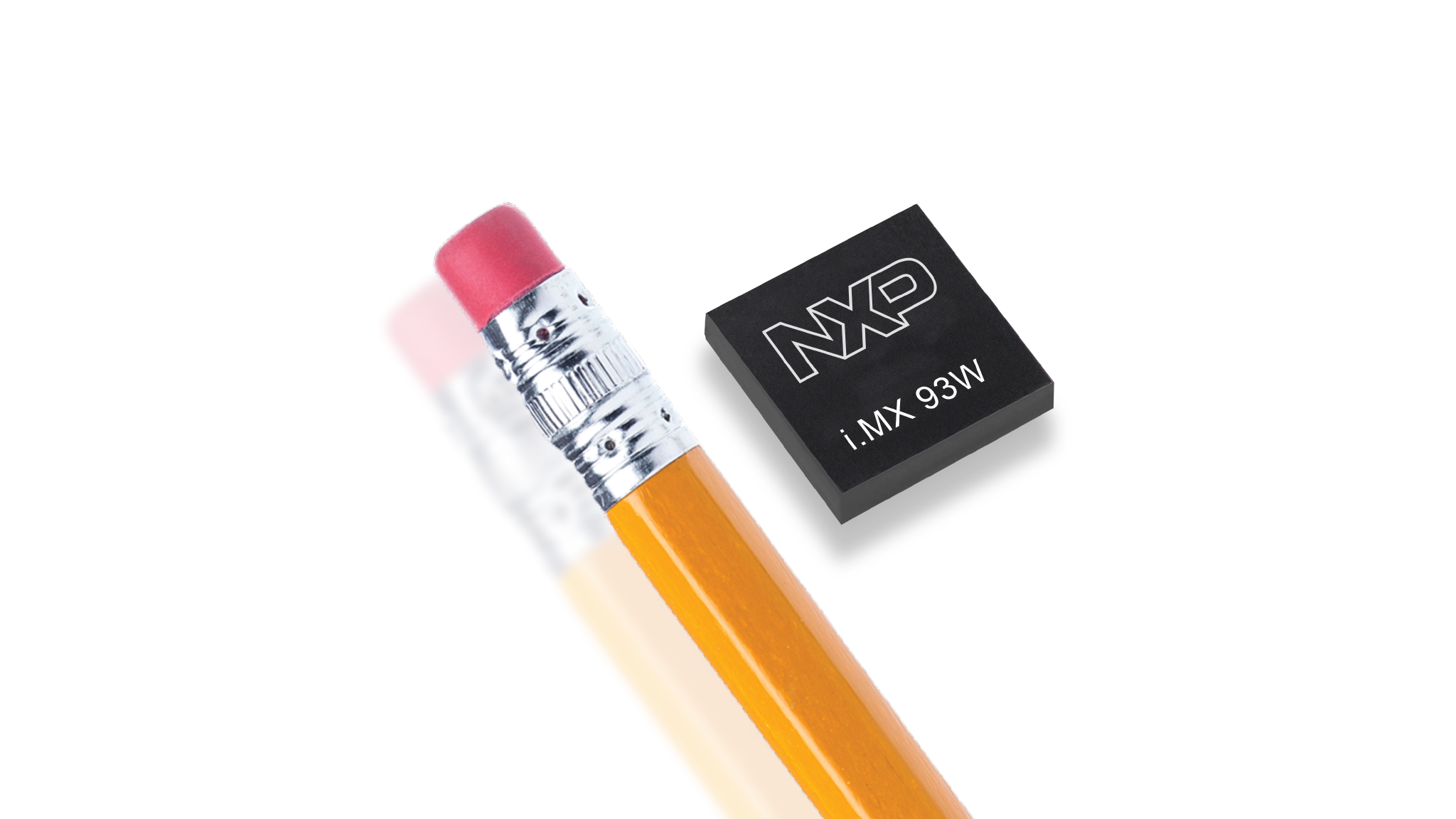
NXP’s New i.MX 93W Fuses Edge Compute and Secure Wireless Connectivity to Accelerate Physical AI
Globenewswire· 2026-03-09 08:00
Core Insights - NXP Semiconductors has launched the i.MX 93W applications processor, which is designed to accelerate the deployment of physical AI by integrating a dedicated AI neural processing unit (NPU) with secure tri-radio wireless connectivity [2][4][6] Product Features - The i.MX 93W is the first applications processor to combine an AI NPU with secure tri-radio connectivity, allowing customers to replace up to 60 discrete components with a single package [6][8] - It features a dual-core Arm Cortex-A55 applications processor and an Arm Ethos NPU capable of up to 1.8 eTOPs, enhancing processing power for AI applications [8] - The integrated IW610 tri-radio supports Wi-Fi 6, Bluetooth Low Energy, and 802.15.4 connectivity, facilitating Matter and Thread deployments [8] Market Impact - The i.MX 93W is expected to simplify the integration of AI and secure wireless connectivity, reducing design complexity and accelerating time-to-market for various applications, including healthcare devices and smart building controllers [4][5][8] - Pre-certified reference designs associated with the i.MX 93W minimize RF tuning efforts and reduce the complexity and cost traditionally associated with RF design and wireless certification [10] Security Features - The i.MX 93W integrates an EdgeLock Secure Enclave, addressing regulatory requirements and simplifying the implementation of security-critical functions such as secure boot and device attestation [9] Availability - The i.MX 93W is expected to begin sampling in the second half of 2026 [11]

NXP's New i.MX 93W Fuses Edge Compute and Secure Wireless Connectivity to Accelerate Physical AI
Globenewswire· 2026-03-09 08:00
Core Insights - NXP Semiconductors has launched the i.MX 93W applications processor, which is designed to accelerate the deployment of physical AI by integrating a dedicated AI neural processing unit (NPU) with secure tri-radio wireless connectivity [2][4][6] Product Features - The i.MX 93W is the first applications processor to combine an AI NPU with secure tri-radio connectivity, allowing customers to replace up to 60 discrete components with a single package [6][8] - It features a dual-core Arm Cortex A55 applications processor and an Arm Ethos NPU capable of up to 1.8 eTOPs, enhancing processing power for AI applications [8] - The integrated IW610 tri-radio supports Wi-Fi 6, Bluetooth Low Energy, and 802.15.4 connectivity, simplifying system design and certification [7][8] Market Impact - The i.MX 93W is expected to help customers scale physical AI applications across various sectors, including healthcare, smart buildings, industrial gateways, and smart home hubs [4][5] - Pre-certified reference designs associated with the i.MX 93W minimize RF tuning efforts and reduce the complexity and cost of wireless certification, thereby accelerating time-to-market [10] Security Features - The i.MX 93W integrates an EdgeLock Secure Enclave, which addresses regulatory requirements and simplifies the implementation of security-critical functions [9] - This hardware root of trust supports secure boot, secure update, device attestation, and secure device access, enhancing the overall security of the applications [9] Availability - The i.MX 93W is expected to begin sampling in the second half of 2026, indicating a forthcoming opportunity for developers and manufacturers [11]

机器人领域的 “铲子与镐”-半导体投资机会-Rowdy Robot-Picks & Shovels Robot Expressions Semis
2026-03-07 04:20
Summary of Key Points from the Conference Call Industry Overview - The focus is on the robotics and semiconductor industry, particularly the role of semiconductors in the development of physical AI and robotics. The semiconductor market for robotics is projected to expand significantly, with estimates suggesting an increase of approximately 800 times by 2050 [1]. Core Insights and Arguments - **Market Growth Projections**: The semiconductor market for robotics is expected to grow from approximately $2.2 billion in 2025 to $24 billion in 2030, $570 billion in 2040, and $1.8 trillion by 2050. These figures represent original equipment sales and do not include aftermarket demand [6]. - **Semiconductors as Foundational Technology**: Semiconductors are essential for physical AI, with the demand for more intelligent robots leading to increased semiconductor content. This includes a variety of specialized chips such as vision processors, tactile sensors, and motion control ICs [6]. - **Types of Semiconductors Required**: Robots require high-performance processors (CPUs, GPUs) for various functions including perception and decision-making, as well as memory and connectivity chips for real-time data processing [6]. - **New Designs and Production Needs**: The rise of robotics is expected to drive demand for new, purpose-built chips tailored to specific robot architectures. Major semiconductor companies are already introducing robotics-specific silicon [6]. - **Notable Companies and Products**: Companies like Qualcomm, NVIDIA, and Infineon are actively developing products for robotics. Qualcomm has introduced the Dragonwing portfolio, while NVIDIA has unveiled various models for robotics applications [6][7]. Additional Important Insights - **NVIDIA's Perspective**: NVIDIA views robotics as a three-computer problem involving datacenter training, simulation, and on-robot inference compute. The CEO has emphasized that "everything that moves will be robotic," indicating a significant shift towards physical AI [9]. - **Market Dynamics**: The proliferation of physical AI may lead to new computing architectures, potentially leveraging distributed AI systems to alleviate pressure on datacenters [9]. - **Semiconductor Content in Humanoids**: Estimates suggest that humanoid robots may require between $1,500 to $3,000 in semiconductor content, highlighting the financial implications for companies involved in this sector [9]. - **Curated List of Companies**: A curated list of 25 companies relevant to the robotics theme includes major players like Samsung Electronics, NVIDIA, and AMD, among others [9]. This summary encapsulates the key points discussed in the conference call, focusing on the robotics and semiconductor industry, market projections, and the implications for various companies involved in this rapidly evolving sector.

How physical AI will remake civilization | Senthil Kumar | TEDxBVRIT Hyderabad
TEDx Talks· 2026-03-06 17:20
Let me start with a moment that changed how I see the world. A few years ago, I was standing at a construction site at dawn. The air was thick with silence and steel.Flood lights hummed against the early sky. Concrete reflected a faint silver glow. Silver columns rose like unfinished thoughts.There were no slides, no applause, just a crew that measures truth in millimeters. Besides me stood a foreman, 30 years in the trade, hands marked by time. We had given him a mobile tablet with construction software po ...

Ouster Accelerates Software Adoption in 2025 with Record Bookings and Global Expansion
Businesswire· 2026-03-05 11:00
Core Insights - Ouster has achieved significant commercial momentum in 2025, doubling software-attached bookings and expanding its global deployments of Ouster Gemini and Ouster BlueCity solutions [1] Group 1: Financial Performance - Ouster doubled software-attached bookings in 2025, indicating accelerated commercial adoption of its lidar-powered Physical AI solutions [1] - The company expanded contracted deployments for Ouster Gemini and Ouster BlueCity to over 1,200 sites, covering more than 65 million square feet of roadways and facilities [1] Group 2: Product Developments - Ouster's Physical AI solutions, including Ouster Gemini and Ouster BlueCity, are designed to provide high-performance edge processing for real-time insights in smart infrastructure [1] - The company introduced new cloud tools and advanced its AI capabilities, enhancing its offerings for enterprise deployments [1] Group 3: Strategic Partnerships and Contracts - Ouster signed a multi-million-dollar agreement with LASE PeCo for deploying Ouster Gemini in Europe, marking its largest software-attached sales contract in the region [1] - The company secured contracts in New Jersey, Utah, and Tennessee for deploying Ouster BlueCity to improve traffic management and congestion [1] Group 4: Market Opportunities - Ouster aims to capture a greater share of the $19 billion market opportunity for smart infrastructure by advancing its proprietary AI model and expanding its commercial reach [1] - The company has integrated Ouster Gemini into Constellis' LEXSO platform to enhance adoption across complex security environments [1]


Ouster Announces Upcoming Investor Events
Businesswire· 2026-03-05 01:00
Core Viewpoint - Ouster, Inc. is actively participating in upcoming investor events to enhance its visibility and engagement with the investment community [1] Group 1: Investor Events - Ouster management will participate in the Cantor Global Technology & Industrial Growth Conference on March 10, 2026, in New York, NY, with CFO Ken Gianella and SVP Chen Geng attending [1] - The company will also be present at the 38th Annual Roth Conference on March 24, 2026 [1]