Risk Management

Search documents
How A Trader Lost $2 Million on Polymarket: 5 Mistakes You Need to Stop Making
Yahoo Finance· 2026-01-05 13:30
Core Insights - A trader on Polymarket has incurred losses exceeding $2 million in just over a month, with a single position responsible for nearly 79% of these losses [1][2]. Group 1: Trader's Performance - The trader, identified as beachboy4, made 53 predictions over a 35-day period, achieving a win rate of approximately 51% with 27 winning positions [3]. - The average bet size for the trader was around $400,000, with the largest gain reaching $935,800 and the biggest loss totaling $1.58 million from a single bet on Liverpool [4]. Group 2: Risk Management Issues - The trader's losses were primarily attributed to high-risk trades, with entry prices for major losing positions clustered between $0.51 and $0.67, offering limited upside but total-loss risk [6]. - Basic risk management strategies were not employed, such as setting early exits or applying probability-based stop-loss mechanisms, leading to magnified impacts from incorrect predictions [7]. Group 3: Misunderstanding of Market Dynamics - The trader treated Polymarket as a binary sports betting platform rather than a probability market, which contributed significantly to the losses [5]. - Lookonchain emphasized that the trader's approach lacked defined maximum loss per position and probability discipline, indicating that losses were inevitable due to fundamental flaws in strategy [8].
Better Dividend ETF: Vanguard's VYM vs. ProShares' NOBL
The Motley Fool· 2026-01-05 01:24
Core Viewpoint - The Vanguard High Dividend Yield ETF (VYM) offers broader diversification, higher recent returns, and a lower expense ratio compared to the ProShares - S&P 500 Dividend Aristocrats ETF (NOBL), which has a more concentrated sector mix and focuses on companies with long dividend growth histories [1][2]. Cost & Size Comparison - VYM has an expense ratio of 0.06%, significantly lower than NOBL's 0.35% - The one-year return for VYM is 12.2%, while NOBL's is 4.3% - VYM has a dividend yield of 2.4%, compared to NOBL's 2.1% - VYM's assets under management (AUM) stand at $84.5 billion, while NOBL's AUM is $11.2 billion [3][4]. Performance & Risk Comparison - Over five years, NOBL experienced a maximum drawdown of 17.92%, while VYM had a lower maximum drawdown of 15.83% - An investment of $1,000 would grow to $1,601 in VYM compared to $1,327 in NOBL over the same period [5]. Portfolio Composition - VYM holds 589 stocks with major sector exposures in financial services (21%), technology (18%), and healthcare (13%) - Top positions in VYM include Broadcom Inc., JPMorgan Chase & Co., and Exxon Mobil Corp. [6]. - NOBL consists of 70 stocks, primarily concentrated in consumer defensive (23%), industrials (21%), and financial services (13%) - Key holdings in NOBL include Albemarle Corp., Cardinal Health Inc., and C.H. Robinson Worldwide Inc. [7][8]. Investment Implications - VYM's diverse portfolio allows it to better withstand downturns in specific sectors, benefiting from its inclusion of technology stocks - NOBL's focus on companies with a history of increasing dividends results in a smaller, more concentrated portfolio, which may limit diversification [9][10].

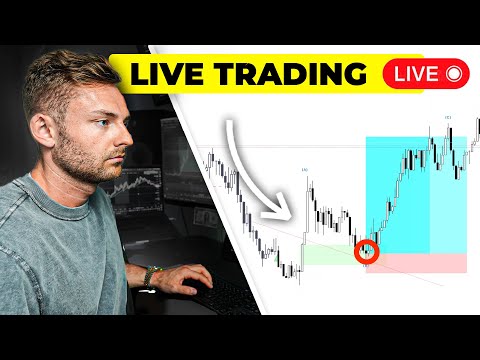
Live Day Trading Making $4,759 (I TOOK SO MANY TRADES)
Craig Percoco· 2026-01-04 15:16
Today, I'm going to take you through an entire day of my live trading. I'm going to show you the indicators, [music] strategies, and thought process that goes into finding each one of these trades and how I use all this to be able to execute on these trades in real time. And as always, I'm going to be trying to aim for my daily goal. And I'm going to do this by focusing on consistency and focusing on executing my strategy.Okay, so it's about 9:25 right now. Markets are about to open. So, let's get into sett ...
How Advisors Are Putting Private Markets to Use
Yahoo Finance· 2026-01-04 13:00
Core Insights - The integration of alternative investments into client portfolios is evolving from an opportunistic add-on to a calculated component of portfolio construction, reflecting a structural shift in advisor strategies [2][3][5] Group 1: Portfolio Construction and Strategy - Alternative investments can be categorized into three types: income and low-volatility growth, growth alternatives, and real assets for inflation hedging, depending on client risk and return profiles [1] - Private credit is utilized for income and downside support, while private equity and venture capital are sought for long-term growth, emphasizing pacing and vintage diversification [2] - Advisors are increasingly using alternatives as a core part of portfolio construction, with 50% allocating at least 10% of client assets to alternatives and 75% allocating at least 5% [3][5] Group 2: Client Demand and Market Trends - Higher-net-worth clients often inquire about alternative investments after reaching significant financial milestones, typically around $1 million in investable assets [8] - The demand for alternatives is driven by a desire for diversification and risk management rather than solely for market-beating returns [8][9] - The trend towards alternative investments is supported by an extended bull market in equities, which has become concentrated and expensive [5] Group 3: Technology and Accessibility - Technology and AI are streamlining access to alternative investments, making it easier for financial advisors to introduce these strategies to clients [6] - 77% of advisors utilize model portfolios for alternative investing, with 55% valuing analysis tools as essential technology features [7] Group 4: Risk Management and Client Concerns - Clients are increasingly focused on ensuring their portfolios are not overly reliant on a single market environment, with alternatives providing a means to manage concentration risk [10][11] - Alternatives can reduce volatility drag during withdrawal phases, but they also come with trade-offs such as less liquidity, complexity, and higher fees [9]
Dar Almarkabah for Renting Cars Co. Announces Appointment of a Board Member
English.Mubasher.Info· 2025-12-31 13:09
Group 1 - Mr. Ahmed Al-Rashed has over 22 years of professional experience in governance, risk management, compliance, and cybersecurity [1] - He has held senior leadership positions in prominent organizations across banking, telecommunications, and financial sectors [1] - Currently serves as a Board Member and Secretary of the Board of Directors of Intilaaqah Solutions Company (Qiwa Finance) [2] Group 2 - Mr. Al-Rashed is a member of the Risk and Audit Committees of several companies, including National Finance Company and Rasid Fintech Payments Company [2] - He serves on the Risk Committee at NUPCO and the Audit Committee at the Saudi Food and Drug Authority (SFDA) [2] - Holds a Master of Business Administration (MBA) degree from Al Yamamah University and has completed advanced executive programs from London Business School and the University of Oxford [3]


Why 2026 Could Be A Riskier Year For Stocks
Youtube· 2025-12-30 18:03
Market Overview - The S&P 500 has annualized about 11% since 1970, but it is currently up over 23% per year for the last three years [2][3] - The consensus forecast for the S&P 500 entering 2026 is double-digit growth, driven primarily by earnings [4] Economic Conditions - Monetary policy is expected to remain accommodative with a new Fed chair likely not changing this stance [4] - Fiscal policy is anticipated to provide a tailwind, with expectations of significant tax refunds early in the year and a potential decrease in corporate taxes [5] Investment Strategy - The company’s hedged equity ETF, HEG, is designed to be a part of a diversified portfolio, providing market participation while managing volatility [11][12] - The product has annualized at about 11.7% over the last three years, which is lower than the market's performance but offers better downside protection during market downturns [16][17] Risk Management - The product aims to reduce portfolio volatility, traditionally exhibiting about 40% of the S&P's volatility [13][14] - There is a trade-off between downside protection and upside potential; while the product cushions against market declines, it may not fully participate in strong market gains [15][16] Future Outlook - The market conditions for 2026 are viewed as generally favorable, but there is an expectation of volatility [18][19] - The company emphasizes the importance of being analytical and prepared for unexpected risks that may arise [18]

How To Save 15% More of Your Mutual Fund or ETF
Yahoo Finance· 2025-12-30 15:05
Core Insights - Average investors may experience lower returns than expected, with a Morningstar study indicating a 15% loss in returns over 10 years, where investments in ETFs and mutual funds yielded 6.3% annually compared to the funds' 7.3% return [1][2] Group 1: Investment Performance - The gap between investor returns and fund performance highlights significant lost income potential over time [2] - Investors who opt for volatile stocks, mutual funds, and ETFs are less likely to realize the full potential of their investments due to increased trading frequency and associated fees [3][4] Group 2: Investment Strategy - A hands-off, buy-and-hold investment strategy generally results in smaller performance gaps compared to frequent trading [5][6] - Emotional and discretionary trading can significantly diminish long-term gains, with data showing that missing the market's 10 best days over 30 years could halve returns [6] - Adjusting holdings to include more stable investments can facilitate a hands-off approach, making it easier to endure market fluctuations [7]
Applied Digital And The EKSO Transaction: Buy This Clear Story
Seeking Alpha· 2025-12-30 14:10
Core Insights - Mr. Mavroudis is a professional portfolio manager with a focus on risk management and financial market analysis [1] - He has successfully navigated major crises, including the COVID-19 pandemic [1] - Mr. Mavroudis is the CEO of FAST FINANCE Investment Services, a registered Greek company [1] Professional Background - Mr. Mavroudis holds multiple degrees, including an MSc in Financial and Banking Management, an LLM in Law, and a BSc in Economics [1] - He is a certified portfolio manager and has various certifications related to financial instruments and derivatives [1] - He has published three books on investments and contributes articles to reputable financial media [1] Engagement and Community - By writing on Seeking Alpha, Mr. Mavroudis aims to engage with a community of investors and market enthusiasts [1] - His goal is to foster mutual growth and knowledge sharing within the investment community [1]


Why One Investor Sold $6 Million of the MSCI China ETF Amid a Nearly 30% Run
Yahoo Finance· 2025-12-29 13:50
Core Viewpoint - Fosun International has completely exited its position in the iShares MSCI China ETF (MCHI), selling 106,000 shares valued at $5.84 million, as reported in an SEC filing on November 14 [2][3][6]. Group 1: Transaction Details - Fosun International sold 106,000 shares of MCHI during the third quarter, marking a full exit from its holdings [3][6]. - The total value of the shares sold was approximately $5.84 million based on quarterly pricing [3][6]. Group 2: ETF Performance - As of the latest data, MCHI shares were priced at $61.27, reflecting a 28% increase over the past year, significantly outperforming the S&P 500, which rose by 15% in the same period [4]. - The iShares MSCI China ETF has a total asset under management (AUM) of $7.86 billion and a yield of 2.3% [5]. - The ETF has achieved a one-year total return of 32.87% [5]. Group 3: Investment Strategy - MCHI's investment strategy focuses on tracking the MSCI China Index, providing exposure to large- and mid-cap Chinese equities across various sectors [8][9]. - The ETF primarily consists of H-shares and B-shares, representing the top 85% of the Chinese equity market by market capitalization, and invests at least 80% of its assets in the component securities of the MSCI China Index [8]. Group 4: Market Insights - The iShares MSCI China ETF has experienced a strong year, with net asset value increasing over 30% year to date as of late September, indicating a broad recovery in large and mid-cap Chinese stocks [10]. - Exiting a single-country ETF after a significant price increase may not necessarily indicate a bearish outlook on China but could reflect risk management strategies [11].
AST SpaceMobile: A Speculative Buy As Execution Finally Takes Center Stage (NASDAQ:ASTS)
Seeking Alpha· 2025-12-28 15:00
Core Insights - Mr. Mavroudis is a professional portfolio manager with a focus on risk management and in-depth financial market analysis [1] - He has successfully navigated major crises, including the COVID-19 pandemic and the PSI [1] - Mr. Mavroudis is the CEO of FAST FINANCE Investment Services, a registered Greek company [1] Professional Background - Mr. Mavroudis holds an MSc in Financial and Banking Management, an LLM in Law, and a BSc in Economics, graduating as valedictorian [1] - He is a certified portfolio manager and analyst for financial instruments, as well as a specialist in derivatives and securities market-making [1] - He is also a licensed Class A accountant-tax consultant and a member of the Economic Chamber of Greece [1] Contributions to the Industry - Mr. Mavroudis writes daily articles for reputable financial media and appears as a guest commentator on television and online programs [1] - He teaches in educational seminars and has published three books on investments [1] - By writing on Seeking Alpha, he aims to engage with a community of investors and market enthusiasts, fostering mutual growth and knowledge sharing [1]