Autonomous Driving

Search documents
Tesla's Robotaxi Delays: Who Benefits Most from Waymo's Lead?
247Wallst· 2026-01-26 14:32
Core Viewpoint - Tesla's admission of a slow rollout for Cybercab and Optimus presents a significant opportunity for competitors like Waymo, which is already operational in multiple cities, potentially leading to a market share transfer [1][13] Group 1: Competitors' Positioning - Waymo, owned by Alphabet, is currently operating robotaxis in San Francisco, Phoenix, Los Angeles, and Austin, leveraging lidar technology and established regulatory relationships [2][3] - Uber partners with Waymo to offer autonomous rides through its platform, maintaining marketplace dominance without the technology risk [6][10] - Lyft is pursuing a similar partnership strategy but lacks the scale of Uber, making it more vulnerable in the competitive landscape [7][12] - General Motors' Cruise is attempting a relaunch after a safety incident in 2023, but faces public skepticism and must prove its operational safety [8][12] Group 2: Market Dynamics - Waymo's first-mover advantage allows it to generate revenue from paying customers, creating a data moat that enhances its algorithm with every mile driven [5][11] - Uber's model allows it to benefit from the autonomous vehicle trend without taking on technology development risks, relying on its existing human driver network for profitability [10][12] - Lyft's position is weaker due to its smaller scale and reliance on human drivers, which may prolong its viability but limits growth potential [7][12] Group 3: Financial Implications - Alphabet's financial strength provides Waymo with the ability to absorb losses while scaling its technology, although this value is not currently reflected in Alphabet's stock price [9][11] - Uber's market capitalization stands at $172 billion, trading at 21 times forward earnings, with strong free cash flow from its core ride-sharing business [10] - The delay in Tesla's autonomous rollout creates opportunities for Waymo and Uber to solidify their positions in the market [13]





中国汽车:特斯拉或很快入局中国自动驾驶领域=China Autos & Shared Mobility -Tesla could soon step into China's AD ring
2026-01-26 02:49
Summary of Key Points from the Conference Call Industry Overview - **Industry**: China Autos & Shared Mobility - **Focus**: Autonomous Driving (AD) and Electric Vehicles (EVs) Core Insights 1. **Tesla's FSD Rollout in China**: Tesla's Full Self-Driving (FSD) rollout in China could receive approval as early as February 2026, with discussions in the final stages, although stringent data scrutiny may cause delays [1][2][3] 2. **Impact on AD Supply Chain**: The potential approval of Tesla's FSD is expected to positively impact the AD supply chain and robotaxi players, potentially accelerating Level 3 (L3) license approvals and expanding Level 4 (L4) robotaxi operations [2][3] 3. **Regulatory Environment**: Improved Sino-US relations may facilitate regulatory approval for FSD in China, but local data capture and cloud access remain sensitive issues that require careful management [3][4] 4. **L3 Technology Adoption**: The Chinese government has been granting L3 AD permits since December 2025, with several local brands like Chang'an and XPeng receiving approvals. The rollout of Tesla's FSD could significantly boost the entire AD ecosystem in China [4][6] 5. **AI Technology Implications**: Tesla's suite of AI technologies could catalyze advancements in China's AI supply chain, positioning the country for long-term growth in this sector [5] 6. **Local Competition**: Local brands are preparing for the competitive impact of Tesla's FSD rollout, with expectations that major Chinese players will accelerate their own L3 development to maintain market share [6] Additional Important Points 1. **Stock Recommendations**: Preferred stocks in the China AD space include Hesai (HSAI.O) and WeRide (WRD.O), with Horizon Robotics (9660.HK) and Desay SV (002920.SZ) expected to benefit from faster adoption of Level 2 and above technologies [2][8] 2. **Market Dynamics**: The potential for Tesla's FSD to act as a quasi-robotaxi does not guarantee a smooth rollout for robotaxis in China, as this would involve more complex data collection and regulatory challenges [10] 3. **Valuation Methodology**: The report includes various valuation methodologies for companies like Huizhou Desay SV and Horizon Robotics, with key assumptions regarding WACC and growth rates [11][12][13] This summary encapsulates the critical insights and implications for the China Autos & Shared Mobility industry, particularly focusing on Tesla's developments and their potential impact on local competitors and the broader market.
Elon Musk Says FSD's $99/Month Subscription Fee Will Rise As Tesla Scraps Autopilot In US: 'You Can Be On Your Phone…'
Yahoo Finance· 2026-01-24 14:31
Core Insights - Tesla's Full Self-Driving (FSD) system will see a price increase as its capabilities improve, with the current $99/month for supervised FSD expected to rise once unsupervised FSD is implemented [2][4] - The unsupervised FSD will allow users to engage in other activities, such as being on their phone or sleeping during the ride, marking a significant value enhancement for customers [2][3] FSD Price Hike - Elon Musk announced on social media that the price for supervised FSD will increase as the technology advances [2] - The anticipated "value jump" will occur with the introduction of unsupervised FSD, which allows for complete hands-off driving [2][3] Autopilot Changes - Tesla has discontinued the Autopilot feature in the U.S. and Canada, replacing it with Traffic-Aware Cruise Control for all new car purchases [3] Value Generation - ARK Invest, led by Cathie Wood, estimates that the FSD system could generate eight times more value for customers once unsupervised autonomy is achieved, making the current pricing a great deal [4] Driverless Robotaxis - Tesla has launched driverless Robotaxis in Austin, which operate on unsupervised FSD, with Musk claiming that autonomous vehicles are "essentially" solved by Tesla [5] - Concerns have been raised regarding the safety of these Robotaxis, as human-driven Tesla vehicles were observed following them, suggesting a potential shift in safety protocols [6] Insurance Collaboration - Lemonade Inc. has partnered with Tesla to reduce insurance rates by 50% for FSD-engaged driving, promoting the system as safer than human drivers [7] - This collaboration has faced criticism, with some investors labeling it a marketing gimmick rather than a genuine safety improvement [7]
These 2 ‘Perfect 10’ Stocks Are Winning Wall Street’s Confidence
Yahoo Finance· 2026-01-24 10:57
Company Overview - Pony AI operates in the Chinese market, focusing on autonomous vehicles and robotaxis, with headquarters in Fremont, California, and Guangzhou, China [3] - The company has been a leader in the autonomous vehicle sector since its inception in 2016, developing self-driving vehicles and robotaxis [3] Product and Technology - Pony's robotaxi service, PonyPilot, is available in major cities including Beijing, Shanghai, Guangzhou, and Shenzhen, accessible via a mobile app [1] - The company has launched its sixth-generation automated robotaxi vehicles and recently introduced Gen-7 robotaxis, aiming to operate 3,000 robotaxis by the end of the year [1] - Pony's technology includes high-end sensors for perception, AI for prediction and planning, and a robust infrastructure with over 20 safety features integrated into its vehicles [2] Financial Performance - In Q3 2025, revenue from robotaxis increased by 89.5% year-over-year, contributing to total quarterly revenues of US$25.4 million, a 72% year-over-year gain [7] - The company reported a net operating loss of 14 cents per share in Q3, based on non-GAAP measures [7] Analyst Insights - Citi analyst Jeff Chung has a positive outlook on Pony AI, citing several upcoming catalysts, including potential gains from Q4 results and a favorable re-rating of Pony's valuation [8] - Chung rates Pony AI as a Buy with a price target of $24.50, indicating a potential upside of 48% from the current price of $16.58 [8] - The consensus rating for Pony AI is Strong Buy, based on 4 reviews, with a majority favoring Buy over Hold [8]

Tesla Begins Robotaxi Rides in Austin Without Safety Drivers
Youtube· 2026-01-23 18:37
Core Insights - The development of autonomous vehicles is gaining momentum, with multiple players entering the market, indicating increased confidence in the technology [1][4] - Tesla's vision-only platform is now operating on public roads without human supervision, marking a significant milestone in the autonomous vehicle sector [2][3] - Waymo is currently leading in commercial ride-hailing services, aiming to reach one million rides per week by the end of the year, while Tesla's presence remains limited [5][6] Industry Landscape - The regulatory environment has not hindered competitors, and the rapid entry of new players is reshaping the market dynamics [5][6] - Waymo's deployment in multiple cities without human supervision is a key factor in its competitive advantage [6][7] - Consumer acceptance of autonomous vehicles is growing, with data suggesting that users in San Francisco are increasingly comfortable with Waymo's services [8][10] Global Context - The global readiness for autonomous vehicles is on the rise, with various countries allowing more operators to experiment with these technologies [10] - Partnerships between companies like Uber and Waymo in different regions, including Austin and China, indicate a collaborative approach to expanding autonomous ride-hailing services [8][9]
Jim Chanos Slams Tesla, Lemonade's Autonomous Insurance, Says True FSD Will Have Manufacturer's Liability: 'You Are All Being Played...'
Yahoo Finance· 2026-01-23 18:31
Core Viewpoint - Investor Jim Chanos has criticized the collaboration between Lemonade Inc. and Tesla Inc., particularly the offering of reduced insurance rates for Tesla vehicles engaged in Full Self-Driving (FSD) mode, suggesting that this partnership is misleading [1][2][3]. Group 1: Collaboration Details - Lemonade announced a partnership with Tesla to provide a 50% reduction in insurance rates for vehicles using FSD, citing data that indicates Teslas in FSD mode are involved in significantly fewer accidents [3]. - Chanos argues that true FSD will shift liability insurance from drivers to manufacturers, implying that driver insurance may become unnecessary [2][3]. Group 2: Safety Concerns - There are ongoing concerns regarding the safety of Tesla's autonomous driving systems, with the company facing multiple lawsuits alleging that these systems have caused fatalities [4]. - The National Highway Traffic Safety Administration (NHTSA) has initiated a probe into Tesla's autonomous driving system following reports of incidents involving vehicles in FSD mode, raising further questions about the safety and reliability of these technologies [5].

特斯拉:司机退出
2026-01-23 15:35
Summary of Tesla Inc. Conference Call Company Overview - **Company**: Tesla Inc (TSLA.O) - **Industry**: Autos & Shared Mobility - **Market Cap**: $1,521,257 million as of January 21, 2026 - **Stock Rating**: Equal-weight - **Price Target**: $425.00 Key Points Robotaxi Development - Tesla has initiated Robotaxi drives in Austin without a safety driver, marking a significant step in its autonomy strategy [1][2] - The company plans to operate Robotaxis in approximately 8 to 10 metro areas by the end of 2026, with a focus on expanding the unsupervised fleet [3][4] - The scaling of a passive optical-only autonomous vehicle (AV) system is expected to challenge conventional robotaxi models, with projections of 1,000 robotaxis operational by year-end 2026, scaling to 30,000 by 2030 and 5 million by 2040 [4][5] Safety and Expansion - The removal of the safety driver is seen as a critical milestone for validating Tesla's robotaxi strategy, indicating confidence in safety standards [3] - The company is closely monitoring safety data as it scales its fleet, particularly the miles between crashes [12] - Future expansions are anticipated in cities like Las Vegas, Phoenix, Dallas, Houston, and Miami, with a combined metro population of approximately 30 million [11] Financial Projections - The base case valuation for Tesla is set at $125 per share, with key assumptions including a fleet size of 30,000 vehicles by 2030 and 1 million by 2035 [13] - Revenue per mile is projected to decrease from $2.17 in 2030 to $1.33 by 2040, while costs per mile are expected to decline as well [13] - The bull case scenario estimates a price target of $205 per share, assuming a larger operational fleet and higher adoption rates [13] Risks and Considerations - Potential risks include competition from legacy automakers and tech companies, execution risks in robotaxi and FSD (Full Self-Driving) deployment, and regulatory challenges [18] - The company is also facing risks related to market conditions in China and potential dilution of shares [18] Additional Insights - Tesla's move to a subscription-only model for FSD is expected to enhance revenue streams, although only about 12% of Tesla's global fleet currently utilizes FSD [10] - The company is testing in additional markets such as Boston, New York, Denver, and Chicago, although no official launch plans have been announced [11] Conclusion Tesla's recent developments in the robotaxi sector and the removal of safety drivers represent significant advancements in its autonomous vehicle strategy. The company's ambitious growth projections and focus on safety metrics will be critical as it navigates potential risks and competition in the evolving automotive landscape.
Did Nvidia Just Say "Checkmate" to Tesla?
The Motley Fool· 2026-01-23 07:00
Core Insights - Nvidia has introduced a new tool that enhances its autonomous vehicle ecosystem, indicating a significant advancement in the physical applications of artificial intelligence [1][7] - The competition in the autonomous driving sector is intensifying, with Nvidia emerging as a formidable challenger to Tesla's leadership in self-driving technology [2][3] Group 1: Nvidia's Autonomous Driving Technology - Nvidia DRIVE is a comprehensive suite of tools designed for the development of autonomous vehicles, incorporating AI and deep learning capabilities for environmental perception and decision-making [5] - DRIVE Hyperion serves as Nvidia's turnkey solution for self-driving cars, integrating essential components like cameras, radar, and lidar with safety software for various vehicle designs [6] - The newly introduced Alpamayo system utilizes reasoning-based vision language action (VLA) technology, enabling vehicles to "think" and react autonomously, which could significantly enhance performance in complex driving scenarios [8][9] Group 2: Comparison with Tesla - Tesla's Full Self-Driving (FSD) platform relies on in-house camera systems and chip architectures, providing significant control but potentially limiting commercial viability [11] - Nvidia's open-source model allows for easier partnerships with automobile manufacturers, enabling quicker development of autonomous vehicles compared to Tesla's more integrated approach [12] - While Tesla's FSD has a higher current scale, Nvidia's DRIVE platform is positioned for exponential growth as automakers seek alternatives to Tesla's technology [12] Group 3: Market Position and Valuation - Tesla's price-to-sales (P/S) ratio of 15.7 reflects high market expectations for its AI products, positioning it more as a technology platform than a traditional car manufacturer [16] - Tesla is still in the testing phase for its robotaxi ambitions and faces regulatory hurdles before scaling its autonomous ride-hailing service [17] - Nvidia's diversified business model allows it to benefit regardless of which automakers lead in autonomous driving, contrasting with Tesla's more precarious position [18]

Tesla's stock pops on a robotaxi milestone. Here's what comes next.
MarketWatch· 2026-01-22 19:40
Core Insights - Tesla has begun the process of removing safety drivers from certain robotaxi rides, indicating a significant step towards full autonomy in its ride-hailing service [1] - CEO Elon Musk anticipates that the company's robotaxi network will become "very, very widespread" across the U.S. by the end of 2026, suggesting aggressive expansion plans in the autonomous vehicle market [1] Company Developments - The removal of safety drivers marks a pivotal transition for Tesla's robotaxi initiative, reflecting confidence in the technology's readiness for broader deployment [1] - The expectation of widespread adoption by 2026 highlights Tesla's strategic vision and commitment to leading the autonomous transportation sector [1]
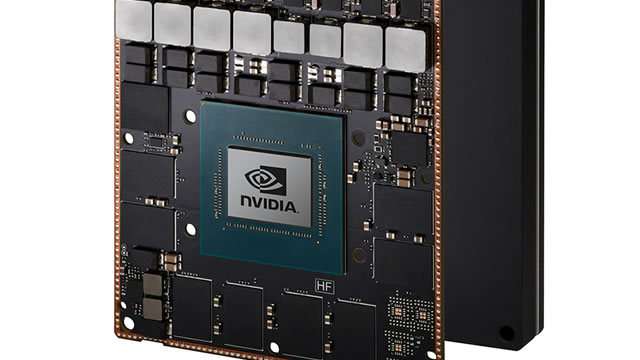
Exclusive: Nvidia’s Alpamayo Could Help Automakers Catch Up On Autonomy, Analyst Says Nvidia’s Alpamayo Could Help Legacy Automakers Catch Up On Autonomy, Analyst Says - NVIDIA (NASDAQ:NVDA)
Benzinga· 2026-01-22 10:34
Core Insights - Nvidia's self-driving technology, Alpamayo, is expected to significantly impact the auto industry, particularly aiding OEMs and robotaxi operators in achieving autonomy [1][2]. Group 1: Impact on OEMs - The technology could provide a better foundation for OEMs, including legacy automakers like General Motors and Ford, to enhance their autonomous capabilities [2][3]. - Mercedes-Benz has been collaborating with Nvidia, indicating a trend among automakers to reassess existing partnerships in light of new technologies [4]. Group 2: Robotaxi and Personal Ownership - The future may see a dual approach with both robotaxis and personal ownership of autonomous vehicles, as companies like Tesla and Waymo adopt different strategies [5]. - Waymo manages its fleet while Tesla allows customers to buy robotaxis, suggesting varied business models in the autonomous vehicle space [5]. Group 3: Nvidia's Position and Strategy - Nvidia has evolved from a silicon manufacturer to focusing on ecosystems, though its interest in entering the robotaxi market remains uncertain [6][7]. - The company's Vision-Language-Action (VLA) approach to autonomy aims to mimic human reasoning, which could differentiate it from competitors [7][8]. Group 4: Financial Considerations for Robotaxis - The capital structure of robotaxi deployments is crucial, with high costs associated with vehicles like the Jaguar I-Pace potentially limiting sustainability for many companies [8][9]. - A distributed ownership model could alleviate some financial burdens, making robotaxi services more viable [9]. Group 5: Opportunities for Chinese Automakers - Nvidia's open-source Alpamayo technology could provide Chinese automakers a pathway into the U.S. market, especially as they navigate regulatory challenges [10][11]. - The open-source nature of the technology may enhance customer perception and facilitate partnerships with other OEMs [11][12]. Group 6: Broader Applications of Alpamayo - The Alpamayo technology may also find applications in robotics within manufacturing, although deploying humanoid robots presents unique challenges [14][15]. - The automotive industry may need to rethink manufacturing processes to accommodate robotic assembly, highlighting the need for further development in this area [15].