Communication

Search documents
Why do we lie about money? | Norah Chanda Kalaluka | TEDxLusaka
TEDx Talks· 2025-07-18 15:30
Key Observations on Financial Infidelity and Relationships - Financial infidelity, defined as deceit regarding finances, is increasingly common in relationships [4][6] - Financial infidelity is a symptom, with the lack of financial intimacy being the root cause [17] - Money-related lies are often driven by fear, shame, control, and sometimes love [10] Impact and Consequences - Financial secrets can lead to feelings of betrayal and erode trust within relationships [5][15] - Hidden loans have caused marriages to fall apart, while honesty can lead to healing [19] - Unresolved differences in money personalities can turn money into a battlefield in relationships [14] Solutions and Recommendations - Understanding one's money personality is the first step towards financial transparency [18] - Early and frequent communication about finances is crucial, scheduling regular money dates [18] - Creating a shared financial plan, including budgeting, building, and investing together, is essential [18]


X @Elon Musk
Elon Musk· 2025-07-17 23:39
Memes are the most information-dense form of communication https://t.co/wwweXcmzaX ...
The Power of Soft Skills | Roman Kolesov | TEDxAmerican University of Technology
TEDx Talks· 2025-07-17 15:53
Key Takeaways on Soft Skills - Soft skills are crucial for career and business success, not just for LinkedIn profiles [2] - Soft skills can determine the success or failure of a project [3] - Soft skills are about effective interaction and collaboration, not just being nice [5] - Soft skills are increasingly important in the age of AI and automation, as they are difficult for machines to replicate [6] Developing Soft Skills - Public speaking can be improved through practice, starting with small updates in meetings [7] - Active listening involves understanding the speaker, not just hearing them [7] - Feedback should be sought not only on work but also on communication skills (clarity, audibility, helpfulness) [8] - Empathy is important; consider the other person's feelings before arguing [8] - Learning from others through books, talks, and observing great communicators is beneficial [9] - Focus on developing one skill at a time for better results [9] Importance in Professional Context - Developers are often promoted for their people skills in addition to their technical skills [6] - Well-pitched average ideas can outperform brilliant ones [6] - The ability to connect, collaborate, lead, and communicate is crucial for career advancement [11] - Soft skills are essential for turning good people into great leaders and good teams into unforgettable ones [12]

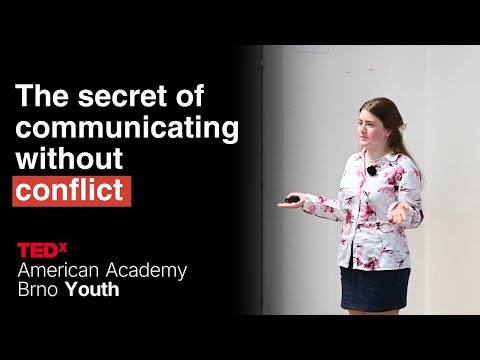
The secret to communicating without conflict | Sophie Vidović | TEDxAmerican Academy Brno
TEDx Talks· 2025-07-17 15:38
Core Concept - Nonviolent Communication (NVC) is a method for communicating with respect for human needs and feelings, aiming to resolve conflicts [2] - NVC involves four factors: observation, feeling, needs, and requests [2] - NVC can be applied to resolve conflicts in various situations, promoting understanding and positive responses [2][3] Key Components of NVC - Observation: Identifying the situation or problem without judgment [2][3] - Feelings: Acknowledging the emotions of oneself and others involved [2][3] - Needs: Recognizing what is important to oneself and others in the situation [2][3] - Requests: Making polite requests rather than demands to address the needs [2][3] Practical Application - Instead of blaming, express feelings and needs to foster understanding and avoid negative reactions [2] - When feeling overwhelmed, communicate the need for rest and suggest a later time to talk [2][3] - In conflict situations, taking a deep breath and applying NVC principles can lead to better outcomes [4]
OpenAI's Sean Grove: Code is NOT all you do
AI Engineer· 2025-07-16 07:00
uh it feels tangible and real but it's sort of underelling the job that each of you does. Code is sort of 10 to 20% of the value that you bring. The other 80 to 90% is in structured communication and this is going to be different for everyone but a process typically looks something like you talk to users in order to understand their challenges.You distill these stories down and then ideulate about how to solve these problems. What what is the goal that you want to achieve. You plan ways to achieve those goa ...