Compounding

Search documents
NUW: Rates Pressure Long Duration Assets As Discount Narrows
Seeking Alpha· 2025-08-07 17:59
Group 1 - The Nuveen AMT-Free Municipal Value Fund (NYSE: NUW) is a closed-end fund that invests in a diversified pool of municipal bonds, primarily offering tax-free distributions to shareholders [2] - The fund is distinct from other municipal closed-end funds as it focuses on providing safe and reliable yields, targeting approximately 8% returns [2] - The investment strategy includes managed portfolios, actionable income and arbitrage recommendations, and in-depth analysis of closed-end funds and exchange-traded funds [2] Group 2 - The CEF/ETF Income Laboratory offers a community of over a thousand members, providing resources for both active and passive investors seeking income ideas [2] - The majority of the fund's holdings are monthly-payers, which aids in faster compounding and smoother income streams for investors [2] - The team behind the fund includes experienced professionals, such as Nick Ackerman, who has over 14 years of personal investing experience and has held relevant financial licenses [3]


X @The Motley Fool
The Motley Fool· 2025-07-30 20:13
Investment Philosophy - The industry emphasizes the compounding effect of not only capital but also accumulated knowledge and experience [1]
X @The Motley Fool
The Motley Fool· 2025-07-30 12:44
Investment Philosophy - Compounding's initial impact is subtle, leading to underestimation of its potential [1]
GSK: I Foresee Only Very Modest Upside Here Even If Blenrep Gets FDA Approval
Seeking Alpha· 2025-07-28 16:41
Company Overview - GSK (formerly GlaxoSmithKline) is one of the largest pharmaceutical and biotech companies globally, with a market capitalization of approximately $73 billion [1]. Investment Philosophy - The investment philosophy emphasizes the importance of compounding, dividend reinvesting, and patient investing through various market conditions to achieve significant rewards [1]. - The approach combines steady accumulation of high-quality assets with high-risk/high-reward opportunities, underappreciated turnaround plays, and transformative technologies [1]. Educational Background - The individual has over 20 years of teaching experience at the college/university level and holds a PhD from Brunel University, indicating a strong academic foundation [1].


X @Poloniex Exchange
Poloniex Exchange· 2025-07-25 09:04
Investment Principles - Prioritize saving over spending to build wealth [1] - Understand that compounding is a powerful tool for long-term investment growth [1] - Recognize that behavior is more important than intelligence in investment decisions [1] - Focus on long-term investment strategies rather than short-term gains [1] - Maintain humility and stay invested in the market [1] Risk Management - Acknowledge the role of luck and risk in shaping investment outcomes [1] - Be aware that tail events can significantly impact investment success [1] Financial Planning - Understand that wealth is not the same as income [1] - Recognize that financial freedom is a valuable return on investment [1] - Appreciate that everyone has different financial experiences and perspectives [1]
X @The Motley Fool
The Motley Fool· 2025-07-24 20:21
Millionaires think in decades, not days.They invest through the noise.They don’t chase. They compound.And they don’t care if anyone notices. ...
The Lesson of Craft
Garry Tan· 2025-07-23 15:00
Craft & Product Development - Focus on perfecting craft, described as "shokunin kishu" in Japan, which means craft perfected for its own sake [1] - Compounding involves making numerous small, invisible improvements that eventually lead to significant results [1] - Aim for a "10-star experience" by exceeding expectations beyond the obvious five stars [1] - Product quality relies on continuous improvement through empirical testing, one change at a time [1] - Prioritize fixing bugs immediately rather than building new features on buggy code [1] Customer Focus & Value Creation - Identify user problems that are so painful they are willing to pay to solve them [1] - Create products that customers will "pull" from you due to their high value [1] - Emphasize that customers form opinions on quality from their own experience with products or services, not marketing [1] - Great chefs and founders are impatient to bring out the potential in their work, driven by a desire that aligns with the customer's needs [3] Key Attributes for Success - Take work seriously, consistently perform at the highest level, and aspire to improve skills [2][5] - Maintain cleanliness and be impatient to achieve greatness [2][3] - Be a leader, be stubborn, and insist on having things your own way [3] - Be passionate about the work [3]

Warren Buffett Says to Buy This Kind of ETF. One Could Turn $1,000 Per Month Into $252,000 in 10 Years.
The Motley Fool· 2025-07-22 17:28
Core Insights - Warren Buffett is recognized as one of the greatest investors due to his successful capital allocation at Berkshire Hathaway, achieving nearly 20% annualized returns over six decades [1] - Buffett advises average investors to consider investing in an S&P 500 index fund, highlighting that even small investments can grow significantly with patience and discipline [2] Investment Strategy - Investors are encouraged to consider the Vanguard S&P 500 ETF, which could potentially grow a monthly investment of $1,000 into $252,000 over 10 years [3][7] - The S&P 500 index has delivered a total return of 255% over the past decade, translating to an annualized return of 13.5%, exceeding its long-term average of 10% [5] ETF Characteristics - The Vanguard S&P 500 ETF tracks the performance of S&P 500 stocks and is managed by a reputable firm with trillions in assets, providing investor confidence [6] - The ETF has a low expense ratio of 0.03%, aligning with Buffett's preference for low-cost investment options [8] Future Performance Considerations - While past performance does not guarantee future results, if the next decade mirrors the last, a consistent investment strategy could yield substantial returns [7] - Current high valuations, indicated by a CAPE ratio of 37.8, suggest that future returns may be lower than historical averages [10] - Factors such as rising government spending and liquidity could potentially support asset prices, leading to returns that match or exceed the previous decade [12]
1 Stock That Turned $1,000 Into $163,000
The Motley Fool· 2025-07-21 11:30
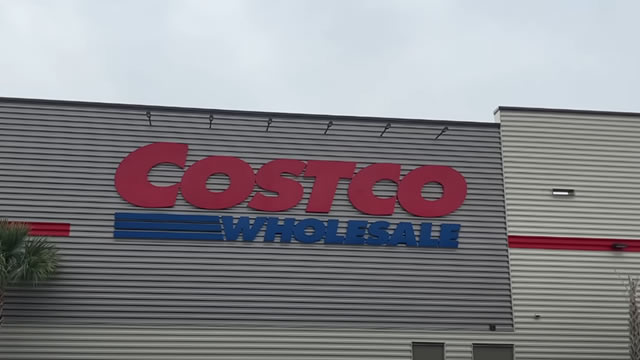
Based on recent trends in the market and the economy, investors might think that the only way to achieve outsized returns is to allocate capital to the technology sector. After all, that's where some of the most dominant businesses reside. But other sectors can also provide winners. Since mid-July 1995, one top retail stock has generated a monster total return of just over 16,000%, or 18.5% on an annualized basis. Had you been around to invest just $1,000 into this business back then, you'd have $163,000 to ...

1 No-Brainer Vanguard ETF to Invest $1,000 Into This July
The Motley Fool· 2025-07-20 13:10
Core Viewpoint - The Vanguard S&P 500 ETF is presented as a strong investment option for passive investors, providing exposure to the performance of the S&P 500 and benefiting from the growth of large U.S. companies [4][5][6]. Group 1: ETF Overview - The Vanguard S&P 500 ETF (VOO) tracks the S&P 500, which includes 500 large and profitable U.S. businesses, serving as a benchmark for market performance [4]. - The ETF offers immediate diversification across all sectors of the economy, with a significant concentration in the largest companies, including Nvidia, Microsoft, Apple, Amazon, and Meta Platforms, which together account for 27.2% of the asset base [6]. Group 2: Performance Metrics - Over the past decade, the Vanguard S&P 500 ETF has achieved a total return of 254%, meaning a $1,000 investment would have grown to $3,540 by July 15 [7]. - Key factors driving past gains include low interest rates, increased capital inflow into passive investment vehicles, and the rise of powerful technology companies [8]. Group 3: Investment Strategy - The ETF is characterized by a low expense ratio of 0.03%, making it a cost-effective option for investors looking to grow their savings without extensive research [9]. - Despite market volatility, the S&P 500 is trading at record levels as of July 15, and the article emphasizes the importance of investing early and consistently rather than trying to time the market [10][12].