Capital allocation

Search documents
Phillips 66 (NYSE:PSX) Conference Transcript
2026-01-06 16:22
Phillips 66 Conference Call Summary Company Overview - **Company**: Phillips 66 (NYSE: PSX) - **Focus**: Downstream operations, including refining, midstream, and petrochemicals - **Positioning**: Positioned to deliver durable cash flow with a rateable dividend, emphasizing a lower volatility business model [4][7] Key Industry Insights - **Refining Dynamics**: - The potential return of Venezuelan crude supply is a significant topic, with Phillips 66 having the capacity to process Venezuelan crudes at its Gulf Coast refineries [8][10] - The company processes approximately 500,000 barrels per day of heavy crudes, including Western Canadian crude [12] - There is a belief that the refining sector will continue to experience tight capacity, with rationalizations expected to persist [17][18] Strategic Initiatives - **Refining Capacity**: - Anticipated net addition of 500,000 barrels per year in refining capacity, but overall capacity is expected to remain tight [18][20] - The company has integrated acquisitions like Wood River and Borger to enhance operational efficiency and market reach [21][22] - **Midcontinent Strategy**: - Phillips 66 views the Midcontinent as a strong competitive position, with linkages to the Gulf Coast enhancing operational flexibility [24][25] - The company is focused on disciplined capital allocation and potential M&A opportunities to strengthen its position in both the Midcontinent and Gulf Coast [26] Financial Performance and Projections - **Cash Flow and Capital Allocation**: - Expected operating cash flow of approximately $8 billion for 2026 and 2027, with a target to reduce debt from $21.8 billion to $17 billion by the end of 2027 [50][51] - The capital budget is projected at a low $2 billion, with a focus on returning value to shareholders through dividends and buybacks [51] - **Chemical Sector**: - The chemical industry is currently facing a downturn, but Phillips 66's joint venture, CP Chem, is performing well and generating cash [46][48] - Long-term fundamentals for the chemical sector remain positive, with continued demand growth expected [49] Operational Efficiency - **Cost Management**: - The company aims to reduce refining costs to $5.50 per barrel, having already achieved a reduction of $1 per barrel [28] - Continuous improvement in operational reliability and efficiency is a key focus, with a mindset shift towards integrated operations [27][43] Market Outlook - **Refining Margins**: - The company is cautiously optimistic about refining margins, expecting higher differentials in the future but acknowledging the challenges posed by lower crude prices [56] Additional Insights - **Asset Dispositions**: - Phillips 66 is actively reviewing its portfolio for non-core assets that can be monetized to free up capital for growth opportunities [55][60] - **Marketing Performance**: - The marketing segment is expected to maintain a consistent run rate, generating approximately $1.8 billion in revenue [62] This summary encapsulates the key points discussed during the Phillips 66 conference call, highlighting the company's strategic focus, market dynamics, and financial outlook.

Whitecap Resources (OTCPK:SPGY.F) 2026 Investor Day Transcript
2026-01-05 16:02
Summary of Whitecap Resources Investor Day Conference Call Company Overview - **Company**: Whitecap Resources - **Market Capitalization**: CAD 14 billion - **Enterprise Value**: CAD 17 billion - **Daily Production**: Approximately 372,500 BOE (Barrels of Oil Equivalent) per day, ranking as the seventh largest Canadian oil and natural gas producer - **Natural Gas Production**: 900 million cubic feet per day, making it the fifth largest gas producer in Canada - **2026 Capital Investment Plan**: CAD 2-2.1 billion, projected to generate approximately CAD 3.3 billion of funds flow at $60 WTI and $3 AECO prices [7][8] Strategic Focus - **Capital Allocation**: Aimed at generating strong, durable returns for shareholders through disciplined investment and operational excellence [5][6] - **Competitive Advantages**: - High-quality inventory with depth and commodity optionality - Technical excellence and strong execution - Capital discipline to protect and compound shareholder value - Strong balance sheet to manage risk and maintain flexibility [6][7] Financial Health - **Net Debt**: CAD 3.3 billion, with a debt-to-funds flow ratio of 1:1 - **Dividend**: CAD 0.73 per share, yielding approximately 6-6.5% at current share price - **Targeted Annual Total Return**: 10-15% for shareholders [9][10] Asset Overview - **Asset Types**: Divided into unconventional (Montney and Duvernay) and conventional assets - **Unconventional Assets**: - 4,700 drilling locations with significant growth potential - Producing approximately 245,000 BOE per day, generating around CAD 900 million in annual free funds flow at current pricing [21][23] - **Conventional Assets**: - Producing about 140,000 BOE per day, primarily oil and NGLs - 5,800 locations with a multi-decade inventory, including enhanced oil recovery projects [58][59] Operational Achievements - **Technical Improvements**: Continuous enhancements in drilling and completion efficiency, leading to improved well performance and reduced costs [49][50][51] - **Production Optimization**: Focus on base production optimization, resulting in significant uplifts in production rates [56][57] Growth Potential - **Unconventional Division**: - Strong long-term growth and free funds flow potential - Flexibility across commodity types allows for capital allocation based on market signals [21][22][25] - **Duvernay Position**: - Largest landholder with approximately 500,000 acres and 700 identified locations - Expected to generate CAD 650 million-CAD 850 million in annual asset-level free cash flow once stabilized [26][30] - **Montney Position**: - Approximately one million acres with diverse development options, providing long-dated organic growth potential [31][32] Capital Efficiency and Execution - **Development Workflow**: A collaborative process that integrates geological evaluations, development planning, economic assessments, and execution to optimize returns [44] - **Design Optimization**: Successful implementation of strategies that improve capital efficiency and returns across various projects [45][46][47] Conclusion - **Long-Term Vision**: Whitecap Resources aims to leverage its strong asset base, disciplined capital allocation, and operational excellence to deliver sustainable shareholder returns and maintain a competitive edge in the energy sector [60][61]
Netflix: From Consensus Long To Repricing Phase
Benzinga· 2026-01-05 12:09
Core Insights - Netflix has transitioned from being a consensus favorite to a stock undergoing reassessment, with the change in positioning being more significant than the absolute price decline [1] Performance Overview - Netflix has underperformed the broader market, trading over 30% below its peak due to a weaker-than-expected October earnings report, scrutiny around execution, uncertainty regarding a potential Warner Bros. transaction, and a valuation with limited margin for error [2] Fundamental Analysis - Core fundamentals remain intact, with solid revenue growth, stable global engagement, and maintained relevance as a platform; however, investor confidence in near-term execution and capital allocation has been repriced [3][4] M&A and Strategic Concerns - The potential Warner Bros. transaction has introduced discomfort among investors, focusing on timing and balance-sheet risk rather than long-term strategic logic [5] - Netflix's capital-intensive model raises concerns about adding leverage and complexity, especially when markets favor financial clarity [6] Strategic Direction - Despite stock weakness, Netflix maintains an offensive strategic posture with an extensive 2026 content slate, focusing on engagement density rather than just subscriber growth [7][8] Competitive Positioning - Netflix's pure-play content operation contrasts with platform-oriented peers like Roku and diversified ecosystems like Amazon and Disney, amplifying both upside potential and investor scrutiny [9] Market Dynamics - The recent sell-off has been orderly, indicating systematic de-risking rather than capitulation, with selling pressure moderating at multiple price levels [10][11] Future Outlook - Netflix does not currently appear inexpensive and lacks an obvious near-term catalyst; however, it is no longer crowded or supported by unquestioned optimism, altering the risk-reward framework for institutional investors [12] - Future phases will depend on clarity in capital allocation, consistent execution, and evidence of engagement translating into durable monetization [13]



Whitecap Resources (OTCPK:SPGY.F) Earnings Call Presentation
2026-01-05 12:00
Company Overview - Whitecap's market capitalization is approximately $14 Billion[3] - The company's 2026 production guidance is 372,500 boe/d[3] - Whitecap anticipates $3.3 Billion in funds flow for 2026[3] - The 2026 capital budget is projected at $2.05 Billion[3] - Net debt as of September 30th, 2025, was $3.3 Billion, with a Net Debt / Funds Flow ratio of 1.0x[3] - The annual dividend is $0.73 per share ($0.0608/month)[3] Strategy and Operations - The company targets a total shareholder return of 10%-15% annually[8] - Whitecap plans for 3%-5% per share production growth per annum, dependent on commodity prices[14] - The company aims for a base dividend payout ratio of 20%-25%[14] - Whitecap's 2026 budget anticipates 3% production growth[22] - At a WTI price of US$60/bbl, 2026 funds flow sensitivity is $3.3 Billion[22] - At a WTI price of US$60/bbl, the company plans to allocate $2.1 Billion to capital budget, $0.9 Billion to base dividend and $0.3 Billion to share repurchases/debt reduction[26]
With Warren Buffett No Longer CEO at Berkshire Hathaway, Greg Abel Will Likely Call the Shots on the Conglomerate's Biggest Investment Decisions
The Motley Fool· 2026-01-03 00:41
Core Insights - Warren Buffett's long-standing role in capital allocation at Berkshire Hathaway is transitioning to Greg Abel, who will be scrutinized for his decisions in the coming decade [1][2][4] - Berkshire Hathaway has over $350 billion in cash and equivalents, making capital allocation decisions critical for shareholder outcomes [5][6] Group 1: Leadership Transition - Greg Abel is set to take over capital allocation responsibilities, a key aspect of Berkshire's strategy, as Buffett steps back from the CEO role [2][5] - Buffett has expressed confidence in Abel's capabilities, stating he would prefer Abel to manage his investments over other top advisors [8] Group 2: Capital Allocation Strategy - Berkshire's decentralized structure allows its operating companies to manage themselves, with excess capital funneled back to Omaha for reinvestment [4][5] - The upcoming capital allocation decisions will be pivotal, with potential for significant impacts on shareholder value [5][9] Group 3: Future Actions to Watch - Investors should monitor Abel's first major capital move, as it will provide insights into his allocation strategy [9] - Share repurchases are another key indicator; a resumption in 2025 could signal that Abel views the stock as undervalued [10][11] - The company is expected to maintain a disciplined approach, with significant moves likely only when attractive opportunities arise [11]
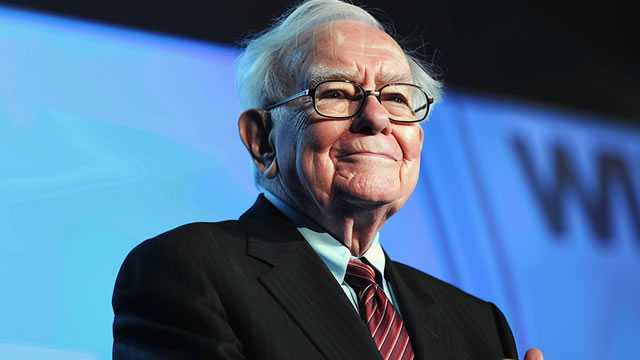
A 5 million percent return in 60 years leaves Warren Buffett's legacy unmatched
CNBC· 2026-01-01 14:31
Core Insights - Warren Buffett has transitioned the CEO role to Greg Abel after leading Berkshire Hathaway for over six decades, raising questions about the future of the company and its unique investment strategies [2][5] - Under Buffett's leadership, Berkshire Hathaway achieved a compounded annual gain of 19.9% from 1964 to 2024, significantly outperforming the S&P 500's 10.4%, resulting in an overall return exceeding 5.5 million percent [3] - The company's investment strategy focused on using insurance float for low-cost capital, acquiring businesses with durable cash flows, and allowing time for growth, leading to significant stakes in companies like Coca-Cola and American Express [4] Leadership Transition - Greg Abel will take over responsibilities for Berkshire's annual shareholder letters, a tradition started by Buffett that has become essential reading for investors [7] - Buffett's reduced public presence is noted, but he will continue to provide a Thanksgiving message, maintaining some level of influence [7] - The annual shareholder meeting, known as "Woodstock for Capitalists," has been a key event for investors, fostering Buffett's role as a trusted voice in the market [8] Company Culture and Strategy - Berkshire Hathaway has maintained a unique culture, avoiding stock splits and earnings guidance, which has cultivated a long-term oriented shareholder base [10] - The company held a record $381.6 billion in cash at the end of September, reflecting its financial strength and Buffett's cautious approach in a high-valued market [11] - There are concerns regarding the future of Berkshire's $300 billion equity portfolio, as no clear successor with a comparable track record in public equities has emerged [12] Market Perspective - Buffett has advised shareholders to not confuse market volatility with failure, emphasizing that stock prices may fluctuate significantly but the company will recover [13]

Carnival (CCL) - 2025 Q4 - Earnings Call Transcript
2025-12-19 16:02
Financial Data and Key Metrics Changes - The company reported a net income of over $3 billion for 2025, a 60% increase from 2024, marking an all-time high [4][16] - Full-year yields improved by more than 5.5% compared to the previous year, exceeding initial guidance by almost 1.5% [4][5] - Operating margins and EBITDA margins increased by over 250 basis points year-over-year, achieving the highest operating income per ALBD in nearly 20 years [5][6] - The company achieved a return on invested capital (ROIC) exceeding 13%, the highest level in 19 years [5] Business Line Data and Key Metrics Changes - The company experienced record booking volumes for 2026 and 2027, with customer deposits up 7% year-over-year, reaching an all-time high [6][7] - The onboard revenue per diem significantly outperformed prior year levels, indicating strong demand despite lower consumer sentiment [6][7] - The company anticipates a 3% yield increase in 2026, normalizing for accounting changes and geopolitical uncertainties [7][8] Market Data and Key Metrics Changes - The company is about two-thirds booked for 2026, in line with historical highs for North America and Europe [6][8] - The Caribbean market is expected to see a 14% increase in non-Carnival Corporation capacity growth, contributing to competitive dynamics [8][12] Company Strategy and Development Direction - The company plans to resume dividends at an initial rate of $0.15 per quarter, reflecting confidence in cash generation and balance sheet improvements [9][10] - The strategy includes a focus on capital allocation to return value to shareholders while continuing to invest in new destination developments and vessel enhancement programs [10][11] - The company is transitioning its destination strategy to enhance marketability and growth potential, with new developments like Celebration Key and Isla Tropical [11][12] Management's Comments on Operating Environment and Future Outlook - Management expressed confidence in the resilience of demand for cruise lines, despite macroeconomic challenges and low consumer sentiment [6][14] - The company expects another year of double-digit earnings growth on top of the 60% increase achieved in 2025 [14][15] - Management highlighted the importance of effective cost management and operational efficiencies to mitigate inflation and other cost pressures [9][10] Other Important Information - The company is recommending unification of its dual-listed company structure to streamline governance and reduce administrative costs [26] - The unification is expected to enhance liquidity for stock trades and increase the stock's weighting in major U.S. indices [26] Q&A Session Summary Question: Guidance for 2026 yield growth and close-in demand - Management indicated that the guidance for 2026 is based on current expectations and momentum, with close-in bookings expected to continue supporting performance [30][32] Question: Caribbean capacity and bookings - Management noted that for Q1, bookings are slightly better positioned compared to the previous year, with a focus on managing Caribbean capacity effectively [34][41] Question: Momentum and booking volumes into 2026 - Management confirmed strong booking volumes leading into 2026, with no irrational pricing observed, and emphasized the importance of managing the booking curve [46][48] Question: Cost management and efficiencies - Management highlighted that cost mitigation efforts are embedded in the forecast, with a focus on leveraging scale to offset inflation [50][51] Question: Caribbean demand and pricing actions - Management expressed confidence in Caribbean yields supporting business momentum, with positive expectations for 2026 [58][59]

Premier Inn targeted by activist investor after Budget tax blow
Yahoo Finance· 2025-12-19 08:54
Core Viewpoint - Corvex, a US activist investor, is urging Whitbread, the owner of Premier Inn, to reassess its five-year capital plan due to a £50 million impact from the recent UK Budget changes [1][2][3]. Group 1: Investor Pressure - Corvex has acquired a 6.05% stake in Whitbread and is calling for a strategic review of the company's capital allocation and overall direction in light of the recent UK Budget changes [1][2]. - The UK Budget introduced an overhaul of business rates, leading to increased tax bills for larger commercial properties, which Whitbread expects to result in up to £50 million in additional costs [2][3]. Group 2: Capital Investment Concerns - Corvex has highlighted that Whitbread's current five-year capital plan involves approximately £3.5 billion in investments, which is close to the company's current market capitalization of about £4.06 billion [3][5]. - The investor suggests that the planned investment figure should be reconsidered, indicating a belief that it may be excessive [4]. Group 3: Market Reaction and Company Response - Following Corvex's intervention, shares in Whitbread rose by 6%, although the company's stock has fallen nearly 11% over the past year, with multiple analysts downgrading its rating from "buy" to "hold" [5][6]. - Whitbread's management has stated that they have a clear strategy and are exploring various options to enhance profits and returns in response to the UK Budget's impact [7].
Corvex Management Announces Ownership Stake in Whitbread PLC
Prnewswire· 2025-12-18 08:45
Core Viewpoint - Corvex Management LP has accumulated a 6.05% stake in Whitbread PLC and is calling for a strategic review of the company's direction and capital allocation to maximize shareholder value [1][2]. Investment Rationale - Corvex believes that Whitbread's current market price does not reflect its fundamental value, particularly undervaluing its UK freehold hotel portfolio and other significant business components such as the UK leasehold portfolio, German hotel assets, and development properties [2][3]. Strategic Review Proposal - Corvex suggests that Whitbread should conduct a strategic review to reassess its capital allocation priorities and overall strategic direction, ideally with the assistance of an independent financial adviser to ensure an unbiased evaluation of options [3]. - The review should include an assessment of the company's current five-year capital plan, which involves approximately £3.5 billion in investments, nearly equivalent to the company's market capitalization [3]. Board Engagement - Corvex intends to seek representation on Whitbread's Board and aims to collaborate constructively with the company's directors and management to facilitate the strategic review [4].


Ford Chooses Its Battles: Hybrids And Trucks Over Tesla EV Showdown
Benzinga· 2025-12-16 15:01
Core Viewpoint - Ford Motor Co is shifting its strategy from aggressive all-electric vehicle (EV) investments to a focus on hybrids, extended-range EVs, and gas-powered trucks, indicating a strategic reset that prioritizes profitability over competing directly with Tesla [1][2][8] Group 1: Strategic Shift - Ford is stepping back from large, capital-intensive EV projects and narrowing its focus to areas where it believes it can execute profitably [2] - The decision to cancel a large all-electric pickup and transition the F-150 Lightning to an extended-range platform reflects a strategic choice to reshape its portfolio [4] - By leaning into hybrids and extended-range EVs, Ford is prioritizing flexibility and appealing to buyers who want electrification without fully committing to charging infrastructure [5] Group 2: Competitive Landscape - Tesla's model is built around pure EV scale, requiring substantial capital and the ability to withstand margin pressure, which Ford is choosing to avoid [3] - Ford is not trying to compete with Tesla on its terms, instead opting for a different approach that allows it to monetize its strongest franchises like trucks and SUVs [6][8] Group 3: Capital Allocation - The strategic reset is fundamentally about capital allocation, as large EV programs require patience and absorb cash, while hybrids and gas-powered trucks generate it [7] - By walking away from the most capital-intensive EV projects, Ford lowers execution risk, improves earnings visibility, and reduces exposure to regulatory changes [7] Group 4: Market Positioning - The market has not punished Ford for its decision to rewrite its playbook around profitability and execution, positioning itself for a market cycle that rewards cash flow over ambition [8] - Ford's approach suggests that not every automaker needs to win the EV race; some can succeed with a playbook that fits their actual market strategy [8]