
Diversification

Search documents
Nasdaq's Elite or S&P's Full Roster? Breaking Down QQQ vs.
The Motley Fool· 2026-01-18 12:17
Core Insights - The Invesco QQQ Trust (QQQ) and Invesco S&P 500 Equal Weight ETF (RSP) differ significantly in risk, sector exposure, and income potential, which are crucial for portfolio resilience [1][2] Cost and Size Comparison - QQQ has an expense ratio of 0.18% and AUM of $412.7 billion, while RSP has a slightly higher expense ratio of 0.20% and AUM of $78.7 billion [3] - The 1-year return for QQQ is 23.6%, compared to RSP's 14.1%, and QQQ has a dividend yield of 0.4% versus RSP's 1.6% [3][4] Performance and Risk Comparison - Over the past five years, QQQ experienced a maximum drawdown of -35.12%, while RSP had a drawdown of -21.37% [5] - An investment of $1,000 in QQQ would have grown to $1,993, while the same investment in RSP would have grown to $1,506 over five years [5] Sector Exposure and Diversification - RSP holds approximately 505 stocks with equal weight, providing broad sector exposure, particularly in Technology, Industrials, and Financial Services, each representing 14%-16% of assets [7] - QQQ is heavily concentrated in technology, with over 50% of its portfolio in this sector, and top holdings include Nvidia, Apple, and Microsoft, which together exceed 23% of assets [8][10] Investment Implications - QQQ offers higher growth potential but comes with greater volatility and sector concentration, making it suitable for investors comfortable with risk [12] - RSP provides broader diversification and a higher yield, appealing to income-focused investors and those seeking risk reduction [12]



WisdomTree Managed Futures Strategy Fund (WTMF US) - Investment Proposition
ETF Strategy· 2026-01-18 09:12
Core Viewpoint - WisdomTree Managed Futures Strategy Fund (WTMF) aims to provide systematic, long/short futures exposure across major asset classes to achieve diversification and risk-managed participation in persistent market trends [1] Group 1: Investment Strategy - WTMF employs a rules-driven process that allocates among equities, rates, currencies, and commodities, utilizing signals designed to capture medium-term trends while managing risk across contracts [1] - The strategy focuses on directional moves as return drivers rather than carry or income, leading to low structural correlation with traditional stock-bond mixes [1] - WTMF is positioned to potentially offset equity drawdowns during pronounced bear phases, making it suitable for multi-asset portfolios [1] Group 2: Market Conditions - The strategy is likely to perform well in trend-friendly regimes characterized by clear macro impulses, such as policy shifts, volatility expansions, or commodity supply imbalances [1] - Conversely, WTMF may struggle in choppy, range-bound markets where trends lack persistence or reverse abruptly [1] Group 3: Target Users - Likely users of WTMF include advisors seeking crisis-mitigation strategies and institutions managing risk-parity or alternative allocations that prioritize process transparency [1] Group 4: Risks - Key risks to monitor include model and execution risk, where signal whipsaws and trading frictions may erode returns during brief or conflicting trends across asset classes [1]

KXI vs. IYK: KXI Has More International Holdings, But IYK Has a Higher Dividend Yield
The Motley Fool· 2026-01-17 19:35
Core Insights - The iShares US Consumer Staples ETF (IYK) and iShares Global Consumer Staples ETF (KXI) cater to investors interested in the consumer staples sector, with IYK focusing on U.S. companies and KXI offering a broader global perspective [1][2] Group 1: Cost & Size - Both IYK and KXI have similar expense ratios, with IYK at 0.38% and KXI at 0.39% [3][4] - As of January 9, 2026, IYK has a one-year return of 6.2% and a dividend yield of 2.7%, while KXI has a one-year return of 11.2% and a dividend yield of 2.2% [3][10] - IYK has assets under management (AUM) of $1.2 billion, while KXI has AUM of $908.7 million [3][9] Group 2: Performance & Risk Comparison - Over the past five years, IYK has experienced a maximum drawdown of -15.04%, while KXI's maximum drawdown is -17.43% [5] - The growth of a $1,000 investment over five years is $1,139 for IYK and $1,136 for KXI, indicating similar performance [5] Group 3: Portfolio Composition - KXI holds 96 global equities, with major positions in Walmart, Costco, and Philip Morris, and is heavily weighted towards consumer defensive stocks [6] - IYK is concentrated on 54 U.S. holdings, with significant investments in Procter & Gamble, Coca-Cola, and also includes exposure to healthcare and basic materials [7][10] Group 4: Investor Implications - Income-oriented investors may prefer IYK due to its higher dividend yield, while those seeking international exposure may favor KXI for its broader global holdings [11]

Growth-Oriented ETFs: VONG Has Lower Fees, While IWY Has Delivered Higher Returns
Yahoo Finance· 2026-01-17 18:20
Core Insights - The article compares two ETFs, Vanguard Russell 1000 Growth ETF (VONG) and iShares Russell Top 200 Growth ETF (IWY), highlighting their differences in diversification, sector allocation, expense ratios, and historical performance [4][5][8]. Group 1: ETF Overview - VONG offers broader diversification with 394 holdings and a sector allocation of 53% technology, 13% consumer cyclicals, and 13% communication services [1][4]. - IWY focuses on large-cap U.S. growth stocks with a pronounced technology emphasis, holding 66% in technology, 11% in consumer cyclicals, and 7% in healthcare, with only 110 holdings [2][4]. Group 2: Performance Metrics - Over the last five years, IWY has generated a total return of 118%, equating to a compound annual growth rate (CAGR) of 16.9%, while VONG has delivered a total return of 106% with a CAGR of 15.5% [7][8]. - IWY's top three holdings (Nvidia, Apple, and Microsoft) make up 37% of its portfolio, indicating a higher concentration risk compared to VONG [7][8]. Group 3: Cost and Fees - VONG has a lower expense ratio of 0.07%, meaning investors pay $7 in fees for every $10,000 invested, while IWY has a higher expense ratio of 0.20% [6][8]. - The cost structure of VONG makes it more appealing for cost-conscious investors, while IWY may attract those seeking higher returns despite the higher fees [8].
RSP vs. IVV: Is RSP's Diversification or IVV's Lower Fees Better for Average Investors?
Yahoo Finance· 2026-01-17 18:04
Core Insights - The article compares two ETFs: iShares Core S&P 500 ETF (IVV) and Invesco S&P 500 Equal Weight ETF (RSP), highlighting their differing strategies in stock weighting and sector exposure [5][7]. Group 1: ETF Strategies - IVV replicates the S&P 500 using market-cap weighting, leading to a high concentration in technology stocks, which account for 43% of its portfolio [1]. - RSP tracks the S&P 500 Equal Weight Index, distributing its investments more evenly across approximately 505 companies, with technology only making up 16% of its assets [2][7]. Group 2: Performance and Returns - IVV has shown stronger recent returns and greater exposure to technology, while RSP offers more diversification across sectors [5][9]. - RSP's top holdings are significantly diversified, with no single company exceeding 0.3% of the portfolio [2]. Group 3: Costs and Yield - IVV has a lower expense ratio of 0.03%, making it more affordable, while RSP has a higher expense ratio of 0.20% but offers a higher dividend yield of 1.6% compared to IVV's 1.2% [8][9]. Group 4: Investor Considerations - Both ETFs provide diversified access to large U.S. companies, but their differing strategies may appeal to different types of investors, with IVV favoring tech-heavy portfolios and RSP appealing to those seeking broader sector exposure [4][6].



RF Industries (RFIL) Q4 2025 Earnings Transcript
Yahoo Finance· 2026-01-15 23:37
Core Insights - RF Industries reported a strong fourth quarter and fiscal year-end 2025, with net sales growing 23% year over year to $22.7 million and a full-year revenue increase of 24% to $80.6 million [1][5][22][23]. Financial Performance - The gross profit margin for Q4 was 37%, exceeding the target of 30%, and for the full year, it increased to 33% from 29% in the prior year [1][5][22][23]. - Adjusted EBITDA for Q4 was 11.5% of net sales, surpassing the goal of 10%, and full-year adjusted EBITDA reached $6.1 million, a significant increase from $838,000 in fiscal 2024 [5][22][23]. - The company achieved a consolidated net income of $75,000 for the full year, compared to a net loss of $6.6 million in fiscal 2024 [23][24]. Strategic Initiatives - The company is transitioning from a product seller to a technology solutions provider, focusing on diversifying end markets and launching new products to drive growth [6][7][12]. - Key initiatives include deepening relationships with existing customers, leveraging successes in established markets to penetrate new segments, and expanding the value proposition offered to distribution partners [9][11][12]. Market Trends - Demand in targeted end markets such as aerospace, stadiums, and transportation remains strong, with the company supporting over 130 projects in these categories [16][17]. - The aerospace and defense market continues to perform well, driven by collaboration with customers to meet stringent performance and compliance requirements [17][18]. Operational Improvements - The company has made progress in operational excellence, focusing on inventory management, cost reduction initiatives, and process improvements to enhance forecast accuracy and scalability [19][20]. - A disciplined stage-gate process and cross-functional prioritization are being implemented to allocate resources effectively to high-value opportunities [20]. Future Outlook - RF Industries anticipates continued sales growth in fiscal 2026, with expectations of a similar growth trajectory to fiscal 2025 despite potential seasonality in Q1 [14][30]. - The company is optimistic about its ability to drive improved profitability as it continues to grow, supported by a strong and diversified pipeline of opportunities [14][27].

How Is Whirlpool Responding to Slowing U.S. Housing Demand?
ZACKS· 2026-01-15 17:21
Core Insights - Whirlpool Corporation (WHR) is adapting to the slowdown in U.S. housing demand by focusing on innovation, market share gains, and structural advantages rather than relying on a macroeconomic recovery [1] Group 1: Product Strategy and Market Position - Whirlpool is aggressively renewing its product lineup in North America, with over 30% of its major domestic appliance portfolio transitioning to new products by 2025, compared to less than 10% in a typical year [2] - These product launches have resulted in significant retail flooring gains and early sell-through, contributing to market share growth in North American major appliances despite weak demand [2] - Premium products, such as the redesigned KitchenAid suite, are enhancing Whirlpool's relationships with builders and trade partners [2] Group 2: Diversification and Revenue Growth - The global small domestic appliance (SDA) segment of Whirlpool is experiencing double-digit revenue growth and strong margins, driven by new products and a growing direct-to-consumer channel that is less affected by housing cycles [3] - This diversification is providing a substantial offset to the weakness in major appliances driven by housing market challenges [3] Group 3: Future Outlook and Investments - Whirlpool is preparing for a future recovery in housing demand, citing a significant undersupply of U.S. homes and an aging housing stock as long-term demand drivers once interest rates decrease [4] - The company is investing in its U.S. manufacturing capabilities, including a $300 million expansion of its laundry facilities, positioning itself to benefit when housing demand normalizes [4] Group 4: Financial Performance and Valuation - Whirlpool's shares have declined by 11.4% over the past six months, compared to a 10.8% decline in the industry [5] - The company trades at a forward price-to-earnings ratio of 12.28X, higher than the industry average of 10.43X [7] - The Zacks Consensus Estimate for Whirlpool's 2025 earnings per share (EPS) indicates a year-over-year decline of 45.6%, while the estimate for 2026 suggests a growth of 3.8% [9]


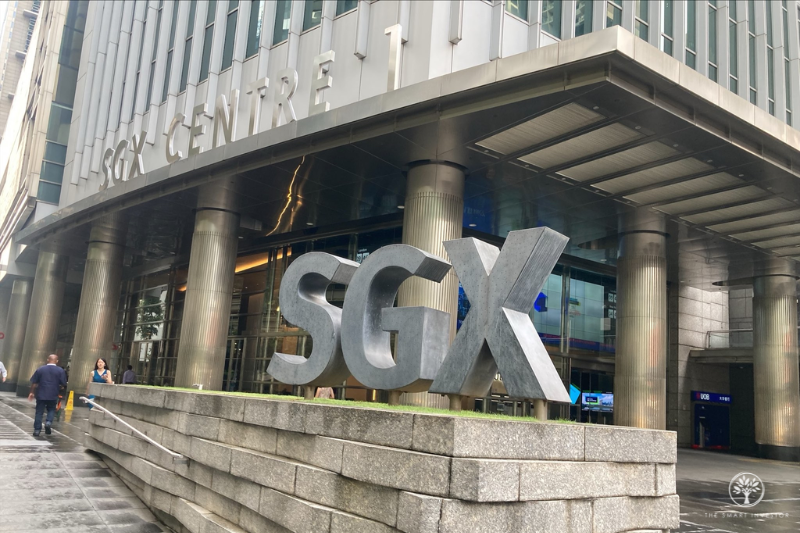
2026 Singapore IPO Outlook: Top SGX Debuts and Market Trends
The Smart Investor· 2026-01-15 06:00
Core Insights - Singapore's IPO market showed significant revival in 2025, leading Southeast Asia with US$1.6 billion raised in the first 10.5 months, primarily driven by two major REITs [1] - The resurgence is attributed to government initiatives, stronger liquidity, and improved investor appetite, indicating a positive outlook for 2026 [1] Group 1: Centurion Accommodation REIT (CAREIT) - Centurion Accommodation REIT is the first pure play, purpose-built worker and student accommodation REIT listed on the SGX, debuting with 14 properties valued at approximately S$1.8 billion [2] - Post-IPO, CAREIT acquired additional properties, increasing its portfolio value to S$2.1 billion, supported by Centurion Corporation Limited's 37 properties, indicating a strong investment pipeline [2] Group 2: NTT DC REIT - NTT DC REIT went public in July 2025, backed by Japan's NTT Group, with an IPO portfolio of six data centres valued at US$1.6 billion and an occupancy rate of 94.3% [4] - Investors can expect a 7.5% annualised DPU yield, which is competitive compared to peers, and the data centre industry is identified as a sector with significant growth potential [4][5] Group 3: Coliwoo - Coliwoo is a leading co-living space provider in Singapore, operating over 2,900 rooms with an occupancy rate exceeding 95%, catering to foreign students and the elderly [6] - The company had an IPO price of S$0.60 per share but has been trading between S$0.55 and S$0.58 since its debut, indicating stable demand in the co-living sector [7] Group 4: Info-Tech Systems - Info-Tech Systems is a cloud-based SaaS provider focusing on HRM solutions, serving over 23,000 clients with 850,000 active users, and reported a 5% YoY revenue growth to S$22.4 million for 1H2025 [9] - The company operates in a high-growth industry with a forecasted CAGR of 11.9% from 2025 to 2029, benefiting from predictable revenue streams [9][12] Group 5: Implications for Singapore's Capital Markets - The successful IPOs in 2025 suggest that Singapore is attracting mature and scalable companies across various industries, reducing reliance on REITs and banks [10] - This trend may encourage other regional companies from Southeast Asia and Asia Pacific to establish a presence in Singapore, marking a potential multi-year revitalization for the capital markets [11]
Bull vs Bear: Can Foreign Equities Repeat in 2026?
Etftrends· 2026-01-14 22:41
Core Viewpoint - The discussion centers around the performance of foreign equities in 2026, with contrasting views on whether they can replicate the strong returns seen in 2025. One analyst expresses skepticism about the sustainability of last year's gains, while the other remains optimistic about continued favorable conditions for international strategies [1][7]. Performance Metrics - The S&P World ex-U.S. Index achieved a 34.5% return as of January 9, 2026. Notable ETFs included the KraneShares Emerging Markets Consumer Technology Index ETF (KEMQ) with a 56.2% return, the Avantis International Small Cap Value ETF (AVDV) at 49.4%, and the VanEck Africa Index (AFK) with a remarkable 74.7% return in 2025 [3][4]. Market Conditions - The uncertainty surrounding the U.S. economy continues to drive investor interest in foreign equities. The U.S. job market showed weak performance, adding only 50,000 jobs in December 2025, which was below expectations and marked the lowest job growth in five years [9][10]. - Geopolitical risks are highlighted as a significant concern for foreign equities in 2026, with potential conflicts in regions like Venezuela and Ukraine posing threats to market stability [23][25][26]. Investment Opportunities - Diversification through international markets is emphasized, with both developed and emerging markets presenting strong opportunities. Investing in a mix of these markets can enhance portfolio diversification [11][19]. - The American Century Quality Diversified International ETF (QINT) is noted for its strategy of investing in large- and mid-cap stocks outside the U.S. with strong fundamentals, achieving a 38.02% return year-to-date as of December 31, 2025 [22][21]. Sector Analysis - The discussion includes a focus on sectors such as precious metals and technology, with a cautionary note on the sustainability of returns from mining-focused ETFs. The potential for growth in AI and defense sectors is also mentioned, driven by increased spending commitments from NATO members [12][18][17]. Regional Insights - Analysts express concerns about Europe's growth potential, citing slower earnings growth and structural challenges. The outlook for Asia, particularly India, is also cautious, with projections indicating a slowdown compared to 2025 [14][15]. - China's market is highlighted for its resilience and potential growth opportunities, particularly in the tech sector, with expectations for a new five-year plan to stimulate the economy [32][33].

RF Industries(RFIL) - 2025 Q4 - Earnings Call Transcript
2026-01-14 22:32
Financial Data and Key Metrics Changes - Net sales grew 23% year over year to $22.7 million in Q4 2025, with full-year revenue increasing 24% to $80.6 million compared to fiscal 2024 [4][5][19] - Gross profit margin for Q4 was 37%, exceeding the 30% target, and for the full year, it was 33%, up from 29% in the prior year [4][5][18][19] - Adjusted EBITDA for Q4 was $2.6 million, compared to $908,000 in Q4 2024, and for the full year, it was $6.1 million, a significant increase from $838,000 in fiscal 2024 [18][19][21] Business Line Data and Key Metrics Changes - The company has shifted from being a product seller to a technology solutions provider, which has diversified its customer base and end markets [6][7] - Key initiatives include deepening relationships with existing customers, leveraging successes in established markets to penetrate new ones, and expanding value propositions for channel partners [8][10] Market Data and Key Metrics Changes - Demand in targeted end markets, including aerospace, stadiums, and transportation, remains strong, with over 130 projects supported in these categories [14][15] - The aerospace and defense market continues to perform well, driven by collaboration with customers to meet stringent requirements [15] Company Strategy and Development Direction - The company aims to diversify end markets, drive customer penetration, and launch new products to sustain strong sales growth and profitability in fiscal 2026 [6][11] - The focus is on operational excellence and innovation aligned with market demand, with a disciplined approach to resource allocation [16][17] Management's Comments on Operating Environment and Future Outlook - Management acknowledges uncertainties in the overall environment but remains confident in executing the long-term strategic plan [6][12] - The expectation for fiscal 2026 is another year of growth, with a similar trajectory to fiscal 2025, despite anticipated seasonality in Q1 [28][29] Other Important Information - The company reduced net debt by $4.6 million compared to last year, with a current ratio of approximately 1.7 to 1 [21][22] - Inventory levels were managed down to $13.7 million from $14.7 million last year, reflecting operational excellence [22][23] Q&A Session Summary Question: Growth trajectory for fiscal 2026 - Management expects another year of growth, with Q1 likely being the lowest quarter of the year due to seasonality [28][29] Question: Breakdown of gross margin expansion - The gross margin increase is attributed to a combination of product mix and higher sales volume, with significant cash flow impact as sales exceed $20 million [31][32] Question: Cost increases and mitigation strategies - Cost increases are nominal and include labor and benefits, with some mitigation possible through pricing and improved sales numbers [38][39] Question: Revenue contribution from diversified markets - Approximately 50% of sales now come from telecom and wireless, with the remaining from transportation, aerospace, and other sectors [53][54] Question: Backlog and bookings analysis - Backlog is expected to hit a low point in Q1 and then increase as project-based work resumes, with Q4 bookings aligning with expectations [55][56][59]