
Reshoring

Search documents
What Apple's $100 billion US pledge really means — and what it doesn't mean
Business Insider· 2025-08-06 19:05
Group 1 - Apple plans to invest an additional $100 billion in US manufacturing, which is part of a broader strategy to align with political pressures and tariffs [1][5][11] - This new investment follows a previous commitment made in 2021 to invest $430 billion over five years and hire 20,000 employees, with some projects already underway [2][5] - The recent announcement indicates an increase in spending by $25 billion annually, building on earlier plans, although there is no mention of additional hiring [3][5] Group 2 - There are doubts about whether Apple will manufacture iPhones in the US, as recreating the necessary supply chain is considered nearly impossible [4][9] - The investment is seen as beneficial for political optics, particularly for Donald Trump, who seeks to showcase corporate investment in America [9][12] - Apple is also looking for relief from tariffs imposed by Trump, having already incurred approximately $2 billion in tariffs over the last two quarters [11][12]



WESCO International(WCC) - 2025 Q2 - Earnings Call Transcript
2025-07-31 15:00
Financial Data and Key Metrics Changes - Organic sales grew 7% in Q2 2025, following a 6% increase in Q1 2025, with preliminary July sales per workday up approximately 10% year over year [5][11][39] - Adjusted EBITDA margin increased by 90 basis points sequentially, driven by strong operating cost leverage and stable gross margin [6][12] - Adjusted EPS was $3.39, reflecting a 6% increase compared to the prior year [7][13] Business Line Data and Key Metrics Changes - CSS (Communications and Security Solutions) achieved 17% organic growth, while EES (Electrical and Electronic Solutions) grew by 6% [5][12] - Data center sales surpassed $1 billion in Q2, marking a 65% year-over-year increase, indicating strong demand driven by AI trends [5][19] - UBS (Utility and Broadband Solutions) experienced a 4% decline in sales, although investor-owned utility sales returned to growth in Q2 [22][24] Market Data and Key Metrics Changes - The utility market faced challenges but showed signs of recovery, with investor-owned utilities growing low single digits in Q2 [22][56] - Backlog increased across all business units, with CSS backlog up 36% year over year, reflecting strong demand in data center projects [36][65] - The overall data center sales represented approximately 18% of total sales in Q2, up from 10% in the previous year [19] Company Strategy and Development Direction - The company raised its full-year outlook for organic sales growth to 5% to 7%, up from a previous range of 2.5% to 6.5% [33][35] - Focus remains on executing cross-sell initiatives, managing margins, and delivering operational improvements through technology [9][38] - The company aims to prioritize deleveraging the balance sheet while remaining opportunistic regarding share repurchases and acquisitions [37][38] Management's Comments on Operating Environment and Future Outlook - Management expressed confidence in the long-term growth trajectory supported by trends in electrification, data center expansion, and infrastructure modernization [16][24] - The company acknowledged uncertainties related to tariffs and the overall economy but noted strong demand for data centers and improving electrical end markets [35][36] - Preliminary July sales indicate continued positive momentum, with expectations for mid to high single-digit growth in Q3 [39][41] Other Important Information - The company redeemed $540 million of Series A preferred stock, enhancing financial flexibility and stability [26][27] - Inventory management remains a focus, with a 60 basis point year-over-year improvement in networking capital intensity [25][37] - The company is actively managing tariff impacts and global trade uncertainties to protect margins [30][41] Q&A Session Summary Question: Clarification on pricing and demand trends - Management confirmed that no tariff impacts are included in the second half outlook, and July sales show genuine demand increase rather than just easier comparisons [45][46] Question: Insights on UBS margins - UBS margins were impacted by customer mix and increased SG&A costs, but management expects significant operating leverage as utility sales return to growth [48][50] Question: Utility business performance - Investor-owned utilities returned to growth in Q2, while public power customers are expected to follow suit in the second half of the year [56][58] Question: Data center growth metrics - Management highlighted strong visibility into data center demand, with significant growth in both white space and gray space projects [60][62] Question: Inventory gains and pricing impacts - Management indicated that inventory gains from price increases are temporary and will be reflected in future financials, but specific impacts are difficult to project [78][89]

Exco Results for Third Quarter Ended June 30, 2025
GlobeNewswire News Room· 2025-07-30 21:02
Core Viewpoint - Exco Technologies Limited reported a decline in sales and net income for the third quarter of fiscal 2025, attributing challenges to market conditions, customer delays, and trade uncertainties while maintaining a focus on strategic initiatives for long-term growth [1][2][14]. Financial Performance - Consolidated sales for Q3 2025 were $154.9 million, down 4% from $161.8 million in Q3 2024 [2][5]. - Net income for the period was $5.4 million, a decrease of 34% from $8.2 million in the same quarter last year, with earnings per share (EPS) of $0.14 compared to $0.21 [2][7]. - EBITDA for Q3 totaled $14.7 million, down 34% from $22.3 million in the prior year, with an EBITDA margin of 9.5% [11]. Segment Performance - The Automotive Solutions segment reported sales of $80.8 million, a decrease of $2.1 million from the previous year, impacted by customer delays and unfavorable vehicle mix [3]. - The Casting and Extrusion segment saw sales of $74.0 million, down 6% year-over-year, with demand for die-cast tooling weakened due to OEMs postponing product launches [4][9]. Cash Flow and Dividends - Free Cash Flow for the quarter was $20.1 million, an increase from $15.9 million in the prior year [12]. - A quarterly dividend of $0.105 per common share was announced, to be paid on September 29, 2025 [1][5]. Strategic Outlook - The company has withdrawn its Fiscal 2026 revenue, EBITDA, and EPS targets due to uncertainties surrounding global trade policies and tariffs [14]. - Exco remains optimistic about long-term growth driven by strategic initiatives, including greenfield investments and new program launches [14][16]. - The company expects to benefit from reshoring trends and compliance with USMCA rules, positioning itself favorably against non-compliant suppliers [15][16].

Tesla Battery Pivot Sparks ETF Rotation: America In, China Out?
Benzinga· 2025-07-30 16:10
Core Viewpoint - Tesla Inc. has entered a $4.3 billion battery agreement with LG Energy Solution, signaling a shift towards domestic battery production in the U.S. and reducing reliance on Chinese battery manufacturers [1] Group 1: Impact on ETFs - The new agreement is expected to enhance investor optimism regarding U.S.-focused clean energy and manufacturing ETFs, benefiting from the "Made in America" supply chains [2] - ETFs like iShares U.S. Clean Energy ETF (ICLN) may see inflows due to their exposure to companies benefiting from the Inflation Reduction Act [3] - First Trust NASDAQ Clean Edge Smart Grid Infrastructure Index Fund (GRID) could also benefit as Tesla's domestic battery production increases, positively impacting related sectors [3] Group 2: International Clean Tech ETFs - South Korean-based LGES is a key player in the clean tech space, and ETFs with international clean tech holdings may gain from the rising profile of South Korean battery manufacturers [4] - KraneShares Electric Vehicles and Future Mobility ETF (KARS) has high exposure to global EV technology and could benefit as LGES gains prominence [4] Group 3: Challenges for China-Focused ETFs - ETFs that previously relied on China's battery leadership may face challenges as Tesla's strategy diverts investment towards non-Chinese suppliers [5] - KraneShares MSCI China Clean Technology Index ETF (KGRN) may experience subdued gains or volatility due to reduced exposure to Chinese battery output [6] Group 4: Strategic Motivations Behind the Shift - Tesla's move is driven by a desire to mitigate trade risks and leverage favorable domestic policies, such as tax credits from the Inflation Reduction Act [7] - By reducing reliance on Chinese suppliers, Tesla avoids potential tariffs and trade uncertainties, prompting a possible rebalancing in investor portfolios [8] - This shift indicates a trend towards more balanced global EV supply chains, suggesting a solid investment thesis for ETFs reflecting this larger trend [9] Group 5: Conclusion - The evolving landscape of geopolitics, policy incentives, and supply chain strategies necessitates a reevaluation of ETF holdings, with Tesla's actions serving as a catalyst for change in fund management strategies [10]


Ryerson(RYI) - 2025 Q2 - Earnings Call Transcript
2025-07-30 15:00
Financial Data and Key Metrics Changes - Ryerson reported net sales of $1,170 million, an increase of 3% compared to the first quarter, with average selling prices up 2.8% and tons shipped up fractionally [16] - Gross margin during the quarter contracted by 10 basis points to 17.9%, influenced by a higher than anticipated LIFO expense of $13 million [16] - Adjusted EBITDA excluding LIFO achieved $45 million in Q2 2025, compared to $32.8 million in the prior quarter [17] Business Line Data and Key Metrics Changes - North American shipments decreased by 1.2% quarter over quarter, generating incremental market share gains, particularly in carbon long, carbon plate, and stainless long products [7] - The consumer durable sector, especially in appliances and recreational vehicles, showed relative strength, while the construction equipment sector experienced sequential volume contraction [8] - Transactional sales accounted for approximately 46% of the business, with a focus on improving service levels and lead times to gain more transactional opportunities [31][32] Market Data and Key Metrics Changes - North American industry volumes decreased by 2.1% relative to the first quarter, with Ryerson's performance slightly better than the industry average [7] - The company noted bright spots in subsector industries such as data centers and public infrastructure projects driven by federal investment spending [9] - The pricing environment is expected to remain supportive, leading to average selling price appreciation of 1% to 3% in the upcoming quarter [11] Company Strategy and Development Direction - Ryerson continues to operationalize its capital expenditures, having deployed over $650 million since 2021 to modernize its service center network [4] - The company is focused on managing non-value-added costs and precise working capital management to prepare for the next cyclical upturn [6] - Investments in processing capabilities and maintenance projects are ongoing, with a full-year capital expenditure target of $50 million [12] Management's Comments on Operating Environment and Future Outlook - Management expressed optimism about medium to long-term demand trends despite current industry downturn challenges, including high interest rates and tariff uncertainties [4] - The company anticipates a softening of volumes by 2% to 4% in the upcoming quarter, but expects pricing to remain supportive [10] - Management highlighted the importance of improving customer experience through operational efficiencies and better service models [26] Other Important Information - Ryerson ended the second quarter with $510 million of total debt and $479 million of net debt, resulting in a leverage ratio of 4.4 times, above the target range [13] - The company distributed $6 million in dividends during the second quarter and announced a similar cash dividend for the third quarter [14] - The Shelbyville facility is currently at about 67% of its volume ramp-up, with expectations for further improvements as investments mature [42] Q&A Session Summary Question: Can you discuss the North American market share growth in Carbon Long and Plate? - Management noted that investments have improved service models and reduced frictional costs, leading to better customer experiences and market share gains [24][26] Question: What was the tax benefit impact on EPS in the second quarter? - The tax benefit was due to reduced earnings and discrete state tax credits, with an expected effective tax rate of around 25% to 26% going forward [28][29] Question: What is the current split between transactional and contractual sales? - The current split is approximately 46% transactional and 54% contractual, with a focus on increasing transactional sales through improved service [31][32] Question: How is the CapEx trend compared to the $50 million target? - Management indicated that the CapEx is a function of timing, and they remain committed to the $50 million target for the year [36] Question: What are the expectations for second half cash flow and leverage ratio? - Management expects to generate cash through the balance of the year, with the leverage ratio anticipated to move back towards the target range [48]

Clean Harbors(CLH) - 2025 Q2 - Earnings Call Transcript
2025-07-30 14:02
Financial Data and Key Metrics Changes - The company achieved a consolidated adjusted EBITDA margin of 21.7%, an increase of 60 basis points year-over-year, driven by strong demand for disposal and recycling assets and lower SG&A costs [5][24]. - Total company revenue was essentially flat compared to 2024, with growth in Environmental Services offsetting a decline in Safety Kleen Sustainable Solutions (SKSS) [23]. - Adjusted free cash flow reached a record of $133 million, up nearly $50 million or approximately 60% from the prior year [26]. Business Line Data and Key Metrics Changes - Environmental Services (ES) segment adjusted EBITDA margin grew year-over-year for the thirteenth consecutive quarter, driven by increased volumes, pricing, and efficiency gains [6][7]. - Safety Kleen Environmental revenue increased by 9% due to pricing gains and growth in core service offerings, despite a slight decline in parts wash services [7]. - Technical Services saw a 4% revenue increase supported by higher incineration and landfill volumes, with incineration prices rising by 7% on a mix-adjusted basis [8]. Market Data and Key Metrics Changes - The company noted strong demand for incineration services, with utilization rates at 89%, up from 88% a year ago, indicating robust market conditions despite tariff uncertainties [8][9]. - The threat of PFAS litigation is creating urgency at various government levels, positioning the company to capitalize on a multibillion-dollar remediation opportunity [12]. Company Strategy and Development Direction - The company is focused on capital allocation strategies to generate long-term returns, with plans for both organic investments and strategic M&A opportunities [17][19]. - The company is actively evaluating bolt-on transactions and larger acquisitions to enhance its market position and unlock long-term value [19][80]. - The ongoing reshoring trend and substantial planned industrial investments in the U.S. are expected to drive greater customer activity and demand for services [20][21]. Management's Comments on Operating Environment and Future Outlook - Management expressed optimism about the demand environment, noting that customer activity is expected to remain strong despite near-term trade headwinds [20][31]. - The company anticipates continued growth in the second half of the year, supported by a solid project pipeline and favorable macroeconomic conditions [28][31]. - Management highlighted that the worst of maintenance deferrals from industrial services customers appears to be behind them, indicating potential for increased activity [10][56]. Other Important Information - The company is addressing the potential for further processing of re-refining byproducts, believing there is value to be harvested in this area [19]. - The company has a strong balance sheet with nearly $700 million in cash and short-term marketable securities, providing flexibility for future investments [25]. Q&A Session Summary Question: Broad view on the macro environment and market share - Management noted that volumes into their network are at all-time highs, with a strong project pipeline and no signs of demand slowing down [40][41]. Question: Confidence in SKSS guidance and potential risks - Management expressed confidence in achieving the $140 million EBITDA target for SKSS, citing improved collection rates and pricing strategies [55][109]. Question: Outlook for turnaround activity and major projects - Management indicated that while turnaround activity is up, the guidance does not depend on a significant ramp-up, suggesting cautious optimism for the back half of the year [56][60]. Question: Impact of tariff uncertainty on remediation projects - Management clarified that growth in projects and remediation is not correlated with tariff issues, emphasizing a strong project pipeline [63][65]. Question: Update on PFAS incineration study and regulatory guidelines - Management confirmed successful results from a PFAS study and anticipates further guidance from the EPA in the near future [68][69]. Question: Expectations for Kimball and EBITDA contribution - Management is confident in the ramp-up of the Kimball facility, expecting strong volumes and EBITDA contributions in the coming quarters [73][75]. Question: M&A opportunities and capital deployment strategy - Management highlighted a full pipeline of M&A opportunities while maintaining a disciplined approach to capital deployment based on returns [79][82]. Question: Environmental Services margins and future trends - Management expects continued margin expansion in Environmental Services, supported by pricing, labor management, and cost efficiencies [88][90].

Clean Harbors(CLH) - 2025 Q2 - Earnings Call Transcript
2025-07-30 14:00
Financial Data and Key Metrics Changes - The company achieved a consolidated adjusted EBITDA margin of 21.7%, an increase of 60 basis points year-over-year, driven by strong demand for disposal and recycling assets and lower SG&A costs [5][24]. - Q2 adjusted EBITDA was $336 million, reflecting higher earnings in the Environmental Services segment and improved corporate costs, offsetting lower contributions from Safety Kleen Sustainable Solutions (SKSS) [24][30]. - Total company revenue was essentially flat compared to 2024, with growth in Environmental Services offsetting the decline in SKSS [23]. Business Line Data and Key Metrics Changes - Environmental Services (ES) segment adjusted EBITDA margin grew year-over-year for the thirteenth consecutive quarter, driven by increased volumes, pricing, and efficiency gains [6][7]. - Safety Kleen Environmental led growth at 9%, driven by pricing gains and growth in core service offerings, despite a slight decline in parts wash services [7][8]. - Technical Services saw a 4% revenue increase supported by higher incineration and landfill volumes, with incineration prices rising 7% on a mix-adjusted basis [9]. Market Data and Key Metrics Changes - The company reported strong demand for incineration services, with utilization rates at 89%, up from 88% a year ago, excluding new facilities [9][10]. - The threat of PFAS litigation is creating urgency at various government levels to address contamination, positioning the company to lead in PFAS remediation solutions [12][13]. - The reshoring trend and planned industrial investments in the U.S. are expected to drive greater customer activity and demand for services [20][21]. Company Strategy and Development Direction - The company is focused on executing a capital allocation strategy aimed at generating long-term returns, with plans for both organic investments and strategic M&A opportunities [17][19]. - The company is enhancing its operational efficiencies and pricing strategies to drive further margin improvement, with a goal of achieving record top-line and bottom-line results in 2025 [21][30]. - The company is actively evaluating opportunities for acquisitions that align with its market position and can unlock long-term value [18][79]. Management's Comments on Operating Environment and Future Outlook - Management expressed optimism about the demand environment, noting that customer activity remains strong despite near-term trade headwinds [20][31]. - The company anticipates continued growth in the second half of the year, supported by a robust project pipeline and favorable macroeconomic conditions [29][31]. - Management highlighted that the worst of maintenance deferrals from industrial services customers appears to be behind them, indicating potential for increased activity [11][58]. Other Important Information - The company reported cash and short-term marketable securities of nearly $700 million, with a net debt to EBITDA ratio of approximately 2x [26]. - Adjusted free cash flow reached a record $133 million in Q2, up nearly $50 million from the prior year [27]. - The company expects full-year adjusted EBITDA guidance to be in the range of $1.16 billion to $1.2 billion, representing a year-over-year growth of 6% [29]. Q&A Session Summary Question: Broad view on the macro environment and market share - Management noted strong volumes and a robust sales pipeline, indicating potential market share gains despite a slow industrial macro [38][40]. Question: Confidence in SKSS guidance and refinery turnarounds - Management clarified that the back half of the year does not heavily depend on a significant ramp in industrial services turnarounds, focusing instead on servicing high-margin customers [45][46]. Question: Impact of bonus depreciation on investments - Management expects incremental cash tax savings from recent tax changes, which may drive further investment in the U.S. manufacturing sector [47][48]. Question: Outlook for SKSS and Environmental Services pricing - Management indicated that lower cost inventory will support profitability in SKSS, with a disciplined pricing improvement plan in place for Environmental Services [106][110]. Question: Update on PFAS remediation efforts - Management confirmed successful PFAS incineration study results and anticipates further regulatory guidance from the EPA [67][70].
PMGC Holdings Inc. Terminates LOI to Focus on Acquiring High-Growth CNC Precision Manufacturing Companies Serving Aerospace, Defense, and Industrial Markets
Globenewswire· 2025-07-30 11:45
Company Overview - PMGC Holdings Inc. has terminated a non-binding letter of intent to acquire a U.S.-based electronics manufacturing company, originally announced on June 9, 2025 [1] - Following a strategic review, the company has decided to focus its M&A efforts on CNC machine shops servicing aerospace, defense, and industrial sectors, aligning with its long-term growth strategy [2] Industry Outlook - The U.S. machine shop services market was estimated at approximately USD 44.7 billion in 2024, with around 17,100 companies employing over 259,000 people [3] - The global machining market is projected to grow from USD 402.6 billion in 2024 to USD 755.7 billion by 2034, at a CAGR of 6.5% [3] - The U.S. machine tools segment, primarily CNC metal-cutting, was valued at about USD 12.7 billion in 2025, expected to grow at a 3.4% CAGR from 2025 through 2030 [3] Demand and Growth Drivers - Demand from aerospace, defense, and industrial sectors is strong, with new U.S. metalworking machinery orders surging 32.6% from February to March 2025, reaching USD 515.8 million [4] - Aerospace machine shops are experiencing record-setting order volumes and capital investments due to reshoring momentum and robust defense procurement trends [4] - Structural growth in the industry is supported by regulations and incentives such as the CHIPS Act and Inflation Reduction Acts, positioning precision CNC machine shops as a critical segment for reshoring and national security [5] Acquisition Details - On June 24, 2025, PMGC announced a non-binding letter of intent to acquire a profitable, AS9100 and ISO 9001-certified CNC precision machining company in the U.S. [6] - The target company specializes in high-complexity aerospace and defense components, generating approximately USD 4.5 million in revenue and USD 500,000 in adjusted EBITDA in 2024 [7]

How one retailer is making 'made in America' work
CNBC Television· 2025-07-23 15:42
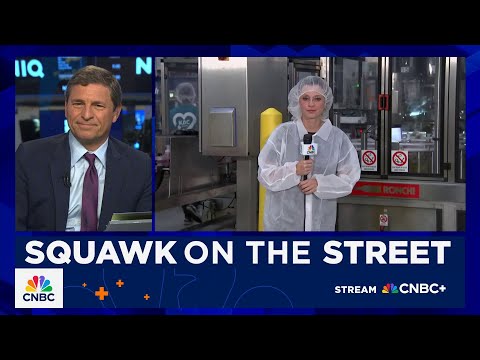
Reshoring Strategy & Supply Chain - A retailer (Bath and Body Works) has been reshoring its supply chain to the United States for over a decade [1] - 80% of the retailer's products are made in the United States, with about half of that production in central Ohio [3] - The company's foaming hand soap production timeline decreased from over 3 months and 13,000 miles to 3-4 weeks and less than 11 miles [4] - The retailer produces approximately 250 million units annually at one facility for Bath and Body Works [2] Investment & Automation - The creation of Beauty Park involved hundreds of millions of dollars of investment from vendors and government [5] - Automation plays a significant role in the manufacturing process, though human quality control and chemists are also essential [2][7][10] Replicability & Industry Applicability - Replicating this reshoring model is potentially more feasible for consumer packaged goods than for apparel or electronics due to raw materials and labor factors [6][7] - Freight costs make local production more economically sensible for heavier products [8]

Thermo Fisher Scientific(TMO) - 2025 Q2 - Earnings Call Transcript
2025-07-23 13:32
Financial Data and Key Metrics Changes - Revenue for Q2 grew 3% to $10.85 billion, with adjusted operating income increasing 1% to $2.38 billion [6][28] - Adjusted operating margin was 21.9%, and adjusted EPS was $5.36 per share, exceeding guidance [7][26] - Free cash flow was $1.5 billion after $645 million in net capital expenditures, with cash and short-term investments totaling $6.4 billion [30][31] Performance by Business Segment - Life Science Solutions reported a 6% increase in revenue, with organic growth of 4%, driven by bioproduction [32] - Analytical Instruments saw a 3% decline in reported revenue, with organic growth down 4%, primarily due to tariffs and muted demand [34] - Specialty Diagnostics revenue grew 2% year-over-year, with adjusted operating margin at 27% [35] - Laboratory Products and Biopharma Services segment reported a 4% increase in revenue, with organic growth of 3% [36] Market Data and Key Metrics Changes - North America and Europe experienced low single-digit growth, while Asia Pacific declined low single digits, with China seeing a high single-digit decline [27] - The academic and government market faced mid-single-digit revenue decline due to customer hesitancy [9] Company Strategy and Industry Competition - The company focuses on high-impact innovation, trusted partner status, and a strong commercial engine to drive growth [10][12] - Recent product launches include advanced mass spectrometers and a cryo transmission electron microscope, enhancing competitive positioning [11] - The company is actively managing costs and navigating tariff impacts through its PPI business system [18][39] Management's Comments on Operating Environment and Future Outlook - Management expressed confidence in long-term growth drivers, expecting organic revenue growth of 3% to 6% in 2026 and 2027 [21][23] - The company anticipates a gradual improvement in end markets, particularly in pharma and biotech, with a focus on customer collaboration [20][22] - Management highlighted the importance of maintaining strong relationships with customers to navigate current challenges [12][71] Other Important Information - The CFO announced plans to retire in March 2026, with a transition to the current VP of Financial Operations [46][48] - The company is on track to close the acquisition of Silventum's purification and filtration business by year-end [16][19] Q&A Session Summary Question: What is the long-term growth outlook? - Management expects a long-term organic revenue growth of 7% plus, driven by strong industry fundamentals and share gains [54][59] Question: How will margin expansion be achieved? - Margin expansion of 50 to 70 basis points is expected, leveraging existing tools and PPI capabilities [60][63] Question: How is the biopharma sector responding to macro factors? - The biopharma sector shows broad strength, with strong growth in bioproduction and pharma services despite macro challenges [67][70] Question: What is the outlook for the Analytical Instruments business? - The Analytical Instruments segment is impacted by muted conditions in academic and government sectors, but new product launches are expected to drive share gains [73][81] Question: How is the company managing customer purchasing decisions amid reshoring? - There is heightened interest in expanding US manufacturing capacity, and customers are not pausing purchases in bioproduction [78][80] Question: What is the funding outlook for academic and government sectors? - There is bipartisan support for funding in life sciences, and budgets are expected to stabilize, moving from a headwind to growth [89][94]
