
Interest Rates

Search documents
X @Bloomberg
Bloomberg· 2025-08-14 17:36
The dollar is set for a toxic mix of a Federal Reserve cutting interest rates in the face of rising annual inflation, a damaging scenario last seen nearly two decades ago, according to Bank of America https://t.co/gQqdlvdJq8 ...

'Fast Money' traders debate Treasury Sec. Bessent's call to lower Fed rates impact on the markets
CNBC Television· 2025-08-14 15:42
Interest Rate Cut Expectations and Market Impact - Treasury Secretary suggests the Fed should cut rates by 50 basis points next month, with an ultimate reduction of 150 to 175 basis points [1] - Small cap Russell 2000 saw the biggest gains, indicating potential rebound in out-of-favor groups and sectors if rates drop [2] - Market had previously priced in six rate cuts for 2025, but the S&P was significantly lower at that time [3] - Lower rates could benefit commercial real estate, which has been hurt by higher rates [6] - Lower rates lead to higher multiples and stock prices due to discounted cash flow [6] Labor Market and Economic Growth - Treasury Secretary's reasons for rate cuts include a softening job market [3] - There's a contradiction in the administration's stance on the job market revisions [4] - Unemployment is at 42%, higher than last year's below 4% [10] - GDP growth in the first half of 2024 was approximately 125% [10] - Tariffs of 15% or 30% on imports, especially from China, could weigh on growth [11] Investment Strategies - Equities are expected to continue to rally in a 150 basis point cut environment [14] - A barbell strategy is suggested, focusing on high multiple tech stocks and value stocks [14] - Financials and healthcare sectors are identified as potential areas for investment [15]

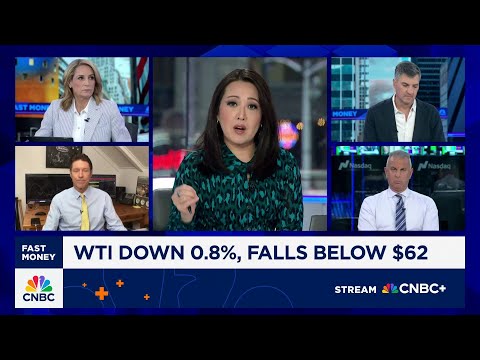
The Fed has to accept disinflation has stalled out, says BNY's Vincent Reinhart
CNBC Television· 2025-08-14 15:40
Monetary Policy Outlook - The market anticipates the Federal Reserve (Fed) will cut interest rates by 25 basis points at the September meeting [2] - The Producer Price Index (PPI) data reinforces expectations of a rate cut, focusing on the magnitude rather than the likelihood [2] - The Fed's decision to cut rates is primarily driven by concerns about employment, despite stalled disinflation [2] Dual Mandate Considerations - The Fed's weighting of its dual mandate (employment and inflation) depends on proximity to goals; with inflation closer to target, employment concerns gain importance [4][5] - Historically, the Fed tends to act more decisively when concerned about employment [4] - Some Fed speakers express reservations about inflation remaining a persistent problem [6] Risks and Uncertainties - Tariffs potentially seeping into prices could cause inflation to rise, complicating the Fed's policy decisions [8] - The Fed is willing to accept stalled disinflation to a certain extent, but dislikes it, tempering enthusiasm for rate cuts [9]

X @Crypto Rover
Crypto Rover· 2025-08-14 14:42
There’s now a 100% chance the FED will cut rates in September.Expect Bitcoin and Altcoins to go parabolic! https://t.co/e4St9gOaqG ...
X @Bloomberg
Bloomberg· 2025-08-14 12:50
Treasuries moved lower after a reading of inflation at the production level came in stronger than expected, prompting traders to pare bets the Fed will cut interest rates in September https://t.co/Sqp8ihu1FN ...
X @Investopedia
Investopedia· 2025-08-14 12:30
Financial markets are pricing in a 100% chance the Federal Reserve is about to cut interest rates when its policy committee next meets in September, but in recent speeches, several policymakers didn't seem so sure. https://t.co/5qxTLxRJsn ...
X @Anthony Pompliano 🌪
Anthony Pompliano 🌪· 2025-08-14 11:31
Inflation is under 2% and interest rates are too high. ...
X @Bloomberg
Bloomberg· 2025-08-14 04:14
Turkey’s central bank will announce its year-end inflation forecast on Thursday, with the magnitude of any upward revision set to shape expectations for the course of interest rates https://t.co/SXnZBbch71 ...
全球宏观下一步:细节为何重要 _ What's Next in Global Macro_ Why the Details Matter
2025-08-14 02:44
Summary of Key Points from the Conference Call Industry Overview - The discussion primarily revolves around the **U.S. economy**, focusing on the implications of **tariffs** and **inflation** on market dynamics and Federal Reserve policy decisions. Core Insights and Arguments 1. **Market Reactions to FOMC Meeting**: The market's pricing for the September FOMC meeting fluctuated significantly, with initial expectations for a rate cut shifting after Chair Powell's comments, indicating ongoing uncertainty in economic conditions [2][5]. 2. **Nonfarm Payrolls Impact**: The July nonfarm payrolls report showed a downward revision of 258k for May and June, the largest revision outside of the Covid period, altering the market's narrative regarding the U.S. economy [2][5]. 3. **Inflation Trends**: The June CPI indicated the onset of tariff-driven inflation, with effective tariff rates rising from 8.7% in May to 8.9% in June, while announced rates exceed 15%. This discrepancy is attributed to supply chain dynamics and timing of tariff applications [3][4]. 4. **Inventory Management Effects**: Companies, particularly in the auto sector, are delaying price increases until new inventory arrives, which may further postpone inflation pass-through to consumers [4]. 5. **Fed's Balancing Act**: The Federal Reserve's decision in September will need to balance inflation pressures against employment data, with tariff uncertainties continuing to complicate the economic outlook [5][7]. 6. **Upcoming Economic Data**: The importance of forthcoming CPI and jobs data is emphasized, as they will be critical in shaping the Fed's decisions regarding interest rates [2][7]. Additional Important Insights 1. **Sector-Specific Inflation**: The analysis indicates that about 80% of the surge in "front loading" inventory in Q1 was concentrated in just seven product categories, suggesting that inflationary pressures may not be as widespread as initially thought [4]. 2. **Consumer Sentiment**: The University of Michigan's survey showed long-run inflation expectations declining to 3.4% in July, with consumer sentiment rebounding but still below last year's levels [22]. 3. **Global Economic Indicators**: Other global economic indicators, such as China's broad credit growth and Japan's GDP forecasts, are also mentioned, reflecting a broader context of economic performance [9][19][20]. This summary encapsulates the critical points discussed in the conference call, highlighting the interplay between tariffs, inflation, and Federal Reserve policy in the current economic landscape.
X @Investopedia
Investopedia· 2025-08-13 20:01
U.S. equities edged higher at midday, with the S&P 500 and Nasdaq adding to their record closes, on optimism the Federal Reserve will lower interest rates next month. https://t.co/RoX2DOHFM9 ...