生态治理

Search documents
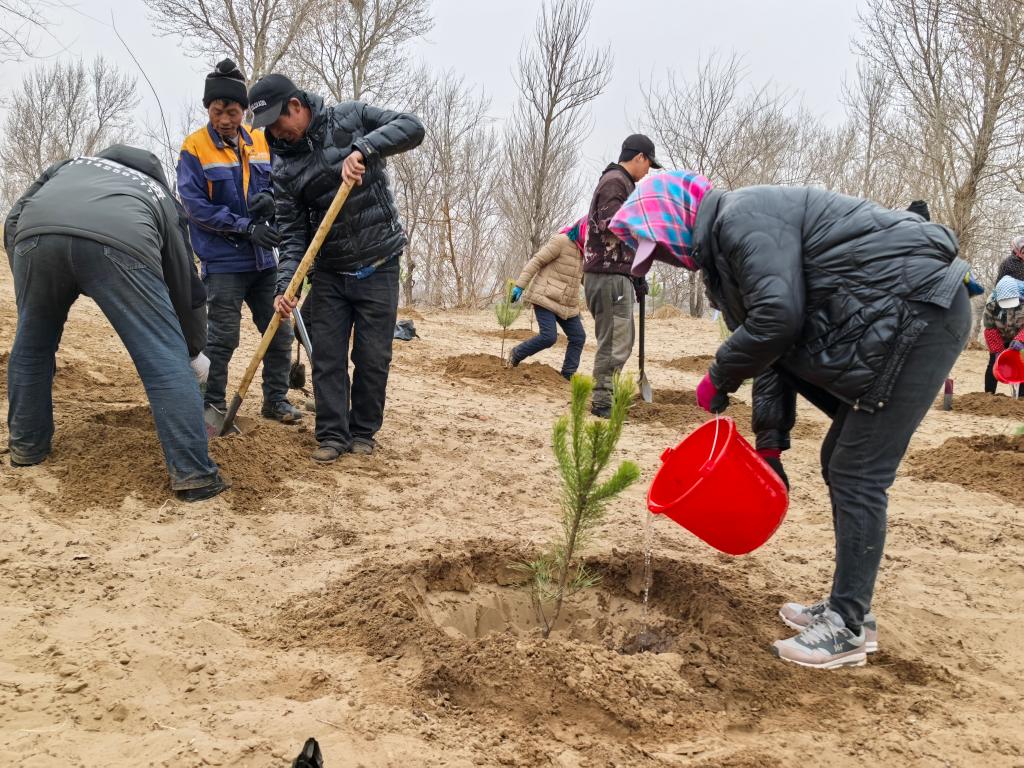
科尔沁沙地植绿见闻:沙子踩实了 树根才能扎得更牢
Xin Hua Wang· 2025-04-05 22:44
Group 1 - The article highlights the ongoing efforts in afforestation and desertification control in Liaoning Province, particularly in the Changwu County area, where local residents are actively planting trees to combat sand encroachment [1][2][4] - The afforestation project involves various stakeholders, including local villagers, companies, and government initiatives, aiming to restore degraded land and promote ecological sustainability [4][5] - The integration of economic benefits with ecological restoration is emphasized, with initiatives such as the development of traditional Chinese medicine and other ecological industries in the sandy areas [4] Group 2 - The article mentions specific projects, such as the 90,000 acres of integrated protection and restoration project undertaken by Changwu County Senlai Forestry Co., which focuses on degraded forest restoration and forest maintenance [4] - The establishment of a "thousand-mile sand-blocking belt" in Liaoning Province, spanning 1,044 kilometers, aims to mitigate wind erosion, with significant ecological restoration tasks planned for the year [4] - The local community's involvement in afforestation is underscored, with individuals like Hou Gui planting over 200,000 trees on 2,400 acres of sandy land, showcasing the commitment of local residents to environmental restoration [2][4]

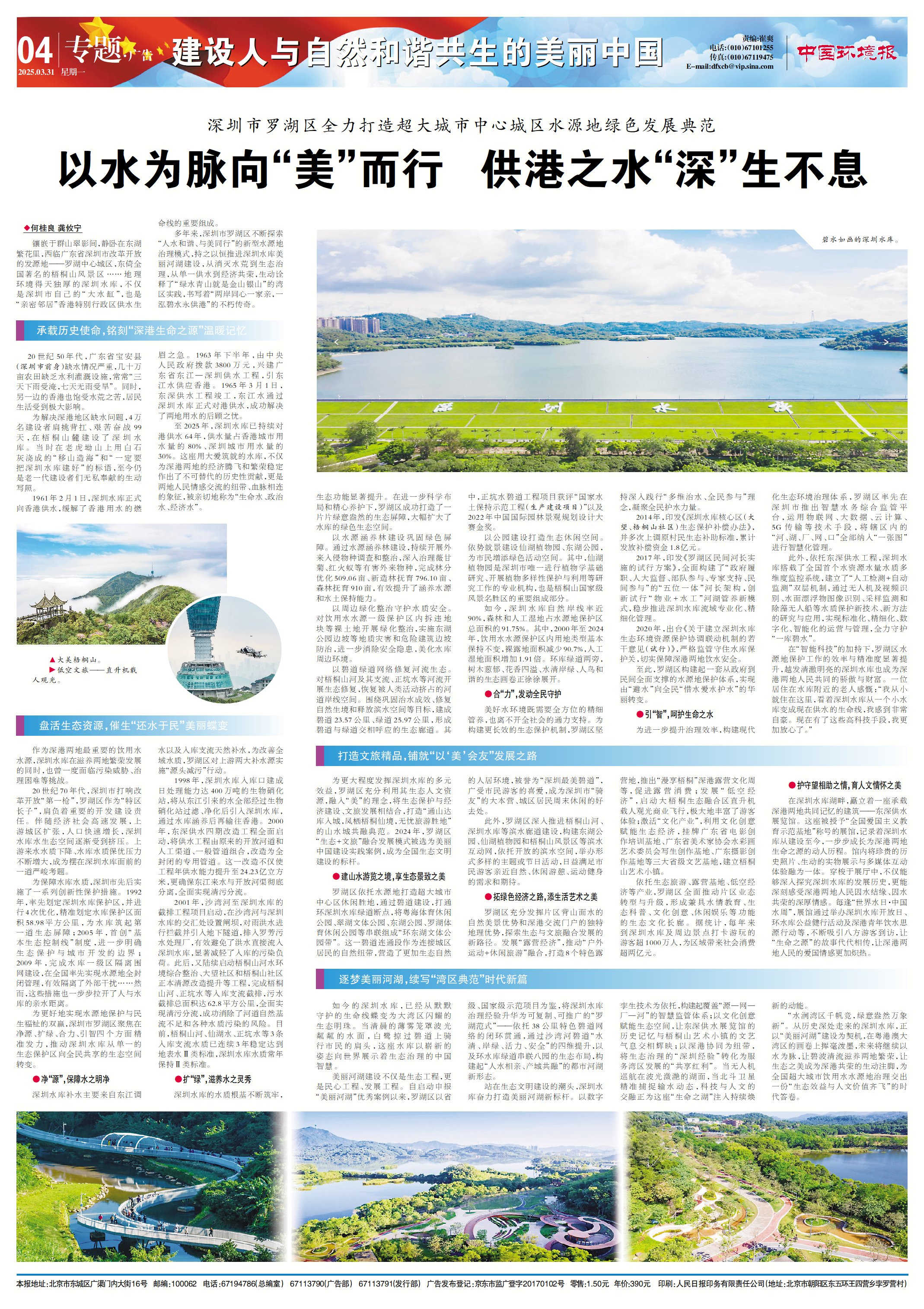
以水为脉向“美”而行 供港之水“深”生不息——深圳市罗湖区全力打造超大城市中心城区水源地绿色发展典范
Zhong Guo Huan Jing Bao· 2025-03-31 01:46
Core Viewpoint - The Shenzhen Water Reservoir serves as a vital water source for both Shenzhen and Hong Kong, embodying the concept of harmonious coexistence between humans and nature while promoting ecological and economic prosperity [1][3][15]. Group 1: Historical Context - The Shenzhen Water Reservoir was constructed in the 1950s to address severe water shortages in both Shenzhen and Hong Kong, with 40,000 builders working tirelessly for 99 days to complete it [2][18]. - Since its official supply to Hong Kong began on February 1, 1961, the reservoir has become crucial, providing 80% of Hong Kong's urban water supply and 30% of Shenzhen's [3][18]. Group 2: Ecological and Environmental Initiatives - The reservoir has undergone significant ecological improvements, including the establishment of a green ecological barrier and the implementation of measures to combat invasive species [6][23]. - Various projects have been initiated to enhance water quality, including the construction of a biological nitrification station and the transformation of water supply systems to ensure clean water delivery [21][22]. Group 3: Community and Economic Development - The integration of ecological protection with community welfare has led to the transformation of the reservoir from a mere ecological protection zone to a shared ecological space for the public [20][27]. - The development of recreational areas and cultural tourism around the reservoir has attracted over 10 million visitors annually, generating significant social consumption [33][34]. Group 4: Technological Advancements - The introduction of smart water management systems utilizing IoT, big data, and 5G technology has improved the efficiency and precision of ecological governance [28][36]. - The establishment of a multi-dimensional monitoring system for water resources has enhanced the protection of water quality and the overall management of the reservoir [28][36]. Group 5: Future Vision - The Shenzhen Water Reservoir aims to set a benchmark for ecological civilization construction, promoting a model that combines ecological benefits with cultural values [36][37]. - The ongoing efforts to enhance the reservoir's ecological and cultural significance are expected to contribute to the prosperity of both Shenzhen and Hong Kong, reinforcing their interconnectedness [37].
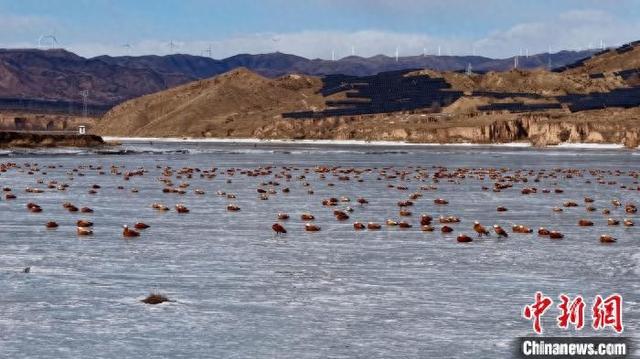
山西天镇生态治理“活名片”:赤麻鸭从“稀客”变“常客”
Zhong Guo Xin Wen Wang· 2025-03-24 13:15
山西天镇生态治理"活名片":赤麻鸭从"稀客"变"常 客" 中新网大同3月24日电 (杨佩佩 杨静 师小淦)春分时节,随着气温回暖,山西大同天镇南洋河湿地迎来一 群特殊的"客人"——赤麻鸭。随着生态环境持续向好,当地候鸟数量从过去的几十只增至上千只,赤麻 鸭从"稀客"变"常客",成为天镇生态治理"活名片"。 清晨,当第一缕阳光洒在洋河水域,平静的水面上便泛起了层层金色的涟漪。此时,休息了一夜的赤麻 鸭群沿河道向上游飞行,开启觅食与活动。它们时而排成整齐队列,时而变换队形,在空中自由翱翔, 场面蔚为壮观。 赤麻鸭是国家二级保护动物,属迁徙性鸟类。每年春季,北方繁殖地冰雪初融时,它们便从南方越冬地 飞往北方。南洋河湿地作为迁徙途中的重要停歇地,为赤麻鸭提供了能量补给和短暂休憩的场所。 随着气温 回暖,山西大同天镇南洋河湿地迎来一群特殊的"客人"——赤麻鸭。 师小淦 摄 南洋河湿 地作为迁徙途中的重要停歇地,为赤麻鸭提供了能量补给和短暂休憩的场所。 师小淦 摄 近年来,天镇坚持生态优先,统筹推进南洋河流域综合治理。通过建设22公里防洪堤、700余亩生态 林、1.4万亩绿化湿地及蓄水坝等工程,显著改善水生态环境。 同时 ...