Autonomous driving

Search documents
Tesla releases detailed safety report after Waymo co-CEO called for more data
TechCrunch· 2025-11-14 21:57
Core Insights - Tesla has provided detailed data on the performance and safety of its Full Self-Driving (FSD) software, claiming significant improvements over national averages in collision rates [1][10] - The data indicates that Tesla FSD users experience major collisions every 2.9 million miles and minor collisions every 986,000 miles, compared to national averages of 505,000 miles and 178,000 miles respectively [10] Summary by Sections Tesla's Data Release - Tesla's new website section claims that FSD users drive approximately 5 million miles before a major collision and 1.5 million miles before a minor collision [1] - The company has been criticized for its previous safety reports, which focused on Autopilot rather than the more advanced FSD software [3][9] Comparison with National Averages - According to the National Highway Traffic Safety Administration (NHTSA), the average driver experiences a major collision every 699,000 miles and a minor collision every 229,000 miles [2] - Tesla's interpretation shows that FSD users are significantly safer than the national average, with a major collision rate that is about 5.7 times better than the national average [10] Definition of Collisions - Tesla defines "major collisions" as incidents where airbags are deployed, and includes crashes where FSD was active within five seconds before the event [11][12] - The company emphasizes that its reported collision rates capture both active and disengaged scenarios of the FSD system [12] Future Data Updates - Tesla plans to update its safety data quarterly, reflecting a rolling twelve-month aggregation of miles and collisions [13] - The company will not release injury rates but will focus on collision frequency and airbag deployment rates as proxies for collision severity [14]




3 Original Auto Equipment Stocks Navigating a Complex Market Landscape
ZACKS· 2025-11-14 14:36
Core Viewpoint - The Zacks Automotive - Original Equipment industry is expected to benefit from a combination of new tax incentives for car buyers, rising demand for advanced electronic systems, and strategic partnerships among key players in the sector [1][3][4]. Industry Overview - The Zacks Automotive - Original Equipment Industry includes companies that design and produce passive safety systems, driveline technologies, and metal forming technologies for various types of vehicles, including electric and hybrid models [2]. - The industry also provides equipment financing and leasing solutions, primarily through third-party funding arrangements [2]. Factors Influencing Outlook - The Trump administration's tax incentive allows qualifying car buyers to deduct up to $10,000 on interest paid for new U.S.-assembled vehicles, potentially increasing vehicle demand and the need for related equipment [3]. - Demand for advanced electrical and electronic systems, such as ADAS and infotainment features, is increasing, allowing OEMs to supply more high-value components and improve profitability [4]. - Protectionist tariffs, including a 25% tariff on imported engines and transmissions starting May 2025, are raising costs for auto equipment manufacturers [5]. Industry Performance - The Zacks Automotive - Original Equipment Industry holds a Zacks Industry Rank of 89, placing it in the top 37% of over 250 Zacks industries, indicating positive near-term prospects [6][7]. - Despite this ranking, the industry has underperformed the S&P 500 and its sector over the past year, returning 2.9% compared to the S&P 500's 19.1% and the broader sector's 24.5% [9]. Valuation Metrics - The industry is currently trading at an EV/EBITDA ratio of 17.33X, which is lower than the S&P 500's 18.59X and the sector's 23.51X [13]. - Over the past five years, the industry's EV/EBITDA ratio has ranged from a high of 22.17X to a low of 8.07X, with a median of 13.51X [14]. Notable Companies - **Magna International Inc. (MGA)**: A global automotive supplier focusing on innovation and technology development, with a Zacks Rank of 2 (Buy) and an average earnings surprise of 7.67% [16][17]. - **QuantumScape Corporation (QS)**: A battery developer for electric vehicles, known for its solid-state battery technology, with a Zacks Rank of 2 and a projected EPS growth of 21.3% for 2025 [21][22]. - **Luminar Technologies, Inc. (LAZR)**: A company specializing in autonomous vehicle sensors, with partnerships with major automakers and a Zacks Rank of 2, projecting a 52.2% EPS growth for 2025 [25][26].




Tesla Rival Li Auto To Report Q3 Earnings On November 26 Amid Hesai Deal, Overseas Expansion - Li Auto (NASDAQ:LI)
Benzinga· 2025-11-14 11:24
Core Insights - Li Auto Inc. will report its third-quarter earnings on November 26, with an earnings call scheduled for 7:00 AM Eastern Time on the same day [1][2] - The company has signed an agreement with Hesai Technology to be its sole supplier of LiDAR technology, which is essential for advanced driver assistance and autonomous driving in all upcoming models [2] - In October, Li Auto delivered over 31,767 vehicles, bringing its lifetime deliveries to 1,462,788 vehicles, and opened its first retail location in Uzbekistan [3] Industry Context - Competitors like Xpeng Inc. are expanding into new markets, including Cambodia, and have recently entered five European markets [4] - BYD Co. Ltd. reported that the UK has become its largest overseas market, indicating growth for Chinese EV manufacturers, while Tesla has seen a decline in demand in both Europe and China [5] - Li Auto's stock price decreased by 0.65% to $19.80 in pre-market trading, following a 0.45% decline during regular trading [5]

Kia Marks Milestone with Establishment of Future PBV Production Hub in Korea
Prnewswire· 2025-11-14 08:02
Core Insights - Kia Corporation has completed its Hwaseong EVO Plant East and commenced construction of the EVO Plant West, establishing a dedicated Platform Beyond Vehicle (PBV) production hub in Korea [1][2][6] - The total investment for the PBV facilities is approximately KRW 4 trillion, covering a site of 296,882 square meters, with a combined annual production capacity of 250,000 PBV units [3][6] - The EVO Plant East will produce 100,000 PV5 units annually, while the EVO Plant West is set to manufacture 150,000 PV7 and other PBV units [6] Investment and Production Capacity - Kia aims to leverage the new facilities to drive global expansion in the PBV market, positioning the Hwaseong EVO Plant as a strategic hub [4][6] - The company is focusing on the electrification of light commercial vehicles as a key opportunity for future business growth in the PBV sector [5][6] Collaborative Ecosystem - A PBV Conversion Center will be established for co-development of specialized PBV models with strategic partners, fostering a collaborative ecosystem in the PBV space [6]


Tesla's Robotaxi Revolution Is Still Downloading — Waymo's Already In The Fast Lane
Benzinga· 2025-11-13 13:27
If you're stuck behind a polite, speed-limit-loving car on a California freeway, there's a good chance it's Waymo — the robotaxi that's now officially conquering highways across San Francisco, Los Angeles and Phoenix. And while the Tesla Inc (NASDAQ:TSLA) CEO Elon Musk keeps promising a self-driving future that spreads "faster than any technology ever," Waymo is quietly doing the unglamorous thing: actually launching it.Track TSLA stock here.Waymo Expands Zip Codes While Tesla Expands TimelinesWaymo isn't j ...

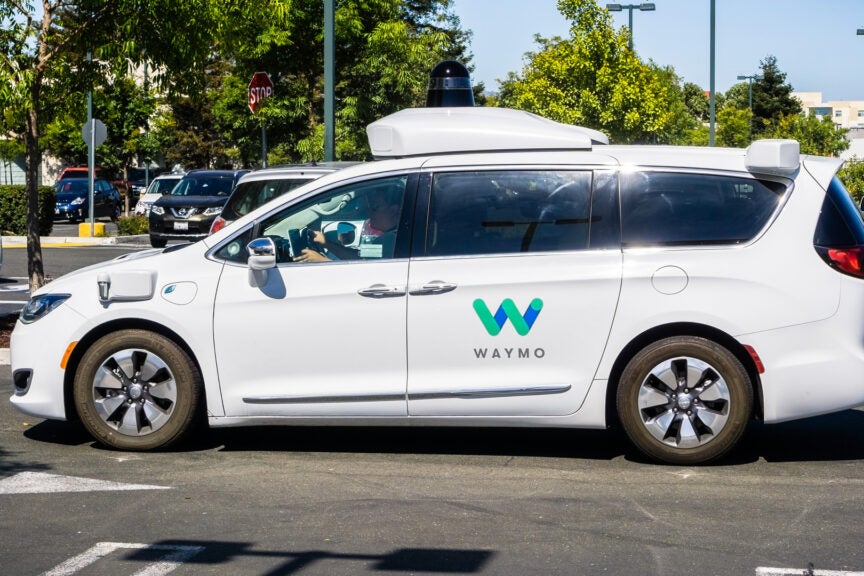
Waymo Now Operates On More Highways Than Tesla Robotaxi With New Expansion, But There's One Key Difference - Alphabet (NASDAQ:GOOG)
Benzinga· 2025-11-13 07:42
Group 1 - Tesla's Robotaxi ambitions are challenged by Waymo's expansion of self-driving cabs on highways in multiple cities [1] - Waymo announced its service expansion to operate on highways in Phoenix, Arizona, and the San Francisco Bay Area, including curbside service at San Jose Mineta International Airport [2] - Waymo will operate its service on freeways without an onboard safety driver, inviting users to sign up for freeway trips [2] Group 2 - Tesla's CEO Elon Musk stated that Robotaxis in Austin, Texas, will go driverless by the end of the year, currently operating with an onboard safety operator [3] - Musk revised Tesla's expansion target to 8-10 major cities across the U.S., down from an earlier goal of serving over 50% of the U.S. population with Robotaxis [4] - Waymo CEO Tekedra Mawakana emphasized the importance of transparency for road safety, criticizing other companies for not doing enough [5] Group 3 - Baidu's Robotaxi service Apollo Go reached 250,000 autonomous rides per week and has completed over 140 million driverless miles [6]

Waymo brings paid robotaxi rides to highways
Youtube· 2025-11-12 18:02
Core Insights - Whimo has expanded its operations to freeways in San Francisco, Phoenix, and Los Angeles, marking a significant step in the evolution of autonomous driving [1][3] - The shift to freeway driving is crucial for making autonomous vehicles mainstream, as it allows for longer, more efficient trips compared to urban driving [2][3] - Whimo's operational model focuses on building a network rather than just a map of test zones, which could lead to a national driverless network [3][4] Company Performance - Whimo has logged over 100 million miles of driving, significantly outpacing Tesla's 1 million miles, highlighting its advanced operational capabilities [4] - Alphabet, Whimo's parent company, has a forward PE ratio of 28, contrasting sharply with Tesla's 240, indicating that Whimo is delivering on its promises at a larger scale [5][4] Industry Context - The transition to freeway driving represents a major economic shift for the autonomous driving industry, as it enhances the value of rides and reduces inefficiencies associated with urban driving [2][3] - The successful implementation of autonomous driving on highways is seen as a critical milestone, with high stakes involved in ensuring safety and technology reliability [7][8]
Waymo's Driverless Rides Are Hitting Freeways, Starting in These Cities
CNET· 2025-11-12 16:33
Core Insights - Waymo is expanding its driverless rides to include freeway routes in San Francisco, Phoenix, and Los Angeles, allowing for quicker travel to destinations [1][2] - The service will initially be available to customers who opted for early access, with plans for gradual rollout to more users [3] Expansion of Services - Waymo currently operates its robotaxi service in five cities, with plans for further expansion [2] - The service area in the San Francisco Bay Area now covers over 260 square miles, including San Jose Mineta International Airport [10][11] - Waymo has received a pilot permit for commercial operations at San Francisco International Airport, which will be rolled out in phases [12][13] Technology and Safety - Waymo has been testing freeway rides for over a year, focusing on system safety and reliability [2][7] - The autonomous vehicles are designed to handle freeway driving without human intervention, with the ability to navigate ramps and change lanes [4][8] - The Waymo Driver is noted for not getting tired or losing focus, which is a significant advantage in high-speed driving scenarios [8] Challenges and Testing - Freeway driving presents unique challenges, and Waymo has utilized closed-course driving and simulation testing to prepare its system for various scenarios [9] - The company emphasizes that critical events occur less frequently on freeways, making it essential to train the system for high-speed situations [9] Competitive Landscape - With the expansion of freeway rides, Waymo is increasingly sharing the roads with other self-driving companies like Nuro and Amazon-owned Zoox, which have also begun public rides [14]
Polestar(PSNY) - 2025 Q3 - Earnings Call Transcript
2025-11-12 14:00
Financial Data and Key Metrics Changes - Retail sales volume increased by 36% to over 44,000 cars in the first nine months of 2025 [9] - Revenue grew by 49% to approximately $2.2 billion in the first nine months of 2025 [10] - Adjusted EBITDA loss improved by 8% to $561 million [12] - Net loss for the third quarter was $365 million, with a gross margin of negative 6% [14] Business Line Data and Key Metrics Changes - Retail sales in the third quarter grew by 13% year-on-year, with revenue increasing by 36% to $748 million [13] - Polestar 3 and Polestar 4 accounted for 65% of retail sales [9] - Carbon credit sales amounted to $104 million under the new EU pooling agreement, a significant increase from below $1 million in the same period in 2024 [11] Market Data and Key Metrics Changes - Europe remains the main market, representing over 75% of global deliveries, with notable growth in Belgium (40%), Netherlands (37%), Germany (46%), Norway (63%), Sweden (41%), and the U.K. (100%) [5] - South Korea showed exceptional growth of 430% [6] - The U.S. market represented only 8% of retail sales for the first nine months of 2025, down from 16% in 2024 [10] Company Strategy and Development Direction - The company is focusing on transforming commercial operations, increasing retail footprint, and improving operational efficiency [4] - A shift in platform strategy was announced, utilizing group technology platforms for future models [6] - The company plans to continue optimizing operations and expects to end the year with approximately 2,000 employees, down from 2,500 [7] Management's Comments on Operating Environment and Future Outlook - Management acknowledged significant external headwinds, including tariff and pricing pressure impacting profitability [9] - The company aims to drive growth through an active selling model and leverage its attractive model lineup [15] - Future guidance is expected to be provided in early 2026 [8] Other Important Information - The company raised $200 million in new equity from PSD Investment Limited [15] - A reverse stock split is planned to change the ratio of American depositary shares to ordinary shares [15] Q&A Session Summary Question: Can you help us bridge the walk for gross margin? - Management noted ongoing pricing pressure and higher production costs due to duties, alongside an adverse mix effect from sales [18][19] Question: Can you comment on OPEX spending trends? - Management indicated a significant decrease in fixed costs, driven by optimized marketing expenses and headcount reduction [21][22] Question: How is the company adapting its business plan in light of the new EU-US trade agreement? - Management discussed local production setups and the introduction of Polestar 4 to the U.S. market, which has lower duties [26] Question: What is the new effective rate of interest on Polestar's debt portfolio? - Management confirmed that most of the interest is floating, with no significant change to the previous rate [28] Question: Can you provide an update on capital needs and liquidity? - Management reported a monthly cash burn of around $136 million, with expectations for increased cash burn due to legacy CapEx [33] Question: What opportunities is Polestar pursuing in autonomy? - Management highlighted partnerships with Mobileye and the importance of balancing performance with higher levels of autonomy [36][38]

5 Reasons to Buy Uber Technologies Stock Like There's No Tomorrow
The Motley Fool· 2025-11-11 09:15
Core Viewpoint - Uber Technologies has seen a 20% increase in stock value over the past year, despite concerns regarding competition from autonomous ride-hailing services like Waymo and Tesla's Robotaxi [1][2]. Group 1: Market Position - Uber holds an estimated 75% market share in the U.S. ride-hailing sector and approximately 25% globally, making it a dominant player in the industry [3]. - The brand name "Uber" has become synonymous with ride-hailing, similar to how "Kleenex" is associated with facial tissue, providing a significant competitive advantage [4]. Group 2: Network Effects - Uber's large user base creates a strong network effect, where more users attract more drivers, leading to shorter wait times and better market coverage [5]. - The company has expanded its services beyond ride-hailing to include food delivery, advertising, grocery delivery, parcel courier services, rental cars, and a subscription program, enhancing its revenue streams [6][13]. Group 3: Financial Performance - Uber is transitioning from a cash-burning phase to becoming a cash cow, with management converting over $0.17 of each revenue dollar into free cash flow [7][9]. - The company has begun share repurchases, which can drive per-share profits higher as the share count decreases [9]. Group 4: Autonomous Driving Strategy - Uber is actively pursuing opportunities in autonomous driving, having partnered with Nvidia to develop level-4 autonomous vehicle technology, aiming to build a fleet of 100,000 vehicles by 2027 [10][11]. - While competitors like Waymo and Tesla have established autonomous technology, Uber's existing user network and data from billions of trips provide a significant advantage in scaling its autonomous capabilities [12][14]. Group 5: Valuation - Despite recent stock gains, Uber is trading at a free cash flow yield of about 4.4%, the highest since going public, making it an attractive investment compared to other tech stocks [16][17].