Consumer Sentiment

Search documents
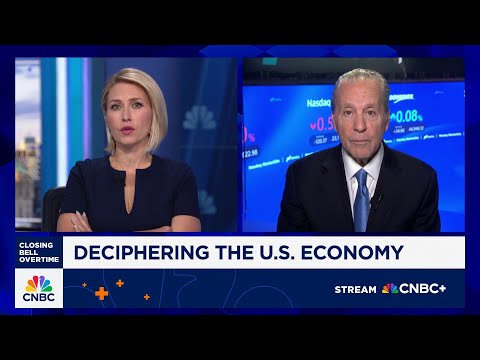
It's not an easy time to be at the Federal Reserve, says fmr. NEC Director Gene Sperling
CNBC Television· 2025-08-15 20:57
And this week's economic reports haven't made it easy to decipher the state of the economy. This morning's retail sales showed consumers kept spending in July, but consumer sentiment for the month month dropped to its lowest level since May. These reports come after yesterday. We saw wholesale prices rising far more than expected, but CPI was lighter than expectations, at least on the top line. Joining us now is Gene Sperling, former director of the National Economic Council under President Obama and Presid ...

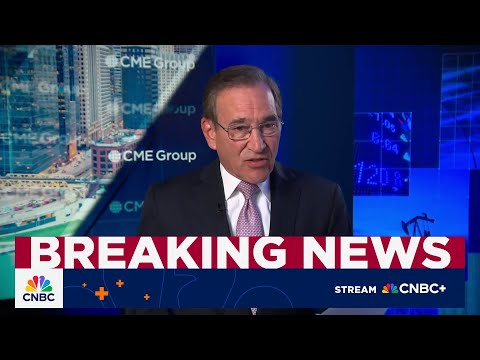
Consumer sentiment comes in at 58.6 vs. 62.5 estimated
CNBC Television· 2025-08-15 15:15
But first, breaking economic data just crossing. Rick Santelli has that for us. Hey, Rick.Yes. Let's start out with University of Michigan sentiment. Now, these are August preliminary numbers, so they'll change in a couple weeks.I'll tell you right off the bat, they're sequentially lower. We're expecting a headline number around 62. Our last final month read was 617, 58.6%. 58.6%.That's the weakest since May when it was 52.2%. in April when it was 52.2%. Now if we look at current conditions 60.9% our last l ...
X @Bloomberg
Bloomberg· 2025-08-15 14:10
US consumer sentiment unexpectedly fell for the first time since April and inflation expectations rose on lingering anxiety about the impact of tariffs https://t.co/ob2ES92wF1 ...
X @Investopedia
Investopedia· 2025-08-15 11:00
'Soft' data like consumer sentiment is improving just as 'hard' economic data like the jobs report show weakness, reversing a trend seen earlier this year. https://t.co/OBUpCv3qnC ...
3 Earnings Reports Give a Snapshot of Consumer Sentiment
MarketBeat· 2025-08-13 22:29
Core Insights - The earnings season provides insights into consumer sentiment and broader economic issues, particularly in the context of rising inflation and tariffs in 2025 [1][2] Group 1: Company Performance - McDonald's reported a 6% year-over-year increase in global systemwide sales, indicating strong consumer sentiment towards affordable dining options [5] - Shopify's revenue grew by 31% year-over-year, reflecting optimism in retail and a sustained shift towards e-commerce [8] - DoorDash experienced better-than-expected earnings and revenue, with U.S. marketplace orders increasing, suggesting strong consumer interest despite higher delivery costs [11][12] Group 2: Consumer Sentiment - Consumer sentiment appears resilient as evidenced by the performance of major brands like McDonald's, Shopify, and DoorDash, which all reported significant earnings wins [4][8][11] - McDonald's menu innovation and digital ordering initiatives are resonating with customers, potentially leading to stronger traffic and sales growth if household confidence improves [6] - DoorDash's success indicates that convenience remains a key driver of consumer behavior, even amid cost pressures [12] Group 3: Cautionary Signals - Despite positive earnings, McDonald's saw a decline in visits from low-income consumers, raising concerns about future performance as inflation pressures may lead to price increases [14][15] - Shopify's revenue growth was primarily driven by its European business and new large-scale merchants, rather than increased customer spending, suggesting a need for cautious interpretation of results [16] - The retail industry may face challenges due to new tariffs and disappointing inflation results, which could impact consumer discretionary spending [17]



X @Investopedia
Investopedia· 2025-08-10 14:00
Economic Indicators - Fresh data on inflation and consumer sentiment is expected [1] Earnings Reports - Earnings reports are coming from Cisco, CoreWeave, and Circle Internet Group [1]

美国消费者追踪2Q25-通胀上升,实际收入下降,关税在下半年考验消费者-US Consumer Tracker (2Q25)_ Inflation up, real income down, tariffs test consumers in H2
2025-08-05 03:19
Summary of US Consumer Tracker (2Q25) Industry Overview - **Industry**: US Consumer Sector - **Key Focus**: Impact of inflation, consumer sentiment, and tariffs on spending behavior Core Insights 1. **Inflation and Consumer Income**: - Inflation has increased, with a notable rise to 2.7% in June 2025, while real disposable income has declined sequentially in May 2025 [3][15] - Tariff-driven inflation is expected to further impact consumer prices in the second half of 2025 [2] 2. **Consumer Sentiment**: - Consumer sentiment showed slight recovery in June but remains significantly lower year-to-date in 2025, particularly among high-income consumers concerned about inflation and employment [3][17] - The trade-down effect is evident as consumers shift to lower-priced options due to economic pressures [3][17] 3. **Retail Sales Trends**: - Retail sales growth has normalized after an earlier pull forward, indicating stable shopping behaviors despite economic challenges [3][21] - Categories such as home goods and toys have turned inflationary in Q2 2025, contributing to a weak consumer backdrop [3][87] 4. **Sector Performance**: - **Broadlines & Hardlines Retail**: Companies like Dollar General (DG), Dollar Tree (DLTR), and Walmart (WMT) are expected to benefit from trade-down trends, with WMT well-positioned due to its enhanced shopping experience [4] - **Specialty Retail**: Anticipated price increases of high single digits to low double digits for apparel and footwear, and over 20% for hard goods due to tariffs, may impact Q3 spending [5] - **Restaurants**: A macro deceleration in May affected spending, with potential declines in 2026 due to SNAP benefit reductions [6] - **Alcohol Sector**: Consumption is pressured by affordability concerns, particularly among low-income consumers [7] 5. **Investment Ratings**: - **Retailing**: Outperform ratings for WMT, COST, DG, and LOW; Market-Perform for HD and DLTR; Underperform for TGT [11] - **Food Sector**: Outperform ratings for MKC, MDLZ, SMPL, and CPB; Market-Perform for several others [11] - **Apparel & Specialty Retail**: Outperform ratings for brands like NKE, TJX, and LULU; Market-Perform for CPRI and ROST [11] Additional Insights 1. **Consumer Behavior**: - The gap between low-income and high-income consumer sentiment has narrowed, indicating a shift in spending patterns [13][17] - Cooking from scratch is increasing as consumers seek value amid rising prices [7] 2. **Economic Indicators**: - The unemployment rate remains low, but consumer credit growth has decelerated in a high-rate environment [13][51] - The 10-Year Treasury yield remains elevated, reflecting higher inflation expectations [46][48] 3. **Inflation Dynamics**: - Cumulative inflation since January 2019 is at 28%, with food and energy leading the increases [94][96] - General merchandise categories have recently turned inflationary, influenced by tariff-driven price increases [83] This summary encapsulates the key findings and implications from the US Consumer Tracker for Q2 2025, highlighting the challenges and opportunities within the consumer sector amidst ongoing economic pressures.



Is The Luxury Industry Facing An Identity Crisis?
Forbes· 2025-07-30 15:55
Core Insights - The luxury industry is experiencing a significant downturn, with LVMH's profits dropping 15% in the first half of 2025 and organic growth down 3% [3] - Kering's revenue has decreased by 18% in Q2, with Gucci's sales falling by 25% and overall sales in Asia and Japan down by 29% in the first half of the year [3] - The current challenges are attributed to a need for a reset in the luxury sector, moving away from hyper-scaling growth strategies that have led to overexposure and loss of brand essence [4][5] Company Performance - LVMH's shares have declined by 15% since the start of 2025, indicating investor concerns about the company's performance [2] - Hermès, in contrast, reported a 9% revenue increase to 3.9 billion in Q2, demonstrating strong brand equity and customer loyalty [5][6] - Gucci's decline in sales and consumer loyalty highlights the risks of overexposure and trend-chasing strategies [7] Market Trends - Luxury consumers are becoming more selective, valuing emotional connections and long-term worth over short-lived trends [8][10] - The industry is witnessing a shift towards authenticity, craftsmanship, and storytelling as key drivers of desirability [9] - Brands are encouraged to return to their roots, focusing on intention and intimacy rather than mass visibility [9]



X @Bloomberg
Bloomberg· 2025-07-24 23:27
Consumer Sentiment - British households are more inclined to save money than at any point since the run-up to the global financial crisis [1] Economic Outlook - Cautious consumer sentiment reflects potential economic uncertainty [1]
Chipotle Mexican Grill Q2 Sales Decline, June-July Boost Keeps Analysts Bullish
Benzinga· 2025-07-24 15:18
Core Viewpoint - Chipotle Mexican Grill Inc experienced a significant decline in share price following a revenue miss for the second quarter, with analysts providing mixed assessments on the company's performance and future outlook [1][9]. Group 1: Financial Performance - The company reported a 4% decline in same-store sales, missing expectations by 112 basis points [2]. - Earnings per share were reported at 33 cents, aligning with expectations, while store-level margins were better than anticipated [4][8]. - Despite the same-store sales contraction, trends improved in June and July, with two-year comps bouncing back to around 8% [3][5]. Group 2: Management Guidance - Management lowered the full-year same-store sales guidance to approximately flat from low single digits due to macroeconomic uncertainties [3][6]. - Analysts noted that while there were positive trends in late June and July, the overall commentary remained cautious, balancing optimism with guidance reductions [7]. Group 3: Analyst Ratings and Price Targets - RBC Capital Markets reduced its price target from $65 to $58 while maintaining an Outperform rating [10]. - KeyBanc Capital Markets also cut its price target from $60 to $58 but kept an Overweight rating [10]. - BMO Capital Markets reiterated an Outperform rating with a price target of $65, indicating some optimism for future performance [10].