Tariffs

Search documents
X @Wendy O
Wendy O· 2025-10-21 18:11
So basically, tax-paying Americans will still be paying off the public servants' debt because the tariffs are passed down to the consumer?Watcher.Guru (@WatcherGuru):JUST IN: 🇺🇸 President Trump says tariffs can be used to pay US debt. ...
Trump Says Maybe Meeting Won't Happen With Xi
Bloomberg Television· 2025-10-21 17:49
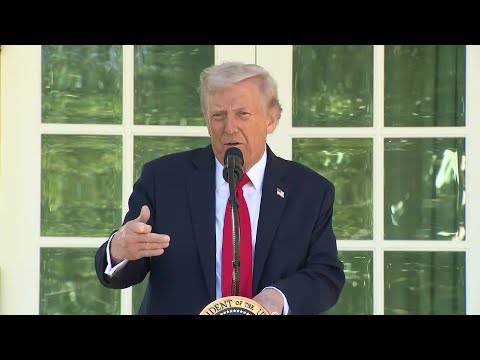
I took in hundreds of billions of dollars from China. I put the full tariffs on China. Biden left the tariffs because he couldn't.It was too much money. But they gave so many exceptions that they were essentially meaningless. In other words, he the tariffs.But you don't have to pay. If you look at somebody the wrong way. You don't have to pay.So they didn't pay very much. But with me, they were paying hundreds of billions of dollars. And again, I have a great relationship with President Xi.I expect to be ab ...

Fed rate cut outlook for 2025, cracks in the economy, and Coca-Cola CFO talks earnings
Youtube· 2025-10-21 17:45
分组1: General Motors (GM) - General Motors raised its full-year outlook, forecasting EBIT in the range of $12 to $13 billion, adjusted automotive free cash flow of $10 to $11 billion, and diluted adjusted EPS of 9.75% to 10.5% [1][2] - GM narrowed its full-year tariff costs estimate to $3.5 to $4.5 billion, down from $4 to $5 billion, and reported a $1.1 billion hit from tariffs in the latest quarter [1][2] - The company is restructuring its EV business, having taken a charge of approximately $1.6 billion to address factory overcapacity and supplier payments, while expecting a natural demand for EVs to emerge next year [1][2][3] 分组2: Coca-Cola - Coca-Cola reported higher-than-expected earnings per share and total sales, driven largely by price increases, indicating strong demand from higher-income consumers [41][42] - The company is focusing on maintaining engagement with lower-income consumers through various packaging options and price points, while also investing in brand appeal [46][48] - Coca-Cola is rolling out a variant with real cane sugar and is optimistic about its performance in the market, alongside a strong pipeline for its Fairlife dairy products [52][58] 分组3: Market Overview - The U.S. stock market is showing a mixed picture during earnings season, with the Dow up by about 44 points, while the S&P 500 and Nasdaq Composite are slightly down [1] - Earnings season is characterized by individual stock movements rather than broad market trends, with notable performances from companies like Coca-Cola and 3M [1][2] - Analysts are observing a rotation into more defensive names in the market, indicating a potential shift in investor sentiment [60][62]



Market Reacts to Trump’s China Remarks Amidst AI Innovation and Banking Optimism
Stock Market News· 2025-10-21 17:09
Geopolitical and Economic Insights - President Trump claims the U.S. is "leading China in the AI race" while expressing mixed sentiments about U.S.-China relations, which contributed to a decline in the NASDAQ 100 [2][8] - Trump reiterated a strong stance on tariffs, suggesting they could help "start paying down our debt" and emphasized their connection to national security [3] AI Sector Developments - OpenAI launched ChatGPT Atlas, an AI-driven web browser that integrates ChatGPT technology, positioning itself against established browsers like Google Chrome [4][8] - Wells Fargo CEO Charles Scharf expressed confidence that the AI sector is not in a bubble, indicating robust growth potential for AI companies [5] Banking Sector Outlook - Scharf provided an optimistic view of the U.S. banking system, stating there are "no cracks in credit" and that businesses are performing well [6][7] - Consumer spending is reportedly strong, with a favorable environment for consumers, despite some uncertainty about the future [7] Corporate Partnerships and Market Movements - Netflix partnered with Mattel to launch KPop Demon Hunters-themed toys, set to debut in 2026, capitalizing on franchise popularity [8][9] - Beyond Meat shares surged 81.6% following an expanded distribution agreement with Coca-Cola and Walmart, indicating growing confidence in the plant-based food market [9] Beauty Industry Insights - L'Oréal reported a 3% growth in the China beauty market in Q3, with improved consumer confidence [10] Global Energy and Trade Dynamics - The U.S. plans to purchase 1 million barrels for the Strategic Petroleum Reserve, with deliveries scheduled for late 2025 and early 2026 [11] - China is exploring a three-way currency swap with Japan and South Korea to enhance regional financial stability amid trade tensions [12]

PACCAR(PCAR) - 2025 Q3 - Earnings Call Transcript
2025-10-21 17:02
Financial Data and Key Metrics Changes - PACCAR achieved revenues of $6.7 billion and net income of $590 million in Q3 2025, with PACCAR Parts achieving record quarterly revenues of $1.72 billion and pre-tax income of $410 million, reflecting a 4% growth in parts revenue compared to the same period last year [4][5][9] - Gross margins for PACCAR's trucks, parts, and other segments were 12.5% in Q3, affected by tariff increases on steel and aluminum, with expectations for fourth quarter margins to be around 12% as tariffs peak [7][8] Business Line Data and Key Metrics Changes - PACCAR Parts reported gross margins of 29.5% and continued to grow by investing in capacity and services, with a new parts distribution center opening in Calgary next year [9][10] - PACCAR Financial Services achieved pre-tax income of $126 million, an 18% increase from the previous year, supported by a high-quality portfolio and improving used truck results [10] Market Data and Key Metrics Changes - The U.S. and Canadian Class 8 market is estimated to be between 238,000 to 245,000 trucks this year, with expectations for next year to range from 230,000 to 270,000 [5][6] - The European above 16-ton market is projected to be between 275,000 to 295,000 vehicles this year, with expectations for 2026 to be in the range of 270,000 to 300,000 [6][7] Company Strategy and Development Direction - PACCAR is focused on long-term growth through investments in truck and engine factories, advanced technology, and expanding its parts business [10][11] - The company aims to improve its competitive position with the implementation of Section 232 tariffs, which are expected to reduce costs for customers and enhance market clarity [8][14] Management's Comments on Operating Environment and Future Outlook - Management expressed optimism about improving market conditions and the potential for increased demand in the truckload sector as customers begin to replace aging equipment [17][25] - The company anticipates that clarity around tariffs and emissions standards will encourage capital allocation towards truck purchases in the upcoming quarters [25][52] Other Important Information - PACCAR plans to invest between $725 to $775 million in capital projects and $450 to $500 million in research and development expenses next year, focusing on clean diesel technology and advanced driver assistance systems [10][11] - The company is also expanding its used truck centers globally to support the sale of premium used trucks [10] Q&A Session Summary Question: Impact of Section 232 tariffs on competitive position - Management indicated that Section 232 tariffs will improve PACCAR's competitive position as most trucks are manufactured in the U.S., and the full benefits will be realized gradually [14][15] Question: Pricing strategy in light of tariffs - Management noted that while tariffs peaked in Q4, they expect to integrate pricing discussions without the need for tariff surcharges, focusing on the value of their trucks [89][100] Question: North American growth outlook and customer conversations - Management highlighted mixed customer sentiments, with positive conditions in vocational and less-than-truckload markets driving orders, while truckload sector challenges persist [25][26] Question: Inventory levels and demand outlook - Management reported healthy inventory levels, with 2.8 months of inventory for PACCAR, and expressed confidence in demand for the first half of next year as customers prepare for potential regulatory changes [85][86] Question: Parts business growth and margin expansion - Management acknowledged challenges in the parts business due to tariffs but emphasized ongoing investments and opportunities for growth in the future [45][80]

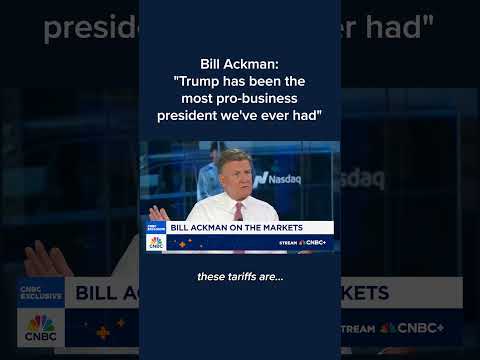
Bill Ackman: 'Trump has been the most pro-business president we've ever had'
CNBC Television· 2025-10-21 17:00
You were worried about tariffs. A lot of people worried about tariffs obviously in April. Is it that those tariffs never really uh came the worst case scenario obviously didn't happen and probably at this point most people think they're unlikely to happen.>> No, actually I think of I think Trump has been the most pro business president we've ever had. >> Tariffs were going to hurt the markets at one point. >> I was a little bit concerned about the you know the scale of the tariffs and how quickly they were ...
GM Is Dealing With Tariffs and an Evolving EV Business. Its Stock Is Jumping.
Yahoo Finance· 2025-10-21 16:28
Photo by Jorge Uzon / AFP via Getty Images General Motors shares jumped as it reported earnings Tuesday morning. Key Takeaways General Motors stock took off Tuesday morning as the car manufacturer adjusted to tariffs more quickly than anticipated, Citi analysts said. Investors didn't seem put off by a $1.6 billion charge tied to GM reevaluating its electric vehicle strategy in response to regulation changes. General Motors shares are racing higher. Progress dealing with tariffs is helping. The Detr ...
GM's tariff pain is easing — thanks to higher prices, CFO says
Yahoo Finance· 2025-10-21 15:30
General Motors (GM) is soothing its tariff pain by raising prices on trucks and SUVs. "Tariffs are getting a little bit better," CFO Paul Jacobson told Yahoo Finance's Opening Bid. "I think the important message for the Street is that it's stabilized." Jacobson said the company is leaning on its "track record" of resiliency — pointing to how GM has managed through past crises, such as the pandemic and the semiconductor shortage. "As we started the year, tariffs were all the noise, and we said that we we ...
Apple approaches $4T market cap, gold pulls back, General Motors CFO talks earnings
Youtube· 2025-10-21 14:51
Core Insights - Strong earnings reports from General Motors and Coca-Cola indicate resilience in consumer spending despite tariff concerns [2][8][35] - General Motors raised its full-year outlook after exceeding profit forecasts, while Coca-Cola also beat analyst estimates [6][9][35] - The impact of tariffs on profits remains significant, with GM estimating a $4 billion hit this year, yet the company is adapting through cost discipline and strategic pricing [35][40][52] Group 1: General Motors - General Motors reported earnings that surpassed analyst expectations, with shares opening nearly 10% higher [6][9] - The company raised its full-year guidance, reflecting strong sales and cost management despite a slight revenue miss [6][35] - GM's CFO noted that tariffs are still a concern, projecting a $4 billion impact on profits, but expressed optimism about future performance [35][40][52] Group 2: Coca-Cola - Coca-Cola experienced weak volume in the U.S. but still managed to beat profit estimates, with shares opening 3% higher [3][7] - The company maintained its full-year sales outlook despite the challenges posed by price increases [3][7] Group 3: Market Reactions - Major indexes opened flat despite strong earnings reports, indicating mixed investor sentiment [4][5] - The positive earnings from GM and Coca-Cola are contributing to a bullish narrative in the market, suggesting resilience in the economy [12][13] Group 4: Consumer Behavior - High-income consumers are driving spending, with many trading down to value options as inflation concerns grow [21][22] - Companies are adapting to consumer preferences, with Coca-Cola shifting towards healthier options and GM focusing on high-demand vehicle segments [19][22] Group 5: Future Outlook - GM is restructuring its EV business in response to slower-than-expected demand, indicating a more cautious approach moving forward [56][57] - The company is optimistic about stabilizing tariff impacts and improving margins through strategic adjustments [42][52]

GM Raises Outlook on Boost From Truck Sales, Tariff Relief
Bloomberg Television· 2025-10-21 14:13
You've got real experience navigating volatile industries, experience in the airline business and experience in the automaker business, too. You took over as CFO in the pandemic. Can you talk to us about this year, Paul.Just how agile have you and the team needed to be and how volatile have things been, too. >> Well, Jonathan, first of all, thank you very much for having us. It's a great day to be at GM and celebrate the success of uh all of our employees and partners worldwide.So really appreciate uh you b ...