
Inflation

Search documents
X @Bloomberg
Bloomberg· 2025-12-11 23:31
Peru held borrowing costs at a three-year low with inflation below the center of the central bank’s target range and the economy growing steadily https://t.co/hcg11KaugJ ...
⛰️ Why another "mountain" of inflation could be coming: Apollo exec
Yahoo Finance· 2025-12-11 22:26
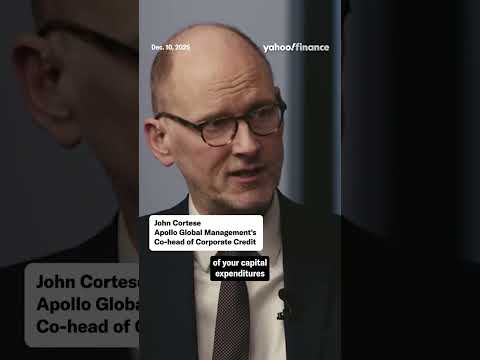
The first mountain was of course after co where inflation went up to almost 10% and now it's come down again to around 3%. The risk is that there's another mountain because you could have growth coming partly because of AI. There's also the one big beautiful bill.One of the important laws in the one big beautiful bill is that you could do immediate expensing of your capital expenditures if you're a company. Normally you have to do that over several years. If that's the case you should expect to see a boom c ...

Will the Stock Market Do the Unthinkable This Year and Post a Third Consecutive Annual Gain of at Least 20%?
Yahoo Finance· 2025-12-11 22:20
Key Points A run of three straight 20%-plus gains for the stock market is nearly unprecedented. It's been a volatile year. However, one group of investors believes the stock market may be in the midst of a multiyear bull run driven by the rise of artificial intelligence. 10 stocks we like better than S&P 500 Index › It's hard to believe that just about eight months ago, the stock market was reeling. President Donald Trump had just shocked the world by announcing high tariff rates on most of the ...
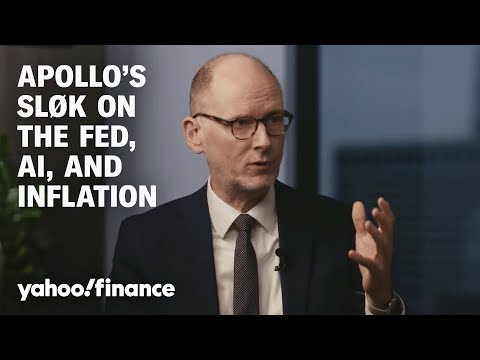
Apollo's Torsten Sløk on the 'very, very important issue' facing the US economy
Yahoo Finance· 2025-12-11 22:07
AI Impact on Labor Market & Economy - The market is considering the potential impact of AI expansion on the labor market, with concerns about job displacement [1] - There's uncertainty regarding AI's impact on the economy, specifically whether it will increase the unemployment rate [2] - While AI implementation is expected to create productivity gains for companies, the macro-level impact, especially by 2026, remains uncertain [5][6] Affordability & Fiscal Policy - The rising prices of education, healthcare, and housing are consuming a larger share of consumer spending, impacting affordability [9][10] - The Federal Reserve has limited tools to directly address the affordability crisis, particularly in sectors like housing [11][12] - Fiscal policy, particularly actions by Congress, such as rolling back tariffs on food or providing tax incentives for first-time home buyers (e g, $5,000 or $10,000), could help improve affordability [14][15][16] Inflation & Economic Growth - There's a risk of a second inflation surge due to growth driven by AI and fiscal policy, particularly the immediate expensing of capital expenditures [19][20][21] - The market rally is potentially anticipating an economic boom, leading to increased investment in sectors like technology stocks [22] - The narrative is shifting from concerns about economic slowdown to expectations of accelerated growth, potentially leading to increased corporate earnings by 2026 [25][26] Federal Reserve & Monetary Policy - The potential for political influence on the Federal Reserve's decisions, especially regarding interest rate cuts, is a concern [27][30] - Disagreement among Federal Reserve members regarding interest rate policy is increasing, potentially leading to less clear messaging from the Fed [31][32] - The choice of the new Fed chair in May 2026 is critical, as they will need to balance the risks of high inflation against a potentially weaker labor market [28][29]
Apollo's Torsten Sløk on the 'very, very important issue' facing the US economy
Youtube· 2025-12-11 22:07
分组1 - The Federal Reserve is concerned about the potential impact of AI on the labor market, indicating that many jobs could be at risk due to AI advancements [1][4][5] - Jobless claims remain low, and while the unemployment rate has slightly increased, there are no dramatic productivity gains or significant rises in unemployment observed yet [2][3] - The macroeconomic effects of AI are still uncertain, particularly regarding its implementation and adoption rates in the coming years [6] 分组2 - Affordability has become a politically sensitive issue, with rising costs in education, healthcare, and housing affecting consumer spending [9][10] - The Federal Reserve has limited tools to address the affordability crisis, as rising prices in essential goods cannot be easily managed through monetary policy [11][12] - Fiscal policy, particularly actions from Congress, may be necessary to address affordability issues, such as lowering tariffs on food and providing subsidies for first-time homebuyers [14][16][17] 分组3 - The potential for a new inflationary cycle exists due to economic growth driven by AI and fiscal policies, which could lead to increased capital expenditures [19][20] - The market is experiencing a rally, possibly due to expectations of economic growth and the effects of recent rate cuts by the Federal Reserve [22][25] - Disagreements within the Federal Reserve regarding interest rate cuts may indicate a shift towards more politicized decision-making, which could impact market stability [31][32]

QE Again! Powell Is Pouring Gasoline On This Market Rally
From The Desk Of Anthony Pompliano· 2025-12-11 22:00
Monetary Policy & Market Impact - The Federal Reserve announced a 25 basis point rate cut, bringing the Federal Funds rate down to 350-375% [2] - The Federal Reserve will restart balance sheet expansion with $40 billion in monthly Treasury bill buys, signaling a return to quantitative easing (QE) [3] - QE is expected to push bond yields down, encouraging investors to move into riskier assets, making borrowing cheaper and boosting confidence across financial markets [7] - Historically, QE has inflated financial assets, potentially benefiting stocks, Bitcoin, digital assets, and real estate [8][12] - The US dollar is expected to weaken with QE, while short-term cash-like investments may become less attractive [10] Economic Outlook & Risks - Multiple deflationary forces, including AI, robotics, tariffs, and increased deportations, could challenge the Fed's monetary policy [6] - Despite rate cuts and QE, the housing market remains constrained by low supply and existing low-rate mortgages [23] - Treasury Secretary confirmed approximately $100-150 billion in tax refunds are expected in 2026, potentially boosting GDP growth [16][20] Housing Market Analysis - The housing market is described as "broken" due to high prices and affordability issues [21] - Deregulation at the local level to allow more housing construction is suggested as a solution to the housing shortage [27]
Why Bitcoin’s Next Big Move Is Closer Than Everyone Thinks
Anthony Pompliano· 2025-12-11 22:00
There's a lot of big institutions that might even be behind some of this sell-off that want to drive it lower because they want to get in. I think there's huge institutional big money demand to buy Bitcoin. It's just waiting to pounce. And so once that pounce happens, we're going to be at 150. I still think, and the last time I was on, I said I think we'll be at 150 by the end of February. I hate to do it, but facts change, I got to change. I'm going to back it up just a little bit and say I think we'll be ...

Powell cuts rates again - but the Fed still faces "a bit in tension"
Bloomberg Television· 2025-12-11 21:37
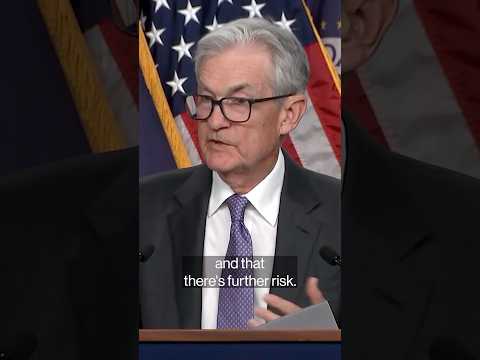
situation is is that our two goals are a bit in tension, right. So, um, interestingly, everyone around the table at the FOMC agrees that inflation is too high and that we want it to come down and agrees that the labor market has softened and that there's further risk. Everyone agrees on that.where the where the difference is is how do you weight those risks and what does your forecast look like and and and where do ultimately ultim where do you think the bigger risk is and and you know it's very unusual to ...
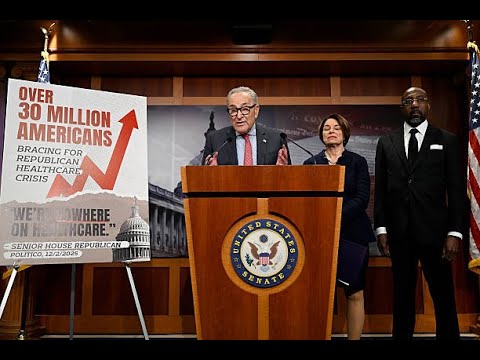
Senate Rejects Measure to Extend Obamacare Subsidies
Bloomberg Television· 2025-12-11 21:17
The president said at a lot of times in your home state the other evening that affordability is a Democrat hoax. Are you involved in some sort of conspiracy here. What is you referring to.Well, often I am bewildered by what exactly the president says. He says the problem is that too many kids have 37 pencils. I can assure you I don't have 37 pencils.Neither does my daughter. You know, this president really was elected more than any other reason, as you kind of referred to just a few moments ago. He was elec ...
Markets Could Say 'No More' to Fed Cuts, Says New York Life Investment's Goodwin
Yahoo Finance· 2025-12-11 20:43
Core Viewpoint - The Federal Reserve's decision to lower interest rates is expected to influence market dynamics, potentially leading to an increase in the 10-year yield as it approaches the lower bound of neutral rates [1] Group 1: Market Reaction - Lauren Goodwin, Chief Market Strategist at New York Life Investments, suggests that the market may react negatively to further rate cuts, indicating a threshold where the 10-year yield could rise [1] - The discussion on Bloomberg Businessweek Daily highlights the implications of the Fed's decision on market sentiment and future interest rate expectations [1] Group 2: Inflation and Future Fed Policy - The potential impact of inflation on the Federal Reserve's policy decisions is a key topic, with projections extending to 2026 [1] - Goodwin emphasizes the importance of monitoring inflation trends as they could significantly influence the Fed's actions in the coming years [1]