下一代显示技术

Search documents
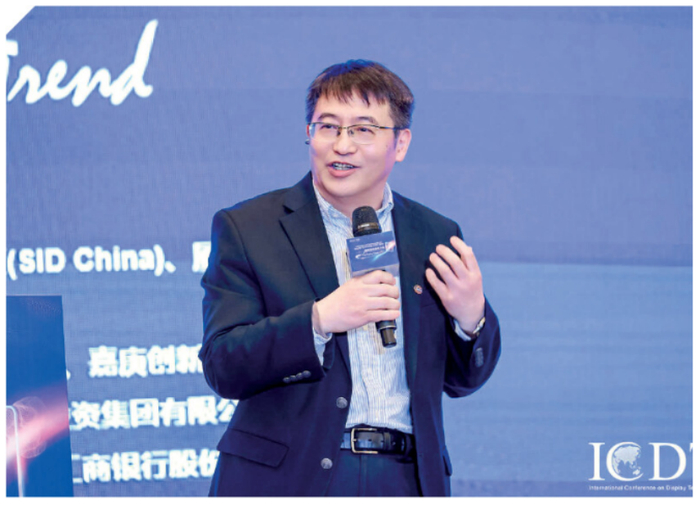
强化下一代显示技术布局 海信视像补选显示领域专家严群为独董
Zheng Quan Ri Bao Zhi Sheng· 2025-10-16 12:38
Core Viewpoint - Hisense Visual Technology Co., Ltd. has appointed Yan Qun as an independent director, enhancing the board's structure towards "professionalization and diversification," which is expected to inject innovative momentum into the company's display technology sector and strengthen its global leadership position [1][4]. Group 1: Appointment and Impact - The company held its first extraordinary general meeting of shareholders in 2025, where the proposal to appoint Yan Qun as an independent director was approved [1]. - Yan Qun's extensive experience in display technology, including over 20 years in the field and leadership roles in next-generation display technologies, aligns well with the company's strategic direction [2][3]. Group 2: Yan Qun's Background - Yan Qun has a comprehensive career in display technology, having worked at Oak Ridge National Laboratory and as the chief scientist at Panasonic's plasma display laboratory, and has contributed to the development and industrialization of high-performance PDP materials in China [2][3]. - He currently holds several prestigious positions, including a distinguished professor at Fuzhou University and the next global president of the Society for Information Display (SID) [2][3]. Group 3: Strategic Alignment - Hisense Visual Technology is focusing on a development path characterized by "technology platformization, product scene application, and market globalization," particularly in ULED, laser display, and Micro LED technologies [4]. - The company has successfully addressed the "two-core" challenge in the industrialization of RGB-MiniLED, setting a global benchmark for the display industry [4].


刚刚,利好来了!上海,重磅发布!
券商中国· 2025-07-22 11:50
Core Viewpoint - The article highlights the strategic development of the next-generation display industry in Shanghai, focusing on technologies such as Micro LED, silicon-based OLED, and flexible displays, which are essential for the metaverse and high-definition visual experiences [1][3][4]. Group 1: Action Plan Overview - The Shanghai Municipal Economic and Information Commission released the "Action Plan for High-Quality Development of the Next-Generation Display Industry (2026-2030)", aiming to cultivate over three leading domestic enterprises in key technologies [1][4]. - The plan emphasizes the construction of a comprehensive "1+2+3+4" industry system, targeting a complete industrial chain and ecosystem by 2028, with international competitiveness by 2030 [4]. Group 2: Smart Glasses Development - The action plan encourages the development of smart glasses production capabilities, including the establishment of intelligent and automated production lines [2][4]. - It aims to foster AI+AR and AI+MR glasses, focusing on lightweight, low power consumption, high resolution, and wide field of view technologies [4]. Group 3: Next-Generation Display Applications - The plan explores innovative applications of next-generation display technologies in various sectors, including automotive displays, holographic displays, and electronic paper displays [5]. - It aims to enhance product innovation in car displays, such as instrument panels and head-up displays (HUD) [5]. Group 4: Micro LED and Silicon-based OLED Technologies - The initiative supports the mass production of full-color Micro LED micro-displays, targeting breakthroughs in low-power CMOS backplanes and high PPI Micro LED arrays [6]. - It also focuses on advancing silicon-based OLED technology for ultra-high resolution displays, addressing issues like color reproduction and latency [6]. Group 5: Market Outlook for AI Glasses and Mini LED - Global sales of AI smart glasses are projected to reach 550,000 units in Q1 2025, with significant contributions from brands like Ray-Ban Meta and Xiaomi [8]. - The Mini LED backlight module market is expected to grow to 15.6 billion yuan by 2028, with a CAGR of 29% from 2024 to 2028, indicating strong growth potential in the display technology sector [10].
面板大厂竞逐Micro LED
WitsView睿智显示· 2025-04-23 09:11
Core Viewpoint - Micro LED technology is recognized as a strong competitor in the next-generation display technology landscape due to its advantages in brightness, contrast, response speed, energy efficiency, and lifespan. The industry is witnessing a competitive race for technological development and industrialization in Micro LED [1]. Company Summaries BOE Technology Group - BOE has been investing in Micro LED for years, establishing a complete industrial chain from upstream IC design to downstream applications through strategic control of Huacan Optoelectronics and the Zhuhai Jingxin project [2]. - The company is developing RGB Mini/Micro LED direct display solutions based on COG and COB technologies, alongside Mini LED backlight solutions. It has also partnered with international equipment companies to develop mass transfer technology [2]. - As of March 19, 2025, BOE's Huacan Optoelectronics has achieved product delivery from its 6-inch Micro LED production line, with an annual production capacity of 24,000 wafers and 45,000kk pixel devices [2]. TCL Huaxing - TCL Huaxing has formed a joint venture with Sanan Optoelectronics, focusing on the development of transfer bonding technology for Micro LED [5]. - The joint venture aims to tackle four key technological areas: miniaturization of LED chips, enhancement of luminous efficiency, transfer bonding technology, and optimization of backplane materials and driving algorithms [5]. - The Micro LED pilot line is expected to achieve small-scale trial production by 2025, with an initial investment of 300 million yuan [8]. Visionox - Visionox has established Chengdu Chenxian Optoelectronics to focus on Micro LED technology research and industrialization, particularly using LTPS glass substrates [9]. - The company aims to develop key technologies such as mass transfer, high-precision repair processes, seamless stitching technology, and driving algorithms based on TFT backplanes [9]. - By December 2024, the first mass production line based on TFT technology in mainland China is expected to be operational [10]. Deepin Technology - Deepin Technology has been involved in Micro LED since 2017, establishing a dedicated research institute and focusing on applications in public information display, automotive displays, and transparent displays [11]. - The company has successfully integrated a G3.5 generation Micro LED production line, which covers the entire process from mass transfer to final display module manufacturing [11]. - This production line utilizes LTPS TFT glass substrates and advanced mass transfer technology, enabling the production of borderless Micro LED display products [13]. AU Optronics - AU Optronics collaborates with its key component supplier Ennostar to enhance its Micro LED capabilities, focusing on mass transfer, inspection, repair, and module manufacturing [14]. - The company is constructing a 4.5 generation Micro LED production line, expected to be operational by 2025, to produce a variety of Micro LED products including smartwatches and automotive displays [16]. Innolux - Innolux has established Advanced MicroLux to focus on Micro LED technology research and manufacturing, with a registered capital of 150 million NTD [17]. - The company is concentrating on active matrix driving Micro LED technology and developing key technologies such as color conversion, selective mass transfer, and seamless stitching [17]. - Innolux's Micro LED technology has already been applied in automotive displays and large-size TVs, with plans to expand production capacity to higher generation lines [19]. Industry Outlook - According to TrendForce, the Micro LED chip market is projected to reach approximately $27.9 million in 2024, primarily driven by large display screens. By 2029, the market is expected to grow to $740 million, with a compound annual growth rate of 93% from 2024 to 2029 [20]. - The continuous investment and strategic layout by major panel manufacturers and LED industry players are accelerating the maturity of Micro LED technology, leading to a gradual decrease in production costs [20]. - Micro LED is anticipated to achieve large-scale applications across various sectors, including consumer electronics, commercial displays, automotive displays, and emerging fields like transparent displays and AR/VR, potentially reshaping the display industry landscape [20].