
两岸关系

Search documents
宋涛发表新年寄语:携手奋进,共创福祉
Xin Lang Cai Jing· 2026-01-02 02:01
Core Viewpoint - The article emphasizes the importance of cross-strait relations and the commitment to national reunification, highlighting the year 2025 as a significant period for both Taiwan and mainland China to strengthen economic ties and cultural exchanges [1][2]. Group 1: Key Points on Cross-Strait Relations - The year 2025 is identified as a crucial time for overcoming challenges in cross-strait relations and building momentum for national reunification, with increased convenience for Taiwanese citizens traveling to the mainland [2]. - There has been a notable increase in the number of Taiwanese individuals, including youth and first-time visitors, traveling to the mainland, indicating progress in cross-strait exchanges and cooperation [2]. - The construction of high-quality cross-strait integration development demonstration zones is being advanced, ensuring equal treatment for Taiwanese citizens and enterprises, which enhances their welfare [2]. Group 2: Future Plans and Policies - The year 2026 marks the beginning of the "15th Five-Year Plan," with a commitment to implement the guiding principles of Xi Jinping's thought and the resolutions from the 20th National Congress of the Communist Party [2]. - The focus will be on promoting peaceful development of cross-strait relations and advancing the national reunification agenda, while creating better conditions for Taiwanese businesses and citizens in the mainland [2]. - There is a strong opposition to "Taiwan independence" and foreign interference, with a call to support patriotic unification forces on the island, aiming to maintain peace and stability in the Taiwan Strait [2].
国民党主席郑丽文称“我是中国人”不该被民进党妖魔化,国台办回应
Xin Lang Cai Jing· 2025-12-31 16:59
Core Viewpoint - The spokesperson of the Taiwan Affairs Office emphasized that both sides of the Taiwan Strait belong to the Chinese nation and are all Chinese, countering the Democratic Progressive Party's (DPP) narrative of "de-Sinicization" [2]. Group 1: Historical and Cultural Identity - The statement from the Kuomintang (KMT) chairman highlighted that expressing "I am Chinese" in Taiwan has been unfairly labeled as a "original sin" due to the DPP's manipulation over the past 30 years [2]. - The Taiwan Affairs Office reiterated that the identity of being Chinese is a natural cultural and historical recognition that should not be demonized by the DPP [2]. Group 2: Political Manipulation and Public Response - The DPP is accused of deliberately distorting historical and cultural connections between the two sides to confuse the younger generation in Taiwan regarding their national identity [2]. - There is a growing backlash from various sectors in Taiwan against the DPP's political maneuvers, indicating that such efforts are unlikely to succeed [2].

台海巡部门称大陆海警“侵扰”罔顾航行安全 国台办回应
Xin Lang Cai Jing· 2025-12-31 10:40
Group 1 - The core viewpoint of the articles emphasizes the ongoing tensions between the mainland and Taiwan, particularly regarding maritime law enforcement and accusations of smuggling activities [1][2] - The Fujian Coast Guard conducted law enforcement patrols near Kinmen, which Taiwan's authorities claim poses significant risks to navigation safety [1] - The spokesperson for the Taiwan Affairs Office, Zhang Han, asserts that the patrols are intended to maintain order in the waters and ensure the safety of fishermen from both sides [1] Group 2 - Zhang Han criticized the Democratic Progressive Party (DPP) for ignoring the historical context of cross-strait fishing activities and accused them of creating risks for navigation through their actions against mainland fishermen [1][2] - The mainland's Public Security Bureau issued a bounty for information on Taiwanese individuals involved in smuggling activities, which Taiwan's authorities claim is an overreach of jurisdiction [1] - The DPP's recent requirement for 12,000 mainland spouses in Taiwan to submit proof of residency has been condemned by Zhang Han as a violation of family stability and an abuse of power [2]
“双城论坛”15年,台北市长蒋万安盼“双城好,两岸好”
Xin Lang Cai Jing· 2025-12-24 22:54
Group 1 - The "Twin City Forum" between Shanghai and Taipei is set to take place, with Taipei Mayor Chiang Wan-an shortening his visit to Shanghai due to a recent random murder incident in Taipei, opting to attend only the main forum on December 28 [1][2] - The forum has been held for 15 years, focusing on municipal exchanges, and aims to maintain good relations between the two cities, with Chiang expressing a desire to continue these exchanges [1][2] - Originally scheduled for late September, the forum was postponed due to disagreements from Taiwan's Mainland Affairs Council and Labor Department regarding a vocational training memorandum, leading to a nearly three-month delay before the new date was confirmed [2][3] Group 2 - The theme of this year's forum is "Technology Changes Life," aiming to promote experience sharing and interaction in areas such as healthcare, rail transportation, and elderly care [2] - The forum has resulted in the signing of 47 cooperation memorandums since its inception in 2010, highlighting the ongoing collaboration between Shanghai and Taipei [2] - Chiang Wan-an's approach has been characterized as moderate and conservative, focusing on cultural connections rather than contentious cross-strait issues, reflecting a shift in public sentiment in Taiwan towards seeking a thaw in cross-strait relations [3]
公安机关依法征集2名台湾居民违法犯罪线索
Xin Lang Cai Jing· 2025-12-24 18:49
Group 1 - The Chinese government has issued a reward for information leading to the capture of two Taiwanese residents, Jian Wensheng and Chen Shunjin, who are accused of smuggling frozen products into mainland China using the vessel "Hongtai 58" [1][2] - The reward for providing effective leads ranges from 50,000 to 250,000 RMB, and the authorities are encouraging the public to assist in the investigation [2] - The spokesperson criticized the Taiwanese authorities for politicizing the smuggling incident and attempting to create tensions between the two sides, asserting that such actions would face opposition from both sides of the Taiwan Strait [1][3] Group 2 - The ongoing investigation into the smuggling activities has revealed a criminal gang led by Jian and Chen, who have a history of smuggling offenses dating back to 2014 [2] - The recent cross-strait business summit in Nanjing highlighted the importance of economic cooperation, with the Chinese government expressing support for Taiwanese businesses to seize development opportunities in mainland China [2]
公安机关依法征集2名台湾居民违法犯罪线索 国台办:希望两岸同胞积极提供线索
Xin Hua She· 2025-12-24 11:13
Group 1 - The Chinese authorities have issued a reward for information leading to the capture of two Taiwanese residents, Jian Wensheng and Chen Shunjin, who are accused of smuggling frozen goods into mainland China using the vessel "Hongtai 58" [1][2] - The reward for providing effective leads ranges from 50,000 to 250,000 RMB, and the authorities encourage the public to assist in the investigation [2] - The incident involving "Hongtai 58" has been politically manipulated by the Democratic Progressive Party (DPP) in Taiwan, which has accused mainland China of "gray zone harassment" [1][3] Group 2 - The authorities are committed to supporting cross-strait economic and cultural exchanges, aiming to enhance cooperation and development opportunities for Taiwanese businesses in mainland China [2] - The political situation in Taiwan, particularly regarding Lai Qingde's administration, has been criticized for prioritizing political gains over the welfare of the people, leading to public discontent [3]
两名台湾走私嫌犯被悬赏追捕 国台办回应
Xin Lang Cai Jing· 2025-12-24 07:33
Core Viewpoint - The Chinese government warns the Democratic Progressive Party (DPP) of Taiwan against protecting and condoning smuggling activities, stating that such actions will lead to negative consequences for cross-strait relations [1]. Group 1: Smuggling Allegations - The Chinese authorities have issued a bounty for two Taiwanese individuals, Jian Wensheng and Chen Shunjin, who are accused of operating the Togolese-flagged vessel "Hongtai 58" for the long-term smuggling of frozen products into mainland China [1]. - The DPP previously accused the vessel of being involved in a cable damage incident in the Taiwan Strait, which the Chinese government claims is a misrepresentation of the facts [1]. Group 2: Legal Actions and Historical Context - The Weifang Public Security Bureau has revealed that Jian and Chen were previously wanted for smuggling waste in 2014, indicating a history of illegal activities [2].
国台办:正告民进党当局停止无端抓扣
Yang Shi Xin Wen Ke Hu Duan· 2025-12-24 05:27
Group 1 - The core viewpoint of the article emphasizes that the Taiwan, Penghu, Kinmen, and Matsu islands are all part of China, and the Xiamen-Kinmen sea area has historically been a traditional fishing ground for fishermen from both sides [5] - The spokesperson, Peng Qing'en, stated that there is no such thing as a "prohibited or restricted water area," and the regular law enforcement patrols by the mainland coast guard are beneficial for maintaining order at sea and ensuring the safety of fishermen's lives and property [5] - The article warns the Democratic Progressive Party (DPP) authorities to acknowledge the historical and objective facts of joint operations by fishermen in traditional fishing grounds and to cease any arbitrary detentions or aggressive actions against mainland fishing vessels, or they will bear all consequences [5]
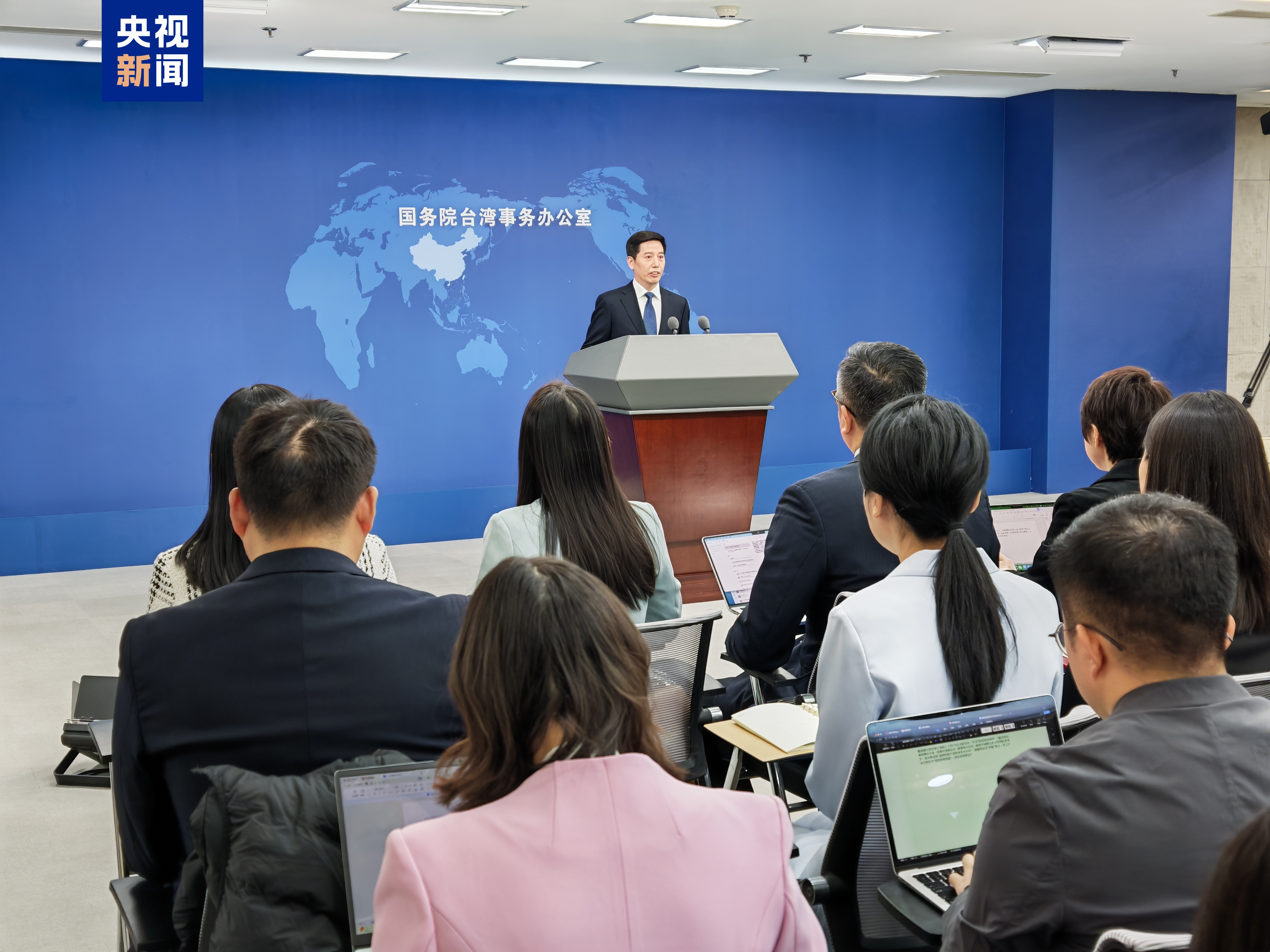
国台办正告民进党当局:停止无端抓扣大陆渔船民
Ren Min Ri Bao· 2025-12-24 04:52
Core Viewpoint - The spokesperson of the Taiwan Affairs Office emphasized that the waters around Kinmen are traditional fishing grounds for fishermen from both sides of the Taiwan Strait, denying the existence of any "prohibited or restricted waters" [1] Group 1 - The Taiwan Affairs Office stated that the waters around Kinmen, including the areas of Xiamen and Kinmen, have historically been used by fishermen from both sides, reinforcing the idea of shared fishing rights [1] - Regular law enforcement patrols by the mainland's coast guard in these waters are aimed at maintaining order and ensuring the safety of fishermen's lives and property [1] - The spokesperson warned the Democratic Progressive Party (DPP) authorities to acknowledge the historical and objective facts of joint fishing operations and to cease any aggressive actions against mainland fishing vessels [1]
国台办回应大陆海警再次进入金门水域执法巡查
Xin Lang Cai Jing· 2025-12-24 04:23
Core Viewpoint - The spokesperson of the Taiwan Affairs Office emphasized that the waters around Kinmen have historically been traditional fishing grounds for fishermen from both sides of the Taiwan Strait, denying the existence of any "prohibited or restricted waters" [1] Group 1: Maritime Law Enforcement - The mainland coast guard's regular law enforcement patrols in the relevant waters are aimed at maintaining order in maritime operations and ensuring the safety of life and property for fishermen from both sides [1] - The Taiwan Affairs Office warned the Democratic Progressive Party (DPP) authorities to recognize the historical and objective facts of joint operations by fishermen in traditional fishing grounds and to cease arbitrary detentions and aggressive actions against mainland fishing vessels [1] Group 2: Political Implications - The DPP must bear all consequences if it continues its current approach towards mainland fishermen and their operations in traditional fishing areas [1]