
国家认同

Search documents
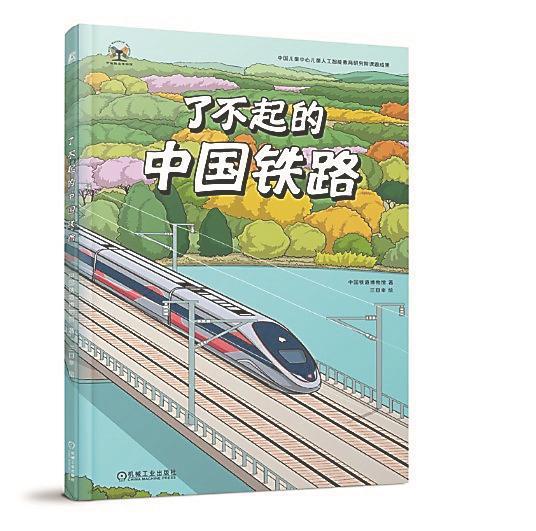
铁轨上的中国故事
Xin Lang Cai Jing· 2026-02-16 22:32
Core Viewpoint - The book "The Remarkable Chinese Railway" systematically organizes the technology and history of Chinese railways, providing a framework for understanding China's development through the lens of railways, showcasing the trajectory of national struggle and era development [3][4]. Group 1: Railway Engineering Innovation - The first chapter focuses on the innovations in railway engineering, highlighting the challenges faced by Chinese railway workers and detailing technical breakthroughs and localized solutions in various environments, such as the Qinghai-Tibet Railway's response to permafrost and the ecological construction innovations of the Hainan Ring Island High-Speed Railway [4]. Group 2: Evolution of Railway Development - The second chapter connects the historical memory of the nation through railways, from the construction of the Jing-Zhang Railway led by Zhan Tianyou to the modern intelligent Jing-Zhang High-Speed Railway, reflecting the evolution of China's railway system alongside the country's comprehensive national strength [4]. Group 3: Imprints of Train Progress - The third chapter outlines the dynamic development landscape, showcasing the evolution from the "National Day" steam locomotive to the Fuxing high-speed trains, and emphasizes the emotional connection of "slow trains" that link urban and rural areas, contributing to the improvement of living standards for people in mountainous regions [4]. Group 4: Global Connections via Railways - The fourth chapter discusses the transformation of Chinese railways from "bringing in" to "going out," featuring projects like the China-Europe Railway Express and the China-Laos Railway, which serve as contemporary practices of the New Silk Road, allowing international audiences to experience different cultures through Chinese-built railways [4]. Group 5: Educational and Cultural Significance - The book serves as a popular science work with multiple layers of reading significance, integrating geographical knowledge with engineering practices, and facilitating a better understanding of national landscapes for youth, while also promoting patriotism and the spirit of "great country craftsmen" through specific railway construction stories [5][6]. Group 6: Narrative and Emotional Engagement - The narrative style of the book emphasizes the emotional stories behind the cold steel tracks, combining linear railway routes with thematic analyses, allowing readers to experience the vastness and diversity of China through the railway trajectory, and balancing objective data with human stories to enhance the content's emotional impact [6][7]. Group 7: New Paradigm for "Chinese Stories" - The book offers a new paradigm for telling "Chinese stories" by shifting from grand narratives of infrastructure construction to detailed presentations that incorporate humanistic care, visualizing "common prosperity" through the stories of "slow trains" and making the Belt and Road Initiative tangible through projects like the China-Laos Railway and the Jakarta-Bandung High-Speed Railway [7].

村里的“天安门” 心里的“中国梦”(金台随笔)
Ren Min Ri Bao· 2026-01-22 02:15
Core Viewpoint - The articles highlight the deep-rooted sense of national identity and emotional connection to cultural symbols like Tiananmen Square and the Great Wall, illustrating how these sentiments manifest in everyday life and significant moments for individuals across generations [1][2][3]. Group 1: Emotional Connection to Cultural Symbols - The painting of Tiananmen Square in a village in Henan province reflects the villagers' deep emotional ties to this national symbol, fulfilling the dreams of the elderly who longed to see it in person [1]. - A young villager's effort to create this artwork resulted in emotional reactions from the elderly, showcasing the powerful connection between personal memories and national identity [1]. - The collective memory of Tiananmen Square resonates with many Chinese people, symbolizing a shared cultural heritage and national pride [1]. Group 2: Personal Experiences and National Identity - A university student's recitation of poetry at the Great Wall sparked emotional responses and highlighted the shared cultural identity among strangers, demonstrating how personal experiences can evoke collective feelings of patriotism [2]. - The emotional resonance of historical and cultural sites like the Great Wall serves to strengthen the bond between individuals and their national history, creating a sense of belonging [2]. - The shared belief in cultural heritage transforms physical structures into symbols of collective identity, as expressed by online comments reflecting on the significance of the Great Wall [2]. Group 3: Historical Context and Collective Spirit - The articles discuss how national identity and emotional connections can surface during critical historical moments, showcasing the enduring spirit of sacrifice and dedication to the nation [3]. - Examples from history, such as acts of bravery during wartime and contributions during the pandemic, illustrate how these sentiments are woven into the fabric of national identity [3]. - The transmission of cultural values and national pride through generations is emphasized, with references to children learning traditional poetry, reinforcing the continuity of these sentiments [3].

国民党主席郑丽文称“我是中国人”不该被民进党妖魔化,国台办回应
Xin Lang Cai Jing· 2025-12-31 16:59
Core Viewpoint - The spokesperson of the Taiwan Affairs Office emphasized that both sides of the Taiwan Strait belong to the Chinese nation and are all Chinese, countering the Democratic Progressive Party's (DPP) narrative of "de-Sinicization" [2]. Group 1: Historical and Cultural Identity - The statement from the Kuomintang (KMT) chairman highlighted that expressing "I am Chinese" in Taiwan has been unfairly labeled as a "original sin" due to the DPP's manipulation over the past 30 years [2]. - The Taiwan Affairs Office reiterated that the identity of being Chinese is a natural cultural and historical recognition that should not be demonized by the DPP [2]. Group 2: Political Manipulation and Public Response - The DPP is accused of deliberately distorting historical and cultural connections between the two sides to confuse the younger generation in Taiwan regarding their national identity [2]. - There is a growing backlash from various sectors in Taiwan against the DPP's political maneuvers, indicating that such efforts are unlikely to succeed [2].
国台办:民进党当局的政治操弄注定枉费心机,不会得逞
Yang Shi Wang· 2025-12-31 03:37
Core Viewpoint - The spokesperson of the Taiwan Affairs Office emphasized that both sides of the Taiwan Strait belong to one China and that the identity of being Chinese should not be demonized by political manipulation from the Democratic Progressive Party (DPP) [1] Group 1: Political Context - The remarks from Kuomintang Chairman Zheng Liwen highlight the cultural and historical identity of Taiwanese people as Chinese, which he argues has been distorted by the DPP's actions over the past 30 years [1] - The DPP is accused of attempting to sever historical and cultural ties between the two sides, leading to confusion among the younger generation in Taiwan regarding their national identity [1] Group 2: Public Response - There is a growing backlash from various sectors in Taiwan against the DPP's political maneuvers, indicating a significant level of dissent regarding the current administration's approach to cross-strait relations [1] - The spokesperson asserts that the DPP's efforts to manipulate public perception will ultimately fail and will not achieve their intended outcomes [1]
香港青年开启福建科教考察之旅
Xin Lang Cai Jing· 2025-12-26 15:55
Group 1 - The core objective of the event is to enhance Hong Kong youth's understanding of the achievements of the motherland, particularly in education innovation and technology in Fujian [1] - The program includes visits to cultural landmarks such as the Lin Zexu Memorial and Sanfang Qixiang, aimed at strengthening cultural identity and patriotism [1] - Participants will engage with local innovative enterprises to learn about advancements in information technology and new energy transportation [1] - The exchange will also involve interactions with students from Fuzhou Senior High School and Xiamen University, promoting cultural resonance and national identity [1]
甘肃学子香江畔的爱国一课:从黄土高坡到维港之滨
Zhong Guo Xin Wen Wang· 2025-10-23 03:56
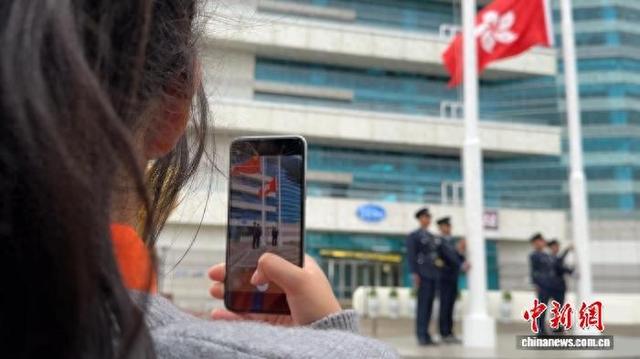
Core Points - The article highlights a youth study tour from Gansu, China, to Hong Kong, focusing on cultural exchange and national identity [1][3][5] - The event is part of the "Lonyuan Spring Buds Hong Kong and Macao Tour: Youth Together Build the Chinese Dream" program, aimed at enhancing interaction between mainland and Hong Kong youth [7] Group 1 - The youth group, consisting of 39 students and teachers from 15 schools in Gansu, attended a flag-raising ceremony at Golden Bauhinia Square, which left a profound emotional impact on the participants [3][5] - The students visited Hong Kong University of Science and Technology, where they were impressed by the modern facilities and international educational approach [3][5] - The program includes visits to historical sites and interactive experiences at the Hong Kong Science Museum, aiming to broaden the students' horizons and inspire future aspirations [5][7] Group 2 - The event is organized by the Gansu Provincial United Front Work Department and the Gansu Overseas Friendship Association, in collaboration with Hong Kong and Macao Gansu Friendship Associations [7] - The activities are designed to deepen the understanding of national history and culture among the youth, fostering a sense of national identity and cultural confidence [7]
海峡两岸书画名家纪念抗战胜利暨台湾光复80周年主题创作展在京开幕
Xin Hua She· 2025-10-19 12:21
Core Viewpoint - The "Danqing Song Fengbei" themed painting exhibition commemorates the 80th anniversary of the victory in the Chinese People's Anti-Japanese War and the 80th anniversary of Taiwan's liberation, showcasing the shared history and cultural identity of people across the Taiwan Strait [1][2] Group 1: Exhibition Overview - The exhibition features over 170 exquisite works of art, including anti-war poetry and large-scale themed Chinese paintings, divided into three parts: "Poetry Casts the Soul, Ink Celebrates the Monument," "Baptized in Blood, Phoenix Rebirth," and "Victory Flowers Reflecting the Rivers and Mountains" [1] - Nearly a hundred artists from both sides of the Taiwan Strait participated in the exhibition, which is organized by various cultural institutions [1] Group 2: Cultural Significance - The exhibition aims to deepen the national and cultural identity among compatriots from both sides of the Taiwan Strait, highlighting their shared history of resistance against foreign aggression [1] - The artworks reflect the resilience and unity of the Chinese people during the Anti-Japanese War, serving as a heartfelt tribute to the collective history of resistance [1][2] Group 3: Artist Contributions - Taiwanese artist Ouyang Kun created a national painting titled "Yimi War," emphasizing the importance of remembering historical wounds and the mission to educate younger generations about the significance of peace [2] - The emotional resonance among artists from both sides during the creative process is highlighted, showcasing the enduring spirit and key events of the Anti-Japanese War from 1895 to 1945 [2]
书香里感知多彩中国(香江在线)
Ren Min Ri Bao· 2025-09-20 22:00
Core Points - The article highlights the increasing interest in patriotic literature and cultural activities in Hong Kong, particularly in relation to the 80th anniversary of the victory in the Anti-Japanese War and World Anti-Fascist War [1] - There is a growing demand for books related to Chinese culture, history, and national identity among Hong Kong residents, driven by various cultural events and initiatives [2][4] Group 1: Cultural Events and Initiatives - The "China People's Anti-Japanese War and World Anti-Fascist War Victory 80th Anniversary" themed book exhibition features around 300 titles, aiming to promote patriotic spirit and national pride among readers [1] - The "Hong Kong Reading Week 2025" and other cultural festivals are contributing to a heightened reading atmosphere in Hong Kong, with a notable increase in the popularity of national condition literature [1] - The "Colorful China" children's book series is gaining traction, appealing to parents interested in bilingual education and cultural awareness for their children [2] Group 2: Youth Engagement and Education - The "Hong Kong Youth Reading Month" initiative has attracted over 500,000 participants since its inception in 2020, promoting a diverse range of literature including classic works and books on national achievements [4][5] - The engagement of Hong Kong youth in reading and cultural exchange is evident through their participation in study tours to mainland China, where they connect literature with real-life experiences [3] - The upcoming reading month will focus on books that highlight China's development achievements, responding to the curiosity of students about national progress [5]
西榴籽・大学魂・中华情:青年学子铸牢共同体意识的三重维度
Yang Shi Wang· 2025-06-20 07:39
Group 1 - The core idea emphasizes the importance of fostering a sense of community among various ethnic groups in the context of the great rejuvenation of the Chinese nation, with Northwest A&F University creatively using the "pomegranate seed" as a symbol for unity among students [1][2] - The "Western Pomegranate Seed" concept represents the dual cultivation of individual growth and the foundation of unity among minority students, addressing challenges such as weak academic foundations and employment aspirations in the context of regional educational disparities [2][3] - The university has established a collaborative educational framework through the "Four Groups and One Team" structure, which includes expert teams focusing on agricultural policies and peer support networks to enhance student development and community building [2][3] Group 2 - The university's educational philosophy, centered around the "University Spirit," integrates the mission of serving the agricultural sector and the strategic needs of modern agriculture in arid regions, promoting a unique value system [3][4] - Innovative programs encourage students to engage in rural revitalization and agricultural practices, fostering a deeper understanding of national and agricultural realities while enhancing their commitment to community service [3][4] - The integration of cultural elements into educational practices, such as the creation of ethnic cultural products, helps to visualize and promote the concept of national unity among students [4][5] Group 3 - The "Chinese Emotion" educational framework focuses on the progression from cultural recognition to national identity, promoting a sense of belonging to the Chinese community and aligning personal development with national strategies [4][5] - The university employs various methods, including workshops and community service projects, to translate cultural understanding into actionable commitments among students, reinforcing the connection between individual choices and national development [4][5] - The three-dimensional model of "Western Pomegranate Seed," "University Spirit," and "Chinese Emotion" creates a structured approach to cultivating community awareness, deeply rooted in the university's mission to serve the western region [5]