乡土文化

Search documents
雷州歌
Ren Min Ri Bao· 2025-08-05 22:21
Core Points - The article discusses the cultural significance of the "Leizhou Song" and its evolution into "Leizhou Opera," highlighting the community's deep-rooted connection to these art forms [1][2][3][4] - The construction of a new cultural building, referred to as "Cultural Building," aims to provide a dedicated space for performances, enhancing the local cultural landscape [3][4] Summary by Sections Leizhou Song - Leizhou Song is a beloved folk song that resonates with people of all ages in the Leizhou region, often sung in various daily life settings [2] - The song reflects the emotions and experiences of the Leizhou people, serving as a medium for expressing joy, sorrow, and hope [2] Leizhou Opera - Leizhou Opera evolved from Leizhou Song and is performed during the annual "Nian Li Xi" festival, which brings together community members for celebrations [3] - The transition from song to opera has created a vibrant cultural tradition that attracts audiences from surrounding areas [3] Cultural Building - The new Cultural Building will serve as a modern venue for performances, replacing the traditional temporary stages previously used [3] - The building symbolizes a new chapter for local cultural expressions, providing a platform for the continuation of Leizhou Song and Opera [4]
广西烟火 | 七洞传家粉蒸鸭
Guang Xi Ri Bao· 2025-06-29 03:02
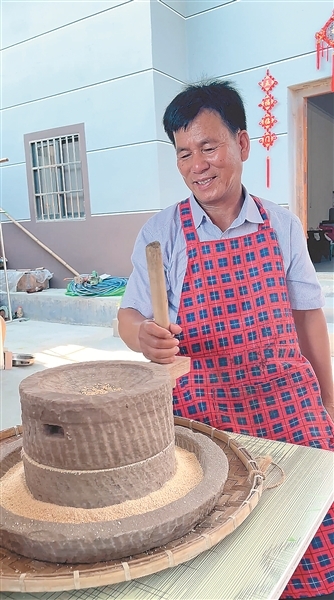
Core Viewpoint - The article highlights the traditional craft of making "Steamed Duck with Rice Flour" in Qidong Township, emphasizing its cultural significance and the efforts to preserve this culinary heritage as it is passed down through generations [5][6][8]. Group 1: Cultural Heritage - The making of "Steamed Duck with Rice Flour" is a time-honored tradition in Qidong Township, with roots tracing back to the late Ming and early Qing dynasties [6]. - The technique has been recognized as a county-level intangible cultural heritage, showcasing its importance in local culture [6]. - The dish is closely associated with the Zhongyuan Festival, where it is a staple on the dining table, symbolizing local customs and traditions [5][6]. Group 2: Ingredients and Preparation - The unique flavor of the dish is attributed to the local ingredients, particularly the high-quality rice and ducks raised in the region, which are nourished by the mineral-rich waters of the Beizhi River [6][7]. - The preparation involves a meticulous process where the rice is ground using traditional stone mills, ensuring the right texture for the rice flour, which is crucial for the dish's quality [5][7]. - The final dish is characterized by its rich flavors, with the combination of rice flour, duck meat, and fresh herbs creating a memorable culinary experience [7][8]. Group 3: Community and Emotional Connection - The article illustrates the strong emotional ties that locals have with the dish, often evoking feelings of nostalgia and connection to their roots [7][8]. - Young villagers are actively engaged in learning the traditional methods from experienced cooks, ensuring the continuity of this culinary art [5][6]. - The dish serves as a reminder of home for many who have moved away, highlighting its role in maintaining cultural identity and community bonds [7][8].

萧山农民画再度“出圈”
Hang Zhou Ri Bao· 2025-06-27 02:42
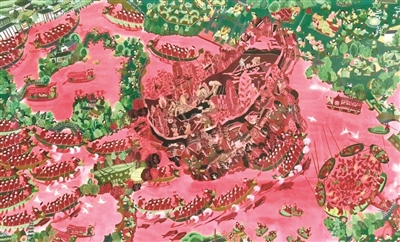
Core Viewpoint - The first China Rural Painting Exhibition highlights the rich cultural heritage and artistic expression of rural areas, with the work "Boat Tracing Eight Thousand Years, Lake Rippling Chinese Dream" by the Xiaoshan farmer painting team being a significant representation of this theme [2][3]. Group 1: Exhibition and Artwork - The artwork "Boat Tracing Eight Thousand Years, Lake Rippling Chinese Dream" was selected for exhibition after two rounds of reviews, showcasing the theme of "rural" and aiming to reflect the diverse rural landscapes and cultural spirit of China [2]. - The painting prominently features red, symbolizing a deep love for the land and the joy of harvest, while also representing the cultural legacy of the Xiaoshan region [2][3]. - The central theme of the painting is the depiction of the ancient wooden boat made by the ancestors of the Kua Lake Bridge, which dates back approximately 8,000 years, making it one of the earliest known wooden boats in the world [3]. Group 2: Creative Process - The creative team faced significant challenges in producing a large-scale painting measuring 3.3 meters by 2.4 meters, which required extensive collaboration and artistic guidance from experts [4]. - The team underwent multiple revisions and experiments with composition and color, reflecting their dedication and passion for the project [5]. - The Xiaoshan farmer painting association has seen a rapid increase in membership, with a notable decrease in average age among its members, indicating a growing interest in rural art among younger generations [5]. Group 3: Cultural Impact - The success of the Xiaoshan farmer painting team at a national level reflects a broader cultural confidence in rural art, showcasing its potential to shine in prestigious artistic venues [6].