
原油市场波动

Search documents
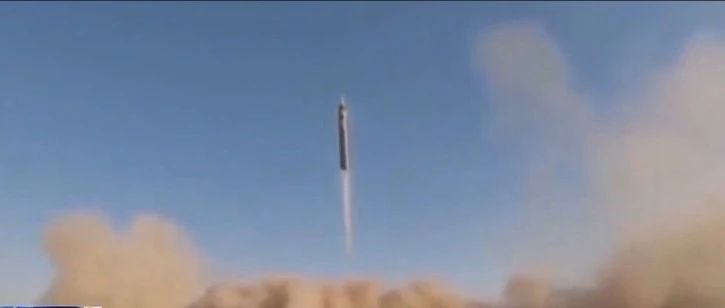
伊朗破坏力最强导弹画面曝光,美国遭警告:不要介入!俄称愿调停,美油布油拉升
21世纪经济报道· 2025-06-19 15:03
Core Viewpoint - The article discusses the recent developments in Iran's missile capabilities and its military actions against Israel, highlighting the potential implications for regional security and oil markets. Group 1: Missile Developments - Iran has unveiled the "Khoramshahr-4" ballistic missile, which is considered its most powerful missile, with a range of up to 2000 kilometers and a payload of 1500 kilograms [3][2] - The "Muds" missile, developed from the "Meteor" missile technology, has a range exceeding 2000 kilometers and is capable of mobile launch, allowing it to evade detection and airstrikes [5][4] Group 2: Military Actions - On the evening of the 18th, Iran launched a new round of missile strikes against Israeli intelligence and air force bases, marking the first use of the "Muds" missile since the recent conflict began [5][4] - Reports indicate that Iran fired over 10 missiles towards Israel, prompting the activation of Israel's air defense systems [7][6] Group 3: Regional Tensions - Iran's Deputy Foreign Minister warned the U.S. against intervening in the conflict, stating that Iran would take necessary measures to defend its national security if the U.S. supports Israel [11][12] - Russia has expressed willingness to mediate the conflict, indicating a potential shift in diplomatic dynamics in the region [13] Group 4: Market Impact - The escalation of the Israel-Iran conflict has led to a rise in oil prices, with WTI crude surpassing previous highs and Brent crude reaching over $78 per barrel, marking a significant increase [14]

伊朗称将严厉果断还击以色列
财联社· 2025-06-13 03:05
Group 1 - Iran plans to respond severely to Israeli attacks, with details under discussion at the highest levels [1] - Israeli airstrikes targeted multiple sites in Iran related to its nuclear program, leading to a significant increase in WTI crude oil prices, which rose over 13% to $76.89 per barrel, the highest since January 22 [2] - An explosion occurred at Iran's Natanz nuclear facility following the Israeli airstrikes, with no signs of nuclear contamination reported [3] Group 2 - Iran's Supreme Leader Khamenei is reported to be unharmed and has received briefings on the situation following the Israeli attacks [4]

原油面临诸多未定因素
Ning Zheng Qi Huo· 2025-04-28 13:47
Report Summary 1. Industry Investment Rating No investment rating for the industry is provided in the report. 2. Core Viewpoint The crude oil market faces many uncertainties. With short - term inventory pressure being relatively low, factors such as ongoing US - China tariff issues, progressing US - Iran negotiations, and the OPEC+ production policy meeting on May 5th will affect the market. Short - term trading is recommended [2][37]. 3. Summary by Directory Chapter 1: Market Review - SC2506 had a slight rebound. It opened at 489, reached a high of 506, a low of 482, and closed at 496, with a weekly increase of 5.4 or 1.10% [3]. Chapter 2: Price Influence Factor Analysis - **OPEC**: In March, OPEC's overall daily crude oil production was 26.78 million barrels, a decrease of 78,000 barrels per day from February. Iraq, UAE production decreased, while Iran and Kazakhstan production increased. OPEC+ agreed to increase oil supply by 411,000 barrels per day in May, three times the original plan, and will gradually cancel the 2.2 million - barrel - per - day production cut by 2026. However, six countries need to cut production by 378,000 barrels per day in May according to the compensation plan. There are disputes among members regarding production quota compliance, and OPEC+ plans to accelerate production increase, which adds pressure to crude oil supply [5][6][8]. - **Russia**: In 2024, Russia's GDP grew by 3.9%, and its crude oil production was 516 million tons (about 9.9 million barrels per day). In March 2025, production decreased to 8.963 million barrels per day. Russia's 2025 - 2028 oil and gas export revenue forecasts have changed compared to previous expectations. There are talks about a Russia - Ukraine cease - fire agreement, but Russia has doubts about some details [10][11]. - **US**: As of the week ending April 18, US daily crude oil production was 13.46 million barrels, a decrease of 2,000 barrels from the previous week and an increase of 360,000 barrels from the same period last year. The four - week average daily production was 13.49 million barrels, 3% higher than the same period last year. EIA predicts that US crude oil production will peak at 14 million barrels per day in 2027 and then decline. Global oil demand growth forecasts for 2025 and 2026 have been lowered [12][13]. - **Americas**: OPEC and IEA have both lowered their forecasts for non - OPEC and non - OPEC+ oil supply growth in 2025 and 2026 [20]. - **Inventory**: In December 2024, OECD oil and crude product inventories decreased by 51.35 million barrels from the previous month. As of the week ending April 18, 2025, US commercial crude oil inventory decreased by 4.565 million barrels according to API data, while EIA data showed an increase of 244,000 barrels. Product inventories decreased, indicating a recovery in demand [21]. - **Consumption**: OPEC, IEA, and EIA have all lowered their global oil demand growth forecasts for 2025 and 2026. Refinery processing fees are low, and refinery operating rates are at a low level [25][27][29]. - **Geopolitics**: The US has imposed new sanctions on Iran and threatened bombing. Iran's crude oil production and exports are affected. The US and Iran held the third - round indirect negotiations in Muscat, Oman, and Iran is cautiously optimistic about the nuclear - issue negotiations [34][36]. Chapter 3: Market Outlook and Investment Strategy The short - term inventory pressure of crude oil is not significant, but the market still faces many uncertainties. Short - term trading is recommended [37].