学术不端

Search documents
“套路论文”谁之过 | 媒体札记
Xin Lang Cai Jing· 2025-12-27 12:29
Core Viewpoint - The case of a student from Wenzhou Medical University publishing 43 papers in a year raises concerns about academic integrity and the potential for "paper mill" practices, despite some arguing that exceptional talent can lead to such prolific output [1][3]. Group 1: Publication Details - The student has published approximately 50 articles since July 2024, with 44 being included in SCI journals and around 30 in top-tier journals as per the Chinese Academy of Sciences [2]. - Twelve of the student's papers prominently feature "Mendelian randomization" in their titles, indicating a reliance on specific methodologies [1]. Group 2: Academic Evaluation System - The incident highlights issues within the current academic evaluation system, which emphasizes quantity over quality, potentially leading students to engage in "publish or perish" mentality [3][4]. - The existing evaluation framework may inadvertently encourage the production of "routine papers," which, while methodologically sound, may lack genuine innovation [2][4]. Group 3: Institutional Responsibility - Wenzhou Medical University has a reward system for students publishing in recognized journals, which could incentivize the production of "routine papers" if not properly monitored [4]. - The university's investment in student innovation and entrepreneurship, while well-intentioned, may contribute to the proliferation of low-quality research if oversight is inadequate [4]. Group 4: Broader Implications - The phenomenon of "routine papers" could waste resources and pose risks in cross-disciplinary applications, potentially harming the academic ecosystem and long-term development of disciplines [4]. - The situation calls for a reevaluation of how academic success is defined and measured, emphasizing the need for a more balanced and fair assessment system [5].

理解“诚实的错误” 惩戒“明确的学术不端”——专家谈撤稿背后的学术治理之道
Xin Lang Cai Jing· 2025-12-26 13:54
Core Viewpoint - The recent initiative by the Ministry of Science and Technology in China to address academic misconduct and retraction of papers highlights the importance of retraction as a means to correct academic records rather than punish authors [1][2]. Group 1: Retraction Purpose and Perception - The core purpose of retraction is to correct academic records and ensure their integrity, rather than to penalize authors, as emphasized in the revised COPE retraction guidelines [2]. - There is a prevalent misconception in academia that retraction implies significant wrongdoing by the authors, leading to a stigma that can adversely affect their careers [2][3]. - The increase in retraction rates globally over the past decade is attributed to heightened awareness within the academic community and advancements in detection technologies, alongside issues like "paper mills" and data fabrication [3]. Group 2: Academic Community's Response - There is a pressing need to rebuild the academic community's neutral perception of retraction, as it is often viewed negatively [4]. - Retraction should be seen as a normal part of academic publishing, reflecting the responsibility of editors and publishers to maintain the integrity of scientific records [4]. - The stigma associated with retraction can hinder the development of a healthy academic ecosystem, which requires a culture of innovation and integrity [4]. Group 3: Causes and Management of Retraction - Retraction reasons can be categorized into "honest errors" and "clear academic misconduct," with the former being understandable and the latter requiring strict penalties [7]. - The recent special action against academic misconduct in China focuses on retracted papers in international journals, targeting behaviors such as plagiarism and data fabrication [7]. - The initiative reflects the government's zero-tolerance stance towards violations of research integrity, emphasizing the need for serious consequences for severe misconduct [7]. Group 4: Evolution of Academic Governance - The analysis of retraction causes over the past decade indicates a shift in academic governance from passive responses to proactive prevention [8]. - Previously, retraction reasons often revealed weaknesses in journal management, while now there is a focus on establishing proactive investigation mechanisms and enhancing third-party oversight [8]. - A robust retraction mechanism is essential for fostering a research culture that encourages innovation, tolerates failure, and upholds rigorous integrity [8].
医学本科生一年发40多篇论文,真水平还是藏猫腻
Xin Jing Bao· 2025-12-25 07:50
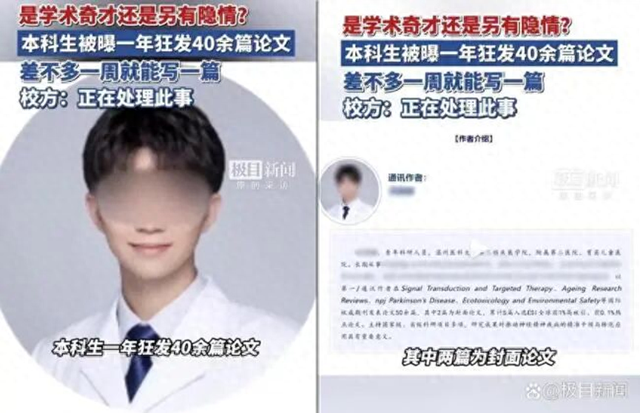
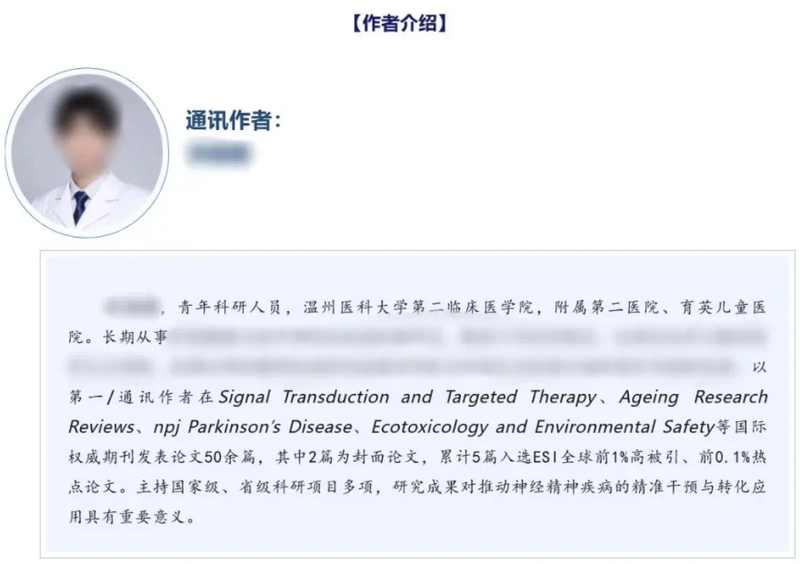
Core Viewpoint - A controversy has arisen regarding a student from Wenzhou Medical University who reportedly published over 40 papers in one year, raising questions about the quality and speed of his academic output [2][3]. Group 1: Student's Achievements - The student is a senior in a five-year program at Wenzhou Medical University and has reportedly published over 50 papers as the first or corresponding author in various international journals, with two papers featured on the cover and five papers ranked in the top 1% and 0.1% of highly cited and hot papers globally [3]. - The rapid publication rate of over three papers per month has led to skepticism about the feasibility of such output from an undergraduate student [2]. Group 2: Public Reaction and Concerns - The public reaction includes skepticism about the student's capabilities, with many questioning how an undergraduate could achieve such a high level of academic output in a short time [2]. - Concerns have been raised about potential academic misconduct, especially given the backdrop of previous scandals in medical academia involving data manipulation and other unethical practices [4]. Group 3: Broader Implications for Academic Integrity - The situation highlights a broader issue of academic integrity within medical institutions, where there have been multiple cases of misconduct reported, including data trading among researchers [4]. - The scrutiny of this student's achievements serves as a call for greater transparency and fairness in academic evaluations, emphasizing the need for a reassessment of how research output is measured and valued [4].
线上考试疑用AI 韩国高校再曝集体作弊丑闻
Xin Hua She· 2025-12-22 06:21
Group 1 - The core issue is the rising trend of academic dishonesty in South Korean universities, particularly through the use of artificial intelligence (AI) tools during online examinations [1][3]. - Seoul National University has declared the results of a course exam invalid due to widespread cheating, with nearly half of the 36 students involved suspected of opening unauthorized windows during the exam [2]. - The university is planning to implement comprehensive measures to address the cheating phenomenon, including a shift to in-person exams as the default mode and the introduction of guidelines for AI tool usage [2][4]. Group 2 - Yonsei University and Korea University have also reported similar cheating incidents, highlighting a systemic issue in managing online examinations and establishing clear guidelines for AI tool usage among students [3][4]. - A survey indicated that 91.7% of students from four-year and six-year universities in South Korea have used AI tools for assignments or research, yet many institutions lack formal policies regarding generative AI [4]. - Critics argue that temporary measures, such as invalidating exams, do not address the root causes of academic dishonesty and may increase distrust between students and faculty [4].

斩断“躺拿省国奖”背后的黑色利益链
Xin Lang Cai Jing· 2025-12-21 19:39
Core Viewpoint - The investigation reveals that some intermediary organizations and students are selling awards for national university competitions online, undermining the integrity of these events and creating a harmful profit-driven black market [1][2][3] Group 1: Impact on Academic Integrity - The practice of purchasing awards fosters a culture of academic dishonesty, leading students to abandon genuine research efforts in favor of financial shortcuts [1][2] - The authority and credibility of competitions are severely compromised, as evidenced by reports of high similarity in submissions and numerous disqualified participants [2][3] Group 2: Drivers of the Issue - The intertwining of competition awards with academic evaluations and scholarships creates immense pressure on students, driving them to seek out these illicit services [2][4] - Intermediaries have established a complete industry chain that capitalizes on this demand, further exacerbating the issue [2][4] Group 3: Consequences for Students - Students who engage in these practices risk losing their integrity and practical experience, which can lead to long-term negative impacts on their careers [3] - The normalization of purchasing awards undermines the value of hard work and dedication in education [3] Group 4: Solutions and Recommendations - A multi-faceted approach is necessary to combat these issues, including stricter regulations on online platforms and improved evaluation mechanisms for competitions [4] - Educational institutions should reform their assessment criteria to reduce the emphasis on awards and promote a more holistic evaluation of student capabilities [4] - Regulatory bodies must hold accountable those involved in the award trading, ensuring transparency and integrity in the educational system [4]
明码标价拿国奖,让“公平”二字往哪搁?
Xin Jing Bao· 2025-12-18 14:43
Core Viewpoint - The investigation reveals that national-level university competitions, intended to be fair platforms for talent selection, have been compromised by intermediaries selling awards online, creating a gray profit chain that undermines educational integrity [1][2]. Group 1: Issues Identified - Some intermediaries and students are selling competition awards through "nominal" and "overall project sale" methods, with prices ranging from thousands to tens of thousands of yuan [1]. - The commercialization of awards has led to a complete gray profit chain, which poses a significant threat to educational fairness and academic integrity [1]. - The drive behind these issues includes the competitive nature of graduate school admissions and awards, where national-level awards are seen as valuable "hard currency" [1]. Group 2: Proposed Solutions - Cutting off online transaction channels is essential to curb the spread of these issues, requiring platforms to establish regular inspection and rapid response mechanisms [2]. - Upgrading the competition evaluation mechanism is crucial, advocating for a composite evaluation system that includes multiple rounds of blind review, on-site defense, and long-term public disclosure [2]. - Universities must enforce strict audits and penalties for students involved in award trading, holding both students and faculty accountable [2]. Group 3: Conclusion - To restore the integrity of competitions, it is imperative to decisively sever the underlying gray profit chain, ensuring that every effort is treated fairly and justly [3].
俄罗斯工程院回复“郭某”事件
财联社· 2025-11-23 04:05
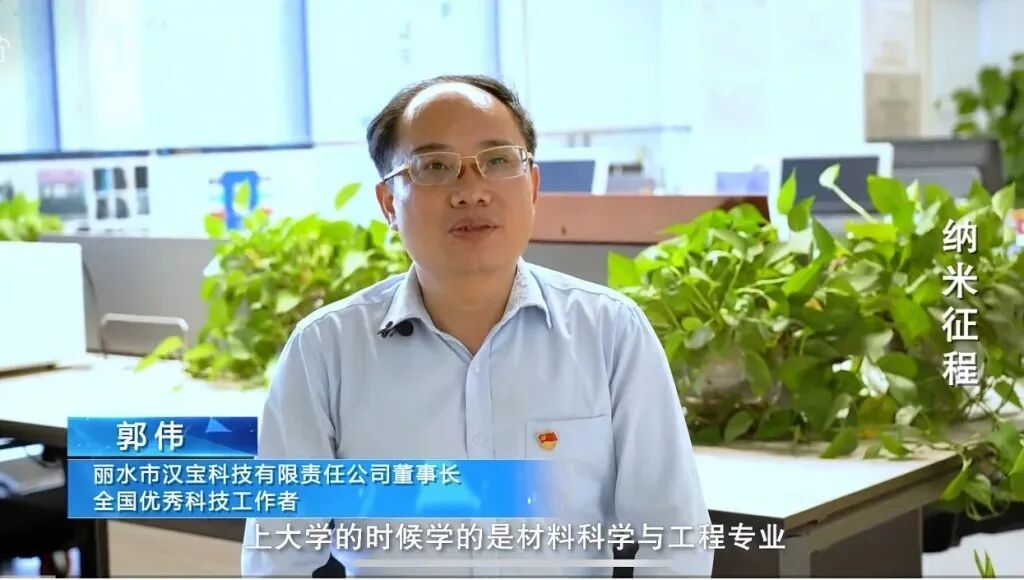
Group 1 - The Russian Academy of Engineering's China headquarters is investigating the academic misconduct case involving Guo Wei from Jiangsu University of Science and Technology, particularly regarding his claim of being elected as a foreign academician in 2025 [1] - Jiangsu University of Science and Technology has acknowledged receiving a report about Guo Wei's alleged academic misconduct in September 2025, and has initiated an investigation which confirmed serious academic misconduct, leading to the termination of his employment [3] - The university has reported the case to law enforcement, and the investigation is currently ongoing [3]
俄罗斯工程院:郭某外籍院士资格暂予中止
Xin Jing Bao· 2025-11-22 23:59
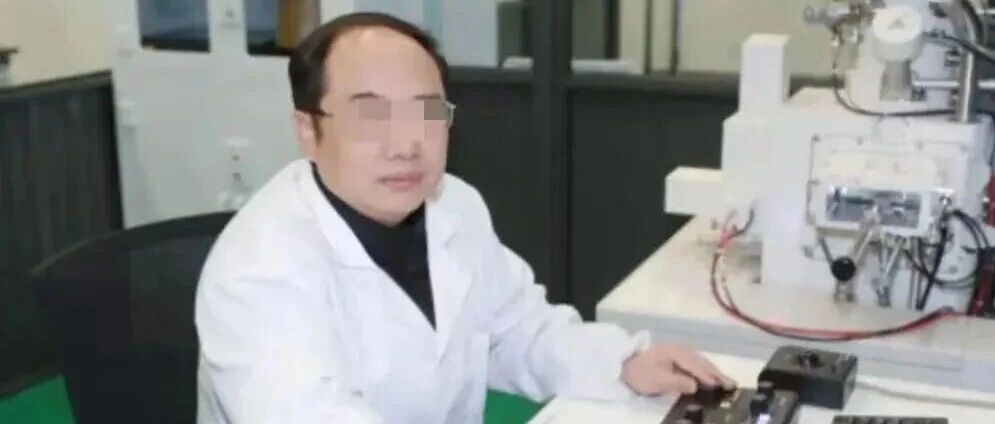
Group 1 - The Russian Academy of Engineering has temporarily suspended the foreign academician title of Guo, a former professor at Jiangsu University of Science and Technology, pending a compliance review of his submitted materials [1][2] - Jiangsu University reported that it received allegations of academic misconduct against Guo in September 2025, leading to an investigation that confirmed serious academic misconduct, resulting in the termination of his employment [1][2] - The university has acknowledged issues in the material review process during Guo's recruitment and has committed to accountability measures [1] Group 2 - Guo held multiple prestigious titles, including chief scientist at Jiangsu University, professor, doctoral supervisor, and foreign academician of the Russian Academy of Engineering, prior to the misconduct allegations [2] - The Russian Academy of Engineering was established in 1991 and currently includes 1,350 scientists and engineers, with over 200 foreign academicians from 30 countries [2]
经济学家宋清辉撕开遮羞布:江苏科大郭伟不是骗徒?真正造假的是评价体系
Sou Hu Cai Jing· 2025-11-22 21:17
Core Viewpoint - The statement by economist Song Qinghui highlights a systemic issue within China's higher education evaluation system, suggesting that the problem lies not with individuals like Guo Wei, but with the flawed system itself [3][4][5]. Group 1: Systemic Issues in Higher Education - The phrase "the higher education evaluation system is itself committing fraud" refers to a systemic and institutionalized false prosperity rather than simple data falsification [6]. - The evaluation system emphasizes quantity over quality, leading to a focus on publishing numerous papers rather than engaging in deep, meaningful research [7]. - A culture of "inflation" is prevalent, where researchers break down one result into multiple publications, chase trends, and replicate studies to meet evaluation criteria [8]. - The system has fostered a "paper factory" culture, where academic misconduct such as ghostwriting and interest exchange has emerged as a gray industry [9]. - The simplification of complex educational and research activities into cold numbers and metrics distorts talent evaluation, favoring those who can navigate the system over those who conduct substantial research [9]. - Resources are misallocated, with significant research funding directed towards projects that yield easy publications rather than addressing critical challenges [10]. Group 2: Public Resonance and Controversy - Many in academia resonate with the statement, feeling that it articulates a widely recognized issue that they often cannot voice [11]. - There are concerns that this flawed system produces graduates with superficial qualifications, damaging the reputation and long-term development of Chinese higher education [11]. - Some argue that even if the system is flawed, individual academic misconduct should not be excused, raising questions about moral responsibility [11]. - The extremity of the statement has sparked debate, as it may overlook the efforts of many scholars who are genuinely dedicated to research [11]. - The challenge remains in reforming this complex evaluation system, which is a global issue, and finding solutions is a significant hurdle [11]. Group 3: Implications for Higher Education - Song Qinghui's statement serves as a critical examination of the current state of higher education in China, prompting a national reflection on the purpose and direction of universities [12]. - It raises fundamental questions about whether universities should prioritize metrics and indicators or return to their core mission of truth-seeking, character development, and societal service [12]. - The reality is that when a system rewards misconduct, every individual who engages in fraud is merely a product of that system [13].
大骗子郭伟如何当上“首席科学家”?校方:我们也是受害者!学生:他从未上过课,招生要求女生优先、有服从意识
Mei Ri Jing Ji Xin Wen· 2025-11-21 17:17
Core Points - The incident involving Guo Wei, a former chief scientist at Jiangsu University of Science and Technology, has attracted widespread attention due to allegations of academic misconduct [1][3] - The university has initiated an investigation after receiving reports of Guo's academic fraud, leading to the termination of his employment and a report to law enforcement [3][10] Group 1: Allegations and Investigation - Guo Wei was accused of serious academic misconduct, which prompted Jiangsu University to terminate his employment and report the case to the police [3] - The university acknowledged shortcomings in the review process during Guo's hiring and promised to hold accountable those responsible [3][10] Group 2: Student Experiences and Concerns - A former doctoral student, Lin Chu, expressed doubts about Guo's qualifications, noting that he had never attended classes and had imposed unreasonable admission criteria [4][6] - Lin reported that Guo's teaching style was unprofessional, lacking in-depth academic discussion, and that he had no laboratory or research equipment available for students [7][9] Group 3: Financial Misconduct - Lin provided evidence of Guo's questionable financial practices, including expenses for self-promotion and non-existent research activities [8] - Allegations surfaced regarding Guo potentially misappropriating research funds, although university officials denied claims of significant financial misconduct [11][12] Group 4: University Policies and Hiring Practices - Jiangsu University has a structured process for hiring chief scientists, which includes rigorous evaluations and criteria for selection [10][12] - The university's policies stipulate that any misconduct during the hiring process could lead to disqualification from future appointments [12][13]