
医疗科研

Search documents
AI算法自动解析脑干白质神经束
Jin Rong Jie· 2026-02-23 23:39
Core Insights - A research team from MIT, Harvard University, and Massachusetts General Hospital has developed an AI software that can automatically analyze white matter tracts in the brainstem, which were previously difficult to image clearly [1] Group 1 - The AI software utilizes algorithms to enhance the clarity of imaging in the brainstem [1] - This breakthrough opens new avenues for studying the brainstem and provides new tools for researching neurological diseases and brain injuries [1] - The research findings were published in the Proceedings of the National Academy of Sciences [1]
一日内两成果同登《自然》,新华医院医工交叉与基因治疗领域迎来重大突破
Xin Lang Cai Jing· 2026-02-19 11:42
Group 1: Breakthroughs in Rare Disease Diagnosis - Shanghai Xinhua Hospital has developed DeepRare, the world's first traceable AI system for rare disease diagnosis, addressing the global challenge of diagnostic transparency [1][2] - DeepRare achieves a first diagnosis accuracy of 57.18% using only clinical phenotype information, and over 70.6% when incorporating genetic sequencing data, making it a valuable tool for grassroots hospitals lacking genetic testing capabilities [2] - The platform has attracted over 1,000 professional users and serves more than 600 top medical research institutions globally, with plans for a "Global AI Rare Disease Diagnosis Alliance" and a clinical validation program targeting 20,000 cases [2] Group 2: Advances in Gene Therapy for Neurodevelopmental Disorders - A collaborative team from Shanghai Xinhua Hospital and other institutions has made significant progress in gene therapy for neurodevelopmental diseases, including autism, through precise gene editing in the brain [3][4] - The team created a humanized mutation mouse model to simulate core symptoms for treatment research and developed a novel adenine base editor, TeABE, which minimizes the risk of genomic disruption compared to traditional methods [4] - Successful experiments in non-human primate models have demonstrated the feasibility of cross-species application of this technology, providing substantial preliminary data for future clinical trials [4][5]
中国专家成功研发可溯源AI诊断系统 破解罕见病诊断世界性难题
Xin Lang Cai Jing· 2026-02-19 05:38
Core Viewpoint - The article highlights the development of DeepRare, the world's first traceable intelligent diagnostic system for rare diseases, which addresses the global challenge of diagnosing rare diseases effectively [1][2]. Group 1: DeepRare's Technological Advancements - DeepRare utilizes a pioneering "Agentic AI" architecture that enhances traditional medical AI by providing a clear reasoning process, thus overcoming the "trust crisis" associated with conventional AI systems [2]. - The system integrates vast medical literature and clinical case data, enabling a deep understanding of medical knowledge rather than simple information retrieval [2]. - DeepRare demonstrates a "phenotype decoding" capability, achieving a first-position diagnostic accuracy of 57.18% based solely on clinical phenotype information, which is a 23.79 percentage point improvement over previous models [3]. Group 2: Performance and Application - When gene sequencing data is included, DeepRare's diagnostic accuracy exceeds 70.6%, significantly outperforming the commonly used Exomiser tool, which has an accuracy of 53.2% [3]. - The DeepRare online diagnostic platform was launched on July 26, 2025, and has quickly gained recognition, attracting over 1,000 professional users and covering more than 600 medical and research institutions globally [3]. Group 3: Future Initiatives - DeepRare is currently undergoing internal testing at Xinhua Hospital and will serve as a digital quality control tool in the rare disease diagnosis process [4]. - A "Global AI Rare Disease Diagnosis Alliance" is being established, along with a "10,000 Clinical Validation Plan" to validate DeepRare's performance through real-world testing of 20,000 rare disease cases [4].
中华医学会糖尿病学分会主要创始人钱荣立辞世,享年93岁
Xin Lang Cai Jing· 2026-02-08 12:21
Core Viewpoint - The passing of Professor Qian Rongli, a prominent figure in endocrinology and diabetes research in China, marks a significant loss for the field, as he contributed greatly to diabetes prevention and treatment in the country [1][2]. Group 1: Contributions to Diabetes Research - Professor Qian Rongli was a key figure in the establishment and development of diabetes research in China, significantly impacting clinical, scientific, and public health efforts related to endocrine metabolic diseases [1]. - He was instrumental in founding the Chinese Diabetes Society and played a crucial role in expanding the professional community and enhancing academic exchange in the field [1]. - Qian served as the editor-in-chief of the Chinese Journal of Diabetes, which became a vital platform for disseminating research findings and clinical experiences [2]. Group 2: Academic and Professional Achievements - He graduated from China Medical University in 1955 and held various positions at Peking University First Hospital, eventually becoming a professor and doctoral supervisor [1]. - Qian was a major contributor to the first Chinese Diabetes Prevention and Treatment Guidelines, integrating international knowledge with local clinical practices [2]. - He authored several significant publications, including "Contemporary Treatment of Diabetes and Its Complications" and "Diabetes Clinical Guidelines," which have been influential in guiding diabetes management in China [2].
中国专家脑机接口研究获突破
Xin Lang Cai Jing· 2026-02-01 06:55
Core Viewpoint - The article discusses a breakthrough in medical technology that allows for the safe opening and closing of the blood-brain barrier (BBB) using an ultrasound-based device, UltraBrainPad, to enhance drug delivery for treating glioblastoma patients [1][2]. Group 1: Technology and Methodology - The UltraBrainPad device utilizes ultrasound neuroregulation technology to open the BBB in glioblastoma patients, significantly increasing drug concentration in the brain by an average of 8 times compared to untreated brain tissue [1][2]. - The entire process of opening the BBB takes only 3 minutes, and the BBB can be safely closed again 6 hours after treatment, ensuring both efficacy and safety [1][2]. - The device allows for real-time observation of the brain's condition and the degree of BBB opening through a handheld ultrasound probe, enhancing the precision of the treatment [2]. Group 2: Clinical Implications - Glioblastoma accounts for approximately 30% of all malignant brain tumors, with an average survival time of around 16 months, highlighting the need for more effective treatment methods [2]. - Traditional chemical treatments for glioblastoma have been largely ineffective due to the BBB, prompting the exploration of physical methods like ultrasound to improve drug delivery [2]. - The research team aims to expand the application of ultrasound neuroregulation technology to various brain diseases in future clinical trials, potentially benefiting a wider range of patients [3].
8937万元!重庆医科大学近期大批仪器采购意向
仪器信息网· 2026-01-25 09:01
Core Viewpoint - Chongqing Medical University has announced procurement intentions for 17 items of laboratory equipment, with a total budget of 89.37 million yuan, scheduled for purchase between September 2025 and December 2026 [1][2]. Procurement Summary - The procurement includes various advanced laboratory instruments such as: - Flow cytometry analyzer, budgeted at 200,000 yuan, aimed at detailed immunological cell typing and monitoring [4]. - Fully automated protein immunoblotting system, budgeted at 250,000 yuan, for protein separation and detection [5]. - Digital PCR system, budgeted at 80,000 yuan, for biomarker research and gene expression analysis [6]. - Cell immune analysis instrument, budgeted at 318,000 yuan, for immunological research [6]. - Mass spectrometer, budgeted at 280,000 yuan, for rapid qualitative and quantitative analysis in various fields [7]. - Gene sequencer, budgeted at 220,000 yuan, for high-throughput sequencing applications [7]. - Other equipment includes a tunnel-type cage washer, high-speed refrigerated centrifuge, and various analytical instruments, with budgets ranging from 64,000 to 3.5 million yuan [8][9][11]. Equipment Requirements - All equipment must meet national standards and technical specifications, ensuring reliability and safety [4][5][6]. - Suppliers must provide comprehensive technical support, including training and maintenance services, with a minimum operational uptime of 99% [5][6][9]. - The procurement process emphasizes the need for after-sales service, including regular maintenance and timely response to service requests [9][11].

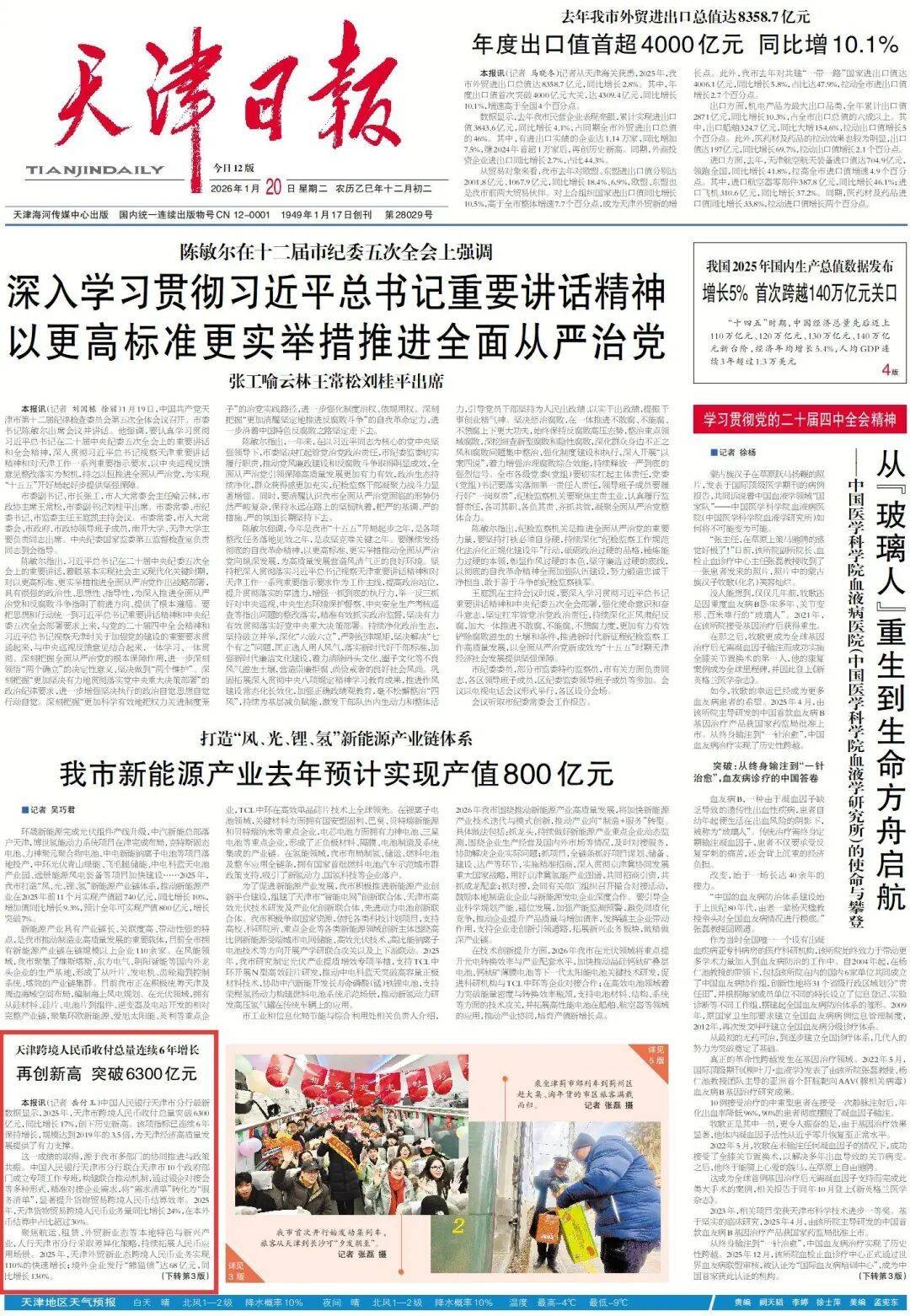
天津跨境人民币收付总量连续6年增长
Sou Hu Cai Jing· 2026-01-20 01:51
Group 1: Foreign Trade Performance - In 2025, Tianjin's total foreign trade import and export value reached 835.87 billion yuan, with exports exceeding 400 billion yuan for the first time, marking a year-on-year increase of 10.1% [1] - The export value of private enterprises in Tianjin reached 843.6 billion yuan, a year-on-year growth of 4.1%, with the number of exporting enterprises reaching a historical high of 11,400 [1] - The export of mechanical and electrical products was the largest category, totaling 871 billion yuan, accounting for over 60% of the city's total exports, with a year-on-year increase of 10.3% [1] Group 2: Cross-Border RMB Transactions - In 2025, Tianjin's cross-border RMB payment volume exceeded 630 billion yuan, a year-on-year increase of 17%, marking a historical high and achieving 3.5 times the scale of 2019 [11] - The volume of cross-border RMB business in Tianjin's goods trade grew by 24% year-on-year, accounting for over 30% of total foreign and domestic currency settlements [11] - The issuance of "Panda bonds" by overseas enterprises reached 6.8 billion yuan, with a year-on-year growth of 130% [11] Group 3: New Energy Industry Development - Tianjin's new energy industry is expected to achieve an output value of 80 billion yuan in 2025, with a year-on-year growth of 9.3% [5] - The city aims to build a comprehensive new energy industry chain, focusing on wind, solar, lithium, and hydrogen sectors [5] - The number of enterprises in Tianjin's new energy industry chain exceeds 110, contributing significantly to the high-quality development of the manufacturing sector [5] Group 4: Policy and Institutional Support - The People's Bank of China Tianjin Branch has established a special working group with ten government departments to enhance cross-border RMB transaction efficiency [11] - The implementation of cross-border RMB facilitation policies has expanded from three regions to sixteen, significantly increasing the number of recognized quality enterprises [12] - The total amount of cross-border RMB facilitation business in Tianjin has exceeded 540 billion yuan [12]
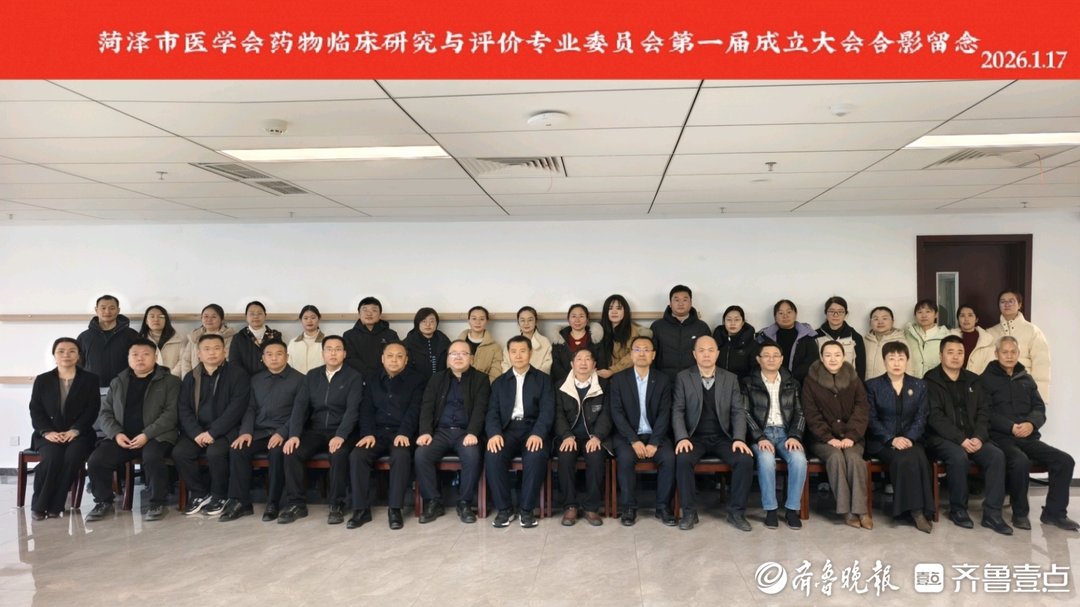
菏泽市医学会药物临床研究与评价专业委员会首届大会成功举办
Qi Lu Wan Bao· 2026-01-18 22:38
Group 1 - The establishment of the Clinical Research and Evaluation Professional Committee in Heze City marks a new development opportunity in the local medical field [1][4] - The committee aims to enhance communication and collaboration among various stakeholders in drug clinical research and evaluation [3] - The committee plans to hold 1-2 citywide academic conferences annually, provide systematic training, promote the transformation of research results into public knowledge, and improve operational mechanisms [3] Group 2 - The successful hosting of the meeting signifies a new milestone for drug clinical research and evaluation in Heze City [4] - The committee is expected to play a significant role in advancing medical development and serving public health [4]
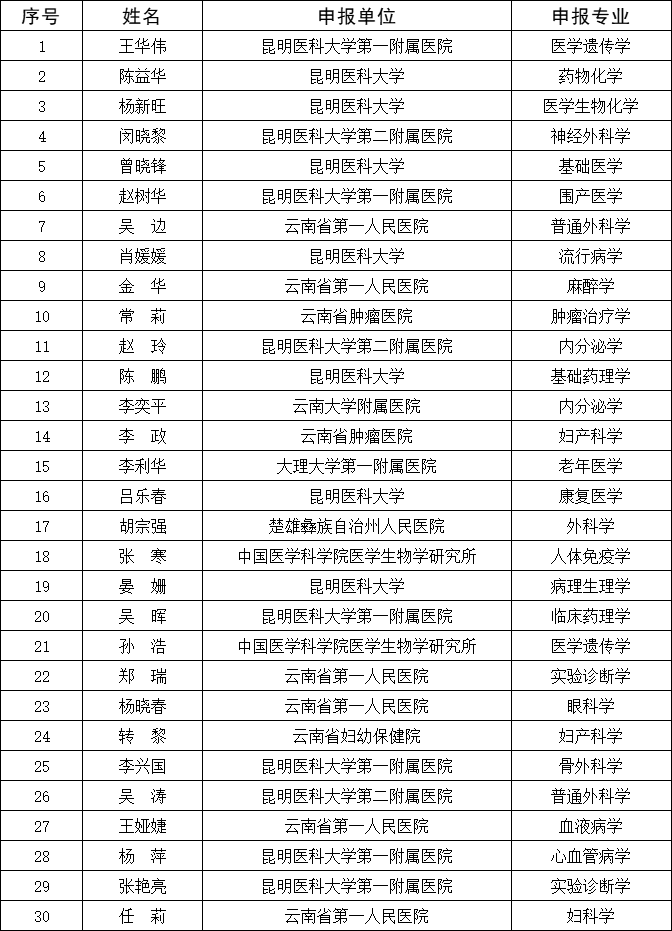
最新名单公示!来自云南各大医院、高校、科研机构→
Xin Lang Cai Jing· 2026-01-15 20:25
Core Points - The Yunnan Provincial Health Commission has announced the list of high-level health technology talent to be trained for 2025, including 30 "high-end medical talents," 60 "medical discipline leaders," and 90 "medical reserve talents" [1][2]. Group 1: Announcement Details - The announcement is based on the implementation plan issued by the Yunnan Provincial Health Commission and the Yunnan Provincial Finance Department [1]. - The selection process involved expert reviews and approvals from the provincial health commission's director's office and party committee meetings [1]. Group 2: Training Categories - The training categories include: - 30 individuals designated as "high-end medical talents" [1]. - 60 individuals designated as "medical discipline leaders" [1]. - 90 individuals designated as "medical reserve talents" [1]. Group 3: Public Feedback - The public can provide feedback on the announced list from January 13 to January 20, 2026 [2].
AI赋能 拓展医疗新领域
Huan Qiu Wang Zi Xun· 2026-01-08 03:14
Group 1: Russia's Health Project and AI Development - Russia has launched a national health project called "New Technologies for Health Protection," with a budget of 37.5 billion rubles planned for 2025-2027, focusing on enhancing medical research efficiency and ensuring technological sovereignty [1] - The project supports clinical trials for 8 original drugs targeting cancer and cardiovascular diseases, the development of 12 original medical devices, and 8 technologies for treating neurodegenerative diseases [1] - Yandex, Russia's largest search engine, has developed a pediatric MRI analysis tool, marking it as one of the first AI medical products specifically for children, adhering to strict data security standards [1] Group 2: Advances in Neurodegenerative Disease Research - The Peter the Great St. Petersburg Polytechnic University has made progress in neurodegenerative disease research, completing preclinical trials of a compound named C20, which reduces amyloid plaque in Alzheimer's disease model mice without affecting survival or genomic stability [2] Group 3: AI and Digital Health in Germany - The German Cancer Research Center (DKFZ) has released an AI-based cancer imaging analysis tool that identifies early tumor characteristics with unprecedented speed and accuracy [11] - The Fraunhofer Society is developing new biosensors and AI algorithms for real-time monitoring of chronic disease patients, aiming to translate research into practical digital health products [11] - Munich University and other institutions are advancing the development of "digital twins" of the human body to simulate drug metabolism and disease progression, potentially accelerating virtual clinical trials [11] Group 4: Synthetic Biology Legislation in South Korea - South Korea's National Assembly has passed the "Synthetic Biology Promotion Act," establishing synthetic biology as a core national technology and aiming to enhance global competitiveness in this field [14] - The act mandates the Ministry of Science and ICT to develop a national plan every five years, creating a collaborative innovation system among government, research, and industry [14] - The government plans to invest 126.3 billion won in a national "biomanufacturing factory," which will automate the design, construction, and testing of biological components using AI technology [14] Group 5: Vaccine Development and Public Health in South Africa - Biovac has received regulatory approval to begin clinical trials for an oral cholera vaccine, marking the first locally produced vaccine in South Africa in over fifty years [16] - The University of Cape Town's South African Tuberculosis Vaccine Initiative has completed a Phase II clinical trial for a new tuberculosis vaccine candidate, achieving a 54% efficacy rate [16] - South African researchers have discovered broadly neutralizing antibodies effective against multiple HIV strains prevalent in Southern Africa, collaborating with the NIH to initiate Africa's first long-acting injectable antiretroviral drug trial for young women [16]