
实质重于形式原则

Search documents
许家印的23亿美元,藏不住了
创业家· 2025-10-10 10:14
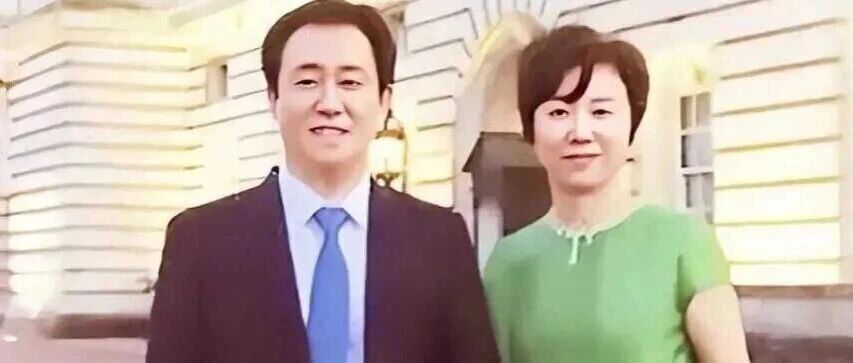
Group 1 - The article discusses the collapse of Xu Jiayin's family trust, which was intended to protect his wealth from corporate risks and debt disputes, following a court ruling in Hong Kong that allowed liquidators to take control of his assets [4][8]. - The family trust, established in 2019 with $2.3 billion, was funded by dividends from Evergrande, but the court found that Xu retained too much control over the trust, leading to its classification as a fraudulent asset transfer [9][10]. - The ruling is based on principles such as "substance over form," "fraudulent transfer," and "creditor protection," indicating that trusts cannot be used to evade debt obligations [10][11]. Group 2 - Following the court's decision, a global asset recovery operation was initiated, freezing $7.7 billion in assets across 12 countries, including luxury properties and yachts [12][13]. - The liquidators are seeking to challenge the validity of the family trust in U.S. courts, arguing that it was established to evade debt responsibilities, which could lead to further legal complications for Xu [13][14]. - The case serves as a cautionary tale for entrepreneurs, emphasizing the importance of legal compliance and ethical business practices over attempts to exploit legal loopholes [15].

许家印的23亿美元,藏不住了
商业洞察· 2025-10-10 09:29
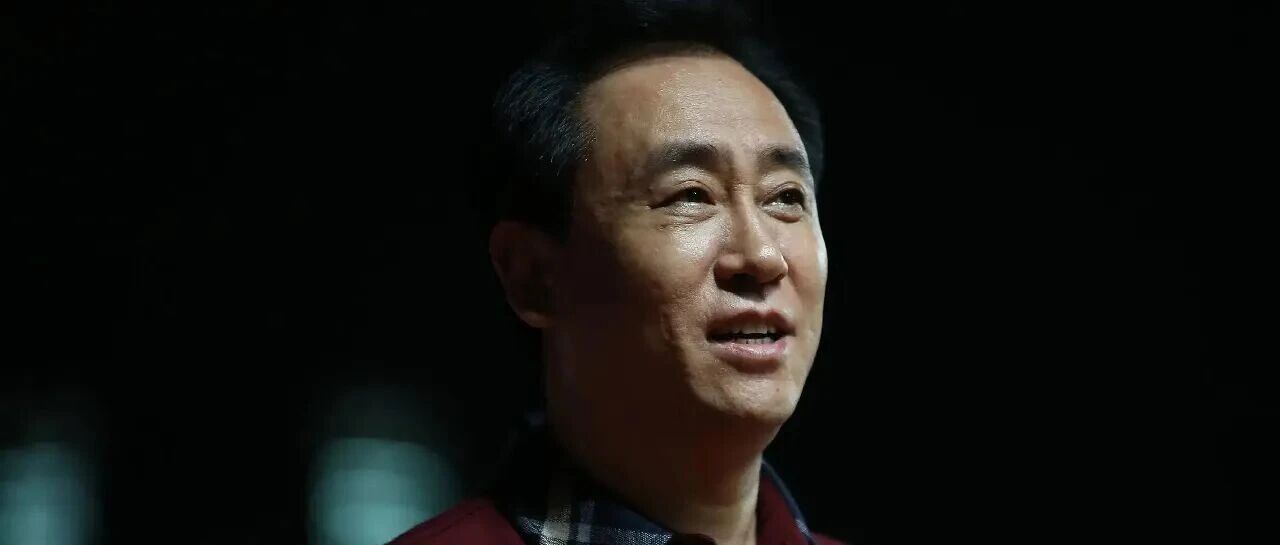
Core Viewpoint - The case of Xu Jiayin's family trust highlights the limitations of offshore trusts as a means of asset protection, demonstrating that legal frameworks prioritize creditor rights over perceived asset isolation strategies [3][6][8]. Group 1: Xu Jiayin's Family Trust Breach - Xu Jiayin established a family trust in the U.S. in 2019, funded by over 50 billion RMB in dividends from Evergrande, with a structure designed to ensure wealth transfer to his sons [5][9]. - The Hong Kong court ruled that the trust was not a legitimate asset protection mechanism due to Xu retaining control over key decisions, leading to the classification of the asset transfer as fraudulent [6][9]. - The court's decision was based on principles emphasizing substance over form, anti-fraud measures, and prioritizing creditor protection in debt crises [6][8]. Group 2: Global Asset Recovery Actions - Following the court ruling, a global asset recovery initiative was launched, freezing $7.7 billion in assets across 12 countries, including luxury properties and yachts [11][13]. - The liquidators filed a request in a U.S. court to annul the $2.3 billion family trust based on fraudulent transfer claims, which could challenge the trust's validity under U.S. law [13][14]. - The outcome of the U.S. court's recognition of the Hong Kong ruling will significantly impact the trust's status, with potential implications for Xu's ex-wife, who is also involved in legal disputes over asset division [14][15].
许家印的23亿美元,藏不住了
凤凰网财经· 2025-10-09 13:48
Core Viewpoint - The case of Xu Jiayin's family trust illustrates the limitations of offshore trusts as a means of asset protection, highlighting that legal frameworks prioritize creditor rights over perceived asset isolation strategies [1][5][10]. Group 1: Xu Jiayin's Family Trust Structure - In 2019, Xu Jiayin and his wife established a family trust in the U.S. with $2.3 billion, funded by over 50 billion RMB in dividends from Evergrande between 2009 and 2022 [2][6]. - The trust was designed to ensure wealth transfer, with the eldest son, Xu Zhijian, receiving only income while the principal was reserved for future generations, reflecting a controlled wealth management strategy [2][6]. - The younger son, Xu Tenghe, was not included in the same trust arrangement and faced legal issues related to Evergrande, indicating a disparity in family wealth distribution [2][6]. Group 2: Legal Principles and Court Rulings - The Hong Kong court's decision was based on the principles of "substance over form" and "fraudulent asset transfer," asserting that if the grantor retains control over the assets, the trust cannot be considered independent [3][5]. - The court emphasized that using a trust to shield assets from creditors while incurring significant debts is not permissible, prioritizing the rights of ordinary creditors in debt crises [3][5]. - The ruling demonstrated that the trust lacked independence due to Xu Jiayin's retained decision-making powers and the questionable origins of the trust's funding [6][10]. Group 3: Global Asset Recovery Efforts - Following the court ruling, a global asset recovery initiative was launched, leading to the freezing of $7.7 billion in assets across 12 countries, including luxury properties and yachts [7][9]. - The liquidators filed a request in a U.S. court to annul the $2.3 billion family trust under fraudulent transfer laws, which could challenge the trust's validity based on the intent to evade debt obligations [9][10]. - The outcome of the U.S. court's recognition of the Hong Kong ruling will significantly impact the future of Xu Jiayin's family trust and its assets [10]. Group 4: Implications for Wealth Management - The case serves as a cautionary tale for entrepreneurs, emphasizing that legal loopholes cannot safeguard wealth, and that legitimate business practices are essential for long-term asset protection [10]. - The increasing global regulatory scrutiny indicates that offshore trusts are not immune to legal challenges, and attempts to evade debt through such structures may lead to asset freezes and reputational damage [10].
非上市股份公司将资本公积用定向增发给一个股东,个人股东涉及到个税吗?
Sou Hu Cai Jing· 2025-07-18 13:24
Core Viewpoint - The article discusses the implications of a non-listed company conducting a targeted issuance of capital reserves to a corporate shareholder, questioning whether individual shareholders are subject to personal income tax in this scenario [1][2]. Group 1: Tax Implications - The targeted issuance, despite its sophisticated terminology, essentially involves the transfer of equity from individual shareholders to a corporate shareholder, which may trigger personal income tax obligations for individual shareholders [1][5]. - Individual shareholders may agree to this arrangement to avoid the 20% personal income tax on dividend income, which corporate shareholders do not incur [2][3]. Group 2: Tax Avoidance Strategies - The primary motive behind this seemingly irrational behavior is tax avoidance, even if only temporarily, as tax regulations in China are becoming increasingly stringent against such practices [3][4]. - The article highlights two foundational principles for anti-tax avoidance measures: the substance-over-form principle and the commercial purpose standard, which allow tax authorities to scrutinize transactions for their economic substance rather than their formal appearance [4]. Group 3: Legal and Regulatory Considerations - The article emphasizes that any arrangement lacking a reasonable commercial rationale and primarily aimed at tax reduction may be disregarded by tax authorities, leading to potential penalties [4][6]. - The legitimacy of the business rationale provided by the company is questioned, suggesting that elaborate justifications may not withstand scrutiny under strict regulatory environments [6].
新开源:中勤万信会计师事务所(特殊普通合伙)关于对博爱新开源医疗科技集团股份有限公司关注函的回复
2023-01-31 12:16
中勤万信会计师事务所(特殊普通合伙) 地址:北京西直门外大街 112 号阳光大厦 10 层 电话:(86-10)68360123 传真:(86-10)68360123-3000 邮编:100044 关于对博爱新开源医疗科技集团股份有限公司 关注函的回复 深圳证券交易所创业版公司管理部: 贵部《关于对博爱新开源医疗科技集团股份有限公司的关注函》(创业板关 注函【2023】第 20 号)收悉,对于贵部询问的有关事项,我所非常重视,经认 真查询,现将核查情况回复如下: 2023 年 1 月 13 日,你公司披露《关于前期股权处置收益调整的公告》,前 期你公司与 Abcam 达成和解,Abcam 对你公司的股权处置款最终结算减少 1,800 万美元,你公司调整前期股权处置收益,将该事项会计处理计入 2021 年。 交易价格分为交易基础对价以及交易价格调整项。交易基础对价为 3.4 亿美 元。交易价格调整项为在交易基础对价 3.4 亿美元基础上加净营运资本差额;加 现金及现金等价物;减应付而未付的交易费用;减有息负债。除交易价格调整项 外,《股权收购协议》还约定了在保证金交付期间的赔偿事项,赔偿事项包含主 要为公司提交 ...
