
技术垄断

Search documents
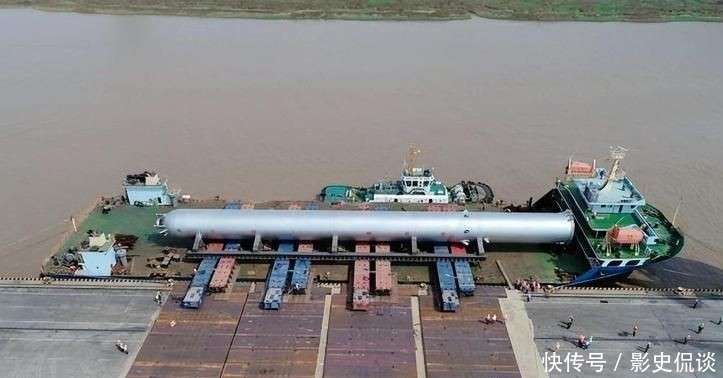
西方专家:中国不可怕,可怕的是3000吨的大国重器,将会改写规则
Sou Hu Cai Jing· 2025-07-27 08:43
Core Viewpoint - A technological breakthrough in hydrogenation reactor manufacturing by China is reshaping the global energy landscape, previously dominated by Western countries [1][5][19]. Group 1: Technological Breakthrough - The 3000-ton hydrogenation reactor developed by China One Heavy Industry marks a significant advancement, as the most advanced similar equipment globally weighed only 2000 tons prior to this [1][5]. - This reactor's primary function is to convert heavy crude oil, which constitutes a large portion of China's annual 500 million tons of crude oil imports, into lighter fuels like gasoline and diesel [3][5]. - The conversion efficiency of traditional refining equipment is often below 50%, while the new reactor can achieve over 85% conversion efficiency, effectively doubling the yield of refined products from low-quality crude oil [5][7]. Group 2: Economic Impact - The successful implementation of this technology allows China to reduce its crude oil imports by 125 million tons annually, saving substantial foreign exchange [7]. - The processing cost per ton of crude oil in domestic refineries has decreased by 120 yuan, equivalent to recreating the production capacity of two Daqing oilfields [7]. - China's share in the global petrochemical equipment market has reached 60%, attracting interest from international giants like BASF and Mitsubishi Heavy Industries for potential collaboration [7][17]. Group 3: Historical Context and Challenges - Before 2018, over 90% of high-end refining equipment was monopolized by four Western countries, leading to significant technological dependency and financial outflow from China [5][19]. - The development of the 3000-ton reactor faced skepticism, as previous attempts by other countries to scale up from 2000 tons had failed [9][15]. - Engineers in China overcame numerous technical challenges, including material selection and structural stability, to successfully manufacture the reactor [11][13]. Group 4: Global Repercussions - The introduction of this technology has prompted oil-exporting countries in the Middle East to adjust their export strategies, focusing on producing high-sulfur oil tailored for the Chinese market [7]. - Following the reactor's success, international interest has surged, with companies like ExxonMobil seeking to rent the technology, which China has declined [15][17]. - This breakthrough signifies a shift in China's manufacturing capabilities from being a follower to a leader in heavy equipment, impacting the global energy supply chain [17][19].


停令形同虚设?3834吨稀土流美,中方动真格,全球稀土洗牌
Sou Hu Cai Jing· 2025-07-14 04:17
Core Viewpoint - The global competition for rare earth elements is intensifying, with China facing challenges to maintain its technological dominance in the industry [1][10]. Group 1: China's Position and Actions - In July 2025, China's Ministry of Commerce launched a special operation against rare earth smuggling, marking the beginning of a reshuffle in the global rare earth industry [1]. - China holds a significant technological monopoly in rare earth refining, with 88% of global refining technology and 94% of high-end magnetic materials [7]. - The recent special operation aims to cut off the "curved blood transfusion" route used by the U.S. to import Chinese rare earths through third countries [9]. Group 2: U.S. Strategy and Challenges - The U.S. has imposed strict sanctions on Chinese rare earths while simultaneously relying on them for its military supply chain stability [5]. - Despite having domestic mines and partnerships with Australia, the U.S. still heavily depends on Chinese technology for refining [7]. - The U.S. Department of Defense invested $1.3 billion to support domestic rare earth companies, but the yield of trial products was below 20% due to various constraints [7]. Group 3: Global Competition and Future Outlook - Other countries, such as India and Australia, are also entering the rare earth competition, with India aiming for over 50% self-sufficiency in rare earth oxides within three years [9]. - Industry experts believe that merely increasing funding will not allow these countries to catch up with China's lead in rare earth refining in the short term [9]. - The ultimate competition will focus on mastering core technologies for high-performance rare earth materials, making simple export bans insignificant [9][10].

稀土暗战!中国三年出口量藏着的军事密码
Sou Hu Cai Jing· 2025-06-15 16:43
Core Insights - China's rare earth exports are projected to increase from 48,700 tons in 2022 to 55,400 tons in 2024, raising concerns for the U.S. F-35 production line which requires significant amounts of rare earth materials [1][3] - Despite the increase in export volume, the export value has significantly decreased from $7 billion in 2022 to $3.48 billion in 2024, indicating a drop in prices despite higher quantities sold [3] - China holds 33.8% of global rare earth reserves and monopolizes extraction technology, allowing it to control export volumes effectively [3][10] Export Dynamics - The export volume growth of only 6% in 2024 has puzzled Western nations, especially given the explosive growth in global electric vehicle production, which requires substantial amounts of rare earth materials [5] - China employs a strategy of dynamic quotas, tariff leverage, and technology controls to manage its rare earth exports, rather than simply increasing production [5][10] - The U.S. relies heavily on imports for rare earths, with 80-85% of its supply coming from abroad, 70% of which is sourced from China [5] Competitive Landscape - Other countries like Vietnam and Australia are attempting to enter the rare earth market, but face significant challenges such as lower ore grades and environmental issues [7] - China's advanced extraction technologies, such as the sequential extraction method developed by Xu Guangxian, provide a competitive edge that cannot be easily replicated by other nations [7][10] - Currently, 60% of China's rare earth permanent magnet exports are utilized in high-end applications, such as electric motors for Tesla and Siemens, indicating a strategic focus on value-added products rather than raw materials [7] Strategic Transformation - The shift from merely selling raw materials to setting industry standards reflects a strategic evolution in China's approach to rare earths, emphasizing technological innovation over resource extraction [10] - As the U.S. faces a lengthy timeline to establish new rare earth mines, China's export strategy has effectively created a technological network that enhances its position in the global market [10]

福晶科技(002222):业绩稳健增长 至期光子营收大增
Xin Lang Cai Jing· 2025-05-08 02:34
Core Viewpoint - The company reported steady growth in its financial performance for 2024 and Q1 2025, driven by increased revenue from various optical components and a focus on R&D to break foreign technology monopolies [1][2] Financial Performance Summary - **2024 Financials**: Revenue reached 880 million yuan, up 12.0% year-on-year; net profit attributable to shareholders was 220 million yuan, up 4.7%; non-recurring net profit also stood at 220 million yuan, up 11.2%. Gross margin was 53.8%, down 2.4 percentage points; net margin was 25.9%, down 1.1 percentage points [1] - **Q1 2025 Financials**: Revenue was 240 million yuan, up 15.2% year-on-year; net profit attributable to shareholders was 50 million yuan, up 3.4%; non-recurring net profit was also 50 million yuan, up 4.7%. Gross margin was 49.8%, down 2.6 percentage points year-on-year but up 3.1 percentage points quarter-on-quarter; net margin was 22.1%, down 1.9 percentage points year-on-year and down 0.6 percentage points quarter-on-quarter [1] Revenue Breakdown by Segment - Revenue from nonlinear optical crystal components, laser crystal components, precision optical components, and laser devices were 230 million, 150 million, 310 million, and 160 million yuan respectively, with year-on-year growth rates of 14.9%, 8.6%, 24.2%, and 5.4% [1] - The subsidiary Ruichuang Optoelectronics achieved revenue of 24.99 million yuan, up 45.9%, and net profit of 5.95 million yuan, up 410.8%; Zhiqi Photon achieved revenue of 76.096 million yuan, up 180.1%, with losses narrowing year-on-year [1] R&D Investment and Strategy - The company increased R&D investment to 97.54 million yuan in 2024, up 11.9% year-on-year, focusing on high-end optical components in the optical communication field and collaborating with major laser manufacturers on advanced crystals and optical devices to break foreign technology monopolies [2] Investment Outlook - The company adjusted profit expectations for 2025-2027, forecasting net profits of 270 million, 330 million, and 410 million yuan respectively, with corresponding PE ratios of 61, 50, and 41 times, maintaining a "buy" rating [2]
