
文化传承发展

Search documents
千年古刹 今朝新篇——习近平总书记在洛阳白马寺考察回访记
He Nan Ri Bao· 2025-05-21 00:06
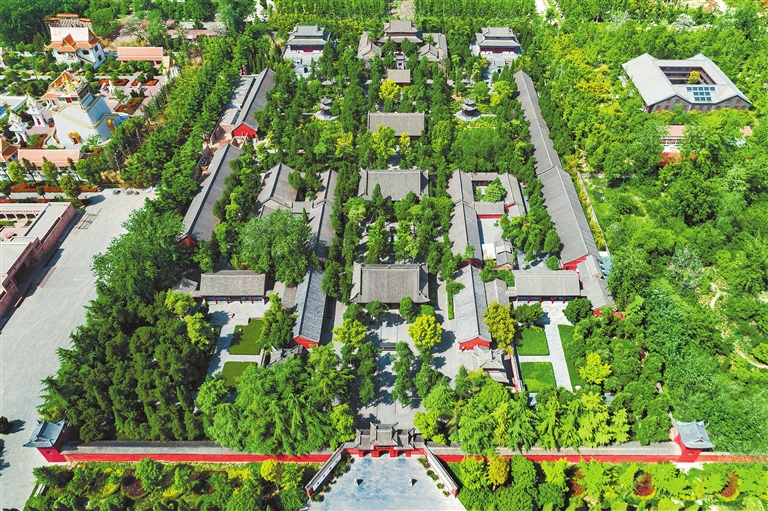
Core Viewpoint - The visit of General Secretary Xi Jinping to Baima Temple emphasizes the importance of integrating religion with Chinese traditional culture and adapting it to socialist society [1][10]. Group 1: Historical Significance - Baima Temple, established during the Eastern Han Dynasty, is recognized as the first official Buddhist temple in China, with nearly two thousand years of history [1][2]. - The temple has been a key site for the introduction and development of Buddhism in China, showcasing the process of its sinicization [11]. Group 2: Cultural Heritage Protection - Baima Temple was designated as a national key cultural relic protection unit in 1961, with ongoing protective restoration efforts since the founding of New China [2][5]. - Recent restoration projects have included the approval of a design plan in 2018 and the allocation of special funds for preservation in 2020 [5]. Group 3: Modern Developments - A new museum is being planned at Baima Temple, focusing on immersive experiences that highlight the historical evolution of the temple across different dynasties [6]. - The local government is enhancing the Baima Temple area to boost its cultural tourism appeal, including the renovation of public spaces and infrastructure [8]. Group 4: Cultural Exchange - Baima Temple serves as a platform for cultural exchange, attracting both domestic and international tourists, and fostering understanding between different civilizations [12]. - The temple's historical significance and well-preserved artifacts contribute to its role in promoting Chinese culture globally [12].

奋力谱写中原大地推进中国式现代化新篇章 牢记嘱托 阔步向前
He Nan Ri Bao· 2025-05-21 00:06
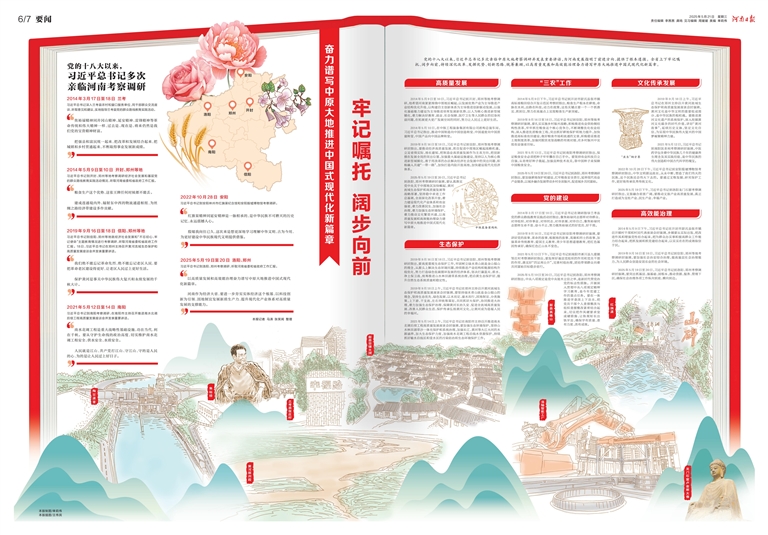
Core Viewpoint - Since the 18th National Congress of the Communist Party, General Secretary Xi Jinping has made multiple visits to Henan, providing guidance for the province's development and emphasizing high-quality growth and effective governance to advance Chinese-style modernization [2][10]. High-Quality Development - Xi Jinping has stressed the importance of optimizing and upgrading the industrial structure in Henan, focusing on developing advantageous industries and building an independent innovation system [11]. - The emphasis is on enhancing the modern industrial system's support for high-quality development, with a call for technological innovation to lead the way [10][12]. Ecological Protection - The concept of "green mountains and clear waters are invaluable assets" has been highlighted, with a focus on ecological protection and sustainable development in the Yellow River basin [13][14]. - Xi has called for a comprehensive approach to ecological governance, ensuring the long-term health of the Yellow River and improving the quality of natural ecosystems [14]. Agricultural Development - The importance of grain production and agricultural modernization has been underscored, with a focus on protecting arable land and enhancing agricultural technology [15]. - Xi has emphasized the need for rural revitalization and structural reforms in agriculture to ensure food security and promote rural prosperity [15]. Party Building - The significance of grassroots party organization and the role of party members in governance have been stressed, with a focus on improving local governance and community engagement [16][17]. - Xi has called for the implementation of the Central Eight Regulations to strengthen party discipline and governance [17]. Cultural Heritage and Development - The importance of preserving and promoting Yellow River culture as a vital part of Chinese civilization has been emphasized, with a call to tell the "Yellow River story" and enhance cultural confidence [18]. - The integration of cultural and tourism industries is seen as a pathway to high-quality development, aiming to make it a pillar industry for the economy [19]. Effective Governance - The need for grassroots governance improvement and community service enhancement has been highlighted, ensuring that governance efforts reach all levels of society [20]. - Xi has called for strengthening social governance capabilities to create a safe and stable environment for the people [20].
文脉传承激荡隽永“中华韵”
Xin Hua She· 2025-05-13 13:52
Core Viewpoint - The article emphasizes the importance of cultural heritage preservation and innovation in driving modern economic development in Eastern China, showcasing various initiatives and activities that blend traditional culture with contemporary practices [1][20]. Group 1: Cultural Heritage Preservation - The article highlights the significance of protecting ancient architecture and cultural relics as a means to preserve historical memory and urban cultural lineage, particularly in cities like Quanzhou [4]. - Quanzhou is presented as a historical maritime trade center where agricultural and maritime cultures coalesce, creating a unique urban landscape that reflects a rich cultural heritage [2][3]. - The archaeological discoveries in Beijing, particularly at the Liuli River site, reveal the city's evolution from a peripheral area to a central hub of civilization, showcasing the integration of diverse cultural influences [5][6]. Group 2: Cultural Transmission and Education - The article discusses various educational initiatives aimed at instilling traditional cultural values in younger generations, such as the activities at the Confucius Museum in Qufu, which include hands-on learning experiences [10]. - The promotion of traditional crafts, such as the Li ethnic weaving techniques, is highlighted as a means of cultural transmission and economic empowerment for local communities [12]. - The integration of red culture into educational programs, as seen in Tianjin, aims to foster a sense of historical awareness and national pride among youth [14][19]. Group 3: Economic Development through Cultural Innovation - The article notes that cultural tourism is becoming a significant driver of economic growth, with regions like Shanhaiguan reporting a 7.61% increase in tourist numbers during the May Day holiday [15]. - In Jiangsu, the blending of cultural heritage with modern tourism experiences has led to a 15.62% increase in visitor numbers and a 14.79% rise in consumer spending during the same holiday period [20]. - The article emphasizes the need for creative transformation and innovative development of cultural resources to enhance economic advantages, as seen in various cultural and tourism initiatives across Eastern China [20].