新型腐败

Search documents
一次收受2000枚以太币 证监会科技监管司原司长姚前大搞权钱交易
Shang Hai Zheng Quan Bao· 2026-01-14 13:56
Core Viewpoint - The article discusses the emergence of new forms of corruption facilitated by virtual currencies, highlighting a specific case involving Yao Qian, a former official at the China Securities Regulatory Commission, who engaged in corrupt practices using cryptocurrencies [1][10][25]. Group 1: Corruption and Virtual Currency - The article emphasizes that traditional forms of corruption, such as cash and valuable goods, are being replaced by virtual currencies, which offer a new avenue for illicit transactions [1][10]. - Yao Qian was found to have received bribes in the form of virtual currencies, specifically Ethereum, which were stored in hardware wallets [3][10]. - The investigation revealed that Yao Qian's corrupt activities included significant transactions involving virtual currencies, demonstrating the challenges of regulating such assets [10][27]. Group 2: Investigation and Evidence - The investigative team utilized advanced data analysis and blockchain technology to trace the flow of virtual currencies linked to Yao Qian, confirming the illicit nature of the transactions [10][23]. - Evidence collected included hardware wallets and bank accounts that were disguised as "shell accounts," which were actually controlled by Yao Qian [12][14]. - The investigation uncovered a complete evidence chain linking Yao Qian's corrupt activities to specific transactions, including a notable case where 2,000 Ethereum were involved, valued at over 60 million yuan at peak [21][25]. Group 3: Implications for Regulatory Practices - The case of Yao Qian serves as a precedent for future investigations into corruption involving virtual currencies, highlighting the need for regulatory bodies to adapt to new forms of financial misconduct [25][27]. - The article suggests that despite the anonymity provided by virtual currencies, they ultimately leave a traceable digital footprint that can be investigated [23][27]. - The successful prosecution of Yao Qian illustrates the importance of leveraging technology and data analytics in combating corruption in the digital age [25][27].

一次收受2000枚以太币,厅官姚前隐性腐败细节披露
Zhong Guo Xin Wen Wang· 2026-01-14 13:55
Core Viewpoint - The news reveals details of corruption involving Yao Qian, the former director of the Technology Supervision Department of the China Securities Regulatory Commission, who engaged in illicit transactions using virtual currencies, specifically Ethereum, to facilitate bribery and corruption [1][5]. Group 1: Corruption Details - Yao Qian received 2,000 Ethereum as a bribe, which at its peak was valued at over 60 million yuan [5]. - Investigations uncovered that Yao Qian used "sleeper accounts" to conceal his financial activities, with significant funds traced back to a virtual currency trading account [4]. - A total of 1,000 million yuan was traced to Yao Qian's "sleeper account," which was subsequently used to pay part of the purchase price for a villa valued at over 20 million yuan, registered under a relative's name but effectively owned by Yao Qian [4]. Group 2: Investigation and Evidence - The investigation utilized blockchain technology to trace the flow of 2,000 Ethereum from a cryptocurrency wallet belonging to a businessman to Yao Qian's wallet, confirming the illicit transaction [5]. - Yao Qian admitted to his violations after the investigation presented a solid chain of evidence, including the transfer of 370 Ethereum, which was exchanged for 10 million yuan [5]. - In November 2024, Yao Qian was expelled from the Party and public office, and was referred to the prosecution for legal proceedings [6].
一次收受2000枚以太币,市值高达数千万元!姚前案详情披露
财联社· 2026-01-14 13:53
Core Viewpoint - The article discusses the case of Yao Qian, former director of the Technology Supervision Department of the China Securities Regulatory Commission, highlighting the emergence of new forms of corruption facilitated by virtual currencies and blockchain technology [1][8][30]. Group 1: New Forms of Corruption - Traditional forms of corruption often involve cash, gold, and other tangible assets, but the rise of digital currencies has introduced new methods for concealing corrupt activities [2][30]. - Virtual currencies, due to their decentralized nature, allow for anonymous transactions that are difficult to trace, posing significant challenges for regulatory oversight [12][30]. Group 2: Case Details - Yao Qian was investigated for accepting bribes in the form of virtual currencies, with evidence showing that he received substantial amounts through complex financial maneuvers involving "shell accounts" [8][19]. - A notable transaction involved 10 million yuan traced back to a virtual currency trading account, which was later used to pay part of the purchase price for a villa valued at over 20 million yuan [17][28]. Group 3: Investigative Techniques - The investigative team utilized big data and blockchain technology to trace the flow of virtual currencies, successfully linking Yao Qian's illicit transactions to specific accounts and assets [26][30]. - The investigation revealed that Yao Qian's close associate, Jiang Guoqing, played a significant role in facilitating these corrupt transactions, further complicating the web of deceit [21][19]. Group 4: Implications for Regulatory Practices - The case underscores the need for enhanced regulatory frameworks to address the challenges posed by virtual currencies in corruption cases, emphasizing the importance of adapting to new technological realities [10][30]. - The successful prosecution of Yao Qian serves as a precedent for future investigations into corruption involving digital assets, demonstrating that even the most sophisticated schemes can be unraveled with the right tools and methodologies [28][30].
姚前长期任职证监会:打一个招呼收了2000枚以太币,最高市值超6000万
Yang Shi Xin Wen· 2026-01-14 13:49
Core Viewpoint - The article discusses the emergence of new forms of corruption facilitated by virtual currencies, highlighting a specific case involving a former official, Yao Qian, who utilized digital assets for illicit transactions [3][11][28]. Group 1: Corruption Mechanisms - Traditional forms of corruption often involved cash, gold, and valuable items, but the rise of digital currencies has introduced new methods for concealing corrupt activities [3][11]. - Hardware wallets, which store virtual currencies, have become tools for corrupt officials to receive bribes discreetly, with one case revealing a total value of several million yuan in virtual assets [5][11]. Group 2: Investigation and Evidence - The investigation into Yao Qian revealed that he engaged in significant financial transactions using virtual currencies, which were difficult to trace due to their inherent anonymity and the decentralized nature of blockchain technology [11][24]. - A thorough examination of Yao Qian's financial activities uncovered "mask accounts" that he controlled, leading to the discovery of a 10 million yuan transaction linked to a real estate purchase [13][15]. Group 3: Role of Technology in Corruption - The use of blockchain technology allowed investigators to trace the flow of virtual currencies, demonstrating that while digital assets can be concealed, they ultimately leave a traceable record when converted into real-world assets [24][28]. - The case illustrates the dual nature of virtual currencies, which can be both a tool for concealment and a means of exposure when linked to tangible assets [24][28]. Group 4: Consequences and Lessons - Yao Qian was expelled from the party and public office, with his case serving as a precedent for addressing corruption involving virtual currencies, emphasizing the need for robust regulatory frameworks [26][28]. - The article concludes that despite evolving methods of corruption, a focus on the fundamental characteristics of power and money transactions, combined with advanced data analysis, can effectively combat corruption [28].
一次收受数千万元以太币,证监会原司长购买别墅露出马脚,被留置时别墅还没装修完
中国基金报· 2026-01-14 13:36
Core Viewpoint - The article discusses the case of Yao Qian, former director of the Technology Supervision Department of the China Securities Regulatory Commission, highlighting the emergence of new forms of corruption facilitated by virtual currencies and blockchain technology [2][12][32]. Group 1: Case Overview - Yao Qian was investigated for corruption, with a focus on his use of virtual currencies to conceal illicit transactions [8][29]. - The investigation revealed that Yao received bribes in the form of virtual currencies, which were stored in hardware wallets, with a total value estimated in the tens of millions of RMB [4][12]. - The case exemplifies the challenges of regulating new forms of corruption that leverage digital assets, emphasizing the need for advanced investigative techniques [10][32]. Group 2: Investigation Techniques - The investigative team utilized big data and blockchain technology to trace the flow of virtual currencies and establish a comprehensive evidence chain [15][27]. - Key evidence included the discovery of hardware wallets and the analysis of transactions on the blockchain, which revealed the movement of significant sums of money linked to Yao Qian [18][29]. - The investigation successfully identified "mask accounts" controlled by Yao, which were used to facilitate large transactions, including a 10 million RMB payment for a property [17][20]. Group 3: Implications for Corruption - The case illustrates the evolving nature of corruption, where traditional methods are being replaced by more sophisticated techniques involving digital currencies [12][32]. - It highlights the importance of adapting regulatory frameworks and investigative practices to address the complexities introduced by virtual currencies [10][32]. - The successful prosecution of Yao Qian serves as a precedent for future cases involving virtual currency-related corruption, reinforcing the message that no form of corruption can evade scrutiny [29][32].
一次收受2000枚市值数千万元以太币,姚前贪腐细节披露
Xin Lang Cai Jing· 2026-01-14 13:25
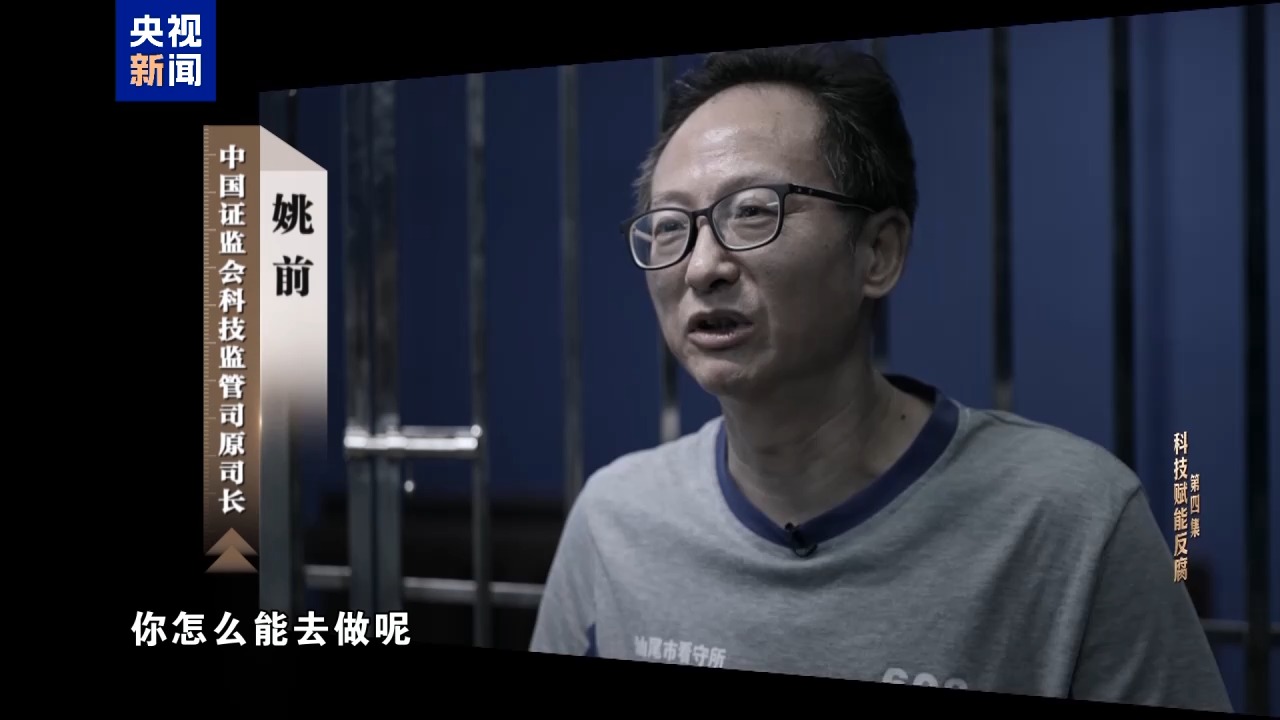
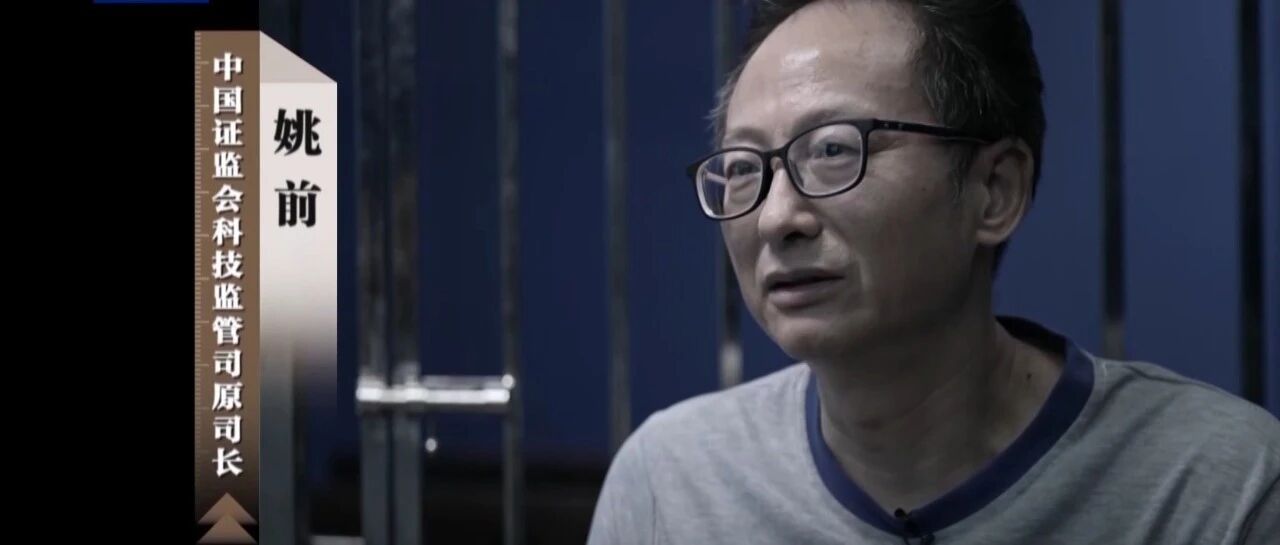
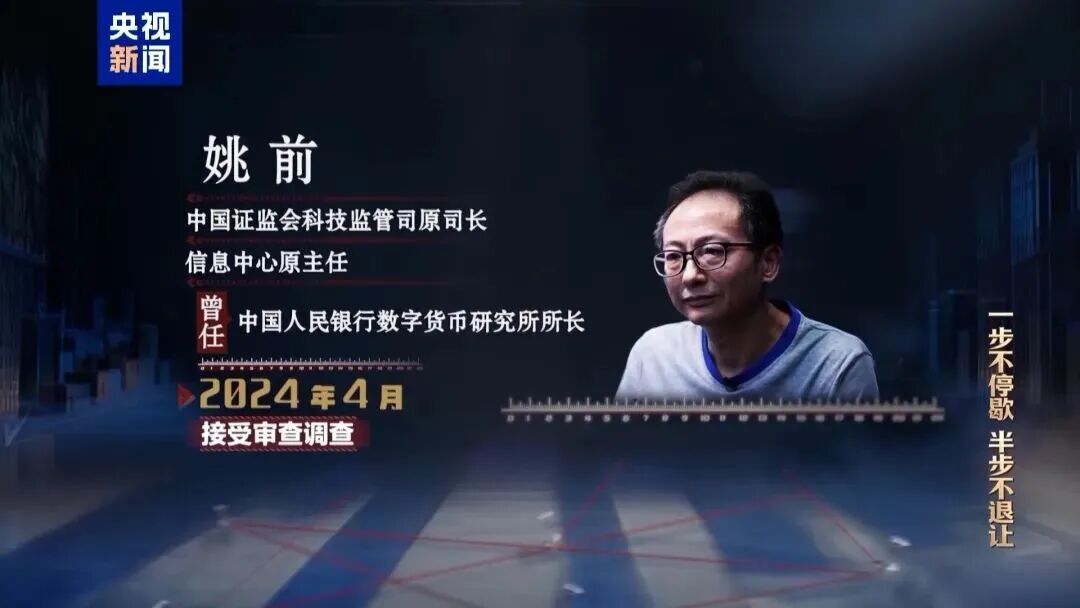
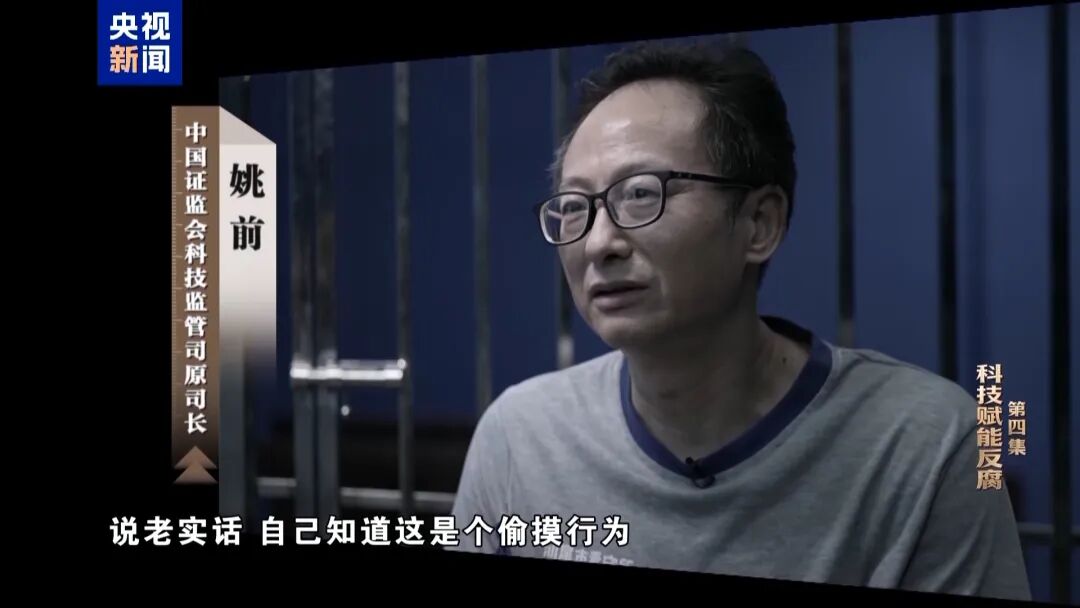
14日,电视专题片《一步不停歇 半步不退让》第四集《科技赋能反腐》播出,披露了中国证监会科技监管司原司长姚前的贪腐细节。 中国证监会科技监管司原司长 姚前:说老实话,自己知道这是个偷摸行为,你怎么能去做呢?只不过你之前觉得好像很难有证据。 广东省汕尾市纪委监委工作人员 施长平:他自认为层层设置之后,可能更为隔离。但反过来说,到时候来证明这个问题或这个问题存在的人、证据也更 多、更充分。 姚前,中国证监会科技监管司原司长、信息中心原主任,曾任中国人民银行数字货币研究所所长,2024年4月被立案审查调查。中央纪委国家监委驻中国 证监会纪检监察组联合广东省汕尾市监察委员会组成专案组,办理这一案件。从一开始,专案组就结合姚前自身特点进行了深入分析。 中央纪委国家监委驻中国证监会纪检监察组工作人员 邹荣:对这个人的监督,是要画像的。他具有比较长时间的数字货币工作经历,这背后是不是也存 在这种利用虚拟货币进行权钱交易的腐败问题?在资本市场的反腐败实践中来看,新型腐败、隐性腐败问题是比较突出的。 随着审查调查的深入,专案组最初的预判得到了印证,姚前的几笔大额权钱交易,都是采用新型腐败、隐性腐败手段,其中就包括收受虚拟货币。 ...
用“马甲账户”收受虚拟币买别墅,证监会原司长姚前贪腐细节曝光
Xin Lang Cai Jing· 2026-01-14 13:25
Core Viewpoint - The documentary reveals corruption details involving Yao Qian, former director of the Technology Supervision Department of the China Securities Regulatory Commission, highlighting the use of virtual currencies in corrupt practices [1][2]. Group 1: Corruption Investigation - Yao Qian was investigated for corruption after serving as the head of the Digital Currency Research Institute of the People's Bank of China, with the investigation initiated in April 2024 [1]. - A special investigation team was formed by the Central Commission for Discipline Inspection and the Guangdong Provincial Shantou Municipal Supervisory Committee to handle the case [1]. - The investigation focused on the potential use of virtual currencies for corrupt transactions, emphasizing the challenges of regulating new and hidden forms of corruption in the capital market [1]. Group 2: Financial Transactions - The investigation uncovered that Yao Qian controlled several "sleeper accounts" opened under other people's names, which were used to facilitate large financial transactions [2]. - A notable transaction involved 10 million yuan traced back to a virtual currency trading account, which was later used to partially pay for a villa in Beijing valued at over 20 million yuan, registered under a relative's name but effectively owned by Yao Qian [2]. - Additional funds totaling 12 million yuan were also traced back to a complex network involving a businessman, indicating a complete evidence chain of interest transfer facilitated by Yao Qian's position [2]. Group 3: Consequences - In November 2024, Yao Qian was expelled from the Party and public office, and the case was forwarded to the prosecutorial authorities for legal review and prosecution [3].
一次收受2000枚市值数千万元以太币 姚前大搞权钱交易
Xin Lang Cai Jing· 2026-01-14 13:25
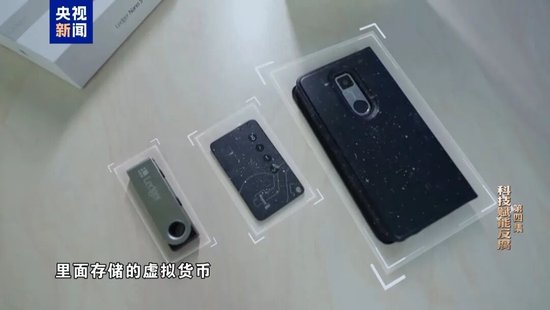
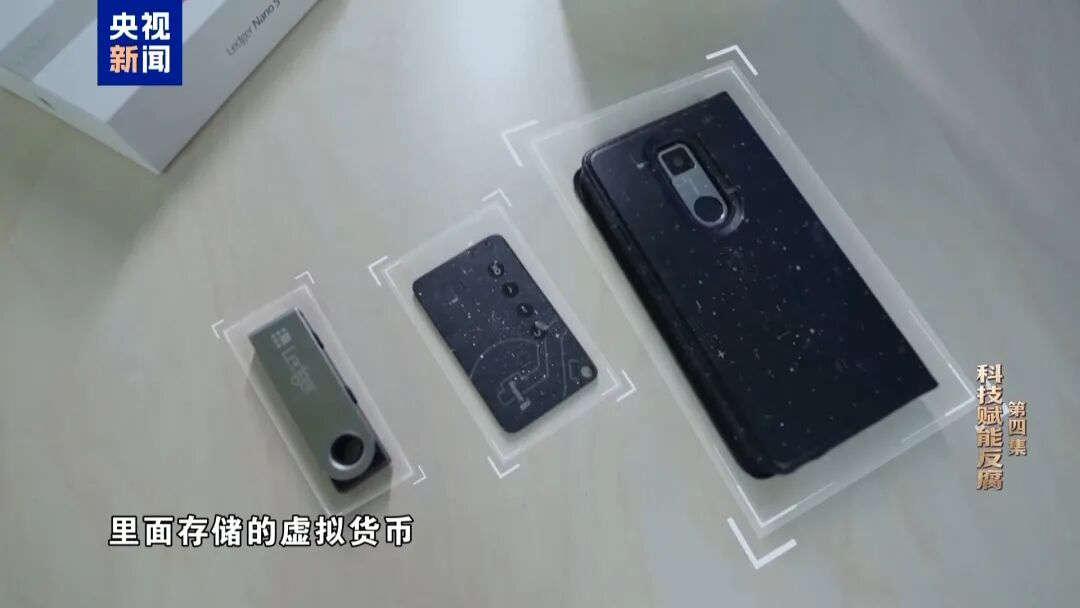
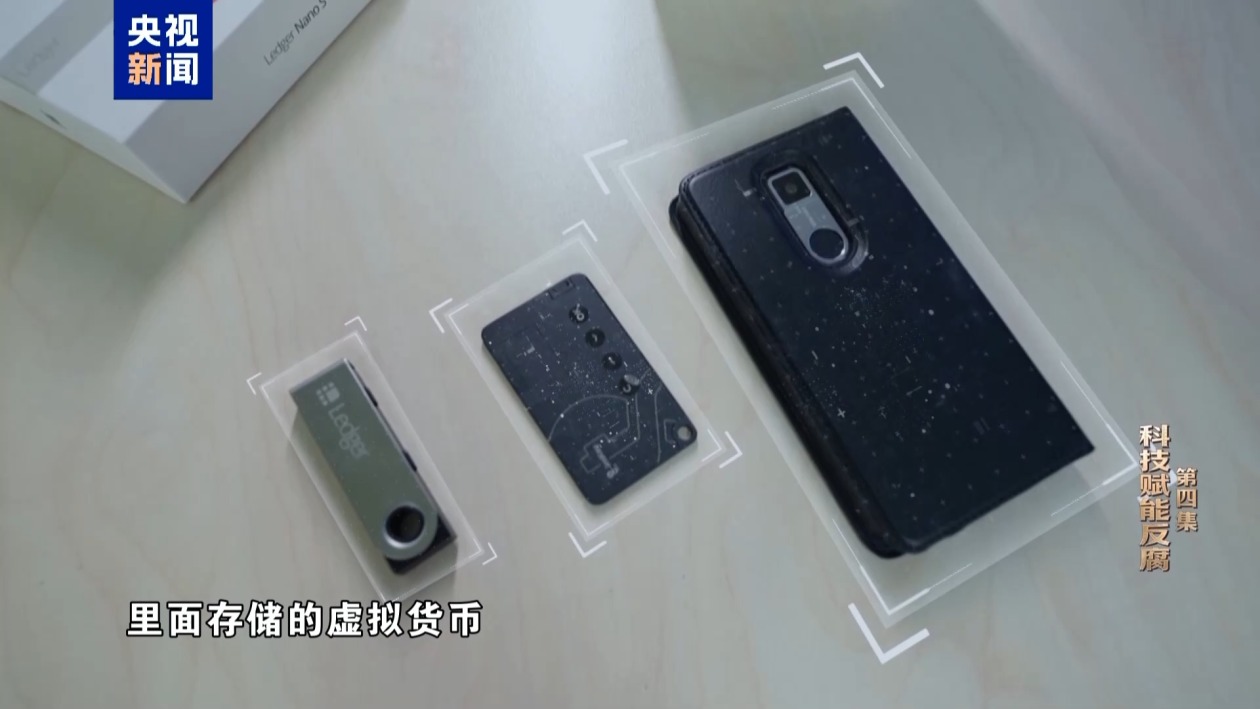
来源:央视新闻客户端 中国证监会科技监管司原司长 姚前: 说老实话,自己知道这是个偷摸行为,你怎么能去做呢?只不过你之前觉得好像很难有证据。 姚前,中国证监会科技监管司原司长、信息中心原主任,曾任中国人民银行数字货币研究所所长,2024年4月被立案审查调查。中央纪委国家监委驻中国证 监会纪检监察组联合广东省汕尾市监察委员会组成专案组,办理这一案件。从一开始,专案组就结合姚前自身特点进行了深入分析。 由中央纪委国家监委宣传部与中央广播电视总台央视联合摄制的电视专题片《一步不停歇 半步不退让》, 1 月 14 日在总台央视综合频道晚 8 点档播出第四集 《科技赋能反腐》,央视新闻新媒体平台同步播发。 除了境内和境外的空间隔离,线上和线下的物理隔离,也成为当前腐败分子企图掩盖贪腐行为的一种手段。黄金、现金、贵重物品,这些都是传统腐败案件 中常见的权钱交易载体,而随着数字时代的到来,虚拟货币依托区块链技术不断发展,腐败又出现了必须警惕的新形式。 这些是一起领导干部违纪违法案件中查获的关键证物,看上去有的像手机,有的像U盘,有的像遥控器。其实,它们都是不同款式的硬件钱包,用于储存和 管理虚拟货币。这三个看似不起眼的小小 ...
一次收受2000枚以太币,市值高达数千万元!姚前大搞权钱交易
21世纪经济报道· 2026-01-14 13:21
由中央纪委国家监委宣传部与中央广播电视总台央视联合摄制的电视专题片《一步不停歇 半 步不退让》,1月14日在总台央视综合频道晚8点档播出第四集《科技赋能反腐》,央视新闻新 媒体平台同步播发。 除了境内和境外的空间隔离,线上和线下的物理隔离,也成为当前腐败分子企图掩盖贪腐行为 的一种手段。黄金、现金、贵重物品,这些都是传统腐败案件中常见的权钱交易载体,而随着 数字时代的到来,虚拟货币依托区块链技术不断发展,腐败又出现了必须警惕的新形式。 这些是一起领导干部违纪违法案件中查获的关键证物,看上去有的像手机,有的像U盘,有的 像遥控器。其实,它们都是不同款式的硬件钱包,用于储存和管理虚拟货币。这三个看似不起 眼的小小"钱包",里面存储的虚拟货币,评估总价值折合人民币达数千万元。通过这种方式收 受贿赂的人,也曾经心怀侥幸,自以为足够隐蔽。 中国证监会科技监管司原司长 姚前:说老实话,自己知道这是个偷摸行为,你怎么能去做 呢?只不过你之前觉得好像很难有证据。 姚前,中国证监会科技监管司原司长、信息中心原主任,曾任中国人民银行数字货币研究所所 长,2024年4月被立案审查调查。中央纪委国家监委驻中国证监会纪检监察组联合广东 ...
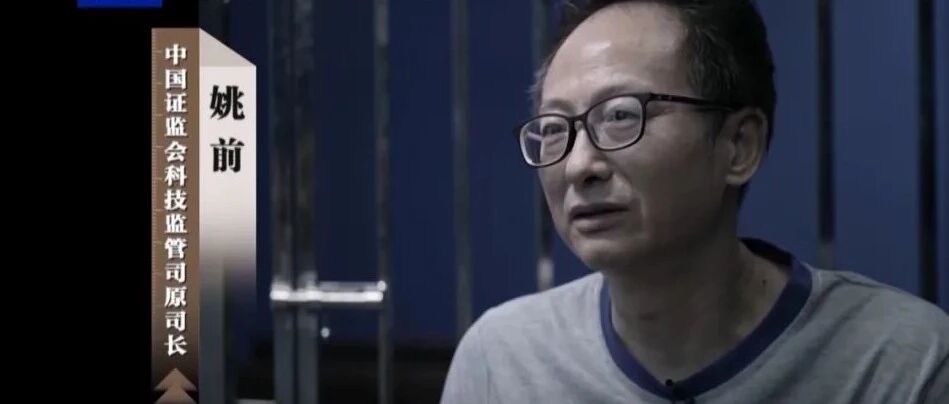
打一个招呼收下2000枚以太币、最高市值超6000万,姚前买别墅后暴露了
Xin Lang Cai Jing· 2026-01-14 13:05
1月14日晚,电视专题片《一步不停歇 半步不退让》第四集《科技赋能反腐》播出,披露了中国证监会 科技监管司原司长姚前的案情: 除了境内和境外的空间隔离,线上和线下的物理隔离,也成为当前腐败分子企图掩盖贪腐行为的一种手 段。黄金、现金、贵重物品,这些都是传统腐败案件中常见的权钱交易载体,而随着数字时代的到来, 虚拟货币依托区块链技术不断发展,腐败又出现了必须警惕的新形式。 这些是一起领导干部违纪违法案件中查获的关键证物,看上去有的像手机,有的像U盘,有的像遥控 器。其实,它们都是不同款式的硬件钱包,用于储存和管理虚拟货币。这三个看似不起眼的小小"钱 包",里面存储的虚拟货币,评估总价值折合人民币达数千万元。通过这种方式收受贿赂的人,也曾经 心怀侥幸,自以为足够隐蔽。 中央纪委国家监委驻中国证监会纪检监察组工作人员 邹荣:对这个人的监督,是要画像的。他具有比 较长时间的数字货币工作经历,这背后是不是也存在这种利用虚拟货币进行权钱交易的腐败问题?在资 本市场的反腐败实践中来看,新型腐败、隐性腐败问题是比较突出的。 随着审查调查的深入,专案组最初的预判得到了印证,姚前的几笔大额权钱交易,都是采用新型腐败、 隐性腐败手 ...