
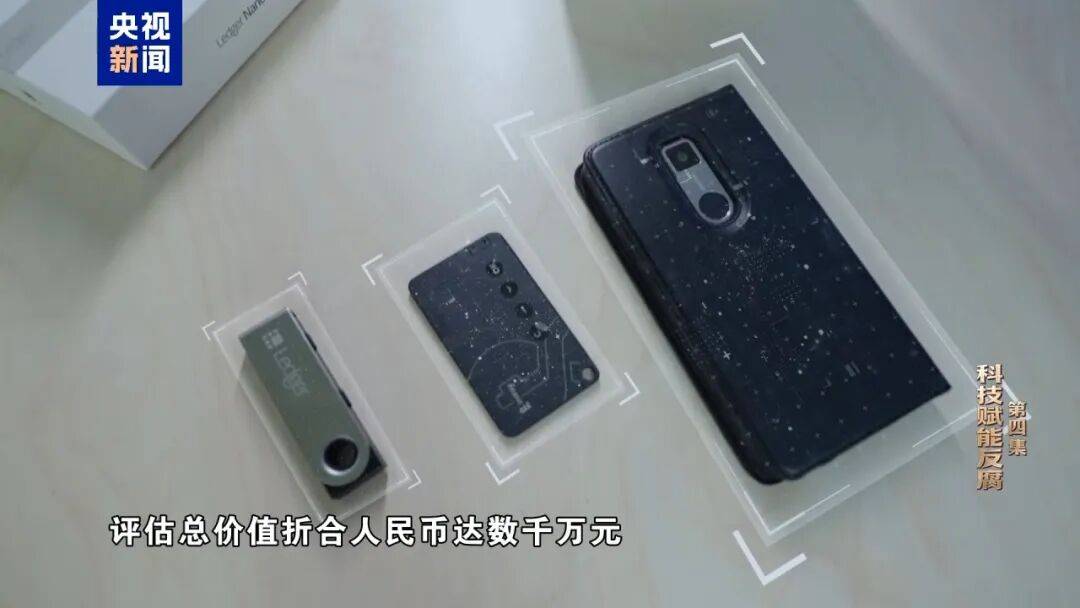
硬件钱包

Search documents
一次收受上千枚以太币,市值数千万元!姚前大搞权钱交易
Sou Hu Cai Jing· 2026-01-15 08:09
Core Viewpoint - The documentary highlights the emerging forms of corruption facilitated by virtual currencies and blockchain technology, emphasizing the need for vigilance in combating these new methods of illicit financial transactions [1][4]. Group 1: Case Overview - The case involves Yao Qian, a former official at the China Securities Regulatory Commission, who was investigated for using virtual currencies to engage in corrupt practices [3][10]. - A special investigation team was formed to analyze Yao Qian's activities, focusing on his extensive experience in digital currency and potential misuse of this knowledge for corrupt transactions [3][4]. Group 2: Evidence Collection - The investigation revealed that Yao Qian used hardware wallets to store virtual currencies, with the total value of the seized currencies amounting to several tens of millions of RMB [3][4]. - The team utilized big data and blockchain technology to trace the flow of virtual currencies and identify suspicious transactions linked to Yao Qian [4][9]. Group 3: Financial Transactions - Yao Qian was found to have established "sleeper accounts" under other people's names, which he controlled, to facilitate large transactions, including a payment of 10 million RMB for a villa [5][6]. - Additional funds totaling 12 million RMB were traced back to a business controlled by a merchant, indicating a systematic approach to corrupt financial dealings [6][8]. Group 4: Key Individuals - A close associate of Yao Qian, Jiang Guoqing, acted as an intermediary in these transactions, facilitating the transfer of virtual currencies and ensuring the concealment of the corrupt activities [7][8]. - Jiang Guoqing's involvement was crucial, as he participated in nearly all significant transactions and helped Yao Qian navigate the complexities of virtual currency exchanges [7][8]. Group 5: Conclusion of Investigation - The investigation culminated in Yao Qian's expulsion from the party and public office, with evidence collected through electronic means and blockchain analysis forming a solid case against him [10]. - The case serves as a precedent for future investigations into corruption involving virtual currencies, demonstrating that despite their intangible nature, such assets can be traced and linked to real-world transactions [10].

一次收受上千枚以太币,市值数千万元!姚前大搞权钱交易
券商中国· 2026-01-15 03:56
Core Viewpoint - The article discusses the emergence of new forms of corruption facilitated by digital currencies and blockchain technology, highlighting a specific case involving a former official who utilized these technologies for illicit financial transactions [1][5]. Group 1: Case Overview - The case involves Yao Qian, a former director at the China Securities Regulatory Commission, who was investigated for using virtual currencies to engage in corrupt practices [4][11]. - A special investigation team was formed to analyze Yao Qian's activities, focusing on his extensive experience with digital currencies and the potential for corruption through these means [5][6]. Group 2: Evidence and Investigation - Key evidence included hardware wallets used to store virtual currencies, with an estimated total value of several tens of millions of RMB [3][6]. - The investigation revealed that Yao Qian had opened "sleeve accounts" under other people's identities, which he controlled, to facilitate large transactions, including a 10 million RMB payment for a villa [6][7]. - The investigation team utilized big data and blockchain technology to trace the flow of virtual currencies and establish a comprehensive evidence chain [10][11]. Group 3: Corruption Mechanism - Yao Qian was found to have received bribes in the form of virtual currencies, including 2,000 Ethereum, which at one point had a market value exceeding 60 million RMB [9][11]. - A close associate, Jiang Guoqing, played a significant role in facilitating these transactions, acting as an intermediary and helping to obscure the flow of funds [8][9]. Group 4: Conclusion and Implications - The case concluded with Yao Qian being expelled from the Party and public office, and the investigation provided valuable insights for future cases involving virtual currency-related corruption [11]. - The article emphasizes that while virtual currencies may seem intangible, they ultimately leave traces that can be uncovered through diligent investigation [11].
中纪委曝光案例:已突破虚拟货币隐匿贪腐手段,详解技术逻辑
Nan Fang Du Shi Bao· 2026-01-14 16:53
Core Viewpoint - The news highlights the emergence of new forms of corruption facilitated by virtual currencies, emphasizing the need for vigilance in combating these practices as demonstrated in the case of Yao Qian, a former official at the China Securities Regulatory Commission [1][10]. Group 1: Case Overview - Yao Qian, former director of the Technology Supervision Department of the China Securities Regulatory Commission, was investigated for corruption involving virtual currencies, with the total value of illicit virtual assets amounting to several tens of millions of RMB [1][10]. - The investigation revealed that Yao utilized hardware wallets to store virtual currencies, which were used as a medium for bribery, showcasing the challenges posed by the anonymity and cross-border nature of virtual currencies [1][3][10]. Group 2: Investigation Techniques - The investigative team employed big data and information technology to trace Yao's financial activities, uncovering "shell accounts" that he controlled, which were used to facilitate large transactions [5][10]. - The investigation successfully traced a significant sum of 1 billion RMB that was funneled through various accounts, ultimately linked to the purchase of a villa registered under a relative's name, indicating a complex web of financial concealment [5][10]. Group 3: Corruption Mechanisms - The case illustrates the use of virtual currencies in modern corruption, where transactions can be obscured due to the separation of identity and the banking system, making detection difficult [3][9]. - Yao's associate, Jiang Guoqing, played a crucial role in facilitating these corrupt transactions, further complicating the investigation and highlighting the network of complicity in such schemes [8][10]. Group 4: Lessons Learned - The successful prosecution of Yao Qian serves as a precedent for future investigations into corruption involving virtual currencies, emphasizing the importance of understanding the operational mechanisms of these digital assets [10][11]. - The case underscores that while virtual currencies may appear intangible, they ultimately manifest in the real world, necessitating robust investigative techniques to uncover hidden corruption [10][11].
一次收受市值数千万元以太币,证监会科技监管司原司长姚前案详情披露
Zheng Quan Shi Bao· 2026-01-14 15:29
Core Viewpoint - The case of Yao Qian, former director of the Technology Supervision Department of the China Securities Regulatory Commission (CSRC), reveals significant corruption involving the acceptance of bribes in the form of virtual currencies, highlighting the challenges of regulating new forms of corruption in the digital age [2][8]. Group 1: Case Background - Yao Qian was investigated for serious violations of discipline and law in April 2024 and was expelled from the party and public office in November 2024 [2]. - He misused his regulatory powers to benefit specific technology service providers and engaged in corrupt practices, including accepting bribes in virtual currencies [2][3]. Group 2: Corruption Methods - The investigation uncovered that Yao Qian utilized hardware wallets to store virtual currencies, which were used as a means to conceal corrupt transactions [3][4]. - Virtual currencies, due to their anonymity and the ability to operate outside traditional banking systems, posed significant challenges for regulatory oversight [4][6]. Group 3: Evidence and Investigation - The investigative team discovered a hardware wallet in Yao Qian's office, which contained virtual currencies valued at several tens of millions of RMB [3][5]. - A significant amount of money, including a transaction of 10 million RMB traced back to a virtual currency trading account, was found to be linked to Yao Qian's illicit activities [6][8]. Group 4: Key Individuals - A close associate, Jiang Guoqing, played a crucial role in facilitating Yao Qian's corrupt transactions, including the transfer of virtual currencies [7][8]. - The investigation revealed that Jiang Guoqing was involved in nearly all major transactions and acted as an intermediary for bribes [7]. Group 5: Implications for Regulation - The case underscores the need for enhanced regulatory frameworks to address the complexities of virtual currencies in corruption cases [9]. - The successful investigation of Yao Qian's case serves as a precedent for tackling similar corruption issues involving virtual currencies in the future [9].
一次收受市值数千万元以太币,证监会科技监管司原司长姚前案详情披露
证券时报· 2026-01-14 14:47
Core Viewpoint - The article discusses the case of Yao Qian, former director of the Technology Supervision Department of the China Securities Regulatory Commission, highlighting the use of virtual currencies in corruption and the challenges of regulating such activities in the digital age [2][30]. Group 1: Case Overview - Yao Qian was investigated for serious violations of discipline and law, including abusing regulatory powers and engaging in corrupt practices involving virtual currencies [2][30]. - The investigation revealed that Yao Qian used his position to support specific technology service providers for personal gain, engaging in transactions that involved virtual currencies [2][30]. Group 2: Corruption Methods - The article outlines how traditional forms of corruption have evolved with the advent of digital currencies, which provide new avenues for concealing illicit activities [3][30]. - Hardware wallets, used for storing virtual currencies, were identified as key evidence in the investigation, with the total value of the virtual currencies involved amounting to several tens of millions of RMB [5][30]. Group 3: Investigation Techniques - The investigative team utilized big data and information technology to trace the flow of funds linked to Yao Qian, uncovering a network of "shell accounts" that he controlled [15][30]. - The investigation confirmed that a significant amount of money, totaling 1 billion RMB, was traced back to a virtual currency trading account, which was then used for real estate purchases [19][30]. Group 4: Implications for Anti-Corruption - The successful handling of Yao Qian's case serves as a precedent for addressing corruption involving virtual currencies, emphasizing the need for robust regulatory frameworks [30][32]. - The article concludes that despite the evolving nature of corruption methods, focusing on the essence of power-for-money transactions and employing advanced technology can effectively combat corruption [32][30].
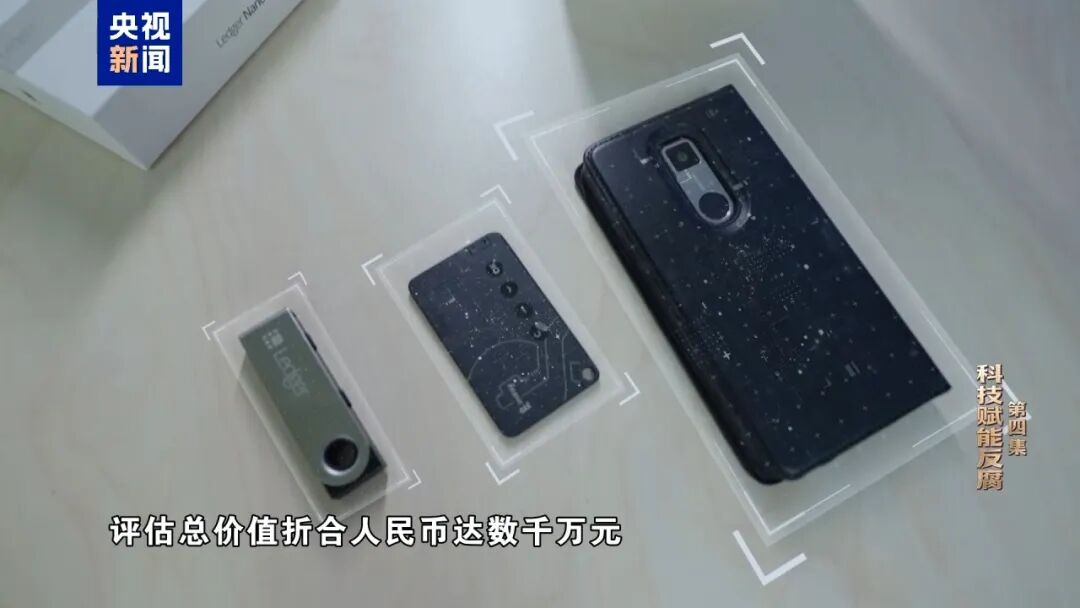
看似U盘手机却藏千万元赃款
Xin Lang Cai Jing· 2026-01-14 14:28
Core Insights - The article discusses a significant case involving a former high-ranking official, Yao Qian, who was investigated for corruption, with evidence including hardware wallets used to store virtual currencies valued at several million yuan [1] Group 1: Corruption Case - Yao Qian, former director of the Technology Supervision Bureau of the China Securities Regulatory Commission, was placed under investigation in April 2024 [1] - The investigation revealed hardware wallets disguised as mobile phones and USB drives, containing virtual currencies worth several million yuan [1] - The special investigation team utilized big data technology to conduct a comprehensive review of Yao Qian's activities, uncovering "disguised accounts" controlled by him [1]
一次收受2000枚以太币,市值最高超6000万元!官方披露姚前案细节:赃款藏在U盘里……
Xin Lang Cai Jing· 2026-01-14 14:08
Group 1 - The core issue revolves around the case of Yao Qian, former director of the Technology Supervision Department of the China Securities Regulatory Commission (CSRC), who was investigated for corruption involving virtual currencies [1][7][32] - The investigation revealed that Yao Qian used hardware wallets to store virtual currencies, which were valued at several million yuan, as a means to accept bribes [3][28] - The case highlights the challenges of regulating new forms of corruption, particularly those involving virtual currencies, which are difficult to trace and monitor due to their decentralized nature [9][34] Group 2 - The investigative team utilized big data and information technology to uncover Yao Qian's illicit activities, including the discovery of "mask accounts" that he controlled, which were used to facilitate large transactions [12][37] - A significant finding was a transfer of 10 million yuan linked to a virtual currency trading account, which was traced back to Yao Qian's "mask account" and subsequently used for purchasing a villa [39][41] - The investigation also identified a key intermediary, Jiang Guoqing, who facilitated Yao Qian's corrupt transactions and was involved in the transfer of virtual currencies [16][43] Group 3 - The case of Yao Qian serves as a precedent for the anti-corruption efforts involving virtual currencies, demonstrating the importance of adapting regulatory frameworks to address new forms of corruption [21][48] - The use of blockchain technology allowed investigators to trace the flow of virtual currencies, providing a clear record of transactions that ultimately led to Yao Qian's admission of guilt [46][48] - The ongoing evolution of information technology, including artificial intelligence and big data, is crucial for enhancing the effectiveness of anti-corruption measures in the public sector [49][51]
一次收受数千万元以太币,证监会原司长购买别墅露出马脚,被留置时别墅还没装修完
Zhong Guo Ji Jin Bao· 2026-01-14 14:07
Core Viewpoint - The case of Yao Qian, former director of the Technology Supervision Department of the China Securities Regulatory Commission (CSRC), highlights the emergence of new forms of corruption facilitated by virtual currencies, emphasizing the need for enhanced regulatory measures in the digital age [1][2]. Group 1: Case Overview - Yao Qian was investigated for accepting bribes in the form of virtual currencies, with the total value of the seized assets amounting to several tens of millions of RMB [1][2]. - The investigation revealed that Yao utilized "shell accounts" to conceal his financial activities, including a significant transaction of 10 million RMB linked to a virtual currency trading account [3][4]. - A total of 1.2 million RMB was traced back to Yao's accounts, which were used to pay for a villa registered under a relative's name but effectively owned by Yao [4][5]. Group 2: Investigation Techniques - The investigative team employed big data and blockchain technology to trace the flow of virtual currencies, successfully mapping transactions from various wallets to Yao's accounts [7][8]. - The use of hardware wallets and mnemonic phrases was critical in the investigation, as these tools are commonly used to store virtual currencies securely [3][6]. - The investigation confirmed that Yao's influence in the industry facilitated corrupt transactions, including a case where he helped a company issue tokens in exchange for virtual currency bribes [6][7]. Group 3: Implications for Regulatory Practices - The case underscores the challenges posed by virtual currencies in corruption cases, as they can be easily concealed and are difficult to trace without advanced technological methods [2][8]. - The successful prosecution of Yao Qian serves as a precedent for future investigations into corruption involving virtual currencies, highlighting the importance of adapting regulatory frameworks to address new forms of financial misconduct [8][9]. - The findings suggest that while virtual currencies offer anonymity, they ultimately leave a digital footprint that can be traced back to illicit activities when converted into tangible assets [8].
一次收受数千万元以太币,证监会原司长购买别墅露出马脚,被留置时别墅还没装修完
中国基金报· 2026-01-14 13:36
Core Viewpoint - The article discusses the case of Yao Qian, former director of the Technology Supervision Department of the China Securities Regulatory Commission, highlighting the emergence of new forms of corruption facilitated by virtual currencies and blockchain technology [2][12][32]. Group 1: Case Overview - Yao Qian was investigated for corruption, with a focus on his use of virtual currencies to conceal illicit transactions [8][29]. - The investigation revealed that Yao received bribes in the form of virtual currencies, which were stored in hardware wallets, with a total value estimated in the tens of millions of RMB [4][12]. - The case exemplifies the challenges of regulating new forms of corruption that leverage digital assets, emphasizing the need for advanced investigative techniques [10][32]. Group 2: Investigation Techniques - The investigative team utilized big data and blockchain technology to trace the flow of virtual currencies and establish a comprehensive evidence chain [15][27]. - Key evidence included the discovery of hardware wallets and the analysis of transactions on the blockchain, which revealed the movement of significant sums of money linked to Yao Qian [18][29]. - The investigation successfully identified "mask accounts" controlled by Yao, which were used to facilitate large transactions, including a 10 million RMB payment for a property [17][20]. Group 3: Implications for Corruption - The case illustrates the evolving nature of corruption, where traditional methods are being replaced by more sophisticated techniques involving digital currencies [12][32]. - It highlights the importance of adapting regulatory frameworks and investigative practices to address the complexities introduced by virtual currencies [10][32]. - The successful prosecution of Yao Qian serves as a precedent for future cases involving virtual currency-related corruption, reinforcing the message that no form of corruption can evade scrutiny [29][32].
用“马甲账户”收受虚拟币买别墅,证监会原司长姚前贪腐细节曝光
Xin Lang Cai Jing· 2026-01-14 13:25
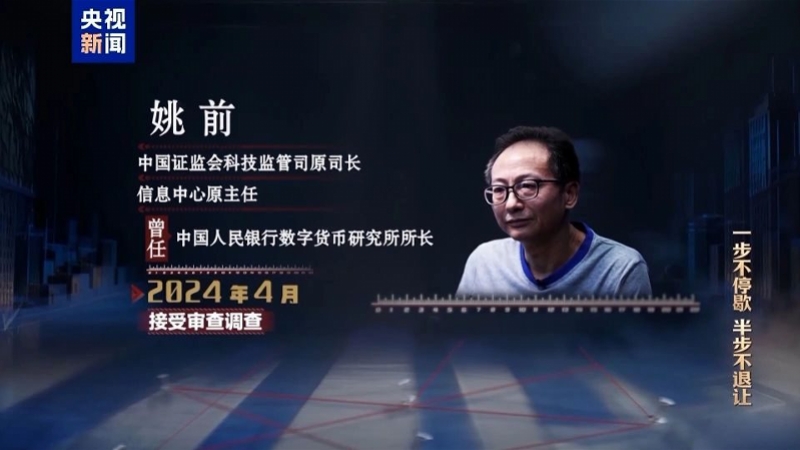
Core Viewpoint - The documentary reveals corruption details involving Yao Qian, former director of the Technology Supervision Department of the China Securities Regulatory Commission, highlighting the use of virtual currencies in corrupt practices [1][2]. Group 1: Corruption Investigation - Yao Qian was investigated for corruption after serving as the head of the Digital Currency Research Institute of the People's Bank of China, with the investigation initiated in April 2024 [1]. - A special investigation team was formed by the Central Commission for Discipline Inspection and the Guangdong Provincial Shantou Municipal Supervisory Committee to handle the case [1]. - The investigation focused on the potential use of virtual currencies for corrupt transactions, emphasizing the challenges of regulating new and hidden forms of corruption in the capital market [1]. Group 2: Financial Transactions - The investigation uncovered that Yao Qian controlled several "sleeper accounts" opened under other people's names, which were used to facilitate large financial transactions [2]. - A notable transaction involved 10 million yuan traced back to a virtual currency trading account, which was later used to partially pay for a villa in Beijing valued at over 20 million yuan, registered under a relative's name but effectively owned by Yao Qian [2]. - Additional funds totaling 12 million yuan were also traced back to a complex network involving a businessman, indicating a complete evidence chain of interest transfer facilitated by Yao Qian's position [2]. Group 3: Consequences - In November 2024, Yao Qian was expelled from the Party and public office, and the case was forwarded to the prosecutorial authorities for legal review and prosecution [3].