暴雪

Search documents
中国气象局升级启动寒潮冰冻暴雪三级应急响应
Yang Shi Wang· 2026-01-18 12:28
Core Viewpoint - The China Meteorological Administration has upgraded the emergency response level for major meteorological disasters (cold wave) from level four to level three, indicating significant weather impacts from January 18 to 21, including strong temperature drops, rain, snow, and freezing rain across central and eastern China [1]. Group 1 - The cold wave yellow alert was issued by the Central Meteorological Station at 10 AM on January 18 [1] - A yellow alert for freezing and a blue alert for snowstorm were also issued at 6 PM on the same day [1] - The China Meteorological Administration has entered a level three emergency response status for major meteorological disasters, which includes cold wave, freezing, and snowstorm [1]
冰冻黄色预警!中国气象局升级调整应急响应为重大气象灾害(寒潮、冰冻、暴雪)三级!
Xin Lang Cai Jing· 2026-01-18 11:14
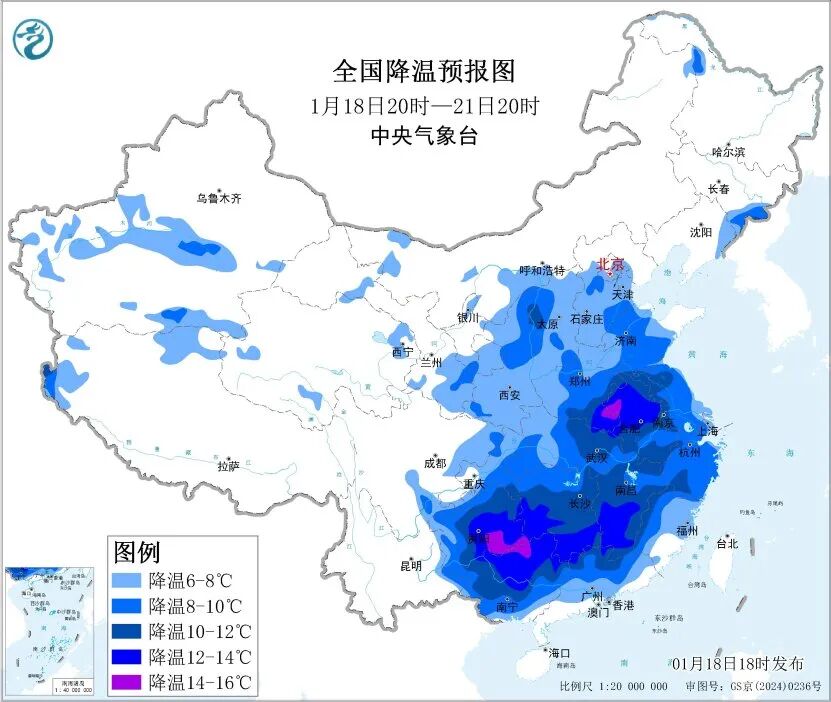
Core Viewpoint - The China Meteorological Administration has upgraded the emergency response to a major meteorological disaster (cold wave) from Level 4 to Level 3, indicating severe weather conditions including cold waves, freezing, and snowstorms [1] Weather Forecast - From the night of January 18 to January 21, significant temperature drops and strong winds are expected in central and eastern China, with average or minimum temperatures decreasing by 6°C to 12°C. In some areas, temperatures may drop by 12°C to 14°C, and localized drops could exceed 16°C [1] - The lowest temperature line is projected to move southward to areas including southern Guizhou, southern Hunan, central Jiangxi, and southern Zhejiang by the morning of January 21 [1] - From January 18 at 20:00 to January 20 at 20:00, temperatures in regions such as central Inner Mongolia, eastern Northwest China, North China, and the Huaihe River basin are expected to decrease by 6°C to 10°C, with some areas experiencing drops of 10°C to 14°C [1] Freezing Rain and Snowfall - Freezing rain or ice pellets are expected in parts of southeastern Henan, western Anhui, northern and western Hubei, southeastern Shaanxi, and northern Chongqing, with freezing rain amounts ranging from 1 to 3 millimeters, and up to 8 millimeters in localized areas [2] - Heavy snowfall is anticipated in parts of southern Shaanxi, central southern Henan, northern Anhui, and northwestern Hubei, with some areas experiencing blizzards (10 to 15 millimeters) and new snow depths of 4 to 8 centimeters, with localized areas exceeding 10 centimeters [4] Precautionary Measures - Individuals are advised to dress warmly and minimize outdoor activities, especially vulnerable groups such as the elderly and children, due to low temperatures and icy conditions [7] - Drivers should exercise caution, avoid aggressive driving maneuvers, and ensure vehicles are equipped with anti-slip measures. Road maintenance should include salting and de-icing efforts in hazardous areas [8] - In agriculture, protective measures for crops include using plastic covers to shield seedlings from freezing rain, wrapping fruit tree branches to prevent ice accumulation, and ensuring greenhouses and livestock shelters are adequately maintained and insulated [9]

平均降温13℃至15℃!安徽发布寒潮和暴雪双预警
Xin Lang Cai Jing· 2026-01-18 10:11
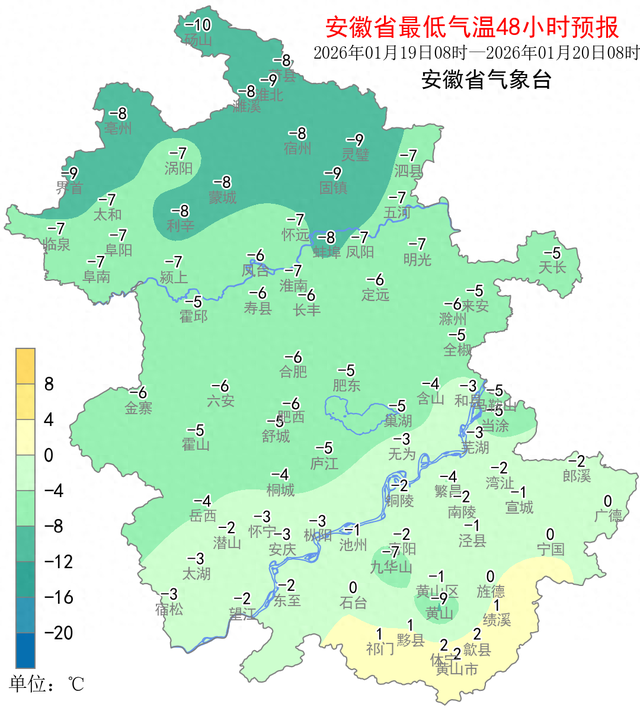
Core Viewpoint - The Anhui Province is experiencing severe cold weather, with significant temperature drops and heavy snowfall expected, which may impact transportation, agriculture, and public safety [1][3][5] Group 1: Weather Forecast - A cold wave yellow alert and a snow yellow alert have been issued, predicting a temperature drop of 13℃ to 15℃ across the province from January 19 to 21, with some areas experiencing drops exceeding 15℃ [1] - The lowest temperatures are forecasted to be between -12℃ to -9℃ north of the Huai River, -8℃ to -6℃ between the Huai and Yangtze Rivers, and -5℃ to -3℃ in southern Jiangsu [1] - Wind speeds are expected to increase to levels of 4 to 5, with gusts reaching 7 to 8 [1] Group 2: Snowfall Predictions - Heavy snowfall is anticipated in cities such as Fuyang, Bozhou, Lu'an, and Huainan, with snowfall amounts reaching 10 to 15 millimeters [3] - Other areas including Suzhou, Bengbu, Hefei, and Chuzhou are expected to receive significant snow, with amounts between 5 to 10 millimeters [3] - Some regions in the Dabie Mountains may experience freezing rain [3] Group 3: Safety and Precautions - Authorities are advising to be cautious of slippery roads and ice accumulation due to the rain and snow, which could affect transportation [5] - The strong cold air is accompanied by high winds, raising concerns about falling objects, temporary outdoor structures, and safety risks in agriculture [5] - Attention is also drawn to the adverse effects of the cold on human health, agricultural production, and energy supply [5]
今年首场寒潮来袭 南方地区尤需防范冻雨风险
Ren Min Ri Bao· 2026-01-17 01:11
Core Viewpoint - The first cold wave of the year is expected to bring significant rain, snow, and freezing weather to the central and eastern regions of China, with temperatures dropping by 6 to 10 degrees Celsius, particularly affecting southern areas where snow and freezing rain are anticipated [1][2]. Summary by Sections Weather Impact - The cold wave will affect China from January 17 to 21, with widespread temperature drops of 6 to 10 degrees Celsius across most regions, and significant impacts in southern areas [1]. - The central meteorological station has issued a blue alert for the cold wave, and a level four emergency response has been activated due to the anticipated severe weather [1]. Regional Differences - The cold wave's impact will vary significantly by region, with northern areas like Northeast China and Beijing-Tianjin-Hebei experiencing less severe effects, while southern regions will face more substantial impacts [2]. - In the Yangtze River basin, temperature drops could exceed 12 degrees Celsius, with localized areas experiencing drops of up to 16 degrees Celsius [2]. Precipitation Characteristics - The cold wave will bring complex precipitation patterns, including rain transitioning to sleet, freezing rain, and snow, particularly in areas south of the Qinling-Huaihe line [2]. - The risk of freezing rain is highlighted as being significantly higher than that of heavy snow, with potential for severe disruptions to transportation and power infrastructure [2]. Agricultural Concerns - The Ministry of Agriculture and Rural Affairs, along with the China Meteorological Administration, has issued warnings regarding frost damage risks to winter wheat and rapeseed crops, advising farmers to take preventive measures [2][3].
大范围雨雪冰冻天气来袭!气象专家:冻雨风险显著高过暴雪风险
Zhong Guo Xin Wen Wang· 2026-01-16 08:33
大范围雨雪冰冻天气来袭!气象专家:冻雨风险显著高过暴雪风险 中新网北京1月16日电(记者 邵萌)近日,我国迎来一波大回暖,多地打破当地同期最暖纪录。不过,随 着今年首场大范围寒潮来袭,中东部大片地区将经历冷暖逆转。 1月16日,中国气象局举行寒潮媒体通气会,中央气象台首席预报员张涛在会上介绍,17日到21日,寒 潮过程将影响我国,中东部地区将出现入冬以来最强雨雪冰冻天气过程,陕西、山西、山东、河南、湖 北、湖南、安徽等地部分地区有暴雪和低温雨雪冰冻灾害风险。 资料图:1月10日,受冷空气影响,河北石家庄遭遇大风降温天气。图为市民包裹严实出行。中新 社记者 翟羽佳 摄 南方地区受影响大 张涛表示,由于冷空气持续补充南下,寒潮降温后会持续偏冷,南方会更加明显。对于大部分地区特别 是南方地区来说,预计低温天气要维持到1月25日左右,此后会慢慢回暖。 大范围雨雪冰冻天气将上线 冻雨风险显著高过暴雪风险 局地降温幅度可达16℃ 据中央气象台预计,此次寒潮影响进程为:17日影响新疆中北部、甘肃中西部和内蒙古西部;18日影响 西北地区东部、内蒙古中部和华北地区;19日继续影响中东部;20日至21日影响贵州及华南等地。另 外 ...

多省份下大雪!寒潮继续影响我国大部地区
Xin Hua She· 2025-12-12 03:27
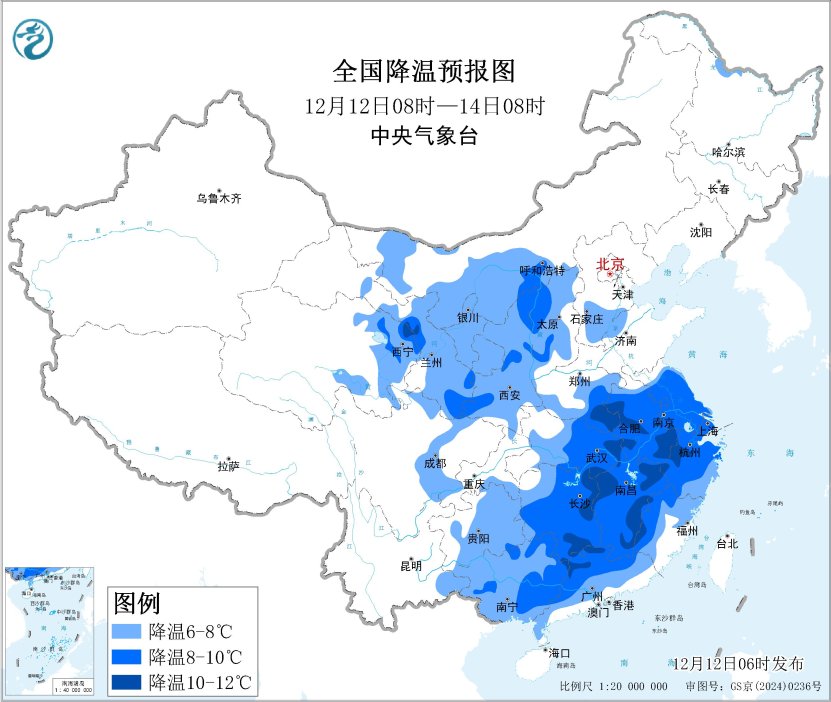
Group 1 - The Central Meteorological Administration issued a blue snowstorm warning, predicting heavy snow in parts of western and northern Shanxi, southwestern Shandong, central and southern Henan, northern Anhui, and northwestern Jiangsu from 14:00 on the 12th to 14:00 on the 13th [1] - A cold wave and strong wind blue warning were also issued, with temperatures expected to drop by 6°C to 10°C across North China and the Huang-Huai region, and some areas experiencing a drop of 10°C to 12°C, with localized drops reaching 12°C to 14°C [1] - Meteorological experts advised that the cold wave could impact energy supply, human health, facility agriculture, and traffic safety, and that maritime areas in the east and south should be aware of strong winds [1]
寒潮+暴雪+大风 中央气象台继续三预警齐发
Yang Shi Wang· 2025-12-12 00:43
Core Points - The Central Meteorological Administration issued blue alerts for cold waves, heavy snow, and strong winds on December 12 at 6 AM [1][5][8] Group 1: Cold Wave - From December 12 at 8 AM to December 14 at 8 AM, the central and eastern regions of China will experience a drop in temperature ranging from 6 to 10 degrees Celsius, with some areas in eastern Qinghai, southern Huanghuai, western Jianghuai, northern Jiangnan, and northern Guangdong seeing drops of 10 to 12 degrees Celsius, and localized drops reaching 12 to 14 degrees Celsius [4] Group 2: Heavy Snow - From December 12 at 8 AM to December 13 at 8 AM, areas including central Gansu, the Hetao region of Inner Mongolia, eastern Shaanxi, Shanxi, western Hebei, southwestern Beijing, Henan, and southwestern Shandong are expected to experience heavy snow, with localized areas in western Shanxi and southern Henan receiving 10 to 15 millimeters of snow, and new snow depth reaching 5 to 10 centimeters, with some areas up to 12 to 18 centimeters [7] Group 3: Strong Winds - From December 12 at 8 AM to December 13 at 8 AM, regions including northern Xinjiang, Qinghai, northern Tibet, western Inner Mongolia, northern Sichuan, eastern Gansu, Ningxia, and northwestern Shaanxi will experience winds of 5 to 7 degrees, with gusts reaching 8 to 9 degrees, and in the mountain pass areas of Xinjiang, gusts may reach 10 to 11 degrees [9] - From December 13 at 8 AM to December 14 at 8 AM, similar wind conditions are expected in northern Xinjiang, southeastern Qinghai, northwestern Tibet, and central Inner Mongolia, with additional strong winds forecasted in various sea areas including the Bohai Sea, Yellow Sea, East China Sea, and South China Sea, with gusts potentially reaching 10 degrees in certain areas [10]