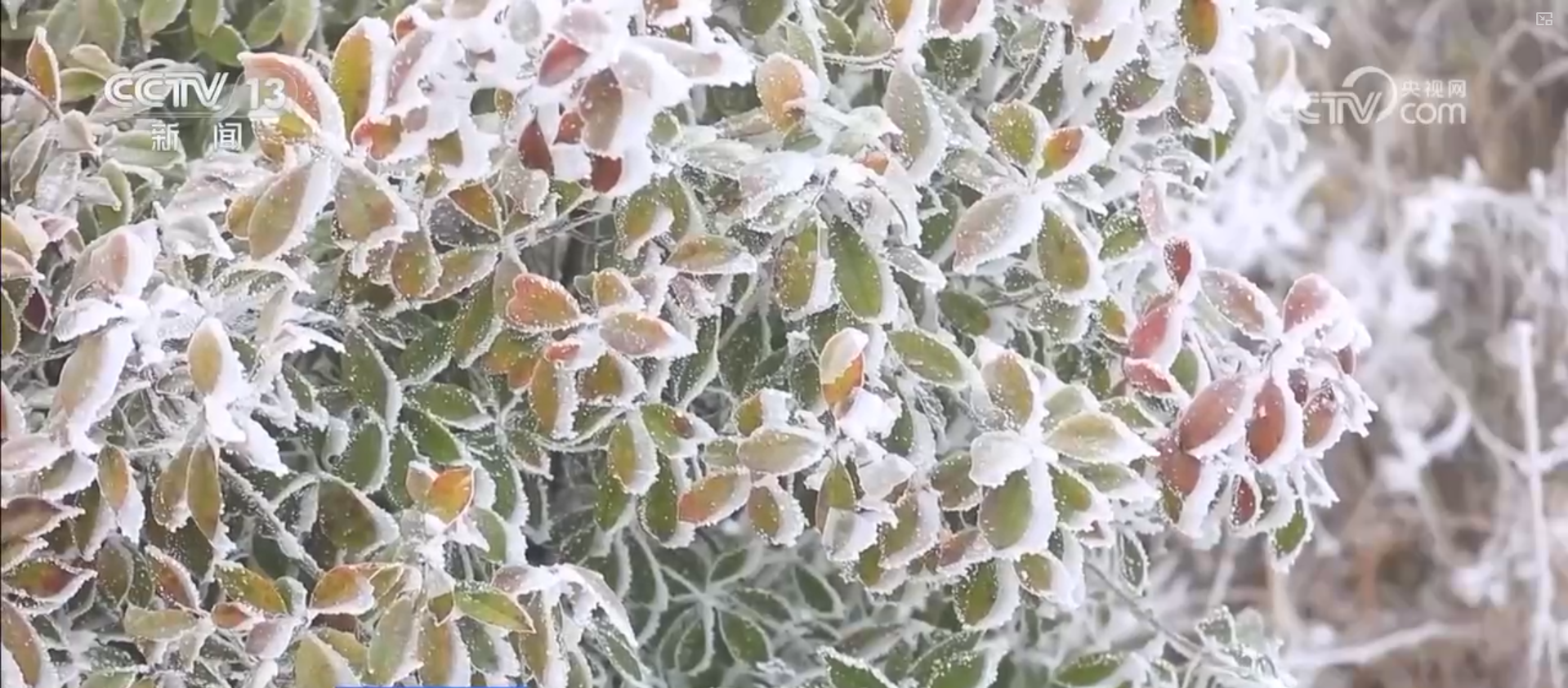
冻雨

Search documents
今天,长沙有雪!
Xin Lang Cai Jing· 2026-01-31 02:58
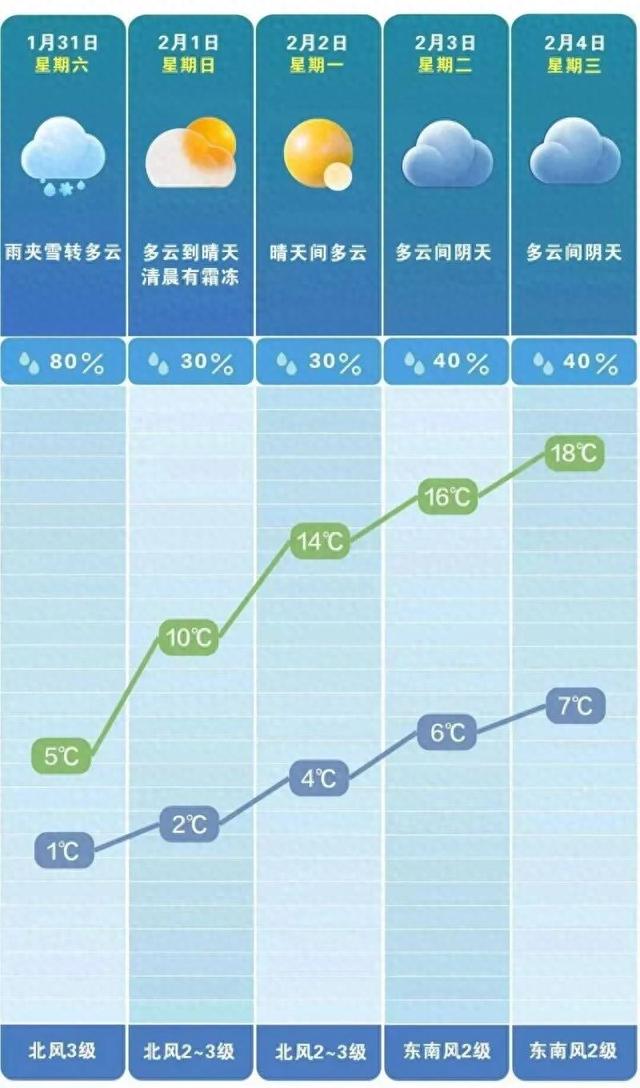
Summary of Key Points Core Viewpoint - The weather in Changsha is expected to transition from cold to warmer temperatures over the next few days, with a significant rise in temperature following a period of mixed rain and snow [1][4][5]. Weather Forecast - On January 31, rain mixed with snow will dominate, with a high of 5°C and a low of 1°C [1]. - February 1 will see a shift to cloudy and sunny weather, with temperatures rising to a high of 10°C and a low of 2°C [4]. - By February 2, the weather will be mostly sunny with temperatures reaching 14°C and a low of 4°C [5]. - From February 3 to 4, temperatures will continue to rise, reaching highs of 16°C and 18°C, with lows of 6°C and 7°C respectively [6]. Weather Warnings and Precautions - The Hunan Provincial Meteorological Station has issued a yellow warning for low temperatures, rain, and snow, predicting that certain areas will experience mixed rain and snow, with temperatures dropping below 2°C [6][8]. - Citizens are advised to take precautions against slipping during mixed rain and snow conditions and to monitor road conditions for ice [6]. - It is recommended to dress appropriately for the temperature fluctuations to avoid colds, and to utilize sunny days for drying bedding and clothes [6]. Cold Wave Impact - A cold wave is characterized by a significant drop in temperature, often accompanied by strong winds and precipitation, which can adversely affect agriculture, transportation, and public health [10]. - The cold wave can lead to severe weather conditions such as strong winds (5-8 levels) and freezing temperatures that can damage crops and disrupt transportation [10]. Frost and Freezing Rain - Frost occurs when air temperatures drop suddenly, causing damage to crops and plants, particularly sensitive species like corn and soybeans [13]. - Freezing rain can create hazardous conditions for transportation and can lead to significant damage to infrastructure [19]. Recommendations for Safety - During cold weather, it is crucial to dress warmly, secure windows and doors, and avoid outdoor activities, especially for vulnerable populations [10][12]. - Precautions should be taken to prevent accidents due to icy conditions, including the use of salt on roads and maintaining safe driving practices [26].

预计2月上旬豫西、鄂北、湘西北高海拔山区局地将出现冻雨
Nan Fang Du Shi Bao· 2026-01-29 05:37
Group 1 - The core viewpoint of the articles highlights the expected impact of strong cold air on the central and eastern regions of China from February 5-7, leading to significant temperature drops and adverse weather conditions [1][2] - The temperature drop is forecasted to be between 4-8°C in most areas, with some regions experiencing drops exceeding 10°C [1] - The meteorological department emphasizes the need for energy supply security and the implementation of protective measures for outdoor structures and agricultural facilities to mitigate wind damage [1] Group 2 - During the Spring Festival travel period, the China Meteorological Administration will provide daily weather service reports to relevant ministries, focusing on national weather conditions and transportation forecasts [2] - Specific warnings are issued for potential freezing rain in high-altitude areas of western Henan, western Hubei, and northwestern Hunan, which could lead to hazardous road conditions and damage to infrastructure [2] - The public and relevant departments are advised to pay attention to the weather's impact on travel during the peak return period of the Spring Festival [1][2]
视频丨冻雨不是雪 盘点低温雨雪冰冻天气常见误区
Yang Shi Xin Wen Ke Hu Duan· 2026-01-25 13:37
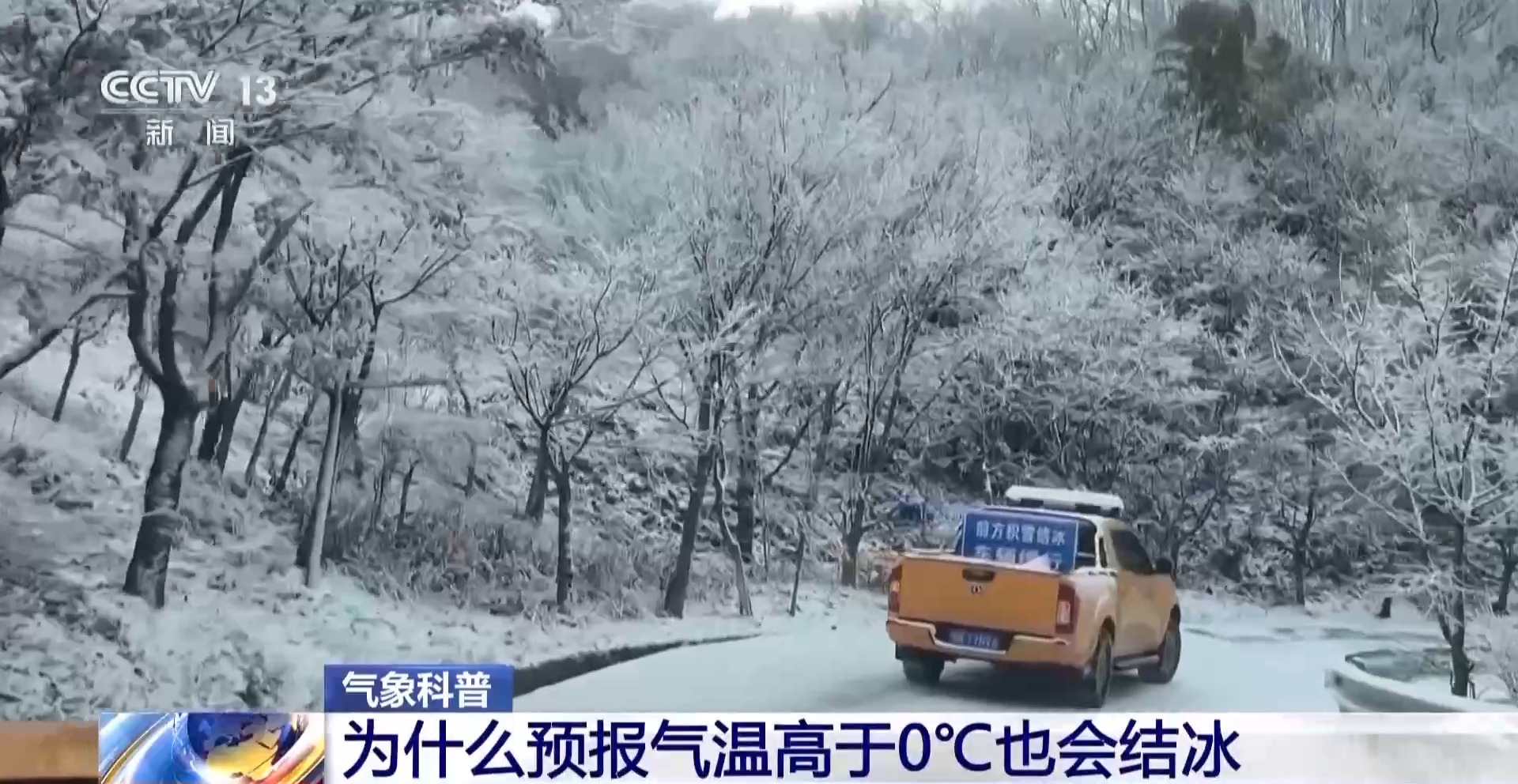
Core Viewpoint - The article highlights common misconceptions regarding low-temperature rain, snow, and ice weather, emphasizing the importance of accurate understanding to improve safety and response efficiency during such conditions [1][5]. Group 1: Weather Phenomena - Precipitation forms are complex and diverse, with freezing rain and snow often causing confusion due to their different formation processes and characteristics [3]. - Snow forms from water vapor in high-altitude clouds directly crystallizing into ice, while freezing rain consists of supercooled water droplets that freeze upon contact with surfaces, creating a smooth ice layer [3]. Group 2: Temperature Misconceptions - A common misconception is that ice only forms when temperatures are below 0°C; however, surface temperatures can be affected by various factors, leading to freezing even when air temperatures are above 0°C [5][7]. - The temperature reported in weather forecasts refers to the air temperature measured at 1.5 meters above ground, which may differ from the actual surface temperature due to radiation cooling and other effects [7]. Group 3: Composite Disasters - Low-temperature rain, snow, and ice disasters are not isolated weather events but rather composite disasters resulting from the combination of cold waves, low temperatures, rain, snow, and ice [9]. - The destructive power of these disasters arises from the synergistic effects of low temperatures and precipitation, leading to prolonged impacts on infrastructure and various sectors, including electricity, communication, transportation, agriculture, and public health [9].
冻雨不是雪 盘点低温雨雪冰冻天气常见误区
Xin Lang Cai Jing· 2026-01-24 09:19
Core Viewpoint - The article emphasizes the misconceptions surrounding low-temperature rain, snow, and freezing weather, highlighting the differences between freezing rain and snow, and the complexities of low-temperature weather phenomena [1][3][7]. Group 1: Weather Phenomena - Freezing rain and snow are both winter precipitation types, but they differ in formation and appearance. Snow forms from water vapor in high-altitude clouds, while freezing rain consists of supercooled water droplets that freeze upon contact with surfaces [1]. - A common misconception is that ice only forms when temperatures are below 0°C. However, surface temperatures can drop below 0°C due to factors like radiative cooling, even when air temperatures are above freezing [3][5]. Group 2: Impact of Low-Temperature Weather - Low-temperature rain, snow, and freezing disasters are not isolated weather events but rather a combination of cold waves, low temperatures, rain, snow, and freezing conditions. This compound disaster can have significant and prolonged impacts on infrastructure [7]. - The effects of low-temperature rain and snow can be complex and cumulative, affecting various sectors such as electricity, communication, transportation, agriculture, and public health [7].
专家解读近期冻雨天气:形成机制特殊 需重点做好防滑防御
Ren Min Wang· 2026-01-23 10:32
Group 1 - The core viewpoint of the article is that freezing rain is a hazardous weather phenomenon with a unique formation mechanism that poses significant risks to transportation, power supply, and public safety [1][2][5] Group 2 - Freezing rain occurs when supercooled water droplets in the atmosphere freeze upon contact with surfaces below 0°C, leading to ice formation that can create hazardous conditions such as icy roads and downed power lines [2][3] - The formation of freezing rain involves a complex process transitioning from solid to liquid to supercooled liquid and then to solid upon contact, which is different from regular rain and snow [3] - The article emphasizes the importance of public safety measures during freezing rain events, including reducing unnecessary travel, wearing non-slip shoes, and staying informed about weather warnings [4]
中东部气温回升进行时 华北黄淮大气扩散条件转差
Zhong Guo Xin Wen Wang· 2026-01-23 03:26
Summary of Key Points Core Viewpoint - The article discusses the weather conditions in central and eastern China, highlighting a warming trend from January 23 to 24, with a subsequent deterioration in air quality due to haze from January 23 to 25, followed by a cold front expected to clear the haze after January 25 [1]. Weather Conditions - A warming trend is expected across most of central and eastern China from January 23 to 24 [1]. - Air quality is predicted to worsen in regions such as southern and central North China, western Huanghuai, Fenwei Plain, and Sichuan Basin, with light to moderate haze expected from January 23 to 25 [1]. - After January 25, the arrival of cold air is anticipated to gradually dissipate the haze [1]. Precipitation Forecast - Light to moderate snow is forecasted for parts of northern and western Xinjiang, western Tibet, northeastern Inner Mongolia, and central and eastern Heilongjiang, with heavy to blizzard conditions (20-28 mm) expected in some areas of southwestern Tibet [1]. - Over the next 10 days, average temperatures in regions such as northern Xinjiang, Inner Mongolia, Northeast China, North China, Huanghuai, Jianghan, Jianghuai, and northwestern Jiangnan, as well as western Tibet, are expected to be 1-3°C lower than the historical average, with some areas potentially experiencing drops of over 4°C [1]. - From January 25 to 27, weak cold air will continue to affect Jiangnan and areas north of it, with snowfall expected in North China, Northeast China, and Huanghuai, and localized freezing rain in regions like Henan and Hubei [1].
抓紧洗晒!河南“晴天卡”仅剩2天,新一轮雨雪锁定周日,或含冻雨
Xin Lang Cai Jing· 2026-01-23 00:21
Group 1 - The article discusses the weather conditions in Henan province, highlighting a temporary calm before a new round of rain and snow expected on Sunday, January 25 [1][5] - A yellow warning for road icing is in effect due to temperatures below 0°C, causing slippery road conditions that could severely impact traffic [3][5] - The minimum temperatures in eastern regions have dropped to -9°C, with most areas experiencing temperatures between -7°C and -5°C, emphasizing the need for caution and warmth [3][5] Group 2 - The forecast indicates that light rain may begin in the central and southern parts of the province on Saturday night, with rain and snow spreading across the province on Sunday [9] - Specific weather conditions include light snow in the north and west, rain or sleet in the southeast, and potential freezing rain in some areas, along with winds of 3 to 4 levels from the north [9] - The article references a historical poem to illustrate the current weather situation, indicating that true warmth is still awaited despite the temporary sunshine [9]
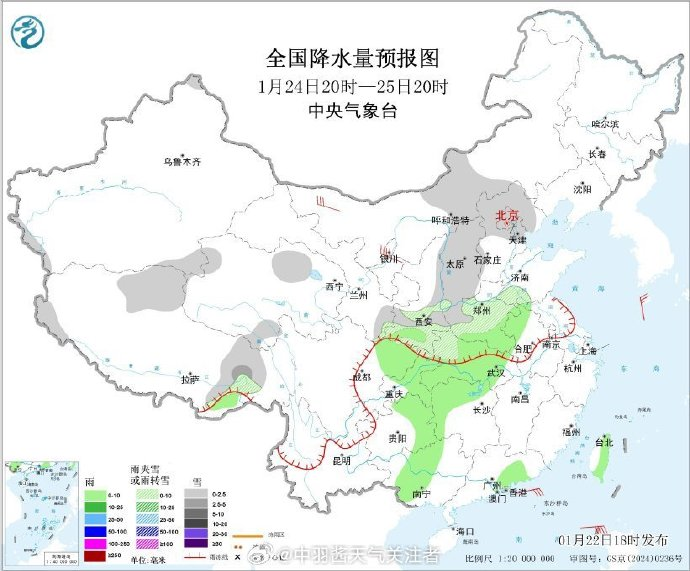
全国大部迎降水间歇期 月底这些地方将再迎雨雪降温
Jing Ji Guan Cha Wang· 2026-01-22 10:22
Group 1 - The cold wave has ended, and most regions in the country will experience a precipitation break for the next three days, allowing people to dry their clothes [1] - A strong snowfall is expected in western Xinjiang and southwestern Tibet from today until the 24th, with the peak snowfall occurring tomorrow [2] - The southern regions are experiencing rapid warming, with temperatures in some areas rising by over 10°C, while the northern regions are warming more slowly due to the influence of cold air [3] Group 2 - Two rounds of cold air will impact the country before the end of the month, with the first from the 25th to the 27th bringing light to moderate snow in northern regions [4] - The second round of cold air from the 29th to the 31st is expected to be stronger, potentially causing significant snowfall in central and eastern regions [4] - Residents in Xinjiang and Tibet should pay special attention to the upcoming heavy snowfall and ensure travel safety [6]
今年首场寒潮有何特点
Ren Min Ri Bao· 2026-01-20 10:28
Core Viewpoint - The first cold wave of the year is significantly impacting various regions in China, with notable temperature drops and complex precipitation patterns expected to continue for several days [1][2][3]. Group 1: Characteristics of the Cold Wave - The cold wave has five main characteristics: a large impact area, significant temperature and precipitation changes, a complex range of rain and snow types, a notable risk of freezing rain, and relatively weak winds [2]. - The temperature drop is particularly pronounced in southern regions, with some areas experiencing a decrease of over 12 degrees Celsius, and localized drops reaching 16 degrees Celsius [3]. Group 2: Weather Forecast and Implications - The central meteorological authority has upgraded the emergency response to a level three due to the cold wave, with warnings for freezing and heavy snow [1]. - The core impact period of the snowfall is expected from January 19 to 20, with significant snowfall predicted in various northern regions [2]. - The cold wave is anticipated to weaken by January 21, but low temperatures in eastern regions may persist until January 25 [3].
冻雨天气来袭,公众如何防御?一文了解→
Yang Shi Wang· 2026-01-20 09:55
Core Viewpoint - The Central Meteorological Observatory predicts freezing rain in regions like Guizhou due to a cold wave, highlighting the formation and public defense measures against this weather phenomenon [1]. Group 1: Formation of Freezing Rain - Freezing rain, also known as "ice rain," consists of supercooled water droplets that freeze upon contact with objects below 0°C [3]. - The formation of freezing rain requires specific weather conditions, including strong cold air to lower ground temperatures below 0°C and the presence of warm, moist air to provide the necessary water vapor for precipitation [5]. - Freezing rain is most common in winter and early spring, particularly in regions like Guizhou, Hunan, and Jiangxi, with mountainous and lake areas being more susceptible [7]. Group 2: Impact and Safety Measures - Freezing rain can disrupt road traffic due to ice accumulation on surfaces and can cause damage to crops and fruit trees [9]. - During freezing rain, it is advised to minimize outdoor activities and take precautions against cold and slipping, with specific recommendations for drivers to reduce speed and avoid sudden maneuvers [11].