暴雪

Search documents
内蒙古:积极应对风雪降温 全力护航假日返程
Xin Lang Cai Jing· 2026-02-24 12:07
Group 1 - The Inner Mongolia Autonomous Region has experienced severe weather conditions including strong winds, dust storms, and significant temperature drops due to a cold wave starting from February 21, prompting the meteorological bureau to issue multiple weather warnings and emergency responses [1][2] - The Inner Mongolia Meteorological Bureau initiated a level four emergency response for major meteorological disasters and issued various weather alerts, including blue and yellow warnings for strong winds and cold waves, as well as yellow warnings for dust storms [1] - In Hohhot, the maximum snowfall reached 30.6 millimeters, with wind speeds in some areas reaching levels 9 to 10, leading to the issuance of eight different meteorological warning signals during the weather event [1] Group 2 - The Ewenki Autonomous Banner upgraded its blizzard disaster emergency response from level four to level three, with various departments and towns quickly coordinating to implement traffic controls and halt public transport [2] - The tourism department activated emergency plans, temporarily closing a red cultural tourism site to ensure the safety of visitors and staff [2] - Multiple cities, including Baotou, Wuhai, and Ulanqab, closed several tourist attractions in response to the adverse effects of dust storms as indicated by meteorological forecasts [2]
四川天气迎转折!降温降雨又要来了,今天抓紧晒太阳
Xin Lang Cai Jing· 2026-02-22 05:31
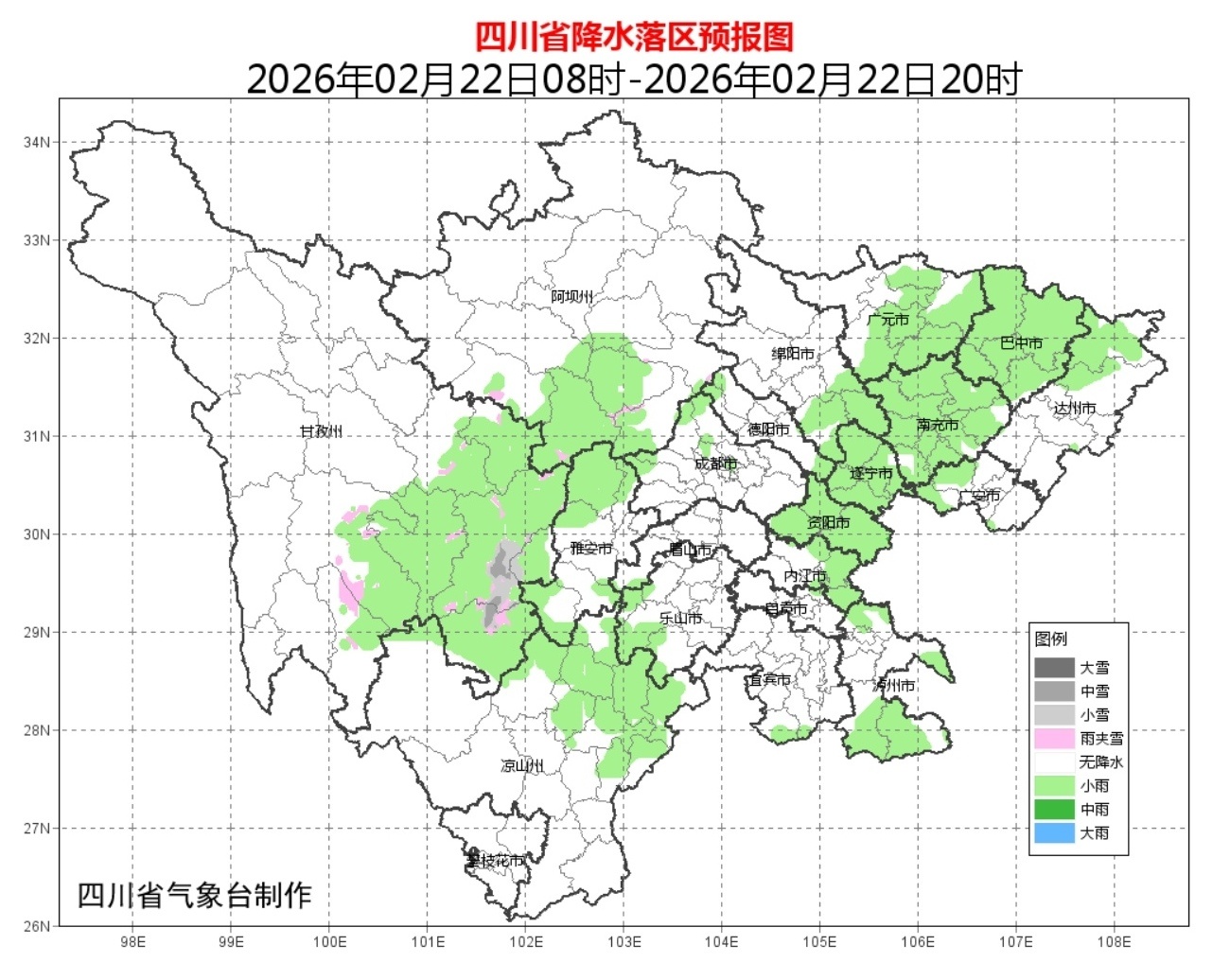
Core Viewpoint - A significant weather change is expected in China, particularly in the northwest and parts of Sichuan, with cold air, rain, and snow forecasted starting from February 21 [1][3]. Group 1: Weather Warnings and Forecasts - The Central Meteorological Observatory issued blue warnings for cold waves, snowstorms, and sandstorms, while Sichuan is not included in these warnings, indicating it will not be affected by strong winds or cold air today [1]. - The Sichuan Provincial Meteorological Station predicts that from the evening of February 22 to the daytime of February 23, the region will experience rain and a drop in temperature, with some areas expecting moderate to heavy rain [3]. Group 2: Temperature Changes - On February 21, temperatures in many areas of the basin exceeded 21°C, with some locations like Yibin and Dazhou reaching over 23°C, breaking previous records for February [5]. - By February 23, the expected maximum temperatures in Dazhou, Bazhong, Nanchong, Guang'an, Suining, and Ya'an will drop to 15-17°C, while other basin cities will see highs of 18-20°C [5]. Group 3: Duration of Weather Impact - The cold air's impact on the Sichuan basin is expected to be brief, with a return to cloudy weather by February 24, although some areas in the western plateau and the southern region may still experience rain and snow [5].

暴雪大风沙尘大范围降雨上线 北方气温“跳水”冷暖快速反转
Xin Lang Cai Jing· 2026-02-21 12:07
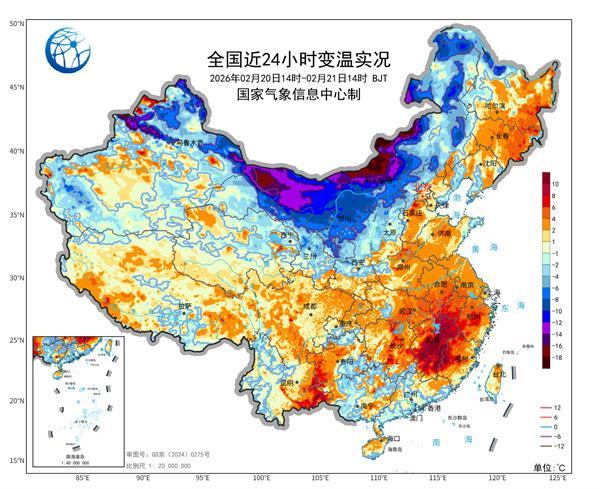
Core Viewpoint - A significant weather change is expected after the Spring Festival holiday, with a cold wave, strong winds, sandstorms, and heavy snowfall affecting various regions in China, leading to temperature drops exceeding 10°C in northern areas [1][4][5]. Group 1: Temperature Changes - The cold wave will continue to impact China, with northern regions experiencing temperature drops of 6 to 10°C, and some areas in Inner Mongolia and Northeast China seeing drops of 12 to 14°C [4][5]. - Major cities like Changchun and Shijiazhuang will experience drastic temperature changes, with highs dropping from over 15°C to below freezing [8]. - The southern regions will also see a temperature decrease of around 10°C due to increased rainfall starting from January 22 [8]. Group 2: Weather Warnings - The Central Meteorological Observatory has issued warnings for cold waves, strong winds, sandstorms, and heavy snowfall as the cold air moves eastward [3][4]. - Strong winds are expected in northern regions, with gusts reaching 9 to 10 levels in some areas, contributing to the largest and strongest sandstorm of the year [8][9]. Group 3: Rain and Snow Forecast - Significant rain and snow are anticipated, particularly in Inner Mongolia and Northeast China, with some areas experiencing heavy to extreme snowfall [11]. - A new round of rainfall will begin in southern regions, with potential thunderstorms and severe weather conditions expected on January 23, coinciding with the peak travel period after the holiday [12][13].
今天,长沙有雪!
Xin Lang Cai Jing· 2026-01-31 02:58
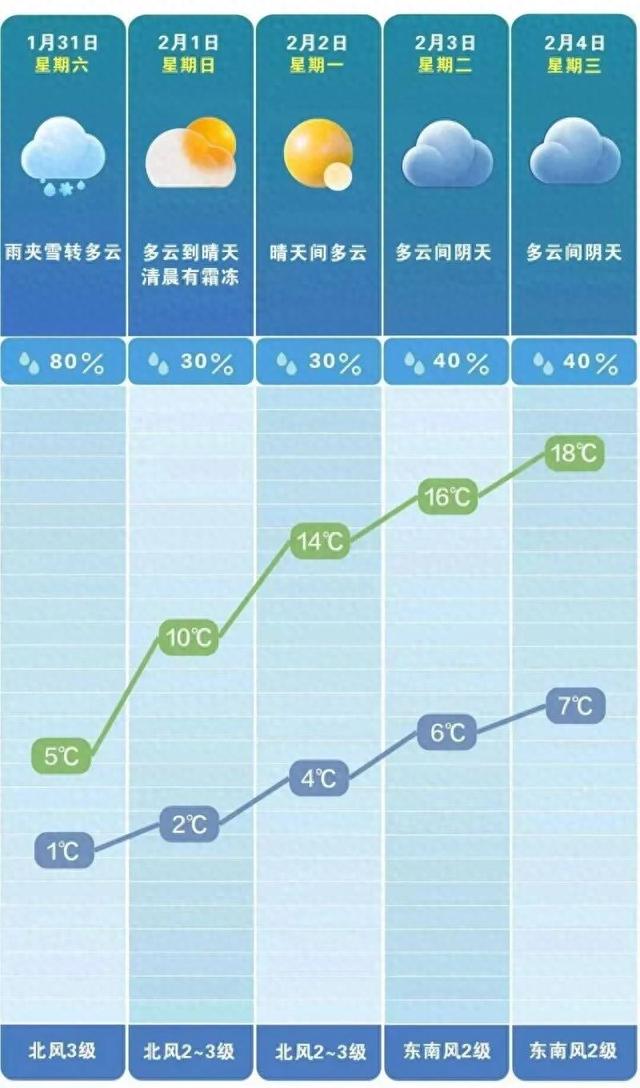
Summary of Key Points Core Viewpoint - The weather in Changsha is expected to transition from cold to warmer temperatures over the next few days, with a significant rise in temperature following a period of mixed rain and snow [1][4][5]. Weather Forecast - On January 31, rain mixed with snow will dominate, with a high of 5°C and a low of 1°C [1]. - February 1 will see a shift to cloudy and sunny weather, with temperatures rising to a high of 10°C and a low of 2°C [4]. - By February 2, the weather will be mostly sunny with temperatures reaching 14°C and a low of 4°C [5]. - From February 3 to 4, temperatures will continue to rise, reaching highs of 16°C and 18°C, with lows of 6°C and 7°C respectively [6]. Weather Warnings and Precautions - The Hunan Provincial Meteorological Station has issued a yellow warning for low temperatures, rain, and snow, predicting that certain areas will experience mixed rain and snow, with temperatures dropping below 2°C [6][8]. - Citizens are advised to take precautions against slipping during mixed rain and snow conditions and to monitor road conditions for ice [6]. - It is recommended to dress appropriately for the temperature fluctuations to avoid colds, and to utilize sunny days for drying bedding and clothes [6]. Cold Wave Impact - A cold wave is characterized by a significant drop in temperature, often accompanied by strong winds and precipitation, which can adversely affect agriculture, transportation, and public health [10]. - The cold wave can lead to severe weather conditions such as strong winds (5-8 levels) and freezing temperatures that can damage crops and disrupt transportation [10]. Frost and Freezing Rain - Frost occurs when air temperatures drop suddenly, causing damage to crops and plants, particularly sensitive species like corn and soybeans [13]. - Freezing rain can create hazardous conditions for transportation and can lead to significant damage to infrastructure [19]. Recommendations for Safety - During cold weather, it is crucial to dress warmly, secure windows and doors, and avoid outdoor activities, especially for vulnerable populations [10][12]. - Precautions should be taken to prevent accidents due to icy conditions, including the use of salt on roads and maintaining safe driving practices [26].
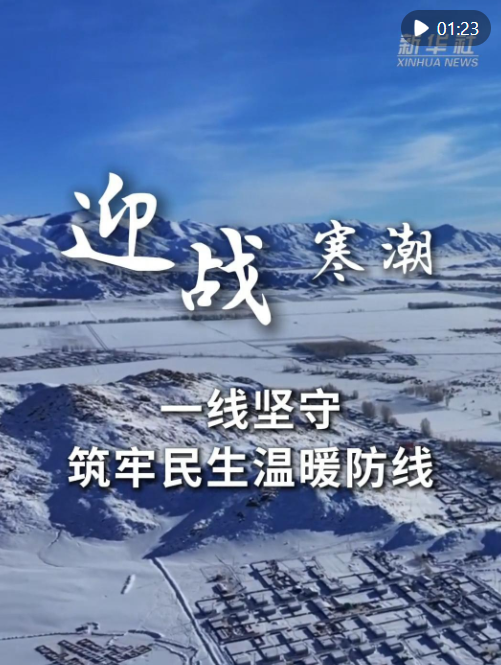
迎战寒潮:一线坚守筑牢民生温暖防线
Xin Lang Cai Jing· 2026-01-20 08:39
Group 1 - The China Meteorological Administration upgraded the emergency response for major meteorological disasters (cold wave) from level four to level three, which includes cold wave, frost, and snowstorm warnings [2] - The Central Meteorological Observatory issued a yellow warning for cold waves, a yellow warning for frost, and a blue warning for snowstorms as of January 18 at 18:00 [2] - In response to the cold wave, various regions across the country quickly activated emergency response mechanisms, with departments mobilizing to ensure public welfare and strengthen warmth defenses [2]
寒潮已抵达!局部中到大雪!浙江多趟列车停运
Xin Lang Cai Jing· 2026-01-19 07:54
Weather Alerts - The Central Meteorological Observatory has issued yellow alerts for freezing, cold wave, and snow as of January 19 [1][3] - A significant temperature drop of 6-10°C is expected across the Huanghuai region and southward from January 19 to 21, with some areas experiencing drops of 10-14°C and localized drops exceeding 16°C [1] Temperature Forecast - From January 19 to 21, average daily temperatures in various regions of Zhejiang will decrease by 8-11°C, with minimum temperatures expected to reach -1 to -4°C in most areas and -4 to -7°C in mountainous regions [6] - The lowest temperatures are anticipated on January 22, with widespread freezing conditions [6] Precipitation and Snowfall - A weak rain and snow event is forecasted for January 19-20, with potential for rain mixed with snow in the northwestern mountainous areas of Zhejiang [6] - In Hangzhou, there is a possibility of seeing snowflakes, particularly in higher altitude areas where conditions for snowfall are more favorable [6] Transportation Impact - Due to the cold wave, several trains have been suspended in Zhejiang, including multiple routes from Hangzhou West Station and Chuzhou Station [8][9] - The railway department plans to temporarily suspend some passenger trains on various high-speed rail lines from January 19 to January 20 due to the impact of snowfall [11]

中雪大雪,即将抵达长沙县!
Xin Lang Cai Jing· 2026-01-19 04:45
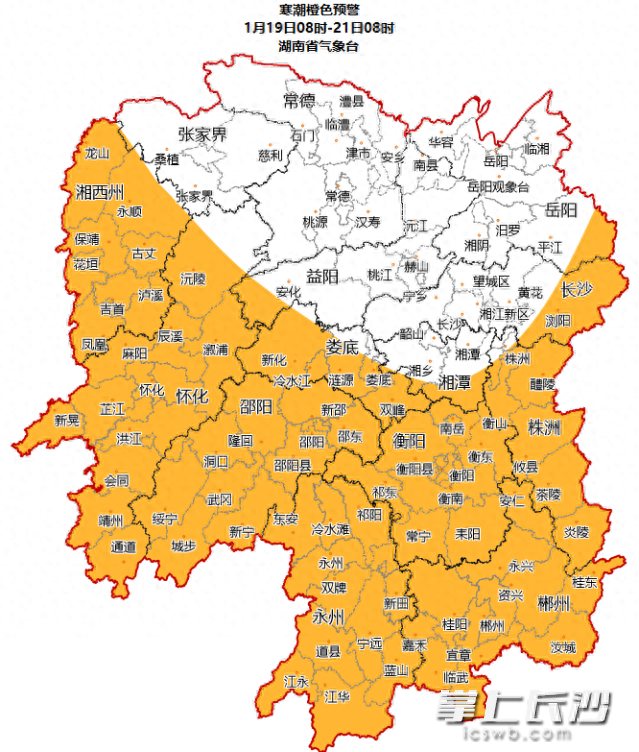
Group 1 - The Hunan Meteorological Observatory has issued an orange cold wave warning, predicting a temperature drop of over 12°C in most areas of Hunan from 8 AM today until 8 AM on the 21st, with minimum temperatures expected to fall below 0°C in many regions [1][3] - A yellow warning for low temperature, rain, and snow has also been issued, forecasting freezing rain, sleet, or snow in parts of Hunan from 8 AM on the 19th to 8 AM on the 20th, with minimum temperatures below 0°C [3] - The provincial meteorological bureau has activated a level three emergency response for low temperature, rain, and snow, with relevant units entering a state of emergency response [3] Group 2 - The latest weather forecast for Changsha indicates a transition from light rain to freezing rain on the 19th, with temperatures ranging from -1°C to 3°C, and a forecast of snow on the following days [5][6] - Specific weather conditions include freezing rain turning to snow on the 20th, with temperatures dropping to -3°C to -1°C, and continued snow on the 21st [5][7] - The forecast also includes a clear day on the 23rd, with temperatures ranging from -3°C to 6°C [5][7] Group 3 - The public is advised to take precautions against the cold wave, including wearing warm clothing and securing outdoor items that may be affected by strong winds [9] - Recommendations include avoiding outdoor activities during severe weather and ensuring safety measures are in place for vulnerable populations [9][12] - The impact of cold waves includes potential damage to agriculture, transportation disruptions, and health risks due to extreme temperature drops [12][21]
今年首场大寒潮将使局地降温16℃以上,豫皖苏等省多地停课应对暴雪
Xin Lang Cai Jing· 2026-01-19 02:45
Core Viewpoint - The first major cold wave of the year is expected to bring the coldest weather since the start of winter to central and eastern China, with significant impacts on various provinces including school closures and emergency responses [1][2][3] Weather Warnings - The Central Meteorological Administration issued multiple yellow warnings for cold waves, heavy snow, and freezing conditions, indicating a significant drop in temperatures across various regions [1][2] - From January 19 to 21, average daily temperatures in the Huanghuai region and southward are expected to drop by 6-10°C, with some areas experiencing drops of 10-14°C or more [1][2] Snow and Ice Conditions - Heavy snow is forecasted for several provinces, with some areas expecting snowfall of 10-18 millimeters, and local accumulations of 4-12 centimeters [1][2] - Freezing rain is anticipated in southeastern Henan, southwestern Anhui, and other regions, with expected ice accumulation of 1-3 millimeters, and localized areas reaching up to 8 millimeters [2] Emergency Responses - The China Meteorological Administration has upgraded its emergency response to a level three due to the extensive impact of the cold wave, with specific focus on the risks of low-temperature rain, snow, and ice disasters [3] - Local governments in provinces such as Henan and Anhui have announced school closures and other measures to ensure public safety during the severe weather [4]
我国大部地区迎降温
Xin Lang Cai Jing· 2026-01-18 17:25
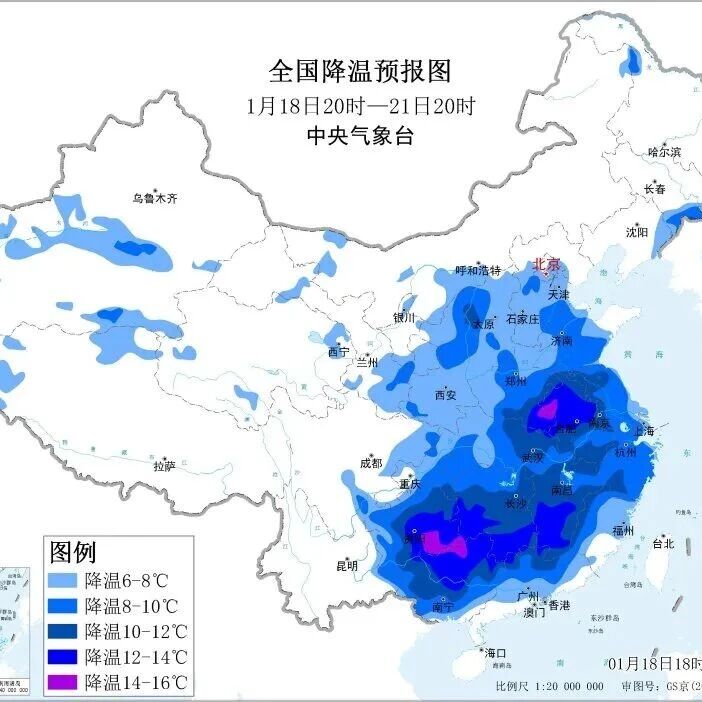
Core Viewpoint - The article discusses the impact of a cold wave on a large part of China, leading to the upgrade of the major meteorological disaster response level from four to three due to cold wave, freezing, and snowstorm warnings [1] Weather Warnings - The Central Meteorological Observatory issued a yellow warning for cold waves, freezing, and a blue warning for snowstorms as of January 18 [1] - From the night of January 18 to January 21, the average daily or minimum temperatures in central and eastern China are expected to drop by 6°C to 12°C, with some areas experiencing drops of 12°C to 14°C, and localized drops exceeding 16°C [1] Temperature Forecast - By the morning of January 21, the zero-degree Celsius line is projected to move southward to a line from southern Guizhou to southern Hunan, central Jiangxi, and southern Zhejiang [1] Snowfall Predictions - The Central Meteorological Observatory forecasts heavy snow in parts of southern Shaanxi, central and southern Henan, northern Anhui, and northwestern Hubei from 20:00 on January 18 to 20:00 on January 19 [1] - Areas in southern Shaanxi, southern and western Henan, northwestern Anhui, and northwestern Hubei may experience blizzards during this period [1] Freezing Rain Forecast - Freezing rain or ice pellets are expected in parts of southeastern Henan, western Anhui, northern and western Hubei, southeastern Shaanxi, and northern Chongqing from 20:00 on January 18 to 20:00 on January 19 [1]
三预警齐发!多地紧急通知:停课
券商中国· 2026-01-18 15:07
Core Viewpoint - A significant cold wave is affecting central and eastern China, leading to substantial temperature drops and widespread rain and snow, with specific warnings issued for various regions [1][3][4]. Summary by Sections Weather Impact - The cold wave is expected to cause average daily or minimum temperatures to drop by 6 to 12 degrees Celsius across central and eastern regions from January 18 to 21, with some areas experiencing drops of 12 to 14 degrees Celsius, and localized drops exceeding 16 degrees Celsius [3][4]. - Rain and snow are forecasted to occur from north to south in the central and eastern regions, with heavy snow expected in parts of Shaanxi, Henan, Anhui, and Hubei, with snow accumulation of 4 to 8 centimeters, and localized areas exceeding 10 centimeters [4][5]. Emergency Responses - Schools in Henan, Anhui, Jiangsu, and Hubei have announced closures due to the severe weather, with specific regions like Zhoukou and Zhumadian suspending all in-person classes on January 19 [5][6][12][14]. - The National Disaster Reduction Committee has activated a Level 4 emergency response for low-temperature rain and snow disasters in provinces including Anhui, Henan, Hunan, and Guizhou [19]. Health and Safety Recommendations - Health authorities in Henan have advised vulnerable populations, including pregnant women, the elderly, and those with chronic illnesses, to monitor their health closely due to the expected temperature drops of 10 to 15 degrees Celsius, with some areas exceeding 20 degrees Celsius [5].