
朔望月

Search documents
公历2026年比农历丙午马年多11天,为啥?
Xin Lang Cai Jing· 2026-01-01 08:29
Group 1 - The core reason for the difference in the lengths of the Gregorian and lunar years is due to their reliance on different celestial cycles [3] - The Gregorian calendar is a solar calendar based on the Earth's orbit around the Sun, with an average year length of approximately 365.2422 days [3] - The lunar calendar, or Chinese calendar, is a lunisolar calendar that considers both the lunar phases and the solar year, resulting in an average year length of about 354 days [5] Group 2 - The Gregorian year 2026 is a common year with 365 days, while the lunar year of the Year of the Horse (丙午) is also a common year with 354 days, making the Gregorian year 11 days longer [7] - To reconcile the differences between the lunar and solar years, the lunar calendar includes leap months, with approximately 7 leap years occurring every 19 years, extending those years to about 384 days [5]

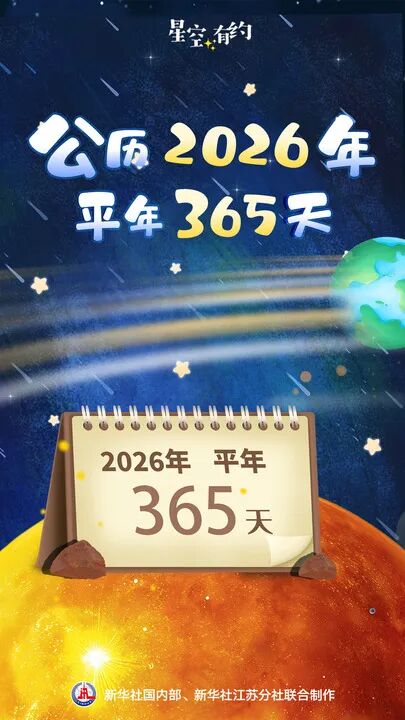
星空有约|公历2026年比农历丙午马年多11天
Xin Hua She· 2025-12-30 03:50
Core Viewpoint - The difference in the length of the Gregorian calendar year and the lunar calendar year is due to their reliance on different celestial cycles for their respective calendar systems [3][5][7]. Group 1: Gregorian Calendar - The Gregorian calendar is based on the solar cycle, with a year length of approximately 365.2422 days, leading to the establishment of regular years (365 days) and leap years (366 days) [3][6]. - The rules for leap years in the Gregorian calendar are "one leap year every four years, no leap year in a century, and a leap year every four centuries" [3]. Group 2: Lunar Calendar - The lunar calendar, or traditional Chinese calendar, is a lunisolar calendar that considers both the lunar phases and the solar year, with an average year length of about 354 days [5][6]. - To reconcile the difference between the lunar year and the solar year, the lunar calendar includes intercalary months, with approximately seven leap years occurring every 19 years, resulting in a leap year length of about 384 days [5].
“双节”同辉!3年后中秋国庆将再次“喜相逢”
Xin Hua She· 2025-10-06 05:19
Group 1 - The occurrence of the Mid-Autumn Festival coinciding with National Day is a normal calendrical phenomenon, with the last occurrence in 2020 and the next one expected in 2028 [5] - The Mid-Autumn Festival can fall on any date between September 7 and October 8 in the Gregorian calendar, depending on the lunar calendar's leap months [2] - The lunar calendar's average year length is aligned with the solar year by adding leap months, which occurs seven times in a 19-year cycle [1] Group 2 - The current lunar year is a leap year, which has resulted in the Mid-Autumn Festival being pushed back to October 6 this year, compared to September 17 last year [1] - The next occurrence of the Mid-Autumn Festival on October 6 will not happen again until 2063 [5]

中秋月又逢“十六圆”,云端赏月受青睐
Qi Lu Wan Bao· 2025-10-02 12:28
Core Viewpoint - The upcoming Mid-Autumn Festival will feature a "supermoon," with the fullest moon occurring on October 7 at 11:48 AM, enhancing the moon-viewing experience for travelers [1]. Group 1: Astronomical Events - The phenomenon of "the moon is fullest on the 16th" is linked to the average length of a synodic month, which is 29.53 days, causing full moons to frequently occur on the 15th and 16th of the lunar month [1]. - In 2024 and 2025, the fullest moon during the Mid-Autumn Festival will also fall on the 16th day of the eighth lunar month, while 2026 will see a "seventeenth full moon" phenomenon [1]. - This year's supermoon will rank as the third largest in visual diameter among all full moons in 2025, appearing approximately 14% larger and 30% brighter than a typical full moon [1]. Group 2: Travel and Tourism Impact - There has been a significant increase in bookings for "moon-viewing flights," particularly for flights departing between 6 PM and midnight on October 6, allowing passengers to enjoy the moon from high altitudes [1]. - In Shenzhen, the moonrise times are set for 5:28 PM on October 6 and 6:06 PM on October 7, providing optimal viewing conditions for the public if the weather is clear [2].