公历

Search documents
“马年无春不宜结婚”是真的吗?天文专家揭秘
Yang Shi Wang· 2026-02-26 21:38
Core Viewpoint - The notion that the Year of the Horse (丙午马年) will have no "Lichun" (立春) is a misconception, as the year does indeed contain this solar term, albeit at the end of the year [1][3]. Group 1: Misconceptions about "No Spring Year" - The term "No Spring Year" refers to the year 2026, where the Lichun falls on February 4, which is still within the lunar calendar of the previous year [1]. - The claim that "No Spring Year" is a rare occurrence is a cognitive bias; such years are not uncommon [4]. - The concept of "Double Spring" (双春) or "Two Springs" is also prevalent, indicating that these phenomena are part of the natural calendar cycle [4]. Group 2: Calendar Mechanics - Lichun is fixed in the solar calendar around February 4, while the lunar calendar varies, leading to discrepancies in the timing of solar terms [5]. - The lunar calendar's adjustments, such as leap months, cause the solar terms to shift within the lunar year [5][7]. - On average, "No Spring Years" or "Double Spring Years" occur approximately every 19 years, with 7 occurrences, roughly every 2 to 3 years [7]. Group 3: Historical Context - Historical texts have never classified "No Spring" as a wedding taboo; this belief is a modern misinterpretation [8]. - The original term for a year without Lichun was "寡春年" (Guachun Year), which was later misinterpreted as "widow year" due to linguistic confusion [9]. - Traditional marriage practices in ancient China were not influenced by the presence or absence of Lichun, as evidenced by numerous marriage records from "No Spring Years" [9][11].

公历2026年比农历丙午马年多11天,为啥?
Xin Lang Cai Jing· 2026-01-01 08:29
Group 1 - The core reason for the difference in the lengths of the Gregorian and lunar years is due to their reliance on different celestial cycles [3] - The Gregorian calendar is a solar calendar based on the Earth's orbit around the Sun, with an average year length of approximately 365.2422 days [3] - The lunar calendar, or Chinese calendar, is a lunisolar calendar that considers both the lunar phases and the solar year, resulting in an average year length of about 354 days [5] Group 2 - The Gregorian year 2026 is a common year with 365 days, while the lunar year of the Year of the Horse (丙午) is also a common year with 354 days, making the Gregorian year 11 days longer [7] - To reconcile the differences between the lunar and solar years, the lunar calendar includes leap months, with approximately 7 leap years occurring every 19 years, extending those years to about 384 days [5]
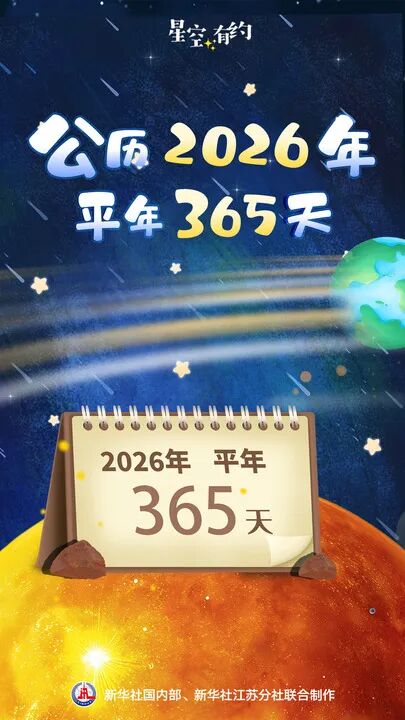
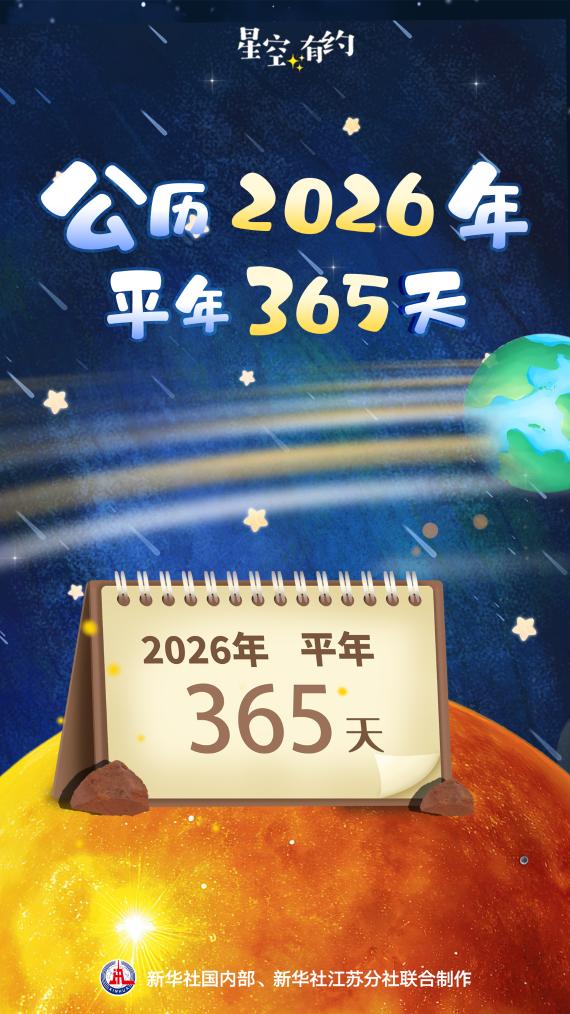
星空有约|公历2026年比农历丙午马年多11天
Xin Hua She· 2025-12-30 03:50
Core Viewpoint - The difference in the length of the Gregorian calendar year and the lunar calendar year is due to their reliance on different celestial cycles for their respective calendar systems [3][5][7]. Group 1: Gregorian Calendar - The Gregorian calendar is based on the solar cycle, with a year length of approximately 365.2422 days, leading to the establishment of regular years (365 days) and leap years (366 days) [3][6]. - The rules for leap years in the Gregorian calendar are "one leap year every four years, no leap year in a century, and a leap year every four centuries" [3]. Group 2: Lunar Calendar - The lunar calendar, or traditional Chinese calendar, is a lunisolar calendar that considers both the lunar phases and the solar year, with an average year length of about 354 days [5][6]. - To reconcile the difference between the lunar year and the solar year, the lunar calendar includes intercalary months, with approximately seven leap years occurring every 19 years, resulting in a leap year length of about 384 days [5].
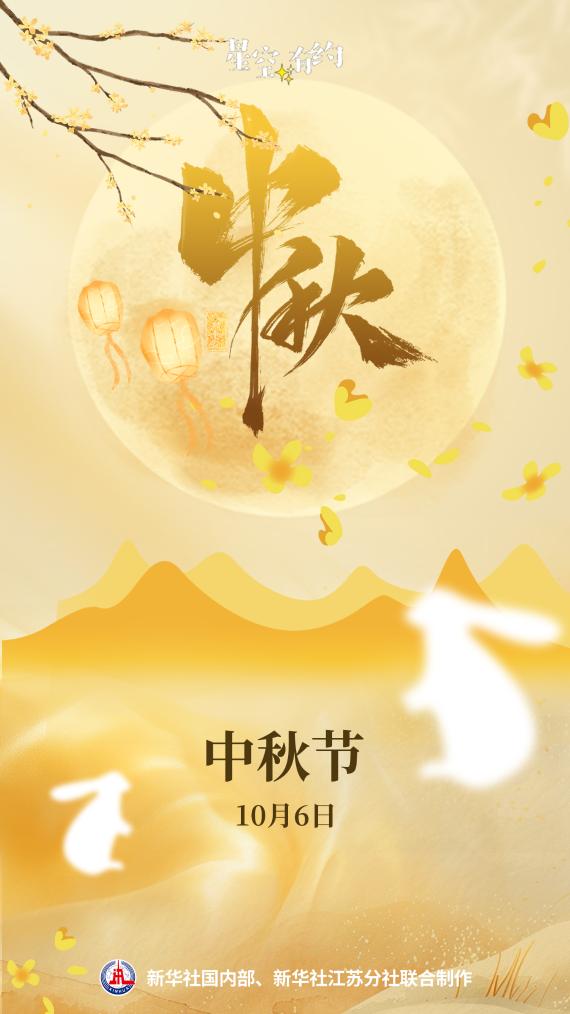
星空有约|本世纪最晚中秋来了!比去年晚了19天
Xin Hua She· 2025-10-04 07:20
Core Viewpoint - The Mid-Autumn Festival in 2023 falls on October 6, making it one of the latest dates for the festival in this century, occurring 19 days later than last year's date [1][3]. Group 1: Calendar and Lunar Cycle - The varying Gregorian dates for the Mid-Autumn Festival are due to the differences between the Gregorian and lunar calendars [3][4]. - The lunar calendar is a lunisolar calendar that accounts for the moon's phases and the solar year, with an average lunar month lasting about 29.5 days and a lunar year typically being 354 or 355 days, which is about 11 days shorter than the Gregorian year [3][4]. - To reconcile the differences between the two calendars, a leap month is added in the lunar calendar, resulting in a leap year lasting 383 or 384 days, which is about 19 days longer than the Gregorian year [3][4]. Group 2: Historical Context - In the 21st century, the latest Mid-Autumn Festival dates have occurred on October 6 in the years 2006, 2025, 2063, and 2082 [7][9]. - The dates for the Mid-Autumn Festival in this century range from September 7 to October 6, with the earliest occurrence on September 7 in 2052 [9]. Group 3: Moon Phases - This year's Mid-Autumn Festival features the phenomenon of "the full moon on the 15th being round on the 16th," with the moon reaching its fullest point on October 7 at 11:48 AM [10][12]. - Between 2001 and 2100, there will be 48 instances of the moon being "round on the 16th," 38 instances on the "15th," and 14 instances on the "17th," with no occurrences on the "14th" [10][12].