权益类投资

Search documents
低利率催生理财变局 含“权”理财驶入“快车道”
Zhong Guo Jing Ying Bao· 2025-10-10 18:49
Core Insights - The market for wealth management products with embedded rights is experiencing significant growth, driven by rising investor risk appetite and demand for equity investments [1][5][6] - Financial institutions are increasingly launching mixed and "fixed income plus" wealth management products, with over 1,600 such products introduced since September [2][3] - The average annualized return for mixed wealth management products has reached 4.82%, while equity products have seen a remarkable return of 24.76% this year [3][4] Group 1: Market Trends - The issuance of wealth management products with embedded rights is accelerating, with a notable increase in the number of mixed and "fixed income plus" products [2][5] - The demand for high-yield investment channels is rising, leading to a higher proportion of mixed and equity products in the market [5][6] - The trend towards multi-asset strategies is becoming mainstream among wealth management institutions, focusing on balancing returns and stability [7][8] Group 2: Product Performance - Mixed and equity wealth management products are favored due to their strong performance, with mixed products showing a 12% increase in scale since August [3][4] - The average annualized return for mixed products has increased by 9.27 basis points, while equity products have surged by 572.38 basis points since August [3] - Institutions are innovating product designs to meet diverse investor needs, including the introduction of index-linked and ESG-themed products [5][6] Group 3: Investor Behavior - Investors are increasingly accepting wealth management products with embedded rights, particularly among younger and high-net-worth individuals [6][7] - There is a shift in investor behavior from pure fixed-income products to those with embedded rights for higher yield opportunities [7][8] - The focus on personalized and customized products is growing, with strategies that include dynamic asset allocation to adapt to market fluctuations [7][8]


投资权益类基金,不妨先从这个问题开始
Sou Hu Cai Jing· 2025-06-18 03:44
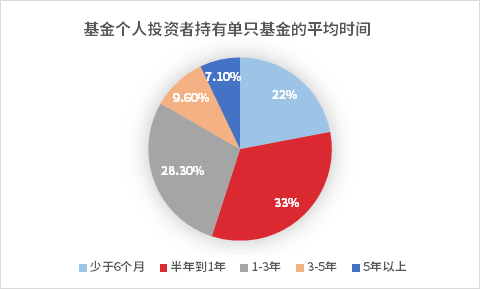
Core Viewpoint - The article emphasizes the importance of understanding personal financial situations before investing in stocks or equity funds, suggesting that potential investors should consider their housing situation, future financial needs, and personal qualities necessary for successful stock investment [1][6][7]. Group 1: Housing Investment Perspective - Peter Lynch suggests that before investing in stocks, individuals should consider buying a house, as real estate is generally a safer investment compared to stocks [2][3]. - The article highlights that while many investors may face financial difficulties when selling properties, it is rare for them to incur continuous losses in real estate transactions, unlike in the stock market [2][3]. - The average holding period for real estate is approximately 7 years, while 87% of stocks on the New York Stock Exchange are traded at least once a year, indicating a significant difference in investment behavior between real estate and stocks [3][5]. Group 2: Financial Planning and Investment Timing - Investors are advised to reassess their financial budgets before investing in equity assets, particularly if the funds are needed within the next two to three years for expenses like education or home renovations [6]. - Lynch proposes a simple formula for investment: only invest money that can be afforded to lose without impacting daily life [6]. Group 3: Personal Qualities for Successful Investing - The article outlines essential personal qualities for successful stock investment, including patience, independence, common sense, emotional resilience, and the ability to remain calm during market turmoil [7][8]. - It discusses the tendency of investors to panic sell during market downturns or to chase after stocks during uptrends, which undermines their long-term investment strategies [8][9]. - True contrarian investing involves waiting for market enthusiasm to cool before purchasing stocks that are overlooked, rather than simply opposing popular trends [8][9].