气温回暖

Search documents
冷空气将暂别广东 全省将迎回暖
Zhong Guo Xin Wen Wang· 2026-01-12 10:47
Core Viewpoint - The cold air is expected to temporarily leave Guangdong, leading to a warming trend across the province starting from January 12 [1] Weather Conditions - On January 12, remnants of cold air resulted in morning low temperatures below 5°C in northern Zhaoqing, northern Huizhou, and most areas in northern Guangdong, with high-altitude regions experiencing temperatures between -1°C and 0°C, leading to frost or freezing conditions [1] - The Guangdong Meteorological Bureau indicates that the cold air is gradually retreating, and temperatures are set to rise in the coming days [1] Temperature Forecast - On January 13, the expected minimum temperatures are: 5 to 8°C in northern counties, 13 to 15°C in southern coastal counties, and 9 to 12°C in other areas [1] - For January 14, the forecasted minimum temperatures are: 7 to 9°C in northern counties, 13 to 16°C in southern coastal counties, and 10 to 12°C in other areas [1] Safety Advisory - The meteorological department warns of high forest fire risk in the province, advising caution with indoor heating and fire safety, as well as ensuring proper ventilation indoors and enhanced management of outdoor fires [1]
“三九”暖如春!全国大部开启大回暖模式,长江沿线将冲击20℃
Bei Jing Ri Bao Ke Hu Duan· 2026-01-12 05:22
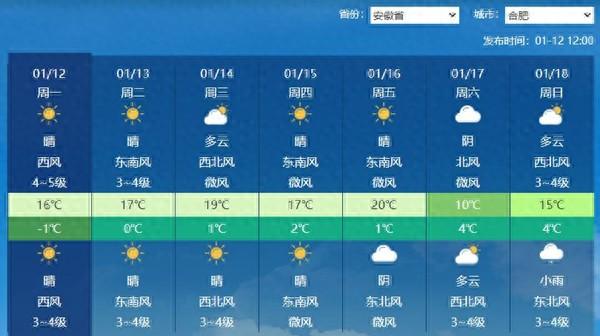
Core Viewpoint - The recent cold wave has affected many regions in China, but temperatures are expected to rise significantly above normal levels in the coming days, particularly along the Yangtze River where highs may reach 20°C during the "Three Nines" period [1]. Temperature Trends - The cold air mass has caused temperatures to drop to recent lows from January 10 to 11, with many northern areas experiencing temperatures below freezing [1]. - Despite the active cold air, the intensity is weak, leading to a general warming trend across most regions, especially in Northwest, North China, Huanghuai, Jianghuai, Jiangnan, and South China, where temperatures may exceed normal levels by more than 10°C [1]. - The highest temperatures are expected between January 14 and 16, with areas in South North China and Huanghuai reaching around 15°C, and the Yangtze River region possibly exceeding 20°C [1]. Local Records - In major cities, Hefei is forecasted to reach a high of 20°C on January 16, potentially breaking the local record for mid-January warmth [3]. - Hangzhou is expected to have three consecutive days with highs of 20°C or above from January 14 to 16, while Changsha may see highs of 22°C on January 14 and 16 [3]. Temperature Variability - Although daytime temperatures are rising significantly, nighttime temperatures are expected to remain low due to a lack of cloud cover, leading to a substantial diurnal temperature range of 10°C to over 15°C [3]. - Public is advised to dress in layers to cope with the significant temperature fluctuations [3]. Future Weather Outlook - A strong cold air mass is anticipated to arrive on January 17, bringing noticeable cooling to the Northwest and much of Central and Eastern China, with average temperatures expected to shift from above normal to below normal by late January [3].

今天起,我国大部掀回暖浪潮
Xin Lang Cai Jing· 2026-01-12 03:34
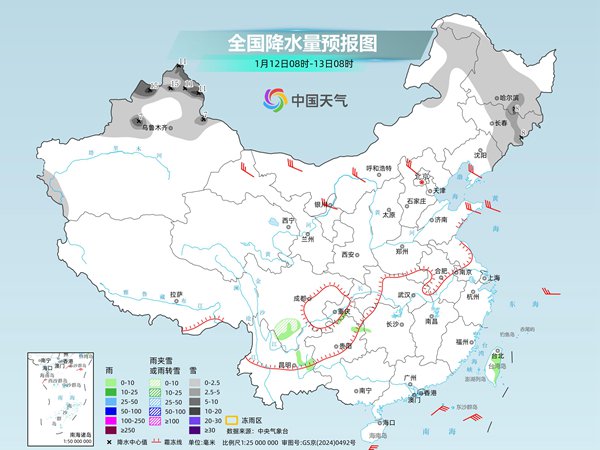
Core Viewpoint - The article discusses the weather conditions in China, highlighting a significant warming trend and snowfall in specific regions, while most areas will experience dry weather with little precipitation [1][4]. Summary by Sections Weather Conditions - Snowfall is expected to increase in Northeast China and northern Xinjiang, with some areas experiencing moderate to heavy snow [1]. - Most of China will continue to have sparse rain and snow, maintaining a dry weather pattern [1]. Temperature Changes - A warming trend is set to sweep across China, with some regions experiencing temperature increases of over 8°C [1]. - The highest temperature increases are expected between January 14 and 16, with areas along the Yangtze River reaching 20°C or higher [4]. - Specific locations like Shijiazhuang, Hangzhou, and Changsha are forecasted to have unusually warm temperatures for mid-January [4]. Humidity and Safety - The article notes that many areas, even in the south, will have afternoon humidity levels dropping below 40% or even 30%, prompting public reminders to stay hydrated and be cautious with fire and electricity [4]. Regional Variations - The temperature trends in Northeast China will differ from other regions, with fluctuations due to frequent cold air influences, leading to significant day-night temperature differences [4].
冬至寒潮后迎回暖 长三角气温触底反弹
Zhong Guo Xin Wen Wang· 2025-12-26 14:02
Core Viewpoint - The Yangtze River Delta region is experiencing a significant temperature rebound following a cold wave, with temperature increases expected to reach up to 12°C in the coming days [1][2]. Group 1: Temperature Changes - From December 26, cities in the Yangtze River Delta, including Shanghai, Suzhou, Hangzhou, and Hefei, will see a strong rebound in temperatures, with cumulative increases expected to reach up to 12°C [1]. - On December 25, many areas in Jianghuai and Jiangnan experienced the coldest day of the second half of the year, with Hangzhou recording its first sub-zero temperature of the winter [1]. - The highest temperature in Shanghai is projected to rise to 12°C on December 27 and reach 15°C on December 28 [1]. Group 2: Weather Forecast - The Central Meteorological Administration forecasts a significant warming trend across most of China from December 26 to 28, with maximum temperature increases of 8°C to 12°C in Jianghuai and Jiangnan regions [1]. - After the warming period, a cold air mass is expected to affect areas north of the Huai River from December 28 to 30, with another strong cold front anticipated around New Year's Day 2026 [2]. Group 3: Public Advisory - Meteorological departments advise the public to prepare for significant temperature fluctuations, with day-night temperature differences exceeding 10°C, and in many areas north of the Yangtze River, differences may exceed 15°C [2].
大回暖模式持续 东北江南等地暖如10月底
Yang Shi Xin Wen· 2025-12-17 00:54
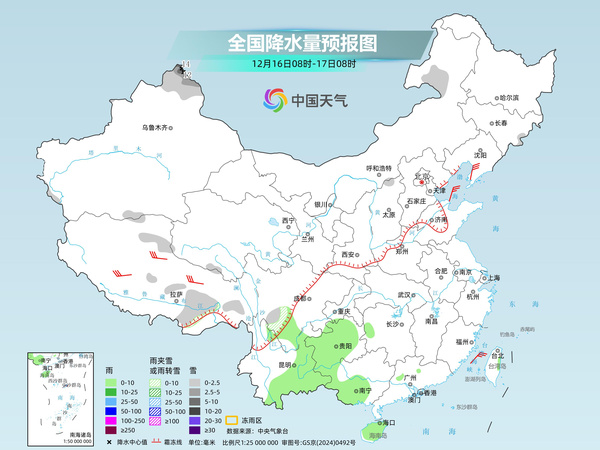
Core Viewpoint - A significant warming trend is expected across most regions of China from December 17 to 19, with temperatures notably higher than usual, particularly in Northeast and Jiangnan areas, resembling conditions typical of late October. However, a cold front is anticipated to disrupt this warming trend after December 19, leading to a substantial drop in temperatures across central and eastern regions [1][2]. Summary by Sections Warming Trend - The warming trend will last for three days, with temperatures rising significantly across the country. The highest temperature line of 20°C is expected to move northward to southern Henan, while the 10°C line may reach southern Hebei. The most pronounced temperature increases are in Northeast and Jiangnan regions, with average highs exceeding 10°C and localized areas reaching around 12°C higher than normal [2]. Temperature Forecast - By the day after tomorrow, the Yangtze River middle and lower reaches will see maximum temperatures slightly above 20°C, with major cities like Hefei and Wuhan exceeding 20°C. However, this warming will be interrupted by a cold air mass, leading to a significant temperature drop back to normal or below normal levels starting December 21. For instance, Hefei's temperature is expected to drop from 21°C to single digits [2]. Weather Conditions - For the next three days, most of the country will experience clear and dry weather, with minimal precipitation. In the north, areas such as northern Xinjiang, northeastern Inner Mongolia, and Heilongjiang may see some snowfall, while the south will have rain mainly in Yunnan and along the southern coast [3].
东北、江南多地昼夜温差将超10℃ 早晚出行应注意保暖
Yang Shi Wang· 2025-12-16 02:33
Group 1 - The core viewpoint of the articles is that most regions in China will experience a warming trend from December 16 to 19, despite some cold air interruptions [1][2] - The temperature in Northeast and Jiangnan regions is expected to be significantly higher, around 10°C above the average for this time of year, resembling conditions typical of early November [2] - Major cities like Changsha will see maximum temperatures exceeding 20°C, which is more than 10°C higher than the average for mid-December [2] Group 2 - The northern regions will maintain a dry and sunny weather pattern, while the southern regions will experience light rain starting tomorrow [3][6] - There will be localized snow or sleet in parts of Inner Mongolia, Xinjiang, and the Tibetan Plateau, with some areas in Xinjiang expected to see heavy snowfall [5][8] - The public is advised to take precautions against potential fog and haze in regions like North China and Huanghuai, which may affect visibility and traffic safety [9]
全国大范围回暖 陆续开启!
Zhong Guo Ji Jin Bao· 2025-12-14 04:43
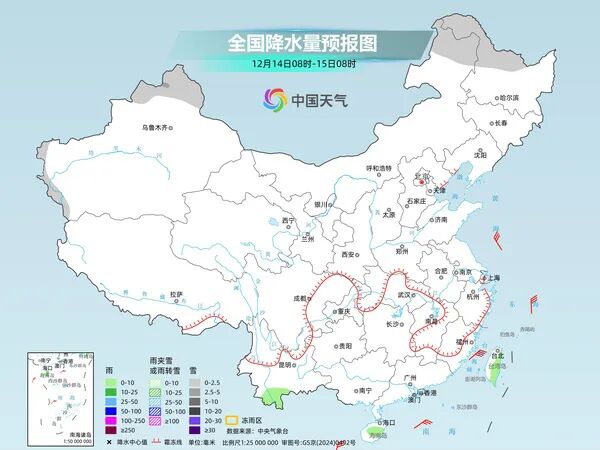
Core Viewpoint - The cold wave is coming to an end, and a significant warming trend is expected across most of the country, with temperatures in some regions rising by over 10°C next week [1][6]. Summary by Sections Weather Conditions - The largest scale of rain and snow since the beginning of winter has mostly ended, with precipitation mainly occurring in northeastern regions, Inner Mongolia, and parts of Shandong [3]. - Most of the country will experience clear weather with little rain or snow in the coming days, although some areas in northern regions may still see light to moderate snow [3][5]. Temperature Changes - The cold wave has shifted southward, with the highest temperature line of 10°C reaching the eastern southwestern region and the Yangtze River Delta, while the 20°C line has moved down to the southern coastal areas [7]. - From December 15 to 19, the highest temperature in regions from western North China to the Yangtze River Delta is expected to rise by over 10°C, with the 10°C line moving southward into southern North China [7]. Public Advisory - Despite the end of snowfall, many northern areas will continue to experience low temperatures, and the public is advised to be cautious of slippery roads and ice, especially when traveling [9].
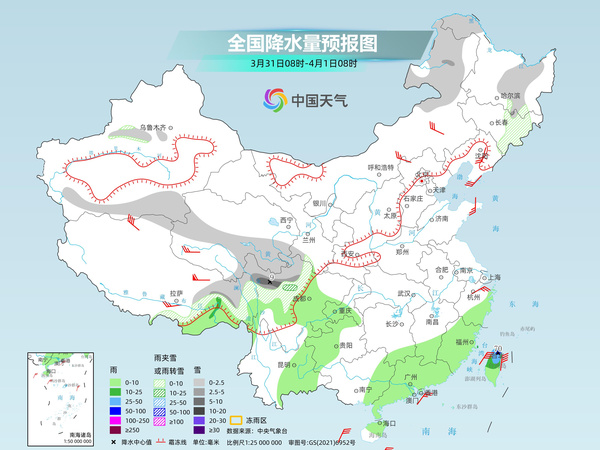
气温倒挂!今天北方气温回升率先转为偏暖 南方阴雨继续气温低迷
Yang Shi Wang· 2025-03-31 00:23
Core Insights - Northern China is experiencing a temperature rise, reaching levels above the historical average, while southern regions remain cool due to ongoing rain [1][6] - The southern regions, particularly Jiangnan, Southwest, and South China, are facing significant rainfall, with some areas experiencing heavy rain and even local torrential rain [2][3] - The cold wave's impact is diminishing, leading to a warming trend in northern China, with temperatures expected to exceed 20°C in many areas by the Qingming holiday [6] Summary by Sections Temperature Trends - Northern China is seeing a notable temperature increase, with cities like Shijiazhuang reaching 16.7°C, while southern cities like Changsha are only at 7.8°C [6] - By the Qingming holiday, many areas in northern China are expected to have maximum temperatures of 20°C or higher [6] Rainfall and Weather Conditions - Southern China continues to experience widespread rain, with regions like southern Jiangxi and northern Taiwan facing moderate to heavy rainfall [2] - The Central Meteorological Observatory predicts ongoing rain and snow in northeastern regions, with some areas experiencing significant snowfall [3] Public Advisory - Meteorological departments are advising the public to be cautious of slippery roads due to rain and snow, recommending reduced speed and increased following distance while driving [5]