
水安全保障

Search documents
水利部办公厅致网民朋友的感谢信
Shui Li Bu Wang Zhan· 2026-01-09 01:42
Core Points - The 2026 National Water Resources Work Conference was held in Beijing from January 5 to 6, focusing on high-quality water development and ensuring water security in China [1] - Public suggestions were collected from November 1 to 30, 2025, through the Ministry of Water Resources website and social media, reflecting the public's aspirations for a better life and support for water development [1] - The conference emphasized the implementation of the spirit of the 20th National Congress of the Communist Party of China and the importance of water management strategies proposed by General Secretary Xi Jinping [1] Summary by Sections Public Engagement - The Ministry of Water Resources actively sought public input on water management issues, indicating a commitment to addressing the concerns of the populace [1] - Valuable suggestions from the public were integrated into the work arrangements for 2026 and the 14th Five-Year Plan [1] Strategic Focus - The conference highlighted the need to prioritize water conservation, balance spatial distribution, and adopt a systematic approach to water governance [1] - The Ministry aims to tackle pressing water-related issues that affect the daily lives of citizens, contributing to the broader goal of achieving significant progress in socialist modernization [1]
中国水资源战略研究会顺利完成换届
Shui Li Bu Wang Zhan· 2025-12-30 10:09
Core Viewpoint - The China Water Resources Strategic Research Association held its third member representative conference and the first meeting of the third council, emphasizing the importance of high-quality water resource development and security in China [1]. Group 1: Conference Highlights - The conference was chaired by Cai Qihua, the second council president, with the presence of Chen Min, Vice Minister of Water Resources, who highlighted the association's achievements in water resource strategy research and its contributions to national decision-making [1]. - The newly elected council president, Zhong Zhiyu, expressed the commitment to implement the spirit of the 20th National Congress of the Communist Party of China and to enhance the association's capabilities and influence in serving water resource practices [1]. Group 2: Strategic Focus - The association aims to focus on water security and high-quality development goals, leveraging its cross-disciplinary think tank advantages to better serve the advancement of water resources in China [1]. - Chen Min emphasized the need for the association to promote the dissemination of water management concepts and enhance China's international discourse power in water resources [1].
水利部召开涉水企业座谈会
Shui Li Bu Wang Zhan· 2025-12-19 13:14
Group 1 - The meeting was chaired by Li Guoying, Minister of Water Resources, to gather opinions from water-related enterprises on promoting high-quality water development and ensuring water security in China during the 14th Five-Year Plan [1][2] - Key representatives from various companies, including China Three Gorges Corporation and China South-to-North Water Diversion Group, provided constructive suggestions on modern water network construction, water-saving industry development, and water technology equipment research and development [1][2] - The Ministry of Water Resources aims to incorporate these suggestions into actionable measures to enhance water quality development and security, aligning with the principles outlined by General Secretary Xi Jinping [2] Group 2 - The Ministry of Water Resources is committed to innovation in major water project management, utilizing new mechanisms for government and social capital cooperation, and accelerating the development of water technology standards [2] - The meeting included participation from various officials and representatives from the Ministry and its affiliated units, indicating a collaborative approach to addressing water resource challenges [3]

水利部召开深入推动流域统一治理管理座谈会
Shui Li Bu Wang Zhan· 2025-12-18 11:47
Core Viewpoint - The meeting focused on advancing unified governance and management of river basins, emphasizing the importance of high-quality water management and safety in China [1][2] Group 1: Meeting Highlights - The meeting was chaired by Li Guoying, Minister of Water Resources, and included reports from seven river basin management organizations on their progress and plans for the 14th and 15th Five-Year Plans [1] - Li Guoying stressed the need to implement the spirit of the 20th Central Committee's Fourth Plenary Session and adhere to Xi Jinping's water management philosophy, which prioritizes water conservation and systematic governance [1][2] Group 2: Strategic Directions - The meeting called for a comprehensive review of the responsibilities and tasks assigned by the central government, aiming to clarify goals and develop effective strategies for the 15th Five-Year Plan [2] - Emphasis was placed on promoting high-quality development of water resources and ensuring water safety in river basins, contributing to the broader goal of achieving significant progress in socialist modernization [2]
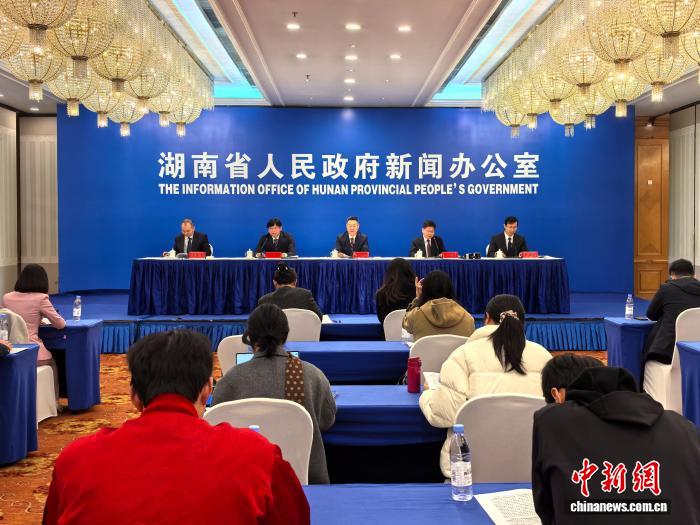
湖南“十四五”共落实投资2654.7亿元提升水安全保障能力
Zhong Guo Xin Wen Wang· 2025-11-24 11:03
Core Insights - Hunan Province has invested a total of 265.47 billion yuan in water security enhancement during the "14th Five-Year Plan" period, significantly contributing to flood control, water supply, food security, and ecological safety [1][4]. Investment and Infrastructure Development - The investment in water conservancy construction during the "14th Five-Year Plan" is 1.9 times that of the "13th Five-Year Plan," with a total of 265.47 billion yuan allocated [4]. - In 2022, water conservancy construction investment exceeded 50 billion yuan for the first time and has continued to break historical records for three consecutive years, reaching 65.47 billion yuan in 2024 [4]. Water Resource Management - Hunan has added 27.4 million cubic meters of flood control reservoir capacity and completed the reinforcement of 5,476 dangerous reservoirs [3][4]. - The province has systematically managed over 4,600 kilometers of various rivers and effectively stored over 40 billion cubic meters of floodwater, demonstrating resilience against severe droughts and floods [3]. Ecological and Environmental Standards - Key river and lake ecological flow rates have reached 100% compliance, with the water quality of national monitoring sections maintaining a good rate of 98.6% for three consecutive years, ranking first in Central China [6]. - Water and soil conservation rates have improved to 86.72%, reflecting effective environmental management practices [6]. Rural Water Supply and Irrigation - Hunan has restored and improved over 10 million acres of irrigation area, addressing significant water issues faced by rural communities [6]. - The province has implemented a standardized construction and management model for rural water supply, achieving a rural tap water coverage rate of 94.21% and benefiting over 20 million rural residents [6].

陕西黄河大北干流管理工作座谈会召开
Shan Xi Ri Bao· 2025-11-17 22:49
Core Points - The 2025 management work meeting for the Yellow River's northern main stream in Shaanxi was recently held, focusing on planning and deploying key tasks for the upcoming period [1][2] - The northern main stream of the Yellow River flows through 10 counties in 3 cities, characterized by a high mountain canyon section with a river width of 300 to 800 meters and a water surface drop of 603 meters, making it a significant area for flood and sediment sources [2] - The meeting highlighted the notable achievements in the management work for 2025, emphasizing the implementation of river chief systems, daily river supervision, illegal sand mining crackdowns, and strict water resource management [2] Management Strategies - The management strategies include the comprehensive promotion of the river chief system, active daily supervision of river channels, and the crackdown on illegal sand mining activities [2] - Measures such as the cleaning up of "four chaos" (乱) issues, strengthening management of river-related construction projects, and enforcing strict water resource management and conservation are being implemented [2] - Future plans involve leveraging the river chief system platform to combat water-related illegal activities, enforcing the strictest water resource management policies, and enhancing the cultural resources of the Yellow River [2]
水利部举行学习贯彻党的二十届四中全会精神宣讲会
Shui Li Bu Wang Zhan· 2025-11-14 05:52
Core Points - The Ministry of Water Resources held a meeting to promote the spirit of the 20th Central Committee of the Communist Party of China, emphasizing the importance of learning and implementing the key messages from General Secretary Xi Jinping's speech and the recommendations from the meeting [1][2] - The Minister highlighted the need to understand the significant achievements during the "14th Five-Year Plan" period and the critical role of the "15th Five-Year Plan" in achieving socialist modernization [1][2] Group 1 - The recommendations focus on long-term strategic planning for economic and social development during the "15th Five-Year Plan" period, particularly in relation to water resources [2] - The Minister called for a comprehensive understanding of the recommendations regarding water management, urging the development of a detailed water security plan [2] - There is a strong emphasis on enhancing water disaster prevention capabilities, resource conservation, and ecological protection of rivers and lakes to contribute to the overall modernization goals [2] Group 2 - The meeting was conducted via video conference, with participation from various departments and units within the Ministry [3]
甘肃“十四五”水利建设交出硬核答卷:预计完成投资逾千亿元,筑牢水安全保障网
Zhong Guo Fa Zhan Wang· 2025-11-07 09:56
Core Insights - Gansu Province has achieved significant progress in water conservancy construction during the "14th Five-Year Plan" period, with total water investment exceeding 80 billion yuan, 1.5 times that of the "13th Five-Year Plan" period [1] - The province is expected to complete water investment of 100 billion yuan during the "14th Five-Year Plan," a 33% increase from the 75.2 billion yuan in the "13th Five-Year Plan" [1] Group 1: Major Water Projects - The completion of the second phase of the Yintao water supply project has provided over 1 billion cubic meters of water, solving water supply issues for over 6 million people in four cities and eight counties [2] - A series of major projects, including the ecological migration and poverty alleviation water supply project, have added 500 million cubic meters of new water supply capacity, optimizing the water resource allocation [2] Group 2: Rural Water Supply Improvements - Gansu has built 1,459 water storage facilities and improved 623 rural water source and pipeline projects, increasing rural tap water coverage from 90% to 95% [3] - Over 19 million rural residents now have access to safer and more stable drinking water, with urban emergency water supply coverage significantly improved [3] Group 3: Agricultural Water Management - The province has implemented modernization projects for 12 large and 40 medium-sized irrigation districts, improving irrigation areas by over 5 million acres [4] - The effective utilization rate of irrigation water has increased to 0.591, providing reliable water support for continuous grain harvests [4] Group 4: Disaster Prevention and Ecological Restoration - Gansu has enhanced its flood and drought disaster prevention capabilities, with the main river levee compliance rate reaching 75% and 124 dangerous reservoirs reinforced [5] - The province has successfully managed severe flood and drought situations, demonstrating the effectiveness of its water engineering system [5] - Ecological restoration efforts have led to the treatment of over 5,039 square kilometers of soil erosion, with a water and soil conservation rate exceeding 61% [6]
引大济岷工程可研报告获国家发展改革委批复
Si Chuan Ri Bao· 2025-11-01 01:24
Core Insights - The Sichuan Province's "Yin Da Ji Min" project has received approval from the National Development and Reform Commission, marking it as the largest and longest water diversion project in the province's history [1][2] - The project aims to supply urban, industrial, and agricultural water, significantly impacting water resource allocation and security in the Chengdu-Chongqing economic circle [1][2] Project Overview - The total length of the water diversion route is 260.9 kilometers, consisting of a main line, southern line, and northern line [2] - The main line is 133.3 kilometers long with a designed flow rate of 80 cubic meters per second, while the southern and northern lines are 102.5 kilometers and 25.1 kilometers long, with flow rates of 48 and 37 cubic meters per second, respectively [2] - The project includes three energy recovery stations with a total installed capacity of 388,000 kilowatts and is estimated to take 96 months to complete with a total investment of 57.51883 billion yuan [2] Impact and Benefits - Upon completion, the project will add 1.79 million acres of irrigated land, improve 5.91 million acres, and provide water for 34.13 million people [2] - The Chengdu Plain will benefit from a dual water source system, enhancing water resource management and supporting high-quality development in the Chengdu-Chongqing economic circle [2]
东营市加快构建现代水网,完善高水平现代化强市建设水支撑
Qi Lu Wan Bao Wang· 2025-10-09 12:12
Core Viewpoint - Dongying City is facing severe water resource shortages, with per capita water resources at 228 cubic meters, significantly below the national average and international critical value, prompting the city to accelerate the construction of a modern water network to support development and improve water security [1][11]. Group 1: Modern Water Network Construction - Dongying City has initiated the "Modern Water Network Construction Plan" in 2022, aiming to create a comprehensive water network structure [1]. - From 2022 to 2024, the city plans to implement 117 modern water network projects with a total investment of 10.8 billion yuan [1]. - The projects are designed to enhance water security, improve water quality, and create a healthy water environment for residents [1]. Group 2: Flood Control and Drainage Improvements - Dongying City has upgraded flood control standards for key rivers, increasing the flood control capacity from a 20-year to a 50-year standard for the main river systems [2]. - Between 2022 and 2024, the city will complete comprehensive river management for 7 rivers, totaling 190 kilometers, significantly enhancing flood control capabilities [2]. - The construction of new drainage systems and flood control structures has been prioritized, including 22.6 kilometers of new flood control dikes and 220 kilometers of new drainage pipelines [2][3]. Group 3: Water Resource Allocation - The city has implemented large and medium-sized irrigation projects to ensure water supply for agricultural and domestic needs, successfully drawing 1.47 billion cubic meters and 2.09 billion cubic meters of water [4]. - The South Dyke Reservoir expansion project has increased its capacity from 3.12 million cubic meters to 7.5 million cubic meters, enhancing regional water supply security [4]. - A total of 11 new or renovated reservoirs and 13 new weirs are planned, adding significant water storage capacity [4]. Group 4: Ecological Water Protection - Dongying City is focusing on ecological restoration and water environment management, integrating rural revitalization and cultural tourism projects [6]. - The city has been recognized for its water system connectivity and rural water beautification projects, ranking first among pilot counties in Shandong [6][7]. Group 5: Rural Water Supply Enhancements - The city has achieved 100% coverage in rural water supply networks, benefiting 1.19 million people, with a supply guarantee rate exceeding 98% [8]. - Ongoing projects aim to upgrade rural water supply infrastructure, including the renovation of 1,365 kilometers of pipelines in 2023 and 1,550 kilometers in 2024 [8]. Group 6: Smart Water Management - Dongying City has implemented a smart irrigation system that allows real-time monitoring of water levels and flow rates, significantly improving management efficiency [9]. - The city has developed a comprehensive smart water management system that includes modules for flood monitoring and urban drainage [9][10]. Group 7: Strategic Water Management Goals - The city aims to establish a robust water security framework to support high-level modernization, focusing on flood prevention, water resource management, and ecological protection [11]. - The strategic approach emphasizes water conservation, systematic governance, and the integration of advanced technologies in water management [11].