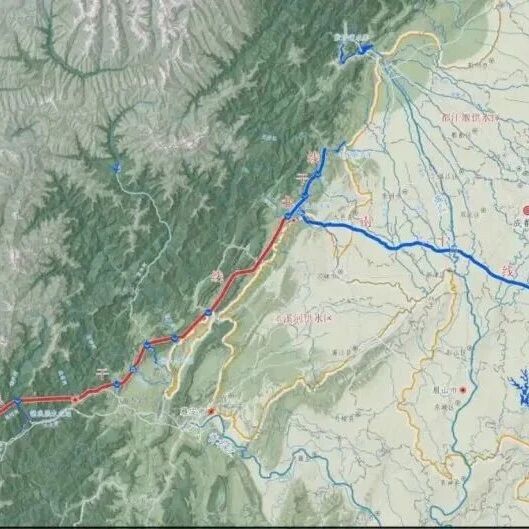
引大济岷工程

Search documents
四川锚定“项目提速年” 冲刺水利投资716亿元目标
Zhong Guo Xin Wen Wang· 2026-02-06 09:57
Core Insights - The 2026 Sichuan Water Conservancy Work Conference emphasized the achievements of the "14th Five-Year Plan" and outlined the development blueprint for the "15th Five-Year Plan," focusing on a theme of "Project Acceleration Year" with a target investment of over 71.6 billion yuan in water conservancy [1] Group 1: Achievements and Investments - In 2025, Sichuan's water conservancy sector achieved significant milestones, including the initiation of the "Yin-Da-Ji-Min" project benefiting 34 million people, and a total funding of 71 billion yuan with an investment completion of 70.2 billion yuan, marking a historic "double 700 billion" milestone [1] - Water conservancy investment in Sichuan grew by 3%, surpassing the national water conservancy industry and provincial fixed asset investment growth rates by 9.3 and 5.4 percentage points, respectively [1] - The province successfully managed 64 mountain flood disasters, achieving zero fatalities from mountain floods for ten consecutive years, with experiences being promoted nationwide [1] Group 2: "14th Five-Year Plan" Accomplishments - During the "14th Five-Year Plan," Sichuan completed a total investment of 286.9 billion yuan, which is 2.1 times that of the "13th Five-Year Plan," and constructed 24 large and medium-sized projects, including the second phase of the Wu-Yin irrigation area [2] - The rural tap water coverage rate reached 94.1%, with 76.2% of the rural population served by large-scale projects, allowing 40.41 million rural residents to access clean water [2] - The efficiency of water resource utilization remained among the top in the country, with a 10.2% and 57.6% reduction in the number of deaths and economic losses from water and drought disasters compared to the "13th Five-Year Plan" [2] Group 3: Future Plans and Goals - The "15th Five-Year Plan" period is seen as a critical window for Sichuan to transition from a "large province" to a "strong province," focusing on constructing a resilient modern water network and achieving strategic tasks by 2030 [2] - Goals include increasing annual water supply capacity by 2 billion cubic meters, raising rural tap water coverage to 97.5%, and completing over 270 "Happy Rivers and Lakes" projects [2] - The province aims to deepen reforms in water rights, pricing, and financing, while advancing digital water conservancy initiatives to ensure water security and ecological sustainability [4]


超级工程重塑四川经济地理
Zhong Guo Fa Zhan Wang· 2026-01-16 06:26
Core Viewpoint - The completion of several major infrastructure projects in Sichuan by the end of 2025 marks a significant advancement in the region's transportation and energy capabilities, enhancing its economic geography and strategic importance in national development [5][20]. Infrastructure Development - The Jinshang-Hubei ±800 kV UHVDC project, completed on December 18, 2025, enables clean electricity to be transmitted 1,900 kilometers to East China in just 6 milliseconds, setting a record for the highest altitude UHV project [1]. - The Leshan-Xichang Expressway, which opened on December 31, 2025, features a high bridge-tunnel ratio of 82% and incorporates innovative heating systems to address winter snow challenges [3]. - Sichuan has invested nearly 8.8 trillion yuan in over 1,600 key provincial projects during the 14th Five-Year Plan, with over 4 trillion yuan already completed, focusing on transportation, energy, water resources, and new infrastructure [5]. Energy Sector Advancements - By December 19, 2025, Sichuan's hydropower installed capacity surpassed 100 million kilowatts, making it the first province in China to reach this milestone, capable of supplying electricity for approximately 500 million people annually [17]. - The province's total power generation capacity exceeded 150 million kilowatts by the end of 2025, marking significant progress in transitioning to a clean energy structure [18]. Transportation Network Expansion - The completion of the Chengdu-Yibin high-speed railway and the operation of the Yuxi-Kunming high-speed railway have significantly improved connectivity in the region, with the Chengdu-Yibin line alone transporting over 29 million passengers in two years [9][11]. - Sichuan's highway network has expanded by over 3,000 kilometers in five years, connecting 15 previously isolated counties to national transportation arteries [12]. Economic Impact - The development of these infrastructure projects is expected to stimulate local economies, with increased tourism evidenced by over 7 million visitors to Jiuzhaigou in 2025, a 27% increase year-on-year [14]. - The establishment of the Chengdu-Europe Railway Express has facilitated the export of various goods, including agricultural products, to over a hundred cities globally, enhancing Sichuan's role in international trade [15]. Environmental Considerations - Infrastructure projects in Sichuan are increasingly incorporating green development principles, such as the relocation of power lines to protect migratory bird pathways and the successful transplantation of endangered plant species [22].
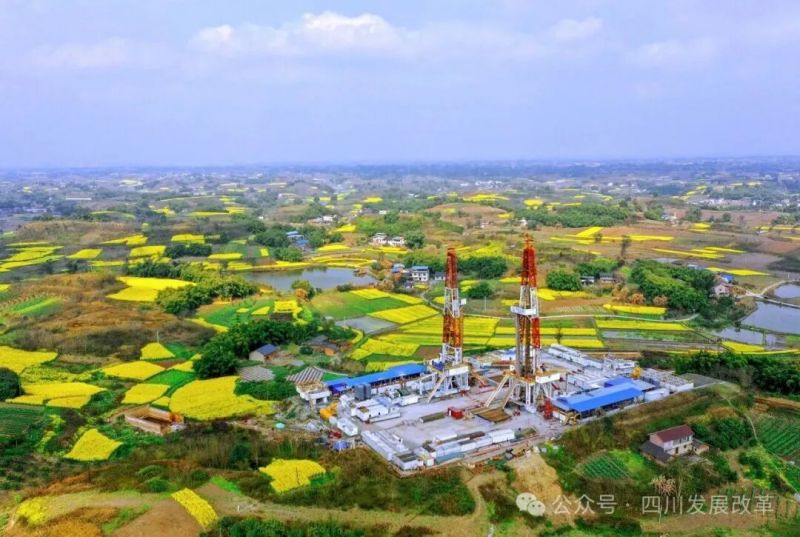
为了“更大的成都”,四川新建一个超级工程
3 6 Ke· 2025-11-24 02:52
Group 1 - The core point of the news is the initiation of the "Yin Da Ji Min" water diversion project in Sichuan, which has an investment of 57.5 billion yuan, aimed at addressing the water scarcity issue in Chengdu and supporting its growth as a major city [1][2][4][10] - The project is expected to significantly enhance the water supply system for Chengdu by introducing water from the Dadu River to the Min River, which is the primary water source for the Chengdu Plain [2][6] - Chengdu currently faces severe water scarcity, with a per capita water resource availability of only 600 cubic meters, which is below the international threshold of 1,000 cubic meters for severe water shortage [6][7] Group 2 - The "Yin Da Ji Min" project is part of Sichuan's "Strong Provincial Capital" strategy, which aims to strengthen Chengdu's role as a central city for the province and the western region of China [10][12] - The project is seen as a strategic necessity for long-term water resource security, as the current reliance on the Min River poses ecological risks and limits future development [7][10] - The "Strong Provincial Capital" strategy is gaining traction across various provinces, indicating a trend towards consolidating resources in major cities to enhance regional development [12][16]
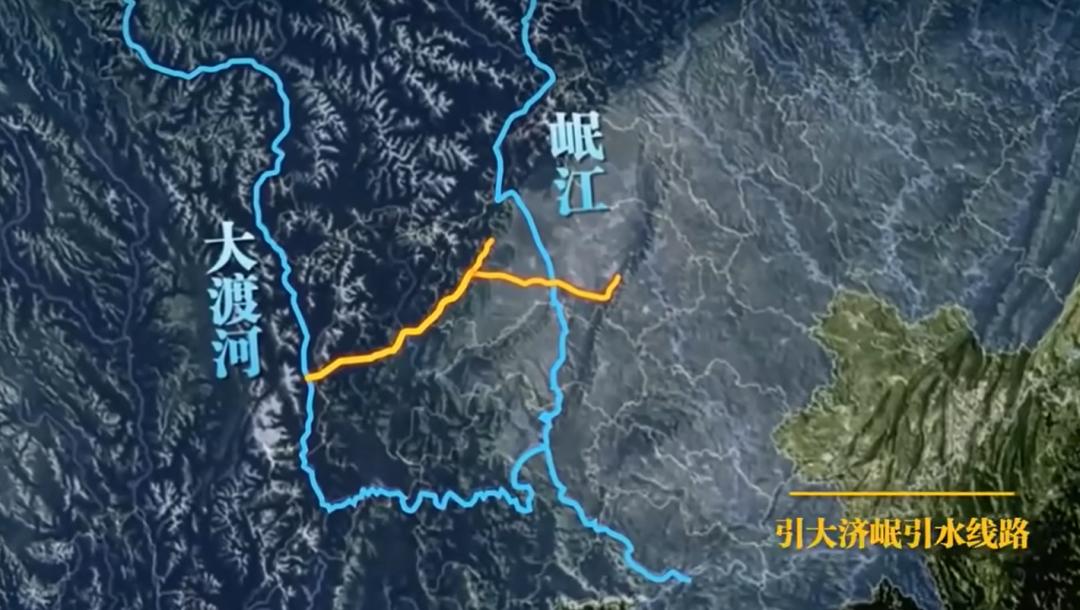
引大济岷工程启动建设 大渡河“牵手”岷江 双水源滋养平原(美丽中国)
Ren Min Ri Bao· 2025-11-10 22:18
Core Points - The Yinda Jimin Project has officially commenced construction, aiming to create a dual water source network with the Dujiangyan water supply project, enhancing regional water resource regulation capacity and supporting ecological protection in the upper Yangtze River [1][2][3] Group 1: Project Overview - The Yinda Jimin Project is a key backbone water network project as outlined in the National Water Network Construction Planning Outline, covering 8 cities and 43 counties, benefiting a population of 34.13 million [1][2] - The project will establish a water supply pattern consisting of a main line and two branch lines, with an annual water diversion capacity of 1.523 billion cubic meters, ending the reliance on a single water source for the Chengdu Plain [3][4] Group 2: Engineering Challenges - The project involves a total water conveyance length of 261 kilometers, with 95% of the route consisting of tunnels and pipelines, facing complex geological conditions [4][5] - Innovative drilling techniques are being employed to minimize environmental disturbance, including horizontal directional drilling and real-time monitoring of geological conditions [5][7] Group 3: Environmental Considerations - The project emphasizes ecological protection, implementing full-cycle ecological monitoring and dynamic restoration during construction [6][8] - Measures such as low-noise operations and green transportation are being adopted to reduce ecological disruption, with plans to enhance regional ecological corridors upon completion [8][9]
总投资575亿元 四川引大济岷工程建设启动
Zhong Guo Jing Ji Wang· 2025-11-07 14:57
Core Insights - The Yinda Jimin Project is a significant water diversion initiative in Sichuan, marking the largest investment and longest route in the province's water conservancy history, officially commencing construction on November 7 [1][2] - The project aims to enhance water resource management, ecological restoration, and economic empowerment, creating a dual water source network with the Dujiangyan water supply system [2] Summary by Sections Project Overview - The Yinda Jimin Project starts from the Luding Hydropower Station reservoir and spans 261 kilometers, with a total mainline of 133 kilometers, a southern branch of 103 kilometers, and a northern branch of 25 kilometers, featuring over 58% of its length as tunnels [1] - The project is designed to divert 1.523 billion cubic meters of water annually, with a maximum flow rate of 80 cubic meters per second, benefiting 34.13 million people across 8 cities and 43 counties [1] Economic and Ecological Impact - Upon completion, the project will increase irrigation areas by 1.79 million acres and improve irrigation for an additional 5.91 million acres, reinforcing the irrigation network for Sichuan's agricultural sector [2] - The project will alleviate water shortages in the affected regions, supporting key industries such as electronics and equipment manufacturing, and is expected to contribute an average annual GDP growth of 1.2 percentage points in the region [2]
中国启动西部水利工程
中国能源报· 2025-11-07 10:57
Core Viewpoint - The "Yin Da Ji Min" project has been officially launched to address the water scarcity issues in the Chengdu Plain Economic Zone by diverting water from the Dadu River, enhancing the water supply for agriculture and industry in the region [3][4]. Group 1: Project Overview - The "Yin Da Ji Min" project will take 8 years to complete and will utilize natural elevation to transport water through over 260 kilometers of tunnels and pipelines [3]. - By 2040, the project is expected to divert 1.389 billion cubic meters of water to the Dujiangyan irrigation area, increasing to 1.523 billion cubic meters by 2050 [4]. Group 2: Regional Water Challenges - Sichuan Province, known for its abundant water resources, faces significant spatial and temporal distribution challenges, with a "west-rich, east-poor" water resource situation [3]. - The population in the Chengdu Plain Economic Zone is projected to exceed 46 million by 2030, leading to a more severe water supply gap by 2035 [3]. Group 3: Benefits of the Project - The project will improve the water supply guarantee rate for urban and industrial use from 90% to 97%, and for agricultural irrigation to 80% [4]. - It will serve multiple functions including urban water supply, irrigation, ecological replenishment, and emergency water sources, benefiting 34.13 million people across 43 counties [4].

四川引大济岷工程建设正式启动
Zheng Quan Shi Bao Wang· 2025-11-07 09:07
Core Viewpoint - The initiation of the "Yin-Da-Ji-Min" project marks a significant milestone in China's water resource management, aimed at addressing water scarcity in the Chengdu Plain Economic Zone and supporting high-quality development in the Chengdu-Chongqing economic circle [1] Group 1: Project Overview - The "Yin-Da-Ji-Min" project is included in the National Water Network Construction Planning Outline and the Chengdu-Chongqing Economic Circle Construction Planning Outline, highlighting its national importance [1] - This project is recognized as the largest investment, longest route, and most extensive beneficiary cross-basin water diversion project in the history of Sichuan's water conservancy [1] Group 2: Strategic Significance - The construction of the project is expected to alleviate the "water bottleneck" in the Chengdu Plain Economic Zone, injecting vital water resources to enhance economic activities [1] - It plays a crucial role in establishing a higher-level "Tianfu Granary" and supports the high-quality development of the Chengdu-Chongqing economic circle, indicating its strategic importance for regional growth [1]
潮起川江 兴水利民——写在引大济岷工程启动建设之际
Si Chuan Ri Bao· 2025-11-07 02:24
Core Points - The "Yin Da Ji Min" project has officially commenced, aiming to transport water from the Dadu River to the Chengdu Plain, addressing long-standing water scarcity issues in Sichuan [1][2] - This project is a significant part of Sichuan's water resource management strategy, enhancing connectivity between major rivers and optimizing water distribution across the region [2][3] Group 1: Project Background and Significance - The concept of the "Yin Da Ji Min" project dates back to the 1950s, with formal proposals emerging in the 1990s after extensive research and planning [2] - It is recognized as a key component of the "National Water Network Construction Planning Outline," serving as a crucial water supply channel for Sichuan's economic and social development [2][3] Group 2: Investment and Infrastructure Development - Sichuan's water infrastructure investment has seen historic growth, with total investments expected to exceed 280 billion yuan, marking a shift from single-channel funding to diversified financial sources [3] - Major water projects, including the Xiangjiaba irrigation area and modernization of existing systems, are progressing steadily, contributing to a more integrated water network [3][5] Group 3: Impact on Local Communities - The project aims to alleviate water scarcity in rural areas, significantly improving access to clean water for over 22 million residents through initiatives like the establishment of large-scale water supply plants [4][5] - The "Yin Da Ji Min" project is projected to provide an annual water supply of 1.523 billion cubic meters, enhancing water quality and availability for both residential and industrial needs [6][7] Group 4: Long-term Vision - The "Yin Da Ji Min" project is viewed as a new starting point in Sichuan's ongoing efforts to address water resource challenges, emphasizing the importance of sustainable water management for future development [8]
西部大省 又一个“超级工程”来了
Mei Ri Jing Ji Xin Wen· 2025-11-04 15:33
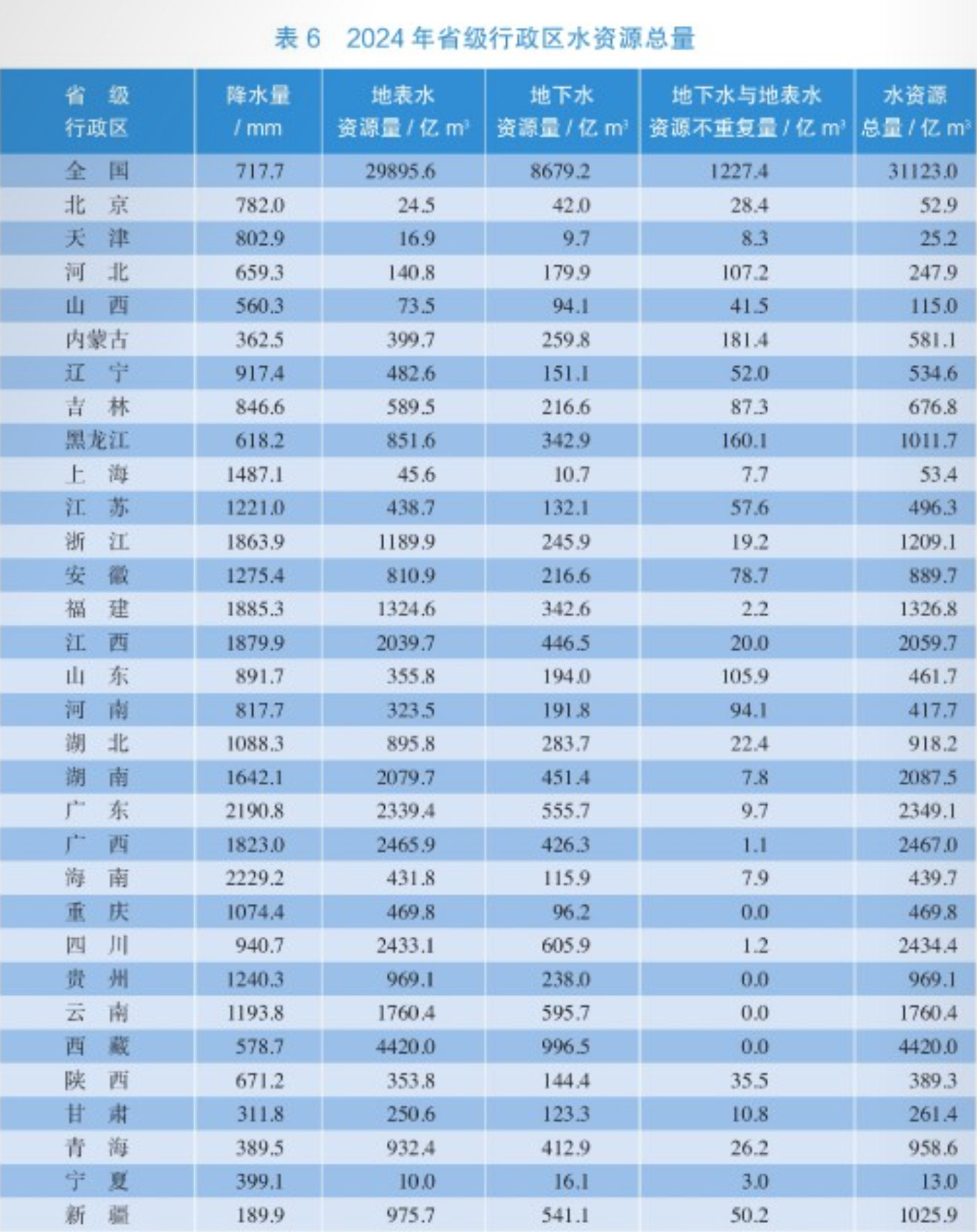
Core Viewpoint - The Chengdu Plain is facing a severe water shortage despite being known as a "province of a thousand rivers," with projections indicating a significant deficit by 2035 [1][8]. Water Resource Distribution - Sichuan province has a total water resource volume that ranks second nationally, but its distribution is uneven, with the Chengdu Plain accounting for 80% of the GDP while only having 20% of the water resources [1][7]. - The average annual water resource volume in Sichuan is substantial, yet the majority of the province's economic activities are concentrated in the basin area, leading to pronounced supply contradictions [2][7]. Water Supply Projects - The "Yin Da Ji Min" project has been officially approved, marking the largest investment and longest water diversion project in Sichuan's history, aimed at alleviating the water shortage in the Chengdu Plain [2][9]. - This project will benefit over 34 million people across eight cities and 43 counties, establishing a dual-source water supply system [2][9]. Future Projections - By 2030, the Chengdu Plain's population is expected to exceed 23.3 million, leading to an estimated annual water supply gap of approximately 2.3 billion cubic meters [7][8]. - The Chengdu water resource per capita is projected to be around 600 cubic meters, with a forecasted shortage of 1.2 to 1.67 billion cubic meters by 2035 [1][8]. Infrastructure Development - The "Yin Da Ji Min" project is part of a broader strategy to reshape Sichuan's water network, with a total length of 260.9 kilometers and an estimated investment of 57.519 billion yuan [9][11]. - The project aims to enhance water resource allocation and improve the irrigation area significantly, impacting over 34 million people [9][11]. National Water Resource Strategy - The national water resource strategy includes multiple major projects aimed at addressing regional water shortages, with a focus on cross-regional water diversion [17][18]. - The ongoing construction of various water projects reflects a trend towards building a modern water network to resolve supply-demand contradictions in water resources across different regions [17][18].
又一重要水利工程获批!
中国能源报· 2025-11-01 08:39
Core Viewpoint - The feasibility study report for the Sichuan Province's Yinda Jimi Project has been officially approved by the National Development and Reform Commission, marking a significant breakthrough in the project's preliminary work [1][6]. Project Overview - The Yinda Jimi Project is the largest and longest water diversion project in Sichuan's history, aimed at diverting water from the Dadu River to the Minjiang River basin, primarily for urban and industrial water supply, with agricultural irrigation as a secondary focus [1][5]. - The project will cover a total length of 260.9 kilometers, consisting of a main line, southern line, and northern line, with an estimated total investment of 57.5 billion yuan [5]. Water Supply Capacity - The average annual water supply capacity is projected to be 1.389 billion cubic meters by 2040 and 1.523 billion cubic meters by 2050 [3][5]. - The project will directly and indirectly supply water to eight cities and 43 counties, including Chengdu, Deyang, and Mianyang, benefiting a population of approximately 3.413 million [5]. Technical Challenges - The project faces 48 technical challenges, including the construction of deep tunnels, with the deepest point reaching 2,040 meters, making it the second-deepest known water conservancy project in China [5]. - The project will also include three energy recovery power stations along the route, with a total installed capacity of 388,000 kilowatts [5]. Future Steps - The Sichuan Provincial Water Resources Department plans to optimize construction plans, enhance geological surveys, and implement ecological protection measures while actively attracting private capital for the project's construction [6].