美国外交政策

Search documents
美媒爆24名美驻外大使接到离任通知
Xin Lang Cai Jing· 2025-12-20 17:01
Group 1 - The Trump administration is dismissing approximately 24 career diplomats, including ambassadors appointed by former President Biden, which is considered a rare move [1] - John Dinkelman, president of the American Global Diplomacy Service Association, confirmed that several ambassadors reported receiving notifications to leave by January 15 or 16, without being given specific reasons [1] - Dinkelman expressed concerns that this action would undermine the effectiveness of U.S. diplomacy and erode confidence in career diplomats' ability to execute U.S. foreign policy [1] Group 2 - The State Department stated that recalling ambassadors is a standard procedure for any administration, emphasizing that ambassadors are the president's personal representatives [1] - Despite quickly replacing Biden's political appointees, the Trump administration has been slow to fill many ambassadorial positions, with around 80 vacancies currently [2] - Democratic Senator Jeanne Shaheen criticized the administration for replacing experienced career ambassadors, suggesting it risks ceding U.S. leadership to other major powers [2]
【环时深度】卡塔尔遭袭暴露中东调停国的无奈
Huan Qiu Shi Bao· 2025-09-14 22:52
Core Viewpoint - The recent Israeli airstrike on Qatar has raised concerns among Gulf nations regarding their diplomatic roles and security, highlighting the potential costs of international mediation in conflict resolution [1][2][3]. Group 1: Impact on Qatar's Mediation Role - The airstrike on Doha has undermined Qatar's image as a stable diplomatic center, raising questions about the price of its mediation efforts in international conflicts [2][5]. - Qatar's past role in mediating conflicts, including hosting the Taliban and Hamas, is now perceived as a liability, making it vulnerable to becoming a battleground in proxy wars [2][5]. Group 2: Concerns Among Gulf Nations - Other Gulf countries are increasingly worried about being drawn into conflicts due to their mediation efforts, particularly in light of recent tensions between Israel and Iran [3][4]. - The fear of becoming targets in a potential Israel-Iran war has heightened the anxiety among Gulf states, as they recognize their security is heavily reliant on U.S. defense partnerships [3][4]. Group 3: Limited Response Options - Gulf nations have found themselves with few viable military options to respond to Israel's actions, as their security frameworks are closely tied to U.S. support [6][8]. - Qatar has vowed to pursue a "regional collective response" but faces challenges in implementing effective countermeasures against Israel [7][8]. Group 4: U.S. Role and Implications - The U.S. has been criticized for its perceived complicity in the Israeli airstrike, raising doubts about its reliability as a security guarantor for Gulf nations [10][11][12]. - The incident has prompted Gulf states to reconsider their dependence on U.S. security assurances, potentially leading to a diversification of their security strategies [12][13].
美国拒绝向巴民族权力机构和巴解组织成员发放签证
news flash· 2025-07-31 15:47
Core Viewpoint - The U.S. government has decided to deny visa issuance to members of the Palestinian Authority and the Palestine Liberation Organization, citing accountability for actions that undermine peace prospects and aligning with national security interests [1] Group 1 - The U.S. State Department announced the visa denial on July 31 [1] - The decision is a response to the failure of the Palestinian Liberation Organization and the Palestinian Authority to fulfill commitments [1] - The action is described as a measure to hold these organizations accountable for their behavior [1]
特朗普伊朗问题陷两难,美媒撺掇:打!一雪阿富汗之耻
Guan Cha Zhe Wang· 2025-06-18 10:11
Core Points - The article discusses the ongoing conflict between Israel and Iran, focusing on the differing assessments of Iran's nuclear capabilities and the potential for U.S. military intervention under President Trump [1][2][4][5][9]. Group 1: U.S. Intelligence and Military Assessment - U.S. intelligence reports indicate that Iran is not actively seeking nuclear weapons and could take up to three years to develop the capability to produce and launch them [1]. - Contrarily, some U.S. officials believe Iran is close to the final stages of nuclear weapon development, suggesting a significant divide in intelligence assessments [1][4]. - The U.S. Central Command has expressed greater urgency regarding Iran's nuclear ambitions compared to the intelligence community, indicating a potential for faster nuclear development than previously anticipated [9]. Group 2: Trump's Position and Strategic Implications - Trump is weighing the option of supporting Israel in bombing Iranian nuclear facilities, viewing it as an opportunity to restore U.S. deterrence following perceived failures in Afghanistan under Biden [2][5]. - The article suggests that if Trump assists Israel in destroying Iran's nuclear program, it could help rebuild U.S. credibility and deterrence in the region [2][8]. - Trump's administration acknowledges that Israel may require U.S. military support to effectively dismantle Iran's nuclear capabilities, particularly the fortified Fordow facility [5][11]. Group 3: Regional and Global Reactions - The article highlights concerns that U.S. support for Israel could provoke Iranian retaliation against U.S. forces, potentially escalating the conflict [5][10]. - There is a fear that failure to act against Iran could embolden them to pursue nuclear weapons more aggressively, especially if key facilities remain intact [12][14]. - The geopolitical landscape is complicated by the involvement of other nations, with Russia and China closely monitoring U.S. actions and responses to the crisis [8][15].

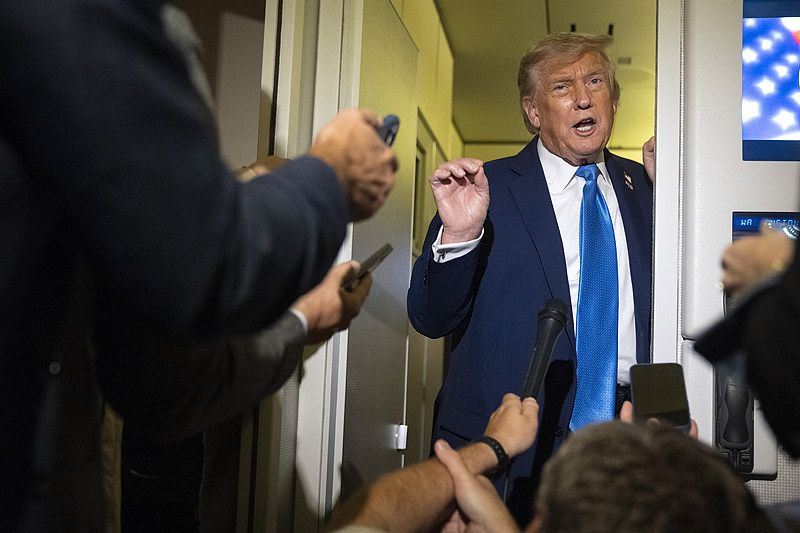
“失望”“后悔”……美国务卿在国会听证会上被批
Xin Hua She· 2025-05-21 12:00
Core Viewpoint - The Senate hearing on May 20 featured Secretary of State Rubio defending the Trump administration's foreign policy amidst intense criticism from Democratic senators, highlighting a significant shift in the political atmosphere compared to his previous tenure as a senator [1][3]. Group 1: Foreign Policy Discussion - Rubio addressed the Trump administration's stance on the Ukraine crisis, Middle East, and Latin America, as well as substantial cuts to foreign aid and refugee admissions [3]. - Democratic Senator Chris Van Hollen criticized the administration for halting aid to countries like South Sudan, labeling it as "despicable," and argued that the refugee agreement with countries like El Salvador undermines constitutional rights [3][5]. - Van Hollen expressed regret for supporting Rubio's nomination, emphasizing a perceived departure from shared values and principles [3]. Group 2: Responses and Achievements - In response to criticisms, Rubio highlighted the administration's achievements in promoting nuclear negotiations, peace talks regarding Ukraine, and resolving conflicts in Gaza, asserting that "America is back" [5]. - Rubio defended the decision to revoke student visas for protesters, claiming that such actions were necessary to maintain order in U.S. higher education [5]. - Some Republican senators, including Mitch McConnell, warned that the significant cuts to foreign aid could lead to the U.S. being outperformed by international competitors [5].