
美国外交政策

Search documents
英国卫报:特朗普正努力追赶布什,争夺史上最糟糕外交决策桂冠
美股IPO· 2026-03-01 23:38
Core Viewpoint - The article critiques President Trump's recent foreign policy decisions, particularly his aggressive stance towards Iran, suggesting it may rival George W. Bush's Iraq War as one of the worst foreign policy decisions in U.S. history [1][4]. Summary by Sections Trump's Announcement - Trump released an eight-minute video declaring a significant shift in U.S. foreign policy, contradicting his previous commitments to avoid endless wars [2][4]. - He emphasized the threat posed by Iran, citing historical grievances and asserting that the U.S. would not tolerate Iran's nuclear ambitions [5][6]. Military Actions and Implications - The President indicated that the U.S. has initiated "large-scale and sustained actions" against Iran, hinting at a potential prolonged conflict [5]. - Trump acknowledged the possibility of American casualties, framing the military actions as a noble mission for the future [5][6]. Reactions and Historical Context - The article draws parallels between Trump's rhetoric and past U.S. interventions, suggesting a reckless gamble without a clear long-term strategy [7]. - It highlights the lessons from the Iraq War, noting that regime change can be easier than the subsequent stabilization efforts [7]. Conclusion - The article concludes that Trump's approach may lead to disastrous outcomes, with experts warning of the potential for significant conflict [7].

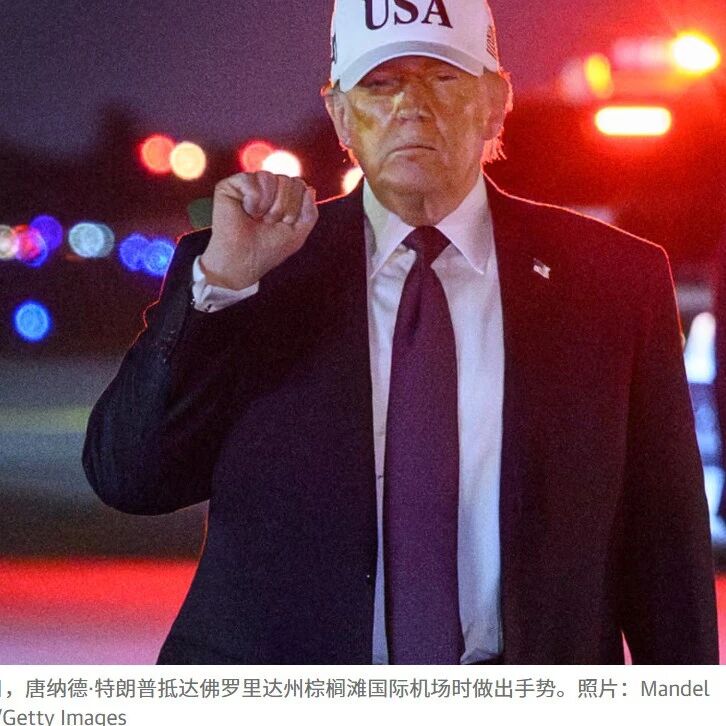
特朗普:这是美国“巨大的胜利” 专家:代价呢?
Xin Lang Cai Jing· 2026-02-26 16:37
Core Viewpoint - The article discusses the U.S. government's recent actions against Venezuelan President Maduro, which President Trump characterized as a "great victory," but many international relations scholars argue that this perspective overlooks significant risks and uncertainties associated with these actions [1][2]. Group 1: U.S. Actions and Motivations - The U.S. government's motivations for controlling Maduro are inconsistent, with various officials providing conflicting reasons, including a desire to bring Maduro to the U.S. for a drug-related trial and to deter leftist movements in Latin America [3]. - Trump's assertion that the control over Maduro is aimed at "taking over" Venezuela for its oil resources reflects a lack of coherent strategy in U.S. foreign policy towards Venezuela [3]. Group 2: Regional Implications - The article suggests that the U.S. actions may not achieve the intended deterrent effect in Latin America; instead, they could lead to increased distrust among regional countries towards the U.S. [3]. - The perception of the U.S. as an unstable and potentially predatory force in Latin America may drive countries in the region to seek more reliable partnerships [5][6].
CGTN民调丨除了不满,还是不满!多项民调显示特朗普就职一年满意度下滑
Xin Lang Cai Jing· 2026-01-20 12:45
Group 1 - The core viewpoint of the articles highlights widespread dissatisfaction with the current U.S. government, particularly regarding its domestic and foreign policies, which have significantly damaged the country's international image and threatened global peace and stability [1][2]. - A global survey conducted by CGTN revealed that 84% of respondents expressed high dissatisfaction with the U.S. government's performance, with 86.2% condemning the "America First" foreign policy and 89.6% considering the U.S. performance in international affairs as a failure [1]. - The survey also indicated that 91.3% of respondents believe the U.S. national reputation has declined over the past year, and 91.1% lack confidence in the government's future performance [1]. Group 2 - A separate survey involving 15,688 respondents from 38 countries identified "irresponsible power" and "world's biggest source of chaos" as the most prominent impressions of the U.S. [2]. - In 2025, 71.4% of respondents felt that the U.S. does not consider the interests of other countries when formulating foreign policy, an increase of 8.5 percentage points from the previous year [2]. - The survey also found that 63.8% of respondents believe the U.S. severely undermines the current international order, a rise of 9.7 percentage points, and 63.4% think U.S. policies pose a serious threat to world peace, increasing by 10.3 percentage points [2].
特朗普称终将就格陵兰达成协议 不排除“来硬的”
Xin Lang Cai Jing· 2026-01-09 22:38
Core Viewpoint - President Trump's comments regarding Greenland have escalated, indicating a willingness to take a hard approach if an agreement for the U.S. to take over the territory cannot be reached [1][2]. Group 1 - Trump has long proposed incorporating Greenland into the U.S., citing its importance to national security [2]. - Recent U.S. military actions, including a raid to capture Venezuelan leader Maduro, have heightened Trump's focus on Greenland, raising concerns among allies about potential military actions to achieve foreign policy goals [2]. - When asked about the possibility of offering money to entice Greenland residents to agree to the U.S. takeover, Trump stated he is not currently discussing payment for Greenland [2][3]. Group 2 - Trump mentioned that he might discuss the payment issue in the future, but emphasized that actions regarding Greenland will be taken regardless of local preferences [3].
“今日委内瑞拉 明日任何一国”!特朗普威胁古巴、哥伦比亚
Zhong Guo Ji Jin Bao· 2026-01-04 01:31
Group 1: U.S. Military Actions in Venezuela - U.S. military operations in Venezuela, named "Absolute Resolve," were initiated at the request of the Justice Department, involving over 150 aircraft from 20 different bases [7][8] - The operation included air, land, and sea forces, showcasing U.S. military strength and capabilities [3] - The U.S. has captured Venezuelan President Maduro and his wife, transporting them to a military base in New York after a raid in Caracas [6][9] Group 2: Political Implications and Threats - President Trump indicated that Cuba and Colombia could become focal points in U.S. policy discussions as tensions in Latin America escalate [2] - Trump stated that all political and military figures in Venezuela should be aware that they could face similar consequences as Maduro [5] - The U.S. plans to manage Venezuela until a safe transition of power occurs, with no set timeline for returning control to Venezuelan authorities [5] Group 3: Economic Considerations - Trump announced intentions to allow major U.S. oil companies to enter Venezuela to invest billions in repairing the country's oil infrastructure [4] - The U.S. maintains a complete embargo on Venezuelan oil, citing the country's harboring of foreign hostile forces [4]

With capture of Maduro, Trump claims successful operation as he treads into uncharted territory
The Economic Times· 2026-01-03 16:00
Core Viewpoint - The U.S. military operation to oust Venezuelan leader Nicolas Maduro is viewed as a significant success for the Trump administration, demonstrating a willingness to use military force in foreign policy despite potential risks and uncertainties ahead [1][19][20]. Group 1: Operation Details - The operation resulted in the removal of Maduro, described by the Trump administration as an "illegitimate" dictator and a "narco-terrorist" responsible for drug trafficking affecting the U.S. and Europe [1][19]. - Trump characterized the operation as "brilliant," indicating a strong endorsement of the military action taken [2][19]. - The operation was the culmination of pressure from within the administration, particularly from Secretary of State Marco Rubio and other opponents of Maduro [11][19]. Group 2: Future Implications - The immediate future for Venezuela is uncertain, with questions about who will fill the power vacuum left by Maduro and how the country will address ongoing issues like hyperinflation and shortages of food and medicine [2][19]. - European allies expressed concern over the U.S. military presence in the Caribbean and the implications of the operation for international law and order [7][8][19]. - The operation may set a precedent for U.S. adversaries, with potential implications for China's ambitions regarding Taiwan and Russia's actions in Ukraine [5][20]. Group 3: Political Reactions - The operation has drawn criticism from some U.S. lawmakers, including Democrats who labeled it as illegal and an overreach of U.S. military power [9][10][19]. - Russia condemned the U.S. action as an "act of armed aggression," emphasizing the need for Venezuela to determine its own future without foreign intervention [10][19]. - In South Florida, the operation was celebrated by the Venezuelan diaspora as a pivotal moment for democracy in the region, with comparisons made to historical events like the fall of the Berlin Wall [12][19]. Group 4: Negotiation Dynamics - Maduro had previously sought a negotiated exit from power, proposing a plan to step down in three years, which was rejected by the White House due to concerns over his legitimacy [14][19]. - The Trump administration's stance has been that Maduro's days in power were numbered, with ongoing discussions about the future leadership of Venezuela [15][18][19]. - The administration's involvement in shaping the next government in Caracas remains a critical question, with potential candidates like Edmundo Gonzalez being considered by opposition groups [17][18].


美媒新民调:美国主要盟友多数受访者视其为“负面力量”,制造问题多于解决问题
Huan Qiu Wang· 2025-12-24 01:56
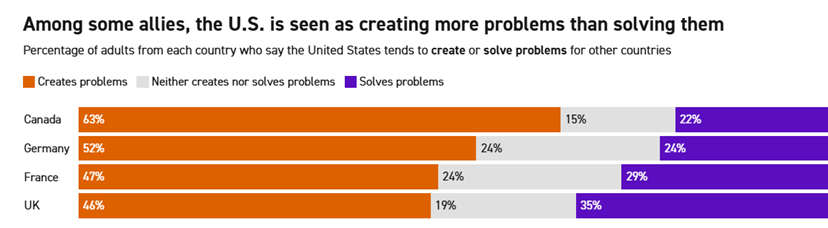
Core Viewpoint - A significant portion of the public in several of America's closest allies views the U.S. as a "negative force" on the global stage, particularly in light of the Trump administration's foreign policy reforms [1][5]. Group 1: Public Perception of the U.S. - The poll conducted by Politico and Public First surveyed 10,510 adults across the U.S., Canada, the UK, France, and Germany, revealing that many believe the U.S. tends to create problems rather than solve them, with 63% of Canadians holding this view [1][5]. - In Germany and France, a majority of respondents also perceive the U.S. as a negative influence, while in the UK, over one-third share this negative assessment [1][3]. Group 2: Support vs. Challenge to Allies - Canadians exhibit the strongest critical stance, with 60% believing the U.S. is challenging its allies, while only 25% think it supports them [3]. - In Germany, 46% view the U.S. as a challenger, compared to 29% who see it as supportive; in France, 45% believe the U.S. challenges allies, while 33% think it supports them [3]. Group 3: Impact of U.S. Foreign Policy - The findings indicate that Trump's broad trade agenda and tough rhetoric towards long-term allies are causing a ripple effect among Washington's closest partners [5]. - The U.S. National Security Strategy report suggests that Europe may face "civilizational extinction" in the next 20 years, prompting European leaders to call for a more cooperative approach from the U.S. [5].
特朗普政府对职业外交官缺乏信任
Xin Lang Cai Jing· 2025-12-21 02:13
Core Viewpoint - The Trump administration is dismissing a number of career diplomats appointed by former President Biden, with approximately 24 ambassadors receiving notices to leave their posts, which is considered unusual for career diplomats [1] Group 1: Diplomatic Changes - About 80 ambassador positions are currently vacant in the U.S. [1] - The dismissal of career diplomats is seen as a significant personnel change in the diplomatic system under Trump, reflecting a lack of trust in the State Department's career officials [1] - The U.S. Global Diplomatic Service Association confirmed that several ambassadors reported receiving phone calls instructing them to leave by January 15 or 16, without specific reasons provided [1] Group 2: Implications for U.S. Diplomacy - The removal of these ambassadors is believed to undermine the effectiveness of U.S. foreign policy execution and damage the country's diplomatic standing [1] - The State Department stated that recalling ambassadors is a standard procedure for any administration, emphasizing the president's right to appoint representatives who can advance the "America First" agenda [1] - Despite the rapid removal of Biden's political appointees, the Trump administration has been slow to fill many ambassador positions, with some nominations stalled in the Senate [1]
环球时报:特朗普政府解雇拜登任命的外交官
Xin Lang Cai Jing· 2025-12-21 00:07
Core Viewpoint - The Trump administration is dismissing a significant number of career diplomats appointed by former President Biden, which is an unusual move that may undermine the U.S. diplomatic standing [1] Group 1: Dismissal of Diplomats - Approximately 24 ambassadors have been notified to leave their positions by January 15 or 16, as confirmed by a State Department official [1] - The move is seen as rare since these ambassadors are career diplomats, who typically remain in their roles regardless of presidential changes [1] - John Dinkelman, president of the American Foreign Service Association, expressed concerns that this action could damage confidence in the ability of career diplomats to effectively execute U.S. foreign policy [1] Group 2: Government's Justification - The State Department stated that recalling ambassadors is a standard procedure for any administration, emphasizing that ambassadors are the president's personal representatives [1] - The administration's approach reflects a lack of trust in career diplomats, which is a departure from the norm where such diplomats usually continue to serve [1] Group 3: Impact on Diplomatic Positions - There are currently about 80 ambassadorial positions vacant, highlighting a slow pace in filling these roles under the Trump administration [1] - The Senate Foreign Relations Committee's Democratic chief member, Jeanne Shaheen, criticized the administration for replacing experienced career ambassadors, suggesting it cedes U.S. leadership to other major powers [1]
十分罕见!美媒爆美国外交系统大地震
Xin Lang Cai Jing· 2025-12-20 17:01
Core Viewpoint - The Trump administration is reportedly dismissing a significant number of career diplomats, specifically 24 ambassadors appointed by former President Biden, which is an unusual move that could undermine the U.S. diplomatic standing [1] Group 1: Dismissal of Ambassadors - Approximately 24 career ambassadors have received notifications to leave their posts by January 15 or 16, as confirmed by the Global Diplomatic Service Association [1] - The dismissal of these ambassadors is seen as a rare occurrence, as typically career diplomats remain in their positions regardless of presidential changes [1] Group 2: Impact on U.S. Diplomacy - John Dinkelman, president of the Global Diplomatic Service Association, expressed concerns that this action will damage the credibility of U.S. diplomacy and erode confidence in the ability of career diplomats to effectively implement U.S. foreign policy [1] - The State Department stated that recalling ambassadors is a standard procedure for any administration, emphasizing the president's right to appoint representatives who can advance the "America First" agenda [1] Group 3: Political Context - The article highlights that while political appointees are often replaced quickly by new administrations, career diplomats are usually retained due to their perceived loyalty to U.S. foreign policy [1] - The Trump administration's distrust of career diplomats is noted, along with the slow pace of filling ambassadorial positions, leading to approximately 80 ambassadorial vacancies [1]