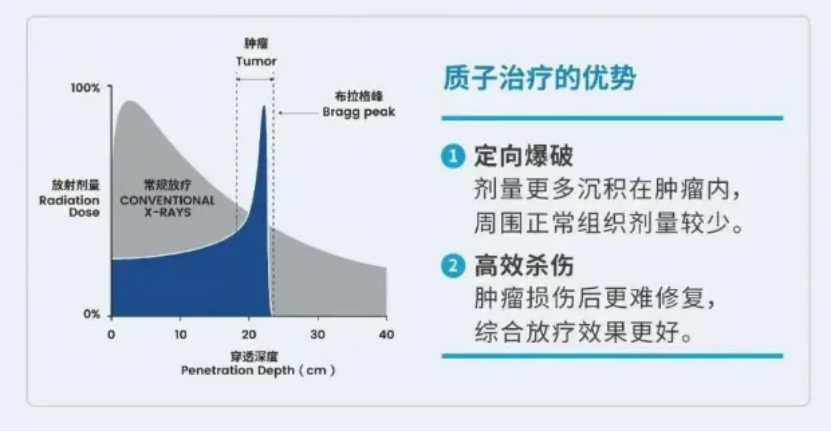
质子治疗

Search documents
深圳质子治疗中心正式启用
Shen Zhen Shang Bao· 2025-08-12 00:53
Core Insights - The Shenzhen Proton Therapy Center has officially commenced operations, marking the first integrated medical, research, and educational proton therapy institution in South China [1] - The center utilizes advanced proton radiation therapy technology to provide "precise, efficient, and low-damage" medical services for cancer patients, signifying a new era in radiation treatment in Shenzhen [1] Industry Overview - Proton therapy is highlighted as a superior alternative to traditional radiation therapy, significantly minimizing damage to normal tissues and reducing risks of long-term complications, including secondary primary tumors [1] - The treatment is particularly beneficial for tumors located near critical functional organs such as the brain, spinal cord, and eyes, as well as for pediatric cancer patients [1]
全国首例!美中嘉和(2453.HK)旗下广州泰和肿瘤医院成功实施脉络膜恶性黑色素瘤质子保眼治疗
Zhong Jin Zai Xian· 2025-07-15 09:13
Core Viewpoint - Meizhong Jiahe (2453.HK) has achieved a significant breakthrough in the treatment of choroidal malignant melanoma by successfully completing the first proton therapy in China, which preserves the patient's eye and vision, filling a treatment gap in the country [1][2]. Group 1: Treatment Innovation - The proton therapy using "pencil beam scanning" technology allows for high-dose radiation to be precisely focused on the tumor while minimizing damage to surrounding critical structures, marking a shift from destructive to functional treatment [1][2]. - Traditional treatment methods primarily involved enucleation, which resulted in permanent blindness and facial disfigurement for patients [1]. Group 2: Patient Outcomes - The first patient treated, a 45-year-old male from Hunan, experienced a significant improvement in vision from 0.1 to 0.4 within 48 hours post-treatment, with tumor markers decreasing by 90% and no complications such as corneal ulcers or retinal detachment [2]. - The patient expressed satisfaction with the treatment, stating he was able to retain his eye and continue working, contrasting with his initial expectation of undergoing enucleation [2]. Group 3: Market Potential - Proton therapy is recommended as a first-line treatment for choroidal melanoma in the 2024 NCCN guidelines, providing evidence-based support for eye-preserving strategies [2]. - With approximately 2,500 new cases of choroidal malignant melanoma diagnosed annually in China, Meizhong Jiahe's advancements in this field are expected to benefit domestic patients and create substantial market opportunities for the company [2].
生命奇迹!质子治疗让双原发癌患者重获新生
Sou Hu Wang· 2025-04-24 11:46
Group 1 - The article discusses the case of a patient diagnosed with dual primary cancers, specifically laryngeal and esophageal cancer, which is a rare occurrence, representing only 20% of dual primary cancers [1] - The patient opted for proton therapy after evaluating surgical options and considering the potential risks and benefits, particularly the preservation of core functions like speech and swallowing [1] - Proton therapy is highlighted as a cutting-edge cancer treatment technology that minimizes damage to critical organs, thereby reducing the incidence of complications such as radiation pneumonitis and myocarditis [1] Group 2 - The Guangzhou Taihe Cancer Hospital Proton Center commenced operations at the end of last year, built with support from renowned institutions like MD Anderson Cancer Center and Mayo Clinic, and features the first Varian ProBeam proton therapy system in South China [2] - The center has seen a significant increase in patient consultations and treatments, with a peak of over 50 patients treated in a single day, covering a wide range of cancers including nasopharyngeal, lung, liver, and prostate cancers, as well as rare tumors resistant to traditional treatments [5] - Proton therapy at the center has improved local tumor control rates while significantly reducing adverse reactions, such as rectitis and cystitis in prostate cancer patients, and preserving quality of life in pediatric cancer treatments by avoiding damage to developing tissues [5]