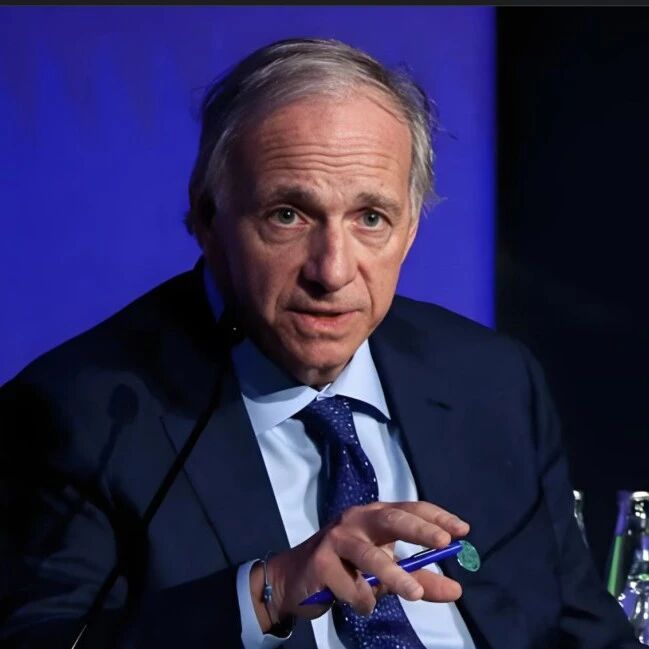
长期债务周期

Search documents
中欧瑞博吴伟志:黄金走势为何势如破竹
Zhong Guo Zheng Quan Bao· 2025-10-09 13:36
Core Viewpoint - The international gold price has surpassed $4000 per ounce, indicating a strong performance during the recent holiday period, which has been termed a "golden week" [1][3] Market Performance - Since September of the previous year, the Chinese capital market has shown strong characteristics, with increasing profitability effects among market participants [1] - As of October 8, the international gold price has risen over 50% this year, outperforming other asset classes [3] Future Outlook - The strong market trend is expected to continue, with increasing market enthusiasm and a potential upward cycle that may not stop at reasonable valuation levels [1] - Patience is advised as the market matures, suggesting that exiting too early may not be wise [1] Federal Reserve's Interest Rate Decision - The recent decision by the Federal Reserve to lower interest rates while the stock market is at historical highs is seen as unusual and raises questions about future market direction [2] - The rationale for the rate cut includes easing inflation data and signs of economic slowdown, which may justify the decision [2] Economic Cycle Insights - Historically, the cycle of monetary policy affecting asset prices and economic conditions is well established, but the current situation is viewed as different due to the Fed's actions at high asset prices [2] - The relationship between interest rates and market dynamics is emphasized, with a warning that ignoring economic principles could lead to greater inflation and currency devaluation issues [2] Long-term Debt Cycle Perspective - The concept of long-term debt cycles, as articulated by Ray Dalio, suggests that the current economic environment may lead to systemic crises due to unsustainable debt levels [3][4] - The importance of recognizing the unique nature of long-term debt cycles is highlighted, advising against applying short-term experiences to current situations [4] Gold as a Safe Asset - Gold is being revalued in the context of major economies entering the later stages of a long-term debt cycle and the shifting global political and economic landscape [4] - The "weaponization" of the dollar has led to a systemic collapse of its wealth storage function for sovereign nations, prompting a search for safer assets like gold [4] Investment Preferences - There is a growing interest in gold and precious metals as safe-haven assets, particularly in China where investment options are relatively limited [5]
瑞·达利欧:我确信我们正面临一个历史反复上演的危险局面
首席商业评论· 2025-10-08 05:07
Core Insights - Ray Dalio, founder of Bridgewater Associates, emphasizes the importance of understanding debt cycles and their impact on national economies, as outlined in his new book "How Countries Go Broke: The Big Cycle" [3][4] - The book presents a framework for analyzing the cyclical nature of national rise and fall, warning investors to look beyond market trends [3][6] Group 1: Key Questions Addressed - The article raises critical questions about the limits of national debt growth, the implications of rising interest rates, and the potential for a major reserve currency nation like the U.S. to face bankruptcy [5][6] - It highlights the lack of clear answers to these questions, which are crucial for investors and policymakers alike [6][8] Group 2: Research Perspective - The research is conducted from a global macro investor's perspective, drawing on over 50 years of experience with various debt cycles [8][9] - Dalio's analysis includes a review of significant debt cycles over the past century and a broader examination of 500 years of history to identify patterns and mechanisms [9][10] Group 3: The Big Cycle Concept - Dalio introduces the concept of the "Big Cycle," which encompasses multiple interrelated cycles, including debt cycles, domestic political harmony and conflict, international geopolitical dynamics, natural forces, and technological breakthroughs [11][12] - The evolution of these cycles is characterized by transitions from one order to another, often accompanied by significant crises [12][13] Group 4: Current Economic Context - The article discusses the current high levels of government debt and the risks associated with assuming that "this time will be different" without studying historical precedents [11][14] - It suggests that the world may be on the brink of repeating historical patterns of political and economic turmoil due to rising debt levels [11][14] Group 5: Future Outlook - Dalio predicts that the next 5-10 years will be a period of significant change across all major orders, with potential for both decline and rise among nations, companies, and individuals [16][17] - The article emphasizes the importance of managing various forces effectively to navigate the upcoming changes and mitigate risks [17][18]