风寒效应

Search documents
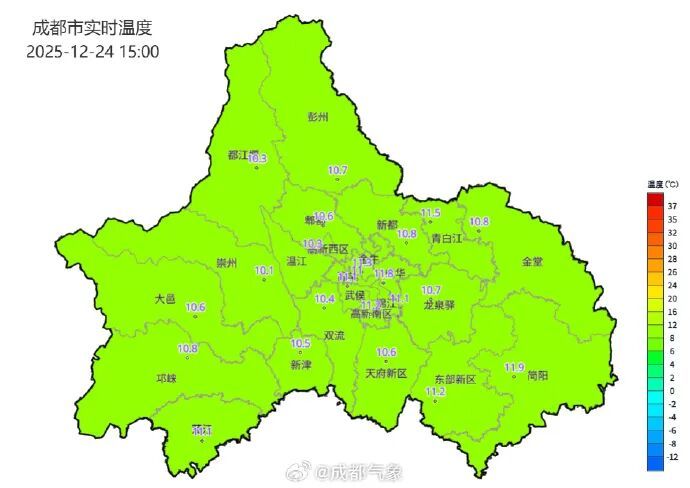
成都低至2℃!冷空气又来冲“业绩”了
Xin Lang Cai Jing· 2025-12-24 09:35
Summary of Key Points Core Viewpoint - The article discusses the upcoming weather changes in Chengdu, highlighting a significant drop in temperatures and the impact of cold air on various regions across China. Weather Forecast - Chengdu's average temperature is currently 11°C, feeling colder due to wind chill effects [1] - The next three days will see maximum temperatures of 14°C, 13°C, and 14°C, and minimum temperatures of 5°C, 2°C, and 2°C respectively, indicating a widening diurnal temperature range [3] - The weather will be predominantly cloudy with scattered light rain expected in the western mountainous areas [3][4] National Weather Patterns - A significant drop in temperatures is anticipated across most of China, with a decrease of 4-6°C in the central and eastern regions, and localized drops exceeding 10°C in the northeast [11] - The highest temperature line will drop below 0°C in northern regions, while the Yangtze River basin will see maximum temperatures below 10°C [11] - The cold air mass will lead to a return of dry and clear weather after a period of rain in the south [6][10] Specific Regional Impacts - The northeast region will experience the most severe temperature drops, with highs expected to fall below -10°C, and areas like Harbin seeing temperatures drop to -20°C [15] - Public health advisories are issued to encourage people to dress warmly to prevent health issues related to the cold [15]

新一轮冷空气来袭 北方大部将迎降雪
Xin Hua She· 2025-12-22 05:28
Summary of Key Points Core Viewpoint - A new round of cold air is expected to impact China, leading to significant temperature drops and precipitation across various regions from December 22 to 25 [1] Weather Impact - Most areas in China will experience a temperature drop of 4°C to 6°C, with some regions in Inner Mongolia and Northeast China seeing drops of over 10°C [1] - Southern regions will predominantly face light rain and localized moderate rain, while northern areas will see light to moderate snow or sleet, with heavy snow and blizzards in parts of Northeast China [1] Specific Weather Forecast - On December 22, a wide range of rain and snow is expected, though the intensity will be low. Areas such as southwestern Xinjiang, central Inner Mongolia, and parts of Northeast China will experience light to moderate snow or sleet, with localized heavy to blizzard conditions in southwestern Xinjiang [1] - On December 23, snowfall in Northeast China will intensify, particularly in central Heilongjiang, central Jilin, and eastern Liaoning, where heavy to blizzard conditions are anticipated [1] Public Advisory - The public is advised to take precautions against wind and cold due to the "wind chill effect," which will make temperatures feel lower [1] - Attention is drawn to the potential impacts on transportation, agriculture, and energy supply due to the strong snowfall in regions like southwestern Xinjiang and Northeast China, emphasizing the need for traffic safety management and snow removal from agricultural facilities and large-span buildings [1]
寒潮带来“速冻”模式,周末这些地方气温“大跳水”
Xin Hua Cai Jing· 2025-12-15 01:05
Core Viewpoint - The recent cold wave has brought the first snowfall of the winter to several cities, but it is followed by a significant drop in temperatures, indicating that the cold weather is far from over [2][4]. Group 1: Weather Conditions - On December 12, cities including Beijing, Tianjin, and Jinan experienced their first snowfall of the winter, enhancing the winter atmosphere [2]. - The cold wave has caused temperature drops exceeding 10°C in several regions, with Gansu's Wuqiaoling recording a dramatic drop of 26.1°C, marking it as the "temperature plunge champion" [4]. - Major cities are expected to see record low temperatures this weekend, with forecasts indicating that Lanzhou could drop to -14°C, Urumqi and Xining to -15°C, and Beijing to -10°C [4]. Group 2: Future Outlook - Following the intense cold wave, temperatures are expected to rise quickly from December 15 onwards, suggesting a return to warmer conditions after the cold weekend [5].
周二起空气好转气温回升 周五夜里换季式冷空气来袭
Mei Ri Shang Bao· 2025-12-09 02:31
Group 1 - A weak cold air mass has arrived, causing a drop in temperature in Hangzhou, with the highest temperature on Monday (December 8) recorded at 15.8℃, down from the "20s" over the weekend [1] - The air quality in Hangzhou deteriorated significantly due to the increase in PM2.5 levels, with the AQI reaching moderate pollution levels between 9-10 AM [1] - The cold air mass is not strong, and temperatures are expected to rebound significantly starting Wednesday, with highs reaching around 20℃ in northern Zhejiang and 22℃ in central and southern regions by Thursday [1] Group 2 - A significant drop in temperature is expected from Friday night to Saturday (December 12-13) due to another cold air mass, with temperature decreases of 6℃-8℃ and strong winds [2] - Rain is forecasted for Saturday, contributing to a "wet and cold" feeling across the Jiangsu-Zhejiang-Shanghai region [2] - The lowest temperatures next week are expected to drop to around 0℃ in most areas, with mountainous regions experiencing temperatures between -2℃ and -4℃ [2]
体感温度比实际气温更低?警惕风寒效应!
Yang Shi Wang· 2025-12-02 16:21
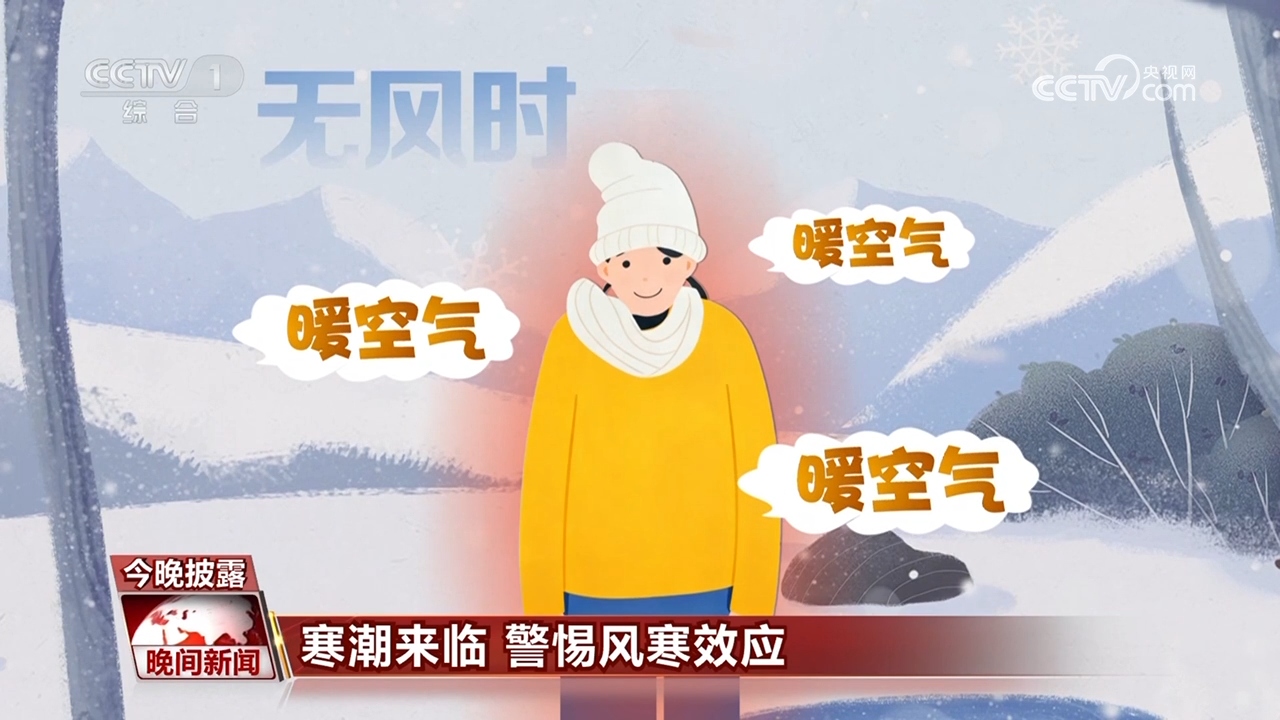
Core Points - The article discusses the "wind chill effect," which causes the perceived temperature to be lower than the actual temperature due to wind [3][5] - It emphasizes the importance of protective measures against the health risks associated with the wind chill effect, particularly for vulnerable populations [5] Group 1: Wind Chill Effect - The "wind chill effect" refers to the phenomenon where wind causes the perceived temperature to be lower than the actual temperature [3] - When there is no wind, a layer of warm air surrounds the body, providing insulation. Wind disperses this layer, accelerating heat loss and making individuals feel colder [3] - Data indicates that when temperatures are above 0°C, for every 2-level increase in wind speed, the perceived temperature drops by 3°C to 5°C; when temperatures are below 0°C, the drop can reach 6°C to 8°C [3] Group 2: Health Risks and Protective Measures - The wind chill effect significantly increases health risks, making individuals more susceptible to frostbite, colds, and cardiovascular diseases [5] - The effect is most pronounced on exposed skin, particularly the head, where approximately half of the body's heat is lost at around 4°C, increasing to three-quarters at -10°C [5] - It is recommended to wear windproof and warm clothing to minimize skin exposure, with a particular focus on head protection [5] - Humidity enhances the wind chill effect, making it crucial to consider both temperature and humidity when preparing for outdoor activities [5]
傍晚前后北风抵达,北京将开启“风冷模式”
Xin Jing Bao· 2025-11-26 04:46
周五(28日)、周六(29日)白天以晴到多云天气为主,气温也略有回升,预计白天最高气温在7~10℃ 之间,午间时段适宜安排户外活动。 周六夜间冷空气南下,北风再起,阵风五级左右;周日(30日)北风萧瑟,风寒效应明显。 北京市气象台提醒,今天傍晚至夜间北风较大,出行请注意防风防寒,谨防高空坠物。风干物燥,请注 意用火用电用气安全,防范火灾发生。早晚寒冷,谨防心脑血管和呼吸道疾病。 新京报讯(记者王景曦)今天(11月26日)白天京城天空云量有所增多,阳光微弱,预计午后最高气温 在9℃上下,午间时段总体比较适宜户外活动和开窗通风。下午到前半夜山区还会有雨夹雪或雪。 据北京市气象台预计,今天傍晚前后,北风从西部山区开始影响京城,预计今天傍晚至夜间有三四级偏 北风,阵风七级左右,西部山区局地阵风可达九级以上,山区局地还会伴有扬沙。 明天(27日)白天风力有所减小,但仍有五级左右的偏北阵风,同时,气温也有所下降,白天最高气温 在7℃左右。 ...
全国速冻地图出炉!本轮寒潮虽猛烈但“来去匆匆”
Yang Shi Xin Wen Ke Hu Duan· 2025-11-17 06:17
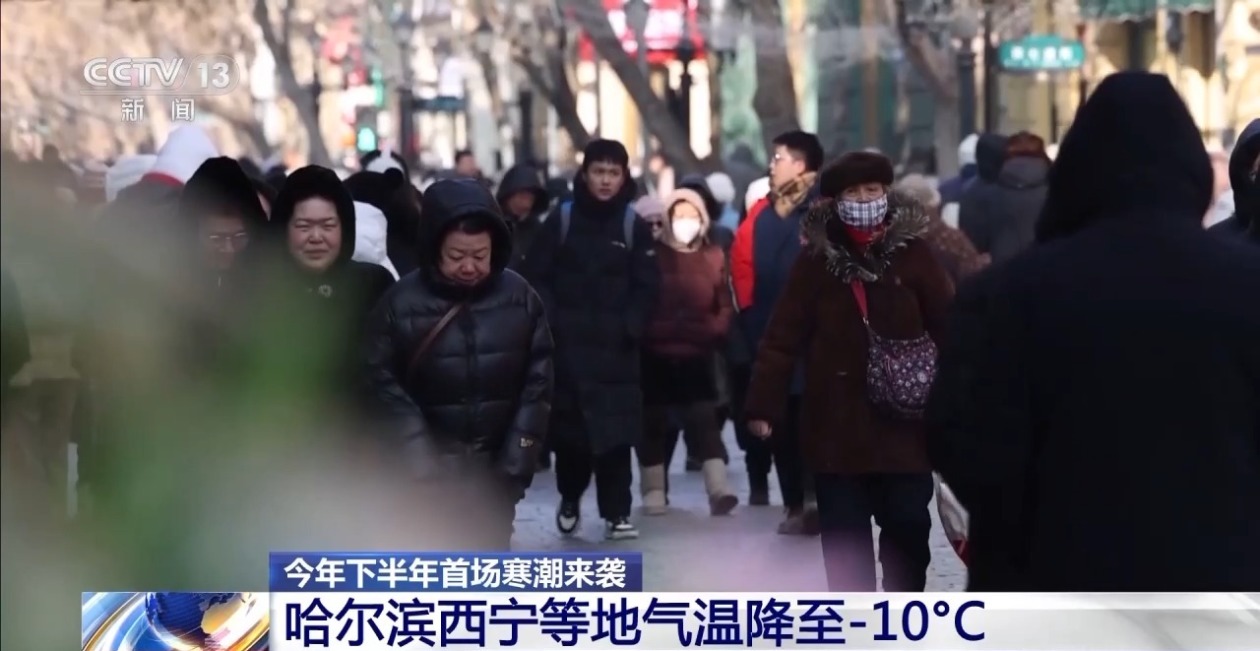
Core Points - The first cold wave of the second half of the year is significantly impacting China's central and eastern regions, with average daily temperature drops of 6°C to 10°C, and some areas experiencing drops of 12°C to 14°C [1][6][8] - The cold wave is characterized by rapid and severe temperature decreases, with cities like Shenyang experiencing a drop from 17.5°C to 1°C in just one day, and Harbin and Xining expected to fall below -10°C for the first time this season [3][6] - The cold wave is expected to expand southward, with major cities like Xi'an, Jinan, Hefei, and Wuhan forecasted to see temperatures drop below 0°C for the first time [8] Temperature and Weather Impact - The cold wave is causing a significant drop in temperatures across a wide area, with the freezing line moving south to regions including Hubei, Anhui, and Jiangsu [6][8] - The weather is also bringing increased precipitation, particularly in the southwest, with rain and snow expected in areas like Shaanxi, Henan, and Hubei [5] - The cold wave is expected to be short-lived, with temperatures in the north beginning to rise again after the 18th, leading to fluctuations in temperature [8] Wind Chill Effect - The cold wave's impact is exacerbated by strong winds, which enhance the "wind chill effect," making temperatures feel colder than they are [9][11] - Humidity also plays a crucial role in the wind chill effect, with moist air conducting heat away from the body more effectively [11] - Recommendations for winter clothing include wearing windproof and warm garments, and protecting the head to minimize heat loss [13]
下半年首场寒潮,来了!
Zhong Guo Ji Jin Bao· 2025-11-14 06:09
Core Points - The average temperature in most parts of China has been 1 to 3 degrees Celsius higher than the same period in previous years, with some areas exceeding 4 degrees Celsius [1] - A significant cold wave is expected to impact most regions of China from November 14 to 17, leading to a temperature drop of 6 to 10 degrees Celsius in northern and central eastern regions [1][2] - The cold wave will bring strong winds, with gusts reaching up to 10 levels in some areas, and will also result in snowfall in specific regions [2] Summary by Sections - **Temperature Changes**: The average temperature across China has been notably higher than usual, with a forecasted shift to lower temperatures due to an incoming cold wave [1] - **Cold Wave Impact**: The cold wave will cause a significant temperature drop, particularly affecting northern and central eastern regions, with specific areas experiencing drops of 12 to 14 degrees Celsius [1][2] - **Weather Conditions**: The cold wave will be accompanied by strong winds and potential snowfall, necessitating public awareness and preparedness for adverse weather conditions [2]
下半年首场寒潮,来了!
中国基金报· 2025-11-14 05:37
Summary of Key Points Core Viewpoint - The article discusses the upcoming cold wave affecting most parts of China from November 14 to 17, leading to significant temperature drops and potential weather hazards. Group 1: Temperature Changes - The average temperature in most regions of China has been 1 to 3 degrees Celsius higher than the same period in previous years, with some areas exceeding 4 degrees Celsius [1] - The cold wave is expected to cause a temperature drop of 6 to 10 degrees Celsius in northern and central eastern regions, with some areas experiencing drops of 12 to 14 degrees Celsius [2] Group 2: Weather Forecast - The cold wave will first impact northern regions such as northern Xinjiang, Gansu, Ningxia, and central western Inner Mongolia from November 14 to 15, before moving to central eastern areas from November 16 to 17 [2] - Rain and snow are forecasted, with small to moderate snow or sleet expected in northern Xinjiang and eastern Tibet on November 14, and in parts of Inner Mongolia and northeastern Heilongjiang on November 15 to 16 [3] Group 3: Public Advisory - The public is advised to pay attention to local meteorological updates and adjust clothing accordingly due to the expected strong winds and potential rain and snow, which may lead to slippery roads and low visibility [6] - It is recommended to choose appropriate clothing to minimize skin exposure, especially in colder temperatures, as significant heat loss occurs through exposed body parts [22][28]

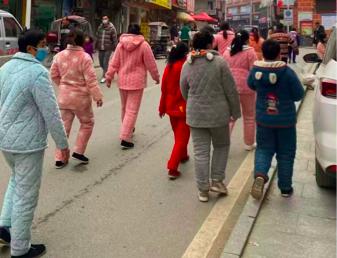
南方人过冬保命指南第一条:扔掉夹棉睡衣
3 6 Ke· 2025-11-11 07:52
Core Points - The article discusses the differences in winter experiences between northern and southern China, emphasizing the impact of humidity on perceived temperature [3][7][10] - It highlights the increasing average humidity levels in southern regions over the years, which contributes to a colder feeling despite higher actual temperatures [4][5][12] Humidity and Temperature Perception - The average relative humidity in eastern, southern, and southwestern China exceeds 70% during winter, while northern regions remain below 65% [4][5] - The "wet cold effect" in southern China leads to a significant difference in perceived temperature, with a potential 5°C difference under similar conditions [7][10] Clothing Recommendations for Southern Winter - The article suggests avoiding cotton clothing, particularly "夹棉睡衣" (cotton-padded sleepwear), due to its high moisture absorption, which exacerbates the cold feeling [10][12][15] - Recommended materials include synthetic fibers like polyester, which have low moisture absorption and better insulation properties [15][17] - A layered clothing approach is advised, with waterproof outer layers and insulating middle layers to retain warmth [17][23] Bedding and Sleeping Comfort - Suggestions for bedding include using synthetic materials that remain dry and warm, as well as regularly airing out bedding to reduce moisture [23][25] - The article emphasizes the discomfort of transitioning from warm clothing to cold bedding, highlighting the need for appropriate materials to enhance sleep quality during winter [23][25]