Consumer spending

Search documents
Banks Say U.S. Consumers Remain Resilient Despite Economic Pressures
Yahoo Finance· 2026-01-14 16:36
Group 1: Economic Outlook and Consumer Behavior - Bank of America expects further economic growth this year, with a 12% profit increase in Q4 due to rising consumer spending and lower credit card delinquencies [1][2] - Spending on debit and credit cards rose by 6%, while delinquencies over 90 days on credit cards decreased to 1.27% from 1.35% a year ago [1][3] Group 2: Financial Performance - For Q4, Bank of America reported earnings of $7.6 billion, or 98 cents per share, exceeding analysts' expectations of 96 cents per share [5] - Full-year profit reached $30.51 billion, a 13% increase compared to the previous year [5] - Total revenue for Q4 was $28.37 billion, surpassing analyst forecasts, with net interest income rising 10% to $15.8 billion [5][6] Group 3: Market and Investment Banking - Provisions for credit losses were reported at $1.3 billion, a decrease from the previous year [6] - Sales and trading revenue from the markets division increased by 10% to $4.52 billion, while investment banking fees rose to $1.67 billion [6]

Holiday shopping season got off to good start, retail sales show. Economy is still chugging ahead.
MarketWatch· 2026-01-14 13:55
Core Insights - The November retail sales report indicates strong consumer spending, suggesting resilience in the economy despite potential headwinds [1] Group 1: Retail Sales Performance - Retail sales increased by 0.6% in November, surpassing expectations and indicating robust consumer demand [1] - Year-over-year retail sales growth stands at 6.5%, reflecting a healthy consumer spending environment [1] - The increase in retail sales was broad-based, with significant contributions from sectors such as clothing, electronics, and online sales [1] Group 2: Economic Implications - The strong retail sales figures may influence Federal Reserve policy decisions regarding interest rates, as consumer spending is a key driver of economic growth [1] - Analysts suggest that sustained consumer spending could mitigate recession fears and support overall economic stability [1] - The data reinforces the notion that consumers remain confident, which is crucial for ongoing economic recovery [1]


Earnings Kickoff, CPI and Other Can't Miss Items this Week
Yahoo Finance· 2026-01-11 18:00
Financial Sector Insights - Major banks including JPMorgan, Bank of America, and Goldman Sachs are reporting earnings this week, providing insights into consumer spending, business loan demand, and credit quality trends [1][2] - Key metrics such as net interest margins, loan loss provisions, and deposit dynamics will be critical for assessing bank conditions [1] - Investment banking revenues will shed light on M&A activity and capital markets health, while wealth management results will reflect retail investor sentiment [1] Economic Data Releases - The December CPI report is anticipated to be a significant economic release, indicating inflation trends as 2025 concludes [3] - Both headline and core CPI readings will be closely monitored for signs of inflation reacceleration, which could impact Federal Reserve policy [3] - Retail sales data will provide context on consumer demand strength, influencing pricing power and market sentiment [3] Semiconductor Sector Update - Taiwan Semiconductor's earnings will be crucial for understanding global semiconductor demand, particularly in AI and other end markets [4] - Insights on advanced node utilization and capital expenditure plans will be vital for assessing the sustainability of AI-driven chip demand [4] - TSM's commentary on competition from Samsung and Intel will provide context on industry dynamics and future investment expectations [4] Retail Sector Analysis - The NRF 2026 and ICR conferences will offer significant retailer preannouncements and guidance updates, impacting consumer discretionary sector sentiment [6] - November retail sales data will provide hard evidence of holiday shopping performance, with comparisons to conference commentary being critical for assessing retailer optimism [6] - Existing home sales data will further contextualize consumer behavior in the residential real estate market [6] Healthcare Sector Developments - The JPMorgan Healthcare Conference will gather key players in the pharmaceutical and biotech industries, generating significant news flow [7] - Updates on pipeline developments and regulatory approvals from major drugmakers could substantially influence stock movements [7] - The conference will highlight critical themes such as drug pricing pressures and innovations in oncology and gene therapy [7]


Widening K-shaped economy pattern across income groups
Fox Business· 2026-01-02 12:30
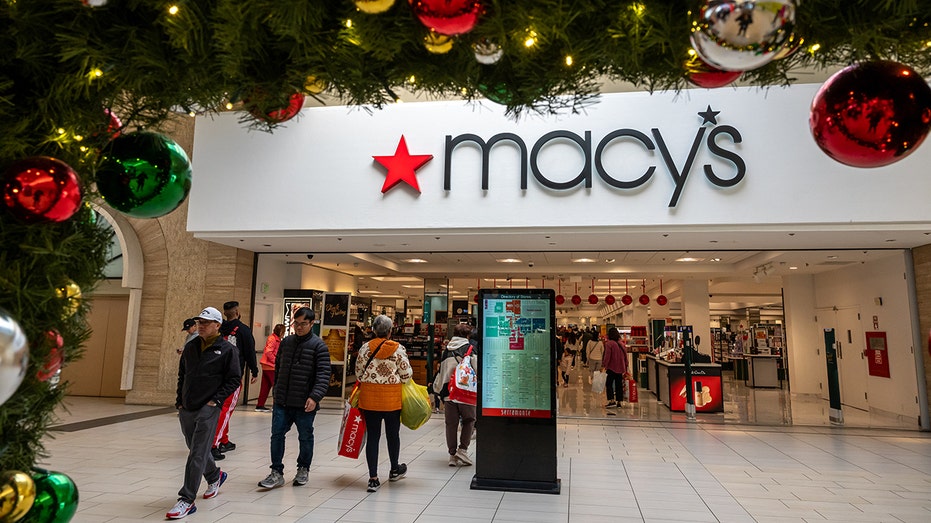
Core Insights - The U.S. economy is exhibiting a "K-shaped" recovery, with spending growth diverging significantly between lower-income and higher-income consumers [1][2] Spending Trends - Higher-income households (top third by income) are experiencing a year-over-year spending growth of approximately 2.6%, while lower-income households are only seeing a growth of 0.6%, indicating a substantial gap [2] - The report highlights that lower-income households had the weakest holiday spending growth leading up to Cyber Monday, despite relatively healthy spending growth compared to previous periods [13] Wage Growth Disparities - Wage growth for higher-income households is around 4%, whereas lower-income households are seeing only about 1.4% growth, marking one of the largest gaps in the last decade [5] - The labor market trends are identified as a key driver of the K-shaped dynamics, with after-tax wage growth for lower-income households lagging behind that of higher-income households [9] Consumer Behavior - Consumers are showing price sensitivity during the holiday season, with spending growth driven by an increase in the number of transactions rather than a significant rise in average spending per transaction [14][15] - Online holiday purchases have seen a transaction increase of about 10%, with total spending up roughly 9%, indicating effective consumer strategies to manage price rises [15][16]

GDP grew 4.3% in Q3, and it was ‘healthier’ growth
Yahoo Finance· 2026-01-01 18:01
Core Insights - The U.S. economy experienced robust growth in Q3 2025, with an annual growth rate of 4.3%, an increase from the previous quarter's 3.8% [1] - The growth in Q3 was characterized by a healthier and more broad-based foundation compared to earlier in the year, indicating genuine economic vitality rather than technical adjustments [1][2] Economic Composition - In Q2, GDP growth was significantly influenced by a decline in imports, which artificially inflated the growth figure without reflecting true domestic production or consumer well-being [2][3] - The second quarter's real GDP growth of 3.3% was primarily due to decreased imports and increased consumer spending, while investment and exports actually declined, revealing underlying weaknesses [3][4] - In contrast, Q3 growth was driven by increases in consumer spending, exports, and government spending, with a smaller contribution from the decline in imports compared to Q2 [5]
'The self-inflicted wound economy': Potential warnings in Nov. jobs report
MSNBC· 2025-12-17 05:04
Money, power, politics. Tonight, the November jobs report may include a warning sign about the state of the economy. More jobs were added in November than expected.That was largely driven by the healthc care sector, but unemployment rose to 4.6%. Now, that is the highest level since September 2021 when the economy was still coming out of the COVID pandemic. Joining me now to discuss is Justin Wolfers, a professor of economics and public policy at the University of Michigan and Jean Sperling, former director ...

AI talent war continues in tech without generating many jobs, says KPMG's Swonk
Youtube· 2025-12-16 18:56
Economic Overview - Consumers are still spending despite an early chill for the holiday season, with core retail sales up 0.9%, indicating stronger performance than the headline figure suggests [1] - The labor market has shown stagnation in payroll since April, with the unemployment rate affected by government shutdowns leading to temporary layoffs [2] Holiday Season Insights - The holiday season is compressed into December, which previously resulted in strong job gains, suggesting a potential repeat this year [3] Future Economic Indicators - Anticipated rate cuts by the Fed and expansions to tax cuts retroactive to 2025 may lead to double-digit gains in tax refunds, which consumers often treat as windfall gains, potentially affecting inflation data [4] Inflation and Labor Market Dynamics - The labor market is currently driven by healthcare and social assistance sectors, with concerns about the stickiness of inflation persisting even with potential improvements in employment [6][7] - There is a normalization of inflation occurring over five years, with sequential tariff-related increases contributing to this trend [8] Fed's Position and Market Sentiment - The Fed faces a divide between those advocating for lower rates and those concerned about inflation, with the current economic data suggesting that price stability has not been achieved [5][9]

Economy will 'rev up' in the first half of next year, says JPMorgan's David Kelly
CNBC Television· 2025-12-16 16:48
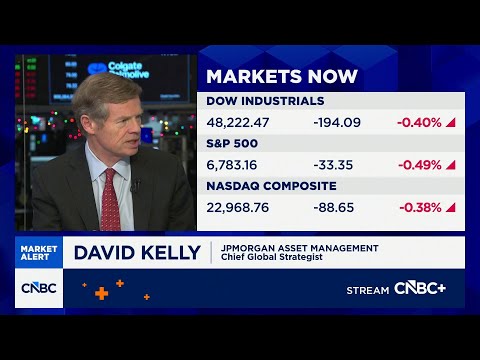
Labor Market & Economic Growth - The labor market shows weakness with the highest unemployment rate and lowest year-over-year wage growth in four years [2] - Despite weak job growth, the economy is still moving forward, avoiding a recession, but is described as a "sickly tortoise" [3] - The economy is expected to experience weak fourth-quarter GDP growth, potentially around 1% [9] - The economy may grow at 3% in the first half of next year and 1% in the second half, resulting in approximately 15% growth for the year if a recession is avoided [8] - Labor supply is limited, with a shrinking native-born working-age population and near-zero net immigration, making it difficult for the economy to grow beyond 15% of trend rates [7][8] Consumer Spending & Fiscal Stimulus - Consumer spending is expected to increase in the first half of next year due to income tax refunds, with the average refund projected to be $4,000, up from $3,200 this year [4] - The boost in consumer spending from tax refunds is considered temporary ("sugar, not protein") and unsustainable in the second half of the year [6] Investment & Sector Performance - While there's a significant data center boom, other investment spending, such as heavy truck sales and home building, is weak [10][11] - Low oil prices are hindering drilling activity in the energy sector [11]
More Young Adults Are Living With Their Parents—and It Could Be Hurting the Economy
Investopedia· 2025-12-12 21:00
Core Insights - The percentage of young adults aged 25 to 34 living with their parents has increased from 11% in 2005 to 16% in 2023, indicating a shift in living arrangements among this demographic [1][6] - Financial reasons are speculated to be the primary factor keeping young adults at home, as the costs of renting and homeownership have risen significantly [2][6] Economic Impact - Young adults who remain living at home tend to spend less than their peers who have moved out, which can negatively affect overall consumer spending and, consequently, GDP growth [2][4] - A report from Oxford Economics estimates that the rising number of young adults living at home has depressed consumer spending by approximately $12 to $13 billion, equating to about 0.1% of total consumption [5] Employment Concerns - The unemployment rate for recent college graduates aged 22 to 27 stands at 4.8%, higher than the 4% rate for all workers, suggesting challenges in the job market for this age group [3]