Electric Vehicles (EVs)

Search documents
America’s New Favorite EV Isn’t Tesla—and the Stock May Surprise
Yahoo Finance· 2026-01-13 16:23
Core Insights - Consumer discretionary stocks are seeking recovery after a challenging year, while automotive stocks, particularly General Motors, are showing resilience and growth in the EV market [2][6] - General Motors is gaining traction in the EV sector, with significant sales increases for its Chevrolet Equinox EV, which ranked third in U.S. EV sales [4][6] Group 1: Automotive Market Performance - U.S. auto sales reached 16.17 million vehicles in 2025, indicating a strong market performance [2][6] - General Motors' stock rose by 60% in 2025, reflecting investor confidence and market momentum [6] Group 2: General Motors vs. Tesla - General Motors has a market capitalization of $77.22 billion, significantly lower than Tesla's $1.48 trillion, yet GM has shown respectable stock performance with a 128% increase since 2020 [3] - GM is viewed as a reliable, low-volatility stock with nearly 93% institutional ownership, compared to Tesla's 66% [4] Group 3: Electric Vehicle Sales - The Chevrolet Equinox EV saw its sales double year-over-year to nearly 58,000 units in 2025, showcasing GM's growing presence in the EV market [4][6] - Despite the growth in EV sales, GM's internal combustion engine vehicles still dominate, with over 93,000 GMC Yukons and more than 114,000 Chevy Tahoes sold in 2025 [5]
GM reports Q4 dip, but full-year sales jump 5.5%, making it the top US automaker
Yahoo Finance· 2026-01-05 18:05
Core Insights - General Motors (GM) experienced a decline in fourth quarter sales but achieved strong overall full-year results, maintaining its position as the top-selling automaker in the US [1][2]. Sales Performance - Q4 sales decreased by 6.9% year-over-year to just over 703,000 vehicles, while full-year sales increased by 5.5% to 2.853 million vehicles [2]. - Full-size pickup sales rose for the sixth consecutive year, marking the best performance in 20 years, and full-size SUVs like the Tahoe, Suburban, and Yukon contributed to a fifth straight year of category wins [2]. Electric Vehicle (EV) Sales - EV sales in Q4 plummeted by 43% to just over 25,000 units, attributed to a "pull ahead" in Q3 sales before the expiration of the federal EV tax credit [3]. - Despite the decline in Q4, GM remains the No. 2 EV seller in the US, following Tesla [5]. Product Portfolio Highlights - Notable sales increases in Q4 included the Buick Enclave SUV (up 53.5%), Chevrolet Colorado midsize pickup (up 11.6%), and GMC Traverse SUV (up 24.1%) [4]. - GM's incentives as a percentage of average transaction price (ATP) were reported at 4.3%, aligning with the industry average, while market share increased by 0.5% to approximately 17% [4]. Inventory and Financial Adjustments - Dealer inventory levels decreased by 18% to 486,000 units, which aligns with GM's strategic plans [4]. - GM announced a $1.6 billion charge related to a reassessment of its EV plans, including $1.2 billion in non-cash special charges and $400 million in cash for contract cancellations and EV-related investments [5].

BYD has officially taken Tesla's crown and become the world's largest EV seller
Business Insider· 2026-01-02 15:19
Core Insights - BYD has surpassed Tesla to become the world's largest seller of battery electric vehicles, marking a significant shift in the EV market dynamics [1][5] - In 2025, BYD sold 2.25 million battery-powered EVs, a nearly 28% increase from the previous year, while Tesla's sales fell by 8.5% to 1.64 million [2] - BYD's total vehicle shipments reached 4.6 million in 2024, including plug-in hybrids, while Tesla does not offer hybrid models [2] Company Performance - Tesla has experienced a decline in sales, with Q4 sales dropping nearly 16% year-over-year due to the removal of the $7,500 tax credit in the US [7] - The company is facing challenges in Europe and China, where competition is intensifying and demand is fluctuating [7][10] - BYD has also faced competition and a crackdown on EV discounting in China, leading to a 10% year-over-year sales drop in December [10] Competitive Landscape - BYD is recognized for its technological innovations, including rapid EV charging and autonomous driving features, enhancing its competitive edge [9] - The company is expanding internationally, planning to open 1,000 new stores in Europe, where it has already outsold Tesla [10] - Tesla's CEO, Elon Musk, has acknowledged BYD's competitiveness, indicating a shift in perception regarding the Chinese automaker [11]



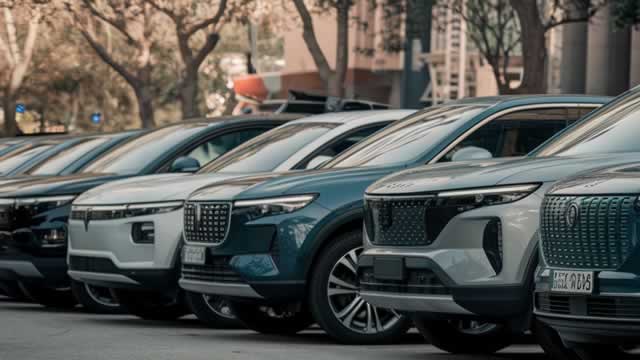
Is Rivian Stock a Buy in 2026?
The Motley Fool· 2025-12-31 19:53
Core Viewpoint - Rivian Automotive, having seen its shares decline over 80% from their peak, may present a potential investment opportunity as it navigates challenges in the electric vehicle (EV) market and expands its business model [1][2]. Industry Challenges - The EV industry is currently facing significant challenges, including a 41% drop in U.S. EV sales in November due to the expiration of a $7,500 tax credit [6][5]. - The removal of government incentives has negatively impacted the EV sector, but it may also reduce competition as some automakers abandon their fully electric ambitions [5][8]. Rivian's Positioning - Rivian is better positioned to withstand the fallout from reduced government support compared to some competitors, as many of its vehicles did not qualify for the tax credit due to battery sourcing requirements and high MSRPs [6][8]. - The company stands to gain market share as traditional automakers refocus on gasoline-powered vehicles and hybrids, following significant writedowns and cancellations of electric models by competitors like Ford [7][8]. Financial Performance - Rivian's third-quarter revenue increased by 78% year-over-year to $1.56 billion, driven by strong automotive sales and a rise in software and services revenue, indicating a diversification of income sources [9]. - The company's gross margin is currently at -159.38%, reflecting ongoing challenges in profitability [9]. Future Outlook - Rivian has established itself as a leader in vehicle electrical and software development, attracting interest from other automotive companies for its technology [10]. - Analysts suggest that Rivian's stock may be a strong buy in 2026 and beyond, as the company capitalizes on a less competitive EV market [10].

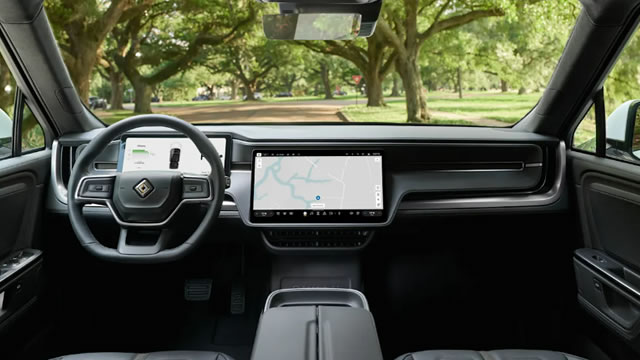
1 Top Stock to Buy Instead of Ford in 2026
The Motley Fool· 2025-12-21 16:50
Group 1: Ford Motor Company - Ford Motor Company has achieved a total return of 48% in 2025, significantly outperforming the S&P 500 [1] - Despite facing challenges such as tariffs, warranty costs, and a supplier factory fire, investor sentiment has improved, with the P/E ratio increasing from 6.8 to 11.5 [4] - The Ford Pro segment has shown strong performance, with double-digit revenue growth and an 11.4% operating margin in Q3 [5] - Ford's long-term growth prospects are considered weak, with low profits and significant capital expenditures [6] Group 2: Ferrari - Ferrari is highlighted as a superior investment opportunity compared to Ford, despite its stock being down 29% from its peak [8] - The company has a powerful brand that allows for pricing power and caters to a recession-resilient ultra-wealthy clientele [9] - Ferrari's revenue has grown at an annualized rate of 12% over the past three years, with an impressive trailing-12-month average operating margin of 29% [10] - Over the past decade, Ford shares generated a total return of 65%, while Ferrari's stock gained 726%, indicating Ferrari's stronger investment potential [11]


Does Ford's Alarming $19.5 Billion Charge Make It a Sell?
The Motley Fool· 2025-12-21 13:45
Core Viewpoint - Ford Motor Company is pivoting away from full electric vehicles (EVs) due to unprofitability and declining demand, resulting in a significant $19.5 billion charge related to business restructuring and reduced EV investments [1][4][10] Financial Impact - Ford expects to record a $19.5 billion charge primarily in the fourth quarter, with a subsequent $5.5 billion cash charge spread through 2027, mostly in the next year [4] - Despite the charge, Ford increased its adjusted EBIT guidance to approximately $7 billion for the year, aligning with earlier targets before a previous reduction [5] Strategic Shift - The company is refocusing investments from full EVs to hybrids and plug-in models, canceling plans for the next generation of large all-electric trucks in favor of smaller, more affordable EVs [6][7] - Ford anticipates that by the end of the decade, around 50% of its global volume will consist of hybrids, extended range EVs, and full EVs, a significant increase from 17% in 2025 [8] New Business Ventures - Ford is launching a new business focused on battery energy storage systems (BESS) to meet growing demand, repurposing its Kentucky battery factory and investing about $2 billion over the next two years [9] Market Position - The company is adapting its strategy to align with current market demands, moving away from high-end EVs that are not selling well, which is seen as a positive shift for the business [6][10]
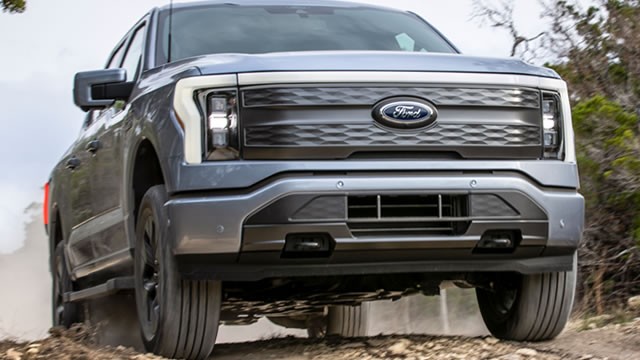
GM Eyes Ex-Tesla Autopilot Exec Sterling Anderson As Potential CEO Successor To Mary Barra: Report - General Motors (NYSE:GM)
Benzinga· 2025-12-19 09:32
Group 1 - General Motors Co. is considering Sterling Anderson, its current Chief Product Officer and former Tesla executive, as a potential successor to CEO Mary Barra [1][2] - Anderson's ability to enhance hardware and software integration for both internal combustion engine (ICE) and electric vehicles (EVs) is seen as a key factor for his potential promotion [2] - GM's stock price has been upgraded by Wedbush Securities to a target of $95, with the current trading price at $81.16, reflecting a 0.81% increase during pre-market trading [3][4] Group 2 - Dan Ives from Wedbush noted that GM is managing its cash flow effectively and is better positioned than competitors in the EV sector, despite some setbacks [4] - GM has commenced production of the Chevrolet Bolt EV, priced at $28,995, with availability expected in January 2026 [5] - The company reported a $1.6 billion charge related to EVs, with $1.2 billion attributed to capacity changes and $400 million to contract cancellations [6]
Is AutoNation's Move Proof Toyota Was Right All Along?
Yahoo Finance· 2025-12-18 13:35
Group 1 - The automotive industry is making significant decisions regarding electric vehicles (EVs) and U.S. production capacity in response to tariffs [1] - AutoNation, a leading vehicle retailer, recently acquired a Toyota franchise for approximately $120 million, marking its first such move in a decade [2] - This acquisition signals a potential shift in Toyota's strategy towards EVs, as the company has focused more on hybrids rather than fully electric vehicles [3][6] Group 2 - Toyota's Chairman Akio Toyoda has expressed skepticism about the future dominance of EVs, predicting that their global market share may peak at 30% [4] - The company is implementing a "multi-pathway" strategy, emphasizing hybrids as a more balanced approach compared to the industry's push for full electrification [4] - Toyota plans to offer hybrid options for nearly all models in its U.S. lineup by the end of the decade, with popular models like the Camry and RAV4 already featuring hybrid variants [5]


Ford's EV pivot is a ‘head scratcher,' says former Tesla board member Steve Westly
Youtube· 2025-12-16 16:57
Core Viewpoint - The significant $19.5 billion write-down by Ford reflects a major shift in the strategy of US automakers towards electric vehicles (EVs), driven by consumer preferences and regulatory changes [1][2]. Group 1: Ford's Strategy and Market Position - Ford's CEO emphasized the necessity of remaining in the EV market to be competitive globally, despite the recent financial setback [2]. - The average sales price of the Ford Mach E is around $425,000, indicating a gap in the market for lower-cost electric utility vehicles (EUVs) that Ford has not yet addressed [2]. - Ford's current strategy focuses on larger vehicles and hybrids, suggesting a response to consumer demand for bigger cars, especially in the US market [3][4]. Group 2: Global EV Market Trends - In 2022, one out of five cars sold globally were electric, and this year, the figure is expected to rise to one out of four, with projections of 20 million electric cars sold out of 80 million total [4]. - The decreasing costs of batteries and photovoltaic systems are contributing to the growth of the electric vehicle market [4]. - The most significant market segment is in the $20,000 to $30,000 range, where competitors like BYD and Hyundai are gaining substantial market share [5]. Group 3: Regulatory Environment and Competitive Landscape - Recent reports indicate that Europe may soften its ban on combustion engine vehicles by 2035, which could benefit US automakers [5][6]. - Approximately 20% of cars sold in Europe this year are expected to be electric, with this number likely to increase as prices continue to decline [6]. - The automotive market is shifting, with China and other regions becoming the fastest-growing markets, challenging the traditional dominance of the US and Europe [7].

Ford CEO gives update on the state of the company
Youtube· 2025-12-16 04:30
Core Viewpoint - Ford Motor Company is shifting its investment strategy from large electric vehicles (EVs) to higher-margin products, including hybrids and American-built trucks, in response to profitability challenges in the EV segment [2][3]. Investment Strategy - The company plans to take a significant write-off of nearly $20 billion related to its previous EV plans, redirecting funds towards more profitable areas [2][3]. - Investments will focus on hybrids, affordable EVs, and energy storage solutions, particularly in the Midwest [3][5]. Product Performance - The F-150 hybrid has become increasingly popular, making up 30% of the vehicle mix, with sales of hybrids up 30% last month despite overall flat sales [4][5]. - Ford aims to provide a range of vehicles, including affordable EVs priced around $30,000, while maintaining options for traditional combustion engines [7]. Job Creation and Economic Impact - The announcement is expected to create thousands of new jobs across America, reinforcing Ford's position as the leading auto producer in the country [6][9]. - The company emphasizes the importance of providing affordable vehicles and choices for consumers, which aligns with new regulatory standards [6][7].