Financial Health

Search documents
Mounjaro Maker Eli Lilly Improves In Quality As BofA Sees 'Room For Stock Upside' With $3 Billion In Sales By 2026
Benzinga· 2025-12-19 12:23
Core Insights - Eli Lilly and Co. has improved its quality score, moving into the top decile of Benzinga Edge's Stock Rankings, indicating strong fundamental strength and operational efficiency [1][2] - Bank of America has issued a bullish note, suggesting that the market is underestimating Eli Lilly's dominance in the obesity sector, particularly with its upcoming products [1][5] Group 1: Quality and Performance Metrics - Eli Lilly's quality score increased from 89.66 to 90.04, placing it in the elite tier above 90% of its peers [2] - The company boasts a near-perfect growth score of 99.38, reflecting a combination of rapid expansion and operational stability [3] Group 2: Analyst Insights and Future Potential - Analyst Jason Gerberry from Bank of America reiterated a Buy rating, emphasizing that Eli Lilly's long-term value is not fully reflected in its current stock price [5] - There is potential for stock upside as Eli Lilly continues to launch key obesity treatments and mitigate risks associated with new therapies [6] Group 3: Product Pipeline and Revenue Forecasts - The anticipated launch of Orforglipron, an oral weight-loss pill, is projected to generate $3 billion in revenue by 2026, significantly higher than the consensus estimate of $1 billion [6] - Positive Phase 3 trial results for Orforglipron indicate its effectiveness in helping patients maintain weight loss, thereby de-risking future revenue streams for the company [7] Group 4: Stock Performance - Eli Lilly's stock was up 0.10% in premarket trading after closing 1.45% higher at $1,056.88, with a year-to-date increase of 35.83% and a 38.57% rise over the last six months [8]



Lennar Corporation's Financial Overview and Market Position
Financial Modeling Prep· 2025-12-18 04:04
Core Viewpoint - Lennar Corporation is a prominent player in the U.S. home construction and real estate market, facing competition from major companies like D.R. Horton and PulteGroup, with a recent price target set by RBC Capital indicating a potential downside for the stock [1]. Financial Performance - Lennar's stock price is currently at $112.23, having dropped by 4.54%, losing $5.34 in value, with daily fluctuations between $110.02 and $114.98 [3]. - Over the past year, the stock reached a high of $148.11 and a low of $98.42, showcasing significant volatility influenced by market conditions [3]. - The company's market capitalization is approximately $28.62 billion, with a trading volume of 9.41 million shares, reflecting strong investor interest [4]. Strategic Insights - The Q4 earnings call held on December 17, 2025, featured key executives and analysts from top financial institutions, providing valuable insights into Lennar's financial performance and strategic direction [2].

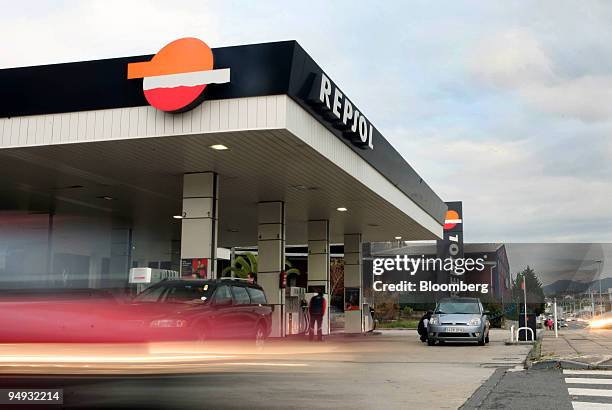
Repsol SA (OTCMKTS:REPYY) Maintains "Overweight" Rating by Barclays
Financial Modeling Prep· 2025-12-12 22:06
Group 1: Company Overview - Repsol SA is a global energy company engaged in the exploration, production, refining, and marketing of oil and natural gas, competing with major players like ExxonMobil and Chevron [1] - The company's market capitalization is approximately $21.81 billion, with a trading volume of 16,725 shares today [4] Group 2: Stock Performance - Repsol's stock opened at $18.90, showing a slight decrease of 0.3%, and the current price is $18.62, reflecting a 1.40% decline [3] - Over the past year, REPYY reached a high of $19.86 and a low of $10.41, indicating some volatility [3] Group 3: Analyst Ratings - Barclays maintained an "Overweight" rating for REPYY, holding the stock at a price of $18.62 [1][5] - The consensus recommendation from nine brokerages is "Hold," with varied opinions including one sell, five holds, two buys, and one strong buy [2][5] - DZ Bank and Zacks Research downgraded the stock from "strong-buy" to "hold," while the Royal Bank of Canada maintained a "sector perform" rating [2] Group 4: Financial Health - Repsol's financial health is supported by a current ratio of 1.47 and a quick ratio of 1.05, indicating its capability to cover short-term liabilities [4][5] - The debt-to-equity ratio further indicates the company's financial stability [4]
SPY Issuer State Street Sees Quality Metric Slides Amid Threats To Voting Power - SPDR S&P 500 (ARCA:SPY), State Street (NYSE:STT)
Benzinga· 2025-12-09 12:16
Core Insights - State Street Corp. has seen its fundamental "Quality" ranking drop into the bottom decile, indicating a significant decline in operational efficiency and financial health [1][2][3] Group 1: Quality Score and Rankings - State Street's quality score decreased from 10.26 to 9.73 week-on-week, placing it in the bottom 10% of its peers [2] - The quality score is a percentile-based metric, suggesting that State Street ranks lower than approximately 90% of its peers in terms of operational efficiency and financial health [3] - The decline into single digits indicates that while the stock price may be performing well, the underlying fundamental efficiency is lagging [3] Group 2: Stock Performance - Despite the drop in quality ranking, State Street's stock price performance remains strong, with a momentum score of 78.34, indicating robust relative strength based on price movement [4] - Year-to-date, shares of State Street have risen by 26.67%, outperforming the S&P 500 index, which gained 16.66% in the same period [7] - The stock closed at $124.07, reflecting a 0.37% increase, and has gained 24.78% over the year and 25.50% in the last six months [7] Group 3: Regulatory Environment - The decline in fundamental scoring coincides with potential regulatory changes being considered by the Trump administration, which may limit the voting power of major index fund managers like State Street [5][6] - Proposed executive orders could require index funds to align their votes with client preferences rather than centralized decisions, following criticism from notable figures in the industry [6]


SPY Issuer State Street Sees Quality Metric Slides Amid Threats To Voting Power
Benzinga· 2025-12-09 12:16
Core Viewpoint - State Street Corp. has experienced a significant decline in its fundamental "Quality" ranking, now placing it in the bottom decile among its peers, which raises concerns about its operational efficiency and financial health [1][2][3]. Group 1: Quality Score and Rankings - State Street's quality score decreased from 10.26 to 9.73 week-on-week, indicating a drop into the bottom 10% of its peers [2]. - The quality score is a percentile-based metric, suggesting that State Street ranks lower than approximately 90% of its competitors in terms of operational efficiency and financial health [3]. - The decline into single digits indicates that despite a potentially strong stock price performance, the company's fundamental efficiency is lagging behind the market [3]. Group 2: Stock Performance - State Street's stock has risen by 26.67% year-to-date, outperforming the S&P 500 index, which gained 16.66% in the same period [7]. - The stock closed at $124.07, reflecting a 0.37% increase on Monday, and has gained 24.78% over the year and 25.50% in the last six months [7]. - The company holds a momentum score of 78.34, indicating strong relative strength based on price movement and volatility, despite the low quality ranking [4]. Group 3: Regulatory Environment - The decline in State Street's fundamental scoring coincides with potential regulatory changes being considered by the Trump administration, which may limit the voting power of major index fund managers [5][6]. - Proposed executive orders could require index funds to align their votes with client preferences rather than centralized decisions, reflecting increased scrutiny on firms like State Street [6].


Synopsys, Inc. (NASDAQ:SNPS) Earnings Preview and Financial Health Analysis
Financial Modeling Prep· 2025-12-09 10:00
Core Viewpoint - Synopsys, Inc. is a leading player in the electronic design automation industry, facing competition and preparing for an important earnings call on December 10, 2025, with analysts estimating an EPS of $2.79 and revenue of $2.25 billion [1] Group 1: Earnings and Financial Outlook - Bank of America has upgraded Synopsys to a "Neutral" rating, highlighting the importance of the upcoming earnings call for restoring investor confidence, despite a reduction in the price target from $525 to $500, reflecting a 4% decrease in earnings estimates for fiscal years 2026 and 2027 [2] - The earnings call on December 10 is expected to provide guidance for fiscal 2026 and address recent sales weaknesses in China and with Intel IP, as well as higher integration costs from the Ansys acquisition [3] - Bank of America projects Synopsys's fiscal year 2026 sales to be around $9.6 billion, with an adjusted EPS of $14.02, supported by Nvidia's $2 billion investment, indicating Synopsys's strategic importance in the chip-design software industry [4] Group 2: Financial Metrics and Position - Synopsys's current ratio of 1.62 indicates its ability to cover short-term liabilities with short-term assets, reflecting financial stability [5] - The company's enterprise value to sales ratio of 15.41 and enterprise value to operating cash flow ratio of 68.76 provide insights into how the market values its total value relative to sales and cash flow, indicating its financial position amidst industry challenges [5]


Prosus N.V. (OTC:PROSY) Earnings Report Highlights
Financial Modeling Prep· 2025-11-25 23:00
Core Insights - Prosus N.V. is a Dutch technology investor with a significant stake in Tencent Holdings, focusing on digital services and e-commerce expansion [1] - The company reported earnings with an EPS of $0.43 and revenue of approximately $3.61 billion, exceeding estimates [2][6] - Prosus experienced a 99% increase in adjusted core profit for the half-year, driven by strong e-commerce and digital services performance [3][6] Financial Performance - Revenue growth is attributed to successful e-commerce operations and strategic investments, with a 70% increase in profitability across regions including Latin America, Europe, and India [3] - The company has a P/E ratio of 17.97, a price-to-sales ratio of 23.03, and an enterprise value to sales ratio of 24.53, indicating strong market valuation [4] - Prosus maintains a debt-to-equity ratio of 0.32 and a current ratio of 3.54, reflecting low debt levels and strong liquidity [5][6]

OSCR Stock Review: Strong Growth Meets Attractive Valuation
Forbes· 2025-11-25 14:35
Core Viewpoint - Oscar Health stock (NYSE: OSCR) has seen a rise to over $16 due to potential two-year extensions of Obamacare subsidies, which may enhance demand for health insurance through the ACA Marketplace, raising questions about the stock's attractiveness post-increase [2] Market Position and Growth - Oscar Health has experienced significant growth, with revenues increasing at an average annual rate of 46.4% over the past three years, compared to the S&P 500's growth rate of 5.5% [3] - In the last 12 months, revenues rose by 37.4% to $11 billion, with the latest quarter showing a year-over-year increase of 23.2% [3] Margins and Profitability - Despite strong revenue growth, Oscar Health's profitability is lacking, with an operating cash flow margin of 6.8%, significantly lower than the S&P 500's 20.5% [4] - The company reported a net income of -$244 million over the last four quarters, resulting in a negative net income margin of -2.2% compared to the S&P 500's 13.1% [4] Financial Health - Oscar Health has a strong balance sheet, with a debt-to-equity ratio of 15.9%, below the S&P 500's 21.0% [5] - Cash constitutes 52.8% of its total assets, significantly higher than the S&P 500's 7.0%, providing a buffer against downturns [5] OSCR Stock Valuation - The current price-to-sales (P/S) ratio for OSCR is 0.4, compared to 3.2 for the S&P 500, indicating it is relatively inexpensive [6] - Oscar Health's P/S ratio aligns with industry trends, reflecting market expectations consistent with the health insurance sector's lower multiples due to thin profit margins [7] Historical Valuation Context - OSCR's average P/S ratio over the past four years has been about 0.4, suggesting it is reasonably valued against its historical levels despite being cheaper than the overall market [8] Resilience and Volatility - OSCR stock has shown poor performance during market downturns, plummeting 94.2% during the 2022 inflation crisis, while the S&P 500 declined by 25.4% [9] - The stock has not recovered to its previous highs and remains significantly below its peak in 2021, indicating a lack of resilience [9] Overall Evaluation - Oscar Health exhibits strong growth and solid financial health, but concerns about profitability and resilience during downturns persist [10] - The current valuation appears attractive compared to the S&P 500, suggesting it may be suitable for investors willing to accept higher volatility and sector-specific risks [10]


CVS vs. WMT: Which Retail Pharmacy Powerhouse Looks Stronger Now?
ZACKS· 2025-11-25 14:21
Core Insights - CVS Health and Walmart are leading players in the U.S. Retail Pharmacy market, with CVS operating nearly 9,000 retail pharmacy locations and Walmart being a tech-powered omnichannel retailer [1][2] Revenue Performance - CVS Health reported record revenues of $103 billion for Q3 2025, exceeding estimates by 17.65%, with an 8% year-over-year growth driven by all segments [3] - Walmart's Q3 fiscal 2026 revenues reached $179.5 billion, a 6% increase in constant currency, surpassing estimates by 1.33%, with the International segment growing 11.4% [4] Profitability Comparison - CVS's adjusted operating income for Q3 2025 was approximately $3.5 billion, a 36% increase year-over-year, with adjusted EPS at $1.60, up 47% from the previous year [5] - Walmart's adjusted operating income increased 8% in constant currency, with adjusted EPS rising 7% year-over-year to 62 cents [6] Financial Health Snapshot - CVS generated operating cash flows of approximately $7.2 billion year-to-date, with total debt at $65.84 billion and $2.6 billion returned to shareholders [7] - Walmart reported $10.6 billion in cash and cash equivalents, with net cash from operating activities at $27.5 billion and total debt at $53.1 billion, returning nearly $13 billion to shareholders [8] Future Outlook - CVS expects revenues of at least $397 billion for 2025, raising its EPS outlook to between $6.55 and $6.65 [10] - Walmart forecasts fiscal 2026 constant-currency sales growth between 4.8% and 5.1%, with adjusted EPS expected between $2.58 and $2.63 [11] Price Performance and Valuation - Year-to-date, CVS shares have surged 73.5%, significantly outperforming Walmart's 15.4% growth [14] - CVS is trading at a forward five-year price-to-sales ratio of 0.24, below its median, while Walmart's P/S is 1.13 [15] Estimate Trends - The Zacks Consensus Estimate for CVS's 2025 EPS implies a year-over-year growth of 22.1% to $6.62, with estimates rising by 4.1% in the past 60 days [16] - Walmart's fiscal 2026 EPS consensus has increased by 0.8% to $2.62, representing a 4.4% increase over fiscal 2025 [18] Investment Consideration - Both CVS and Walmart are positioned as major players in the retail pharmacy space, with CVS showing solid momentum and Walmart benefiting from its International segment and e-commerce growth [19]