Sell America

Search documents
Trump Vows ‘Big Retaliation’ as ‘Sell America’ List Grows
Barrons· 2026-01-22 17:25
Core Viewpoint - A significant public investor has reduced its exposure to U.S. assets, indicating a growing trend of the "sell America" strategy in global capital markets [1] Group 1 - The reduction in U.S. asset exposure by a major public investor reflects a shift in investment strategies [1] - This trend suggests a broader sentiment among global investors regarding U.S. market conditions [1]
Greenland Crisis: 'Sell America' is a long game for the Europeans
The Economic Times· 2026-01-22 10:55
Core Viewpoint - The article discusses the implications of recent U.S. actions and rhetoric under President Trump, particularly regarding Europe, and emphasizes the need for Europe to strengthen its financial independence and investment at home in response to U.S. pressures [1][2][9]. Economic Context - Europe is urged to invest more of its vast savings domestically, as reliance on the U.S. economy and its capital markets poses risks, especially given the current political climate [2][11]. - The U.S. is identified as the world's largest debtor nation, relying on foreign capital, including significant European investments, to fund its deficits [6][9]. Investment Strategies - Joint borrowing within the eurozone is proposed as a means to create a safe asset that could rival U.S. Treasuries, thereby enhancing Europe's financial strength [5][12]. - The article highlights the need for Europe to better integrate its capital markets and develop a larger pool of safe assets to compete with U.S. financial instruments [12][15]. Market Reactions - The article notes that Trump's tariff threats led to market volatility, but his quick reversal indicates a vulnerability in U.S. policy and a potential leverage point for Europe [7][8]. - European investors have historically benefited from capital exports to the U.S., but the current political climate may necessitate a reevaluation of this strategy [10][15]. Future Outlook - The article suggests that ongoing tensions and unpredictability in U.S. policies could drive European investors to diversify away from U.S. assets, although this process may take time [11][15]. - The need for Europe to bolster its military and infrastructure spending is highlighted as a way to increase the supply of European bonds, which could help stem capital outflows [12][15].



This Global ETF Could Help You Survive a Weaker Dollar in 2026
Yahoo Finance· 2026-01-21 18:20
Core Viewpoint - The U.S. dollar is weakening against major global currencies, losing 11% against the euro and 9% against the British pound over the past year, attributed to the "sell America" trade by global investors [1][2]. Group 1: "Sell America" Trade - The "sell America" trade indicates a shift where global investors are moving money out of U.S. assets due to a less attractive investment environment, influenced by changes in trade policy, rising national debt, and potential threats to Federal Reserve independence [2]. - This trend could lead to increased gold prices, higher yields on U.S. bonds, and further depreciation of the dollar [2]. Group 2: Performance of International Stocks - International stocks are currently outperforming U.S. stocks, with the Vanguard Total International Stock Index Fund ETF gaining 32% in the past year compared to 15% for the S&P 500 and 19% for the Nasdaq-100 [3]. - The Vanguard Total International Stock ETF is highlighted as a smart investment choice for exposure to global markets [4]. Group 3: Hedging Against Dollar Weakness - Investing in international stocks and ETFs like the Vanguard Total International Stock ETF can serve as a hedge against a declining dollar, as the dollar value of international stocks tends to increase when the dollar weakens [5]. - A hypothetical example illustrates that a 10% depreciation of the dollar can increase the value of a European stock purchased at $100 to $110 due to exchange rate changes [6]. Group 4: Potential for Higher Returns - American investors can achieve higher returns by investing in international stocks if the U.S. dollar continues to decline, with the Vanguard Total International Stock ETF providing access to thousands of global stocks [7].
Gold blasts through $4,800 as “sell America” sentiment picks up
KITCO· 2026-01-21 17:10
Core Viewpoint - The article discusses the current trends and factors influencing the gold market, highlighting the impact of economic indicators and geopolitical events on gold prices [4]. Group 1: Market Trends - Gold prices are experiencing fluctuations due to varying economic data, including inflation rates and interest rate decisions by central banks [4]. - Recent geopolitical tensions have led to increased demand for gold as a safe-haven asset, contributing to price volatility [4]. Group 2: Economic Indicators - The article notes that inflation remains a critical factor, with recent reports indicating a rise in consumer prices, which typically boosts gold's appeal [4]. - Interest rate changes by central banks are closely monitored, as higher rates generally lead to lower gold prices due to increased opportunity costs [4]. Group 3: Investment Sentiment - Investor sentiment towards gold is shifting, with many viewing it as a hedge against economic uncertainty and currency devaluation [4]. - The demand for gold in investment portfolios is expected to rise as market conditions remain unpredictable [4].

US stocks rebound after Trump's WEF speech: S&P 500 climbs 0.4%, Dow up 140 pts
Invezz· 2026-01-21 14:52
Market Reaction - US stocks rebounded after President Trump's comments at the World Economic Forum, easing geopolitical concerns related to Greenland [1][3] - The Dow Jones Industrial Average rose by 141 points, or 0.3%, while the S&P 500 gained 0.4% and the Nasdaq Composite advanced 0.3% [1][2] Geopolitical Context - Trump's remarks included a clear statement that he would not use military force to acquire Greenland, which helped to reverse market sell-offs [4][5] - The comments were made during a speech addressing various global issues, including NATO and US trade policy [3] Financial Market Dynamics - US Treasury prices rose and yields fell, with the 10-year Treasury yield easing after briefly topping 4.3% [6] - The US dollar index stabilized, indicating a pause in the diversification away from dollar-based assets that had occurred previously [6] Previous Market Volatility - Stocks experienced significant losses prior to Trump's comments, with all major benchmarks logging their worst daily performances since October 10 [7] - The sell-off was accompanied by rising Treasury yields and a sharp decline in the dollar as investors reduced exposure to US assets [7] Emerging Trends - Analysts noted a re-emerging "sell America" narrative, with concerns about diversification away from dollar assets, particularly among government entities [9][10] - Treasury Secretary Scott Bessent attempted to downplay market concerns, stating the administration was not worried about the previous day's turmoil [10] Ongoing Trade Tensions - Despite Trump's reassurances, uncertainty remains high as he continues to seek negotiations regarding Greenland's acquisition [11] - European leaders have responded strongly to US tariff proposals, with potential repercussions for US businesses in the European market [12][13]

Treasury Yield Spike Can't Be Ignored. Stocks Are Vulnerable to ‘Sell America' Pressures.
Barrons· 2026-01-21 11:40
Core Viewpoint - Stocks have erased all their gains for the year due to a significant increase in bond yields [1] Group 1 - The spike in bond yields has led to a negative impact on stock performance, resulting in a complete loss of annual gains [1]

Gold, Silver Prices Soar to Records as Trump's New Tariff Threats Revive 'Sell America' Trade
Investopedia· 2026-01-20 21:02
Core Insights - Financial markets experienced volatility following President Trump's threats to impose tariffs on European countries if they do not agree to U.S. control of Greenland [1][2] Market Reactions - Safe haven assets, particularly gold and silver, saw significant price increases, with gold futures reaching an all-time high of $4,755 per troy ounce, marking a nearly 75% return over the past year [3] - The major stock indexes, including the Dow Jones Industrial Average, S&P 500, and Nasdaq Composite, declined by 1% or more, indicating a flight from risk assets [5] - The Cboe Volatility Index (VIX) rose to 20.69, its highest level since late November, signaling increased market uncertainty [8] Currency and Treasury Market Impact - The U.S. dollar index fell nearly 1% to 98.5, while the yield on the 10-year Treasury rose above 4.3%, indicating a potential revival of the "Sell America" trade [6][7] - Experts expressed concerns that international investors might be abandoning U.S. assets due to Trump's aggressive trade stance and the associated policy volatility [7] Expert Opinions - Industry leaders, such as Sergio Ermotti, noted that the volume of news and uncertainty is affecting investor sentiment, leading to a focus on portfolio diversification [11]
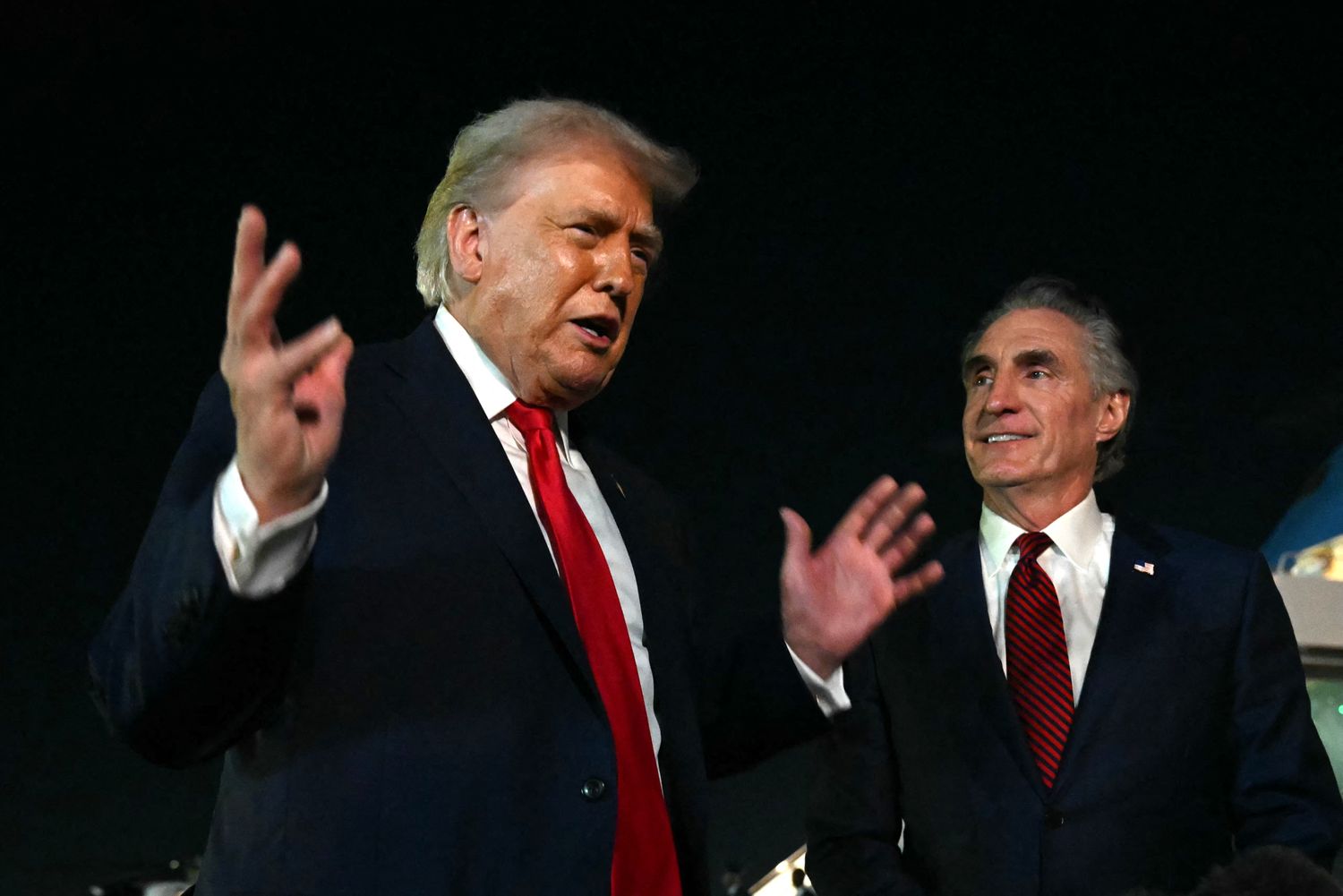
Nasdaq Turns Negative for the Year. Sentiment Looks 'Morose.'
Barrons· 2026-01-20 19:59
A 'Sell America' theme is emerging as the Greenland dispute escalates, with Treasuries and the dollar losing favor and the Nasdaq approaching a year-to-date loss.The Dow was down about 900 points or 1.8%, while the S&P 500 was down 2%. The tech-heavy Nasdaq, down 2.3%, is now trading at 22,981, putting it on track to be negative for the year.President Trump has threatened to impose tariffs on goods from European allies, which presumably come on top of existing tariffs that are being reviewed by the Supreme ...
Bonds and Dollar Follow Stocks Sharply Lower as ‘Sell America’ Trade Hits Another Gear
Barrons· 2026-01-20 14:20
Core Viewpoint - Global bond markets experienced a significant decline, with benchmark 10-year Treasury yields reaching their highest levels in five months due to rising concerns over President Donald Trump's threats regarding Greenland, which introduced new uncertainty about the safe-haven status of U.S. assets [1] Group 1 - The benchmark 10-year Treasury yields rose to the highest levels in five months [1] - Concerns related to President Trump's threats to take control of Greenland contributed to the decline in bond markets [1] - The situation has raised new uncertainty regarding the safe-haven status of U.S. assets [1]
'This is sell America' — U.S. dollar, Treasury prices tumble and gold spikes as globe flees U.S. assets
CNBC· 2026-01-20 13:51
Core Viewpoint - The recent escalation in trade tensions, particularly due to Trump's tariff threats against European countries, has led to increased concerns among global investors regarding the reliability of the U.S. as a trading partner, resulting in a decline in the U.S. Dollar index and a potential shift in investment strategies [1][4][5]. Group 1: Trade Tensions and Market Reactions - Trump's proposed tariffs on European countries, starting at 10% on February 1 and increasing to 25% on June 1, have prompted an emergency meeting among European Union representatives [1]. - Greenland's Prime Minister has firmly rejected Trump's request to purchase the island, emphasizing the importance of dialogue and international law [2]. - The pan-European Stoxx 600 index fell approximately 1% in midday trading, reflecting the negative impact of Trump's tariff threats on international markets [5]. Group 2: Investor Sentiment and Market Dynamics - The "Sell America" trade indicates that global investors are demanding higher risk premiums for U.S.-focused investments due to fears of the U.S. being an unreliable trading partner [4]. - The decline in the U.S. Dollar index is noted as the largest since the introduction of extreme tariffs last April, which were later rolled back [4]. - Analysts suggest that if Trump does not change his approach, the long-term impacts on the dollar and U.S. investments could be severe, with investors looking to hedge their exposure [6][7]. Group 3: Broader Market Implications - Investors may be seeking to diversify their portfolios as U.S. indexes are trading near all-time highs, with American stocks comprising a significant portion of global market capitalization [7]. - The concept of American exceptionalism may already be fully priced into the markets, indicating that minor changes could lead to a shift in investor sentiment towards diversification [8].