
Trade Tensions

Search documents
Why This Major Bank CEO Doesn't 'See Any Path of Normalization' Amid Market Upheaval
Investopedia· 2026-01-20 21:02
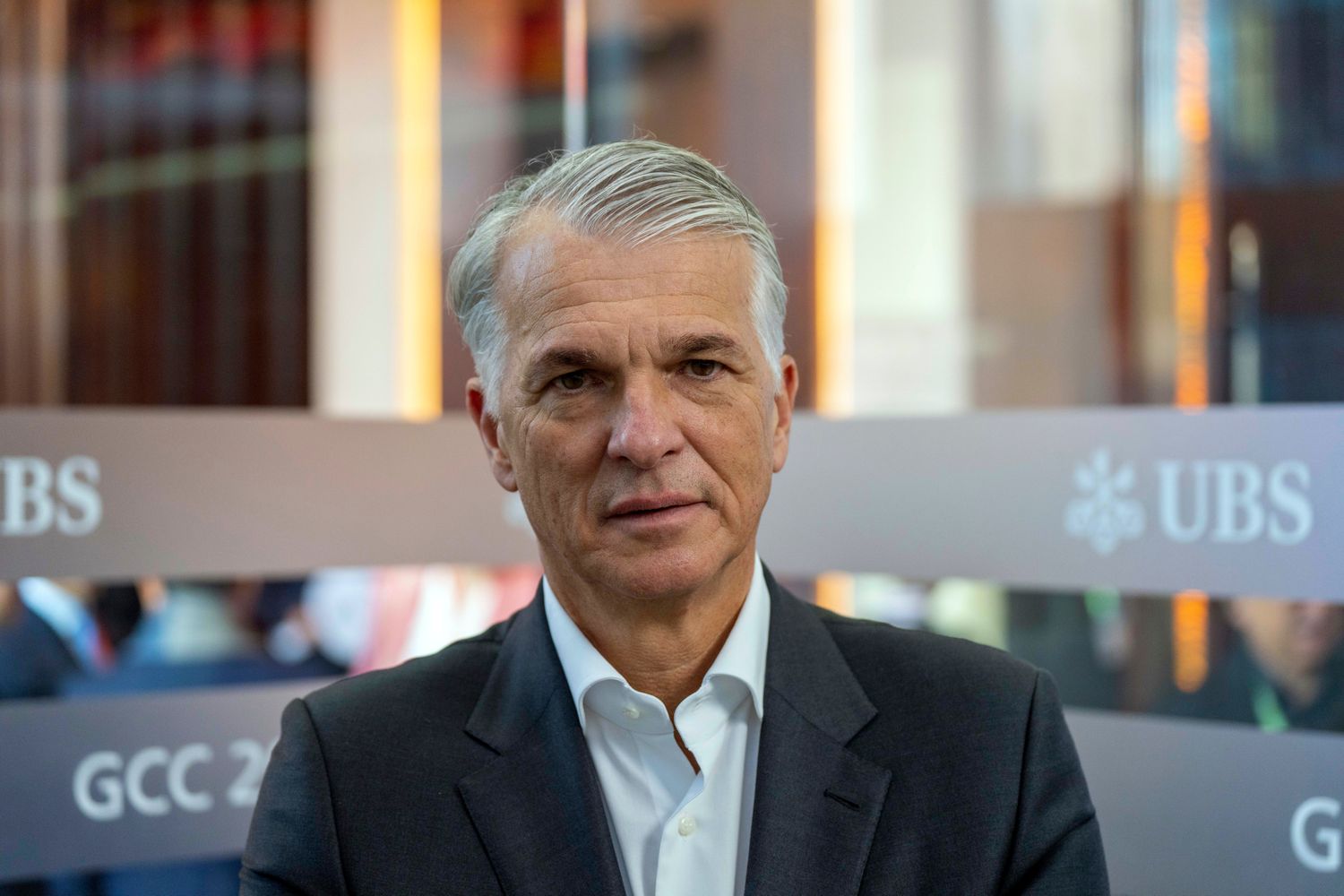
Core Insights - UBS CEO Sergio Ermotti indicated that there is no clear end to the volatility in financial markets, which he described as "quite abnormal" given the lack of significant market impact from recent trade tensions and conflicts [1][5] - Investors' risk appetite is reverting to historic norms, particularly in light of the White House's threats to impose tariffs on nations opposing U.S. control of Greenland [1][3] Market Sentiment - The level of news is beginning to affect client sentiments, with Ermotti noting that there is a threshold of news that can influence investor behavior [2] - The stock market experienced a rebound after a significant drop around Liberation Day last April, but it remains uncertain if the current volatility is merely short-term noise or indicative of a more substantial shift [2] Investor Behavior - Investors are becoming more cautious, opting to retain cash and diversify their portfolios carefully, as finding well-priced assets across any class is challenging [3] - Major stock indexes fell while gold and silver prices reached new highs, reflecting investor reactions to President Trump's comments regarding Greenland [3] Future Outlook - Ermotti expressed that skittishness among investors is unlikely to diminish until there are resolutions to ongoing trade disputes and geopolitical issues, stating that he does not foresee a path to normalization in the near future [4] - The continuation of volatility is expected until trade tensions, tariff issues, and geopolitical concerns, including those related to Greenland and Ukraine, are resolved [4]


Dollar Sinks and Precious Metals Soar as Greenland Crisis Escalates
Yahoo Finance· 2026-01-20 15:32
Currency Market Overview - The dollar index (DXY00) has dropped to a 2-week low, down by -0.84%, primarily due to President Trump's actions regarding Greenland, which have raised fears of trade confrontations with European allies [1] - The Federal Open Market Committee (FOMC) is expected to cut interest rates by approximately -50 basis points in 2026, contributing to the dollar's underlying weakness [3] - The Federal Reserve has begun purchasing $40 billion a month in T-bills, which is increasing liquidity in the financial system and putting additional pressure on the dollar [4] Euro and Yen Performance - The EUR/USD pair has rallied to a 3-week high, up by +0.66%, driven by dollar weakness and positive economic expectations from Germany, where the ZEW survey expectations for economic growth rose to a 4.5-year high of 59.6, exceeding expectations of 50.0 [5] - The USD/JPY pair is down by -0.03%, with the yen gaining strength due to safe-haven demand amid rising trade tensions between the US and Europe, as well as higher Japanese government bond yields, which have reached a nearly 27-year high of 2.359% [7] Economic Indicators - The German Producer Price Index (PPI) for December fell by -2.5% year-on-year, which was weaker than the expected decline of -2.4% and marks the steepest pace of decline in 20 months [6] - Swaps are indicating a 0% chance of a +25 basis point rate hike by the European Central Bank (ECB) at the upcoming policy meeting on February 5 [6]
Ken Griffin's flagship hedge fund at Citadel rises 10.2% in volatile 2025
CNBC· 2026-01-02 16:49
Group 1 - Ken Griffin's Citadel hedge fund experienced a double-digit gain in 2025, successfully navigating a volatile market characterized by sharp swings and trade tensions [1] - Citadel's flagship Wellington fund achieved a return of 10.2% in 2025, while its tactical trading fund rose by 18.6%, the fundamental equity strategy returned 14.5%, and the global fixed income fund advanced 9.4% [2] - The S&P 500 index recorded a 16.4% gain for the year, marking its third consecutive year of double-digit growth, recovering from a downturn in early April [3] Group 2 - Citadel plans to return approximately $5 billion of profits to clients to limit capital growth, which is expected to reduce assets under management from about $72 billion to $67 billion [4] - The Wellington fund has a strong long-term track record, generating an annualized return of 19% since its inception in 1990 [4]
X @The Economist
The Economist· 2025-12-21 19:00
From trade tensions to market resilience, from wars to fragile ceasefires: these are the biggest stories of 2025 https://t.co/yI3LC7Snp4 ...
China's consumer inflation hits near two-year high as producer deflation deepens more than expected
CNBC· 2025-12-10 01:51
Core Insights - China's consumer price inflation rose to 0.7% in November, the highest level since February last year, while producer prices fell by 2.2%, indicating ongoing economic challenges [2][3][4] Economic Indicators - Consumer prices increased by 0.7% year-on-year in November, following a 0.2% rise in October, aligning with economists' expectations [2] - Producer prices experienced a decline of 2.2% in November, extending a deflationary trend into its fourth year, compared to a 2.1% drop in October [2] Economic Outlook - Economists predict that deflationary pressures will continue into the next year due to a prolonged housing downturn and weak labor market conditions, necessitating new policy measures to stimulate demand [3] - Despite a slowdown in the economy, China is on track to meet its annual growth target of "around 5%" for the year, bolstered by strong exports to non-U.S. markets [4] Policy Priorities - The Politburo has identified expanding domestic demand and rebalancing supplies as key economic priorities for 2026 [5] - Policymakers are expected to maintain an easing bias but may be less inclined towards broad-based stimulus measures, indicating a need for stronger pro-growth policies next year [6] Upcoming Events - Investors and economists are closely monitoring the upcoming Central Economic Work Conference, where key growth targets and policy priorities for the next year will be established [7]

Trump’s $12 billion farmer bailout is a ‘Band-Aid on a bigger wound’ the American agriculture industry is still reeling from
Yahoo Finance· 2025-12-09 17:51
Core Viewpoint - The U.S. agriculture industry is receiving a $12 billion aid package from the Trump administration to alleviate the financial strain caused by tariffs, but concerns remain about the long-term viability and stability of the sector amidst ongoing trade tensions and market volatility [2][3]. Group 1: Aid Program Details - The announced aid program will provide $11 billion to major row-crop producers, including those growing corn, soybeans, and rice, while $1 billion is allocated for specialty-crop growers like sugar [4]. - Farmers are expected to start receiving funds by the end of February [2]. Group 2: Industry Concerns - Despite the aid, farmers and agricultural economists express skepticism, viewing the financial assistance as a temporary fix rather than a solution to deeper systemic issues within the agriculture industry [3][4]. - The aid is seen as insufficient to address the significant challenges faced by farmers, particularly in light of rising input costs and declining export opportunities due to tariffs [6][7]. Group 3: Market Conditions - The introduction of tariffs, particularly on China, has led to increased input costs for farmers while simultaneously reducing export demand and crop prices [6]. - Farmers are seeking stable markets and trade relations rather than relying on government aid packages to navigate their financial difficulties [4][5].
Pres. Trump announces $12B in aid for farmers hit by trade tensions
CNBC Television· 2025-12-09 12:14
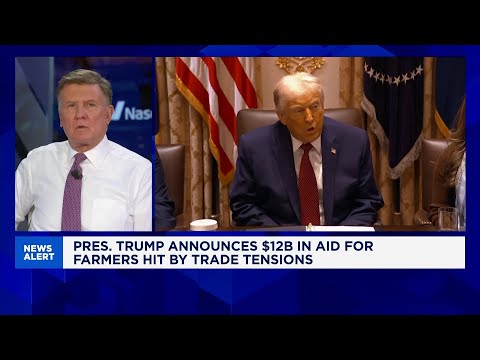
President Trump announcing uh the White House will provide 12 billion dollars in aid to farmers impacted by global uh trade tensions. During a r roundt event uh in Washington, the president said that the funds would come from tariff revenues. Most of the money will go toward providing one-time payments to row crop farmers.the rest will go towards specialty crops. There's a certain symmetry here, I think, because it's the tariffs that really cause some of the backlash from other countries to not buy our soyb ...
Hong Kong survey highlights steady growth outlook
Yahoo Finance· 2025-12-08 11:38
Core Insights - Hong Kong's financial sector remains crucial for the city's economic stability despite global uncertainties and trade disputes [1] - The strength of capital markets and financial links are identified as key factors supporting resilient business sentiment for 2026 [1] Economic Outlook - A survey conducted from 22 October to 21 November 2025 included 296 professionals, with 63% expecting modest economic growth in Hong Kong for the coming year [2] - Main factors supporting growth include tax regime (39%), capital markets (30%), and economic activity in Chinese mainland (24%) [2] Concerns and Challenges - High living expenses (28%), a slowdown in the global economy (27%), and reduced growth rates in Chinese mainland (26%) are primary concerns for 2026 [3] - Trade tensions have negatively impacted business confidence, with 51% reporting adverse effects on performance in 2025 [4] - The proportion viewing trade tensions as a major concern has increased from 9% to 20% for 2026 [5] Market Activity - Hong Kong's IPO market has seen an upturn, regaining its position as the largest global fundraising hub by Q3 [3] - Looking ahead, 66% of respondents anticipate further increases in IPO activity by 2026 [3] Government Policies - The most useful government policies identified include enhancing financial connectivity with other regions (22%) and China's 'Going Out' strategy (21%) [4] Company Strategies - In response to challenges, 24% of companies have relocated or restructured operations, with 20% moving into different markets and 19% conducting risk assessments [5] - Expansion plans are increasingly focused on domestic opportunities (32%) and Chinese mainland markets (46%) [5] Revenue Expectations - Revenue expectations have become more cautious, with only 39% predicting increases for 2026, down from 51% for the current year [6] - Additionally, 37% expect stable revenue levels [6] Investment Perspective - Hong Kong is viewed as a safe haven for international investors and businesses to manage assets and diversify risks amid geopolitical tensions [7]
The Trump Tariff Tango: Wall Street’s Favorite Rollercoaster
Stock Market News· 2025-12-07 06:00
Core Insights - The stock market has become highly volatile due to unpredictable tariff policies and trade tensions, particularly during the Trump administration, with significant impacts on major indices and sectors [1][10][16] Group 1: Tariff Announcements and Market Reactions - The Trump administration announced a 25% tariff on Mexican goods, causing immediate market turmoil, with the Dow Jones Industrial Average dropping 600 points shortly after the announcement [3][4] - Following the announcement, major automakers like GM and Ford experienced significant declines in their stock prices due to their manufacturing presence in Mexico and Canada [4] - In March 2025, confirmation of the tariffs led to further declines, with the Dow down 700 points and the S&P 500 losing 100 points, reflecting heightened investor anxiety [5] Group 2: Broader Trade Tensions - The ongoing trade narrative includes threats regarding China's control of the Panama Canal, which, while not directly impacting stock prices, contributes to overall market jitters [6] - In April 2025, sweeping tariff announcements on China led to a dramatic sell-off, with the NASDAQ plummeting 5.7% and major companies like Apple and Nike experiencing significant stock declines [7][8] - Analysts noted that the average applied US tariff rate increased from 2.5% to an estimated 27% from January to April 2025, the highest level in over a century, leading to a surge in tariff revenue [13] Group 3: Legal Challenges and Market Sentiment - Legal challenges against the tariffs are mounting, with companies like Costco suing the U.S. government over the legality of the tariffs, potentially leading to refunds totaling over $100 billion [14][15] - The market's volatility is characterized by rapid swings in response to tariff announcements and clarifications, with the Cboe Volatility Index (VIX) reaching levels not seen in years [10][11] - Investment strategies are shifting towards safer assets as uncertainty in trade policies continues, indicating a new era of heightened volatility and unpredictability in the market [12]



X @Bloomberg
Bloomberg· 2025-12-01 22:10
Market Trends - China's yuan is on track for its best annual performance in five years [1] - Growing optimism about China's assets and economy is driving the yuan's performance [1] Economic Factors - Optimism outweighs concerns over US trade tensions [1]