Urban Renewal

Search documents
中国房地产月度追踪 - 又一个月的下滑,12 月或延续颓势-China Property Monthly Tracker_ Another month of slippage, and likely carry forward in Dec
2025-12-16 03:30
Summary of China Property Monthly Tracker Industry Overview - The report focuses on the **Chinese property market**, highlighting significant declines in various metrics such as average selling prices (ASP), primary sales, new starts, and completions in November 2025 compared to previous years. Key Market Indicators - **Primary Sales**: - Volume declined by **17%** year-over-year (yoy) - Value declined by **25%** yoy, which was largely in line with expectations [2][11] - **New Starts**: - Fell sharply by **28%** yoy, marking the second consecutive month of decline [11] - **Completions**: - Declined by **25%** yoy, undershooting estimates [11] - **Fixed Asset Investment (FAI)**: - Reached its lowest level since 2012, declining by **30%** yoy [2][11] - **Secondary Transaction Volumes**: - Decreased by **24%** yoy [2][11] Price Trends - **Average Selling Prices (ASP)**: - Nationwide ASP declined by **9.5%** yoy in November [21] - Primary market ASP showed a slight decline of **0.4%** month-over-month (mom), while secondary market ASP declined by **0.7%** mom [11][28] Developer Activity - Developers' land acquisition spending moderated to **21%** of contract sales in November, with an average project-level gross profit margin (GPM) of **25%** [12][71] - The land market showed signs of weakness, with land sales volume and value declining by **27%** and **37%** yoy, respectively [35] Future Expectations - For December 2025, expectations include: - Continued price weakness and a **low-teens to low-twenties %** yoy decline in sales volume and value [3][13] - A potential positive yoy for completions, but a steeper decline in new starts [3][13] - Secondary transaction volumes expected to decline by **high-twenties %** yoy [3][13] Policy and Market Sentiment - Key areas to watch include: - Potential large-scale mortgage interest subsidies and commercial mortgage rate cuts [4][8] - Removal of housing purchase restrictions in core districts of Tier-1 cities [4][8] - Signs of rent stabilization in high-tier cities [4][8] - The overall demand score for the property market was **37 out of 100**, indicating a challenging environment for developers and homebuyers [53][55] Developer Liquidity - Developers are facing a funding gap estimated at **Rmb3.2 trillion** for 2025, with liquidity remaining tight [54][57] - New funding sources for developers increased by **21%** mom and **29%** yoy in November, indicating some recovery in financing [63] Conclusion - The Chinese property market is experiencing significant challenges, with declining sales, prices, and construction activity. Developers are under pressure due to liquidity issues and a challenging market environment. Future policy measures and market sentiment will be crucial in determining the trajectory of the market moving forward.
中国房地产-中央经济工作会议聚焦:化解风险,力稳楼市-China Property CEWC Focus on Defusing Risk Strive to Stabilize Property Market
2025-12-15 01:55
Summary of the Conference Call on China Property Sector Industry Overview - **Industry**: China Property Sector - **Event**: Central Economic Work Conference (CEWC) held on December 10-11, 2025 Key Points and Arguments 1. **Risk Management and Market Stabilization**: - The conference emphasized the need to take proactive steps to defuse risks in key areas and stabilize the property market through city-specific policies aimed at controlling new supply, reducing inventory, and optimizing existing supply [1][2][7] - The focus is on encouraging inventory purchases for social housing and deepening the reform of the housing provident fund [1][7] 2. **Policy Tone and Intentions**: - Compared to previous meetings, the tone in December 2025 is seen as more proactive than in April and July 2025, but less decisive than in December 2024 [2] - The language used indicates a shift from a strong push for stabilization to a more moderate approach, recognizing the imbalance of weak domestic demand against strong supply [2] 3. **Local Stimulus and Monetary Policy**: - A new round of local demand-side stimulus is anticipated, including home purchase and mortgage interest subsidies, although these are not expected to significantly alter home price expectations due to abundant supply [3] - There is a low likelihood of targeted monetary easing or pro-leverage initiatives in the near term, but urban renewals and REIT approvals are expected to accelerate [3] 4. **Market Reactions and Sales Outlook**: - The property sector experienced a share price correction in early December due to weak sales and price declines, particularly in Tier 1 cities, alongside expectations of policy easing following Vanke's debt extension [4] - A short-lived policy-driven rebound in share prices is expected, with continued soft sales projected for Q4 2025 and limited improvement in household confidence [4] 5. **Investment Recommendations**: - Analysts suggest late December as a better entry point for reviewing the sector after the recent price corrections, with top picks including Jinmao, C&D, and CRL [4] Other Important Insights - The conference highlighted the importance of stabilizing investment and resolving local government debt risks while maintaining a necessary fiscal deficit and ensuring stable economic growth [1][7] - The need for a moderate recovery in price levels and stabilization of investment from further decline was acknowledged, indicating a cautious approach to future developments in the property market [2][3] This summary encapsulates the critical discussions and insights from the conference call regarding the current state and future outlook of the China property sector, emphasizing risk management, policy intentions, and market dynamics.
中国地产周评 - 第 49 周总结:市场活跃度放缓,降价幅度收窄-China Property Weekly Wrap_ Week 49 Wrap - Market activities moderated, while price cuts decelerated
2025-12-09 01:39
Summary of Key Points from the Conference Call Industry Overview - The report focuses on the **Chinese real estate market**, highlighting recent trends in property sales and market activities during week 49 of 2025. Core Insights and Arguments 1. **Policy Support**: The State Council continues to support urban renewal initiatives, aiming to stabilize the property market and promote high-quality housing construction and development [1][2] 2. **Market Activity Decline**: Overall market activities have slowed, with primary sales volume down **16% week-over-week (wow)** and secondary sales down **5% wow**. Subscription-based secondary sales also fell by **5% wow** [2][5] 3. **Price Adjustments**: The pressure on secondary prices has eased slightly, with listings that experienced price cuts decreasing by **18% wow**, resulting in a ratio of listings with price cuts to those with price increases at **15.5X** compared to **17.3X** in November [2][5] 4. **Sales Performance**: New home sales volume averaged **-16% wow** and **-44% year-over-year (yoy)**, with tier-3 cities and the Yangtze River Delta (YRD) outperforming other tiers. Secondary transactions were down **5% wow** and **-49% yoy** [5][27] 5. **Year-to-Date (YTD) Performance**: Primary Gross Floor Area (GFA) sold was down **14% yoy**, with tier-3 cities and Central & Western regions outperforming. Secondary GFA sold was up **2% yoy** [5][23] 6. **Inventory Levels**: Inventory increased by **0.1% wow** but decreased by **3.6% from the end of 2024**, with inventory months at **27.5** compared to an average of **26.7** in November [37][39] 7. **Valuation Trends**: Offshore developers saw an average share price decline of **2% wow**, while onshore developers averaged **-3% wow**. Offshore coverage trades at a **41% discount** to end-2025 estimated net asset value (NAV) [49][50] Additional Important Insights 1. **Completion Rates**: The GSPC tracker indicates a high single-digit percentage decline in completions for November 2025, with expectations of a **30%-40% yoy decline** in new starts [15][42] 2. **Home Appliance Sales**: Anticipated to decline yoy in November 2025 based on secondary sales trends in approximately 20 cities [15] 3. **Market Sentiment**: The average Centraline Salesman Index (CSI) was down **2.7 percentage points (pp) wow** and **8.2 pp yoy**, indicating a negative sentiment among agents regarding property prices [31][33] 4. **Seller Expectations**: The average Centraline Seller Asking Index (CAI) increased by **0.3 pp wow** but decreased by **10.9 pp yoy**, reflecting mixed expectations among sellers [34][36] This summary encapsulates the key points from the conference call, providing insights into the current state of the Chinese real estate market, including sales performance, inventory levels, and market sentiment.
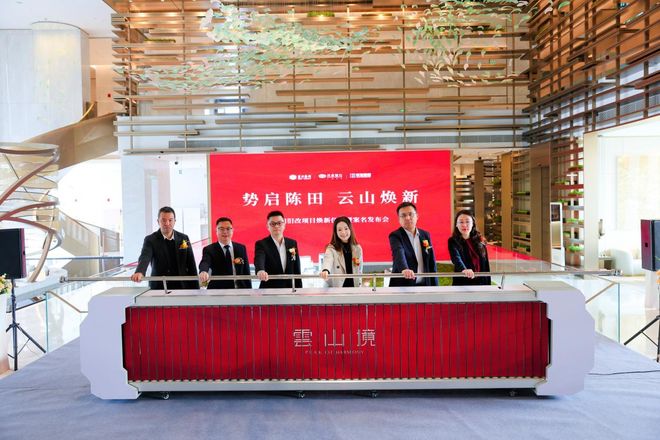
兴业+华发+富力,陈田旧改焕新!广州重迎豪宅“雲山境”
Nan Fang Du Shi Bao· 2025-11-20 12:04
Core Insights - The Chen Tian old renovation project in Baiyun District, Guangzhou, has officially launched with a new name "Yunshan Jing" and is being developed through a collaboration between the local government, Industrial Bank, Huafa Construction Management, and R&F Group [1][3]. Group 1: Project Overview - The project aims for high-quality and efficient development under government guidance, leveraging local development experience, state-owned enterprise quality control, and bank funding supervision [3]. - The total construction area of the project is approximately 2 million square meters, including 7 quality schools, over 500,000 square meters of commercial complexes, a central clubhouse, and sports parks [5]. Group 2: Partnerships and Roles - Industrial Bank plays a crucial role as a funding partner, ensuring strict and transparent fund supervision to guarantee the safety of homebuyer funds and timely delivery [3]. - R&F Group, with 31 years of experience in urban development, provides solid development support through its expertise in old renovation projects [3]. - Huafa Construction Management, backed by Huafa Group's state-owned strength, is responsible for project management and marketing, drawing on its experience from over 200 premium projects nationwide [3]. Group 3: Project Features and Amenities - The project is strategically located near the Guangzhou Baiyun Station, a major transportation hub with a total investment of 44 billion yuan, and is surrounded by extensive urban amenities [5]. - The newly named "Yunshan Jing" features five residential buildings designed to maximize views of the nearby Mount Moxing, with units ranging from approximately 120 to 190 square meters [5]. - Current amenities include a fully operational central clubhouse with a heated swimming pool, a central park under construction, and residential units that are ready for occupancy [5].



中国房地产 - 考察要点:分化的图景-China Property_ Trip Takeaways_ A Diverging Mosaic
2025-11-11 02:47
Summary of Conference Call on China Property Market Industry Overview - The conference focused on the **China property market**, specifically in **Shenzhen** and **Guangzhou**. The analysis included insights from developers, financial institutions, and property managers, highlighting contrasting trends between high-end and broader market segments [1][6]. Key Insights Market Trends - **Luxury Segment Performance**: There is a strengthening in luxury retail sales and affluent asset under management (AUM) growth, with double-digit percentage increases, but this has not yet translated into improved sales for high-end residential projects in Shenzhen and Guangzhou [3][6]. - **New Home Prices**: Prices for new homes remain resilient, with a premium over secondary homes due to better quality offerings. However, the sell-through pace for new homes has slowed, raising concerns about the sustainability of this pricing premium [3][7]. - **Urban Renewal Challenges**: Funding is identified as a significant bottleneck for urban renewal development, which is crucial for demand. Despite policy announcements, funding sources remain a fundamental restraint [3][8]. Financial Health of Banks - Selected banks reported a **10 percentage point increase** in loan-to-value (LTV) ratios to approximately **40%-55%** for mortgage asset balances, indicating limited non-performing loan (NPL) risk. Stress tests suggest these banks could tolerate an additional **20% decline** in property prices in high-tier cities [5][6]. Technology and Efficiency - The adoption of AI and digital applications is becoming increasingly important in the property sector, focusing on operational efficiency and sustainable profitability. Examples include automated cleaning robots and enhanced customer profiling by banks [5][6]. Policy Environment - Experts expressed caution regarding the effectiveness of current easing measures, such as mortgage rate cuts and HPR relaxations, which have had limited impact on market confidence. The need for broader macroeconomic policies or aggressive property-specific stimulus measures is emphasized [10][19]. Additional Observations - **Market Conditions**: The overall market remains in a downturn, with secondary prices falling **20%-30%** and transaction volumes decreasing from **6,000 units** in June to **4,000 units** in October [10][19]. - **Urban Population**: Approximately **1/3** of Guangzhou's and **60%** of Shenzhen's urban populations reside in urban villages, highlighting the potential for urban renewal projects [8][19]. - **Luxury Mall Recovery**: High-end malls are experiencing a recovery driven by luxury retail sales, with significant contributions from high-net-worth customers. The occupancy rate of luxury malls remains high at **97%** [26][28]. Conclusion - The China property market is characterized by a divergence between high-end and broader market segments, with luxury retail showing resilience while the overall market faces challenges. The need for effective policy measures and funding solutions for urban renewal is critical for future recovery. The integration of technology in property management is also seen as a key driver for efficiency and profitability in the sector [1][6][10].
X @Bloomberg
Bloomberg· 2025-10-10 07:59
Infrastructure Development - Mumbai is undergoing a rapid transformation with a multi-billion dollar infrastructure blitz aimed at faster commutes and urban renewal [1] Urban Planning - The city is racing towards urban renewal [1]
坐标市中心!3幅地完成选址,面积295.28亩!福州老街谢幕
Sou Hu Cai Jing· 2025-10-09 12:27
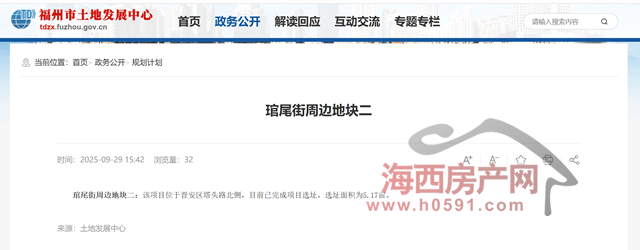
Core Insights - The Fuzhou Land Development Center has announced the completion of project site selection for three land parcels, totaling an area of 295.28 acres [1][2]. Group 1: Land Parcel Details - The three land parcels include: - Kangshan Temple North Parcel, located in Jin'an District, with a site area of 55.88 acres [2]. - Guanwail Street Surrounding Parcel One, also in Jin'an District, with a site area of 234.23 acres [2]. - Guanwail Street Surrounding Parcel Two, in Jin'an District, with a site area of 5.17 acres [2]. Group 2: Land Use and Planning - The eight parcels involved in the planning have a total area of 13.68 hectares (205.20 acres), designated for commercial, residential, and educational purposes [3]. - The land use types include residential and commercial mixed-use, with varying average plot ratios and building height limits [3]. Group 3: Demolition and Relocation - The relocation area for the Guanwail Street surrounding parcels includes multiple residential complexes, affecting 3,592 households [4]. - The Kangshan Temple North Parcel involves the relocation of 225 households, with a completion rate of 99% for preliminary assessments as of September 26 [9]. Group 4: Cultural and Historical Context - Guanwail Street is noted for its cultural significance and is considered a beloved area for many residents, often associated with childhood memories and local cuisine [11]. - The announcement of the land selection and the issuance of demolition notices indicate the transformation of this historic area, marking the end of an era for the local community [12].
中国房地产:“十五五” 规划 -加快建立新发展模式-China_Property_15th_Five-Year_Plan_Accelerate_to_Establish_A_New_Development_Model-China_Property
2025-09-26 02:32
Summary of the Conference Call on China's Property Sector Industry Overview - **Industry**: China's Property Sector - **Focus**: Transformation and upgrade during the 15th Five-Year Plan (2026-2030) aimed at establishing a new development model to enhance living standards and stabilize the property market [1][7] Core Points and Arguments New Development Model - The property sector will transition from construction to providing full life-cycle property services, emphasizing quality over scale [1][9] - Key features include: - Establishing a three-pronged housing system: commodity housing for affordable buyers, rental housing for urban migrants, and social housing for low-income classes [1][9] - Optimizing production factors (people, housing, land, capital) through Hukou and land reforms [1][12] - Urban renewal initiatives to enhance city capacity and promote high-quality homes [1][9][23] Housing Supply and Demand - Land sales revenue is projected to stabilize at approximately RMB 4 trillion annually from 2026 to 2030, reducing local government reliance on land sales for fiscal revenue [1][2] - The government aims to increase annual investments in social housing and urban renewal to around RMB 0.9-1 trillion, with a focus on rectification and upgrades rather than full demolitions [2][50] - Supply-side measures include revitalizing existing lands, controlling new land supply, and enhancing the quality of property supply [3][26] Urbanization and Market Dynamics - Top-10 cities are expected to outperform in property sales, land sales, and rental markets due to urbanization and population concentration [4][65] - The new urbanization policy aims to reshape the value of satellite cities, enhancing their attractiveness through improved logistics and infrastructure [67] Policy Support and Financial Measures - The government is implementing supportive fiscal and monetary policies, including special bonds for social housing and urban renewal projects [68][71] - Local governments are encouraged to repurchase idle land and housing inventory to stimulate the market [68][69] Important but Overlooked Content - The shift in focus from "having a home" to "having a good home" reflects changing consumer preferences and the need for better living conditions [8][9] - The integration of building information modeling (BIM) technology and energy-saving innovations in housing construction is emphasized as part of promoting good-quality homes [24][23] - The expected decline in new supply due to the transition to selling completed properties may lead to cautious land purchases by property firms, impacting cash flow [22][21] Conclusion - The 15th Five-Year Plan outlines a comprehensive strategy for the transformation of China's property sector, focusing on quality, sustainability, and social equity. The emphasis on urban renewal, affordable housing, and policy support indicates a proactive approach to addressing the challenges faced by the industry.
中国房地产:从 2H25 迈入新篇章,利润率将改善,重点关注-China Property_ Turning to a New Chapter from 2H25_ Margin to Improve; Biz Recurring
2025-09-08 06:23
Summary of the Conference Call on China Property Sector Industry Overview - The conference call focused on the **China Property** sector, particularly the luxury home market and the performance of top-10 cities in 1H25 - Key trends indicate a shift towards recurring business operations and improving margins in the sector Core Insights and Arguments 1. **Sales Performance**: - Sales in top-10 cities increased by **4% year-on-year (yoy)**, contrasting with a **17% decline** in the overall sector [1][24] - Luxury home sales (priced over **Rmb10 million**) rose by **19% yoy** [1][30] - New sales gross profit margin (GPM) improved to **13-18%** from **12%** in 1H24 [3][33] 2. **Land Acquisition**: - **82%** of land purchases were concentrated in top-10 cities, indicating a strategic focus on core urban areas [4][27] - State-owned enterprises (SOEs) were particularly active, with land acquisitions up **120% yoy** in 1H25 [4] 3. **Financial Health**: - The sector reported a core loss of **Rmb69 billion** in 1H25, with mixed margins; GPM improved to **12.2%** but net profit margin (NPM) eroded to **-7%** [6] - Companies like **COLI** and **Poly** were the top land acquirers, indicating strong market positioning [3] 4. **Recurring Business Focus**: - Companies such as **COLI**, **SZI**, and **Jinmao** are shifting focus towards rentals and services, aiming for **10% rental growth** in FY25 [2] - Recurring profits for **CRL** and **Longfor** are projected to reach **Rmb12 billion** and **Rmb8 billion** respectively in FY25 [2] 5. **Policy Environment**: - Local governments are accelerating policy execution to stabilize the property market, including easing purchase restrictions in cities like **Shanghai** and **Beijing** [7][42] - The State Council has called for measures to solidify the stabilizing trend of the property market, emphasizing urban renewal [46] Additional Important Points 1. **Inventory Levels**: - Inventory of properties held for sale decreased by **3%** in 1H25, indicating a gradual reduction in excess supply [36] - The overall new home inventory area in key cities was down **17%** compared to historical highs [36] 2. **Market Outlook**: - The sector is expected to see a gradual recovery, particularly in top-10 cities, with **2-3 more cities** showing signs of recovery in 2H25 [23] - The anticipated sector correction in September is viewed as an opportunity to invest in quality property names [1] 3. **Top Picks**: - Recommended stocks include **Jinmao**, **C&D**, and **CR Land** for their strong market positions and growth potential [20][45] 4. **Challenges**: - Companies facing restructuring or significant asset write-downs are underperforming, highlighting the risks associated with the sector [12] 5. **Investment Strategy**: - Focus on luxury and quality products with active land purchases is recommended for partial recovery before earnings scale and return on equity (ROE) improve in 2H25 [14] This summary encapsulates the key points discussed in the conference call regarding the China Property sector, highlighting both opportunities and risks for investors.
都市评:三元里村旧改终迎破局,“三个率先”带来解题新思路
Nan Fang Du Shi Bao· 2025-08-25 14:43
Core Insights - The urban renewal project in Sanyuanli Village, Guangzhou, has officially commenced after 25 years of planning, marking a significant milestone in the city's development [2][5] - The project involves a total investment exceeding 20 billion yuan, covering an area of approximately 71.45 hectares, and aims to enhance living conditions and urban infrastructure [5][6] Group 1: Project Overview - The Sanyuanli urban renewal project began on August 23, with the construction of resettlement housing and the demolition of the old village [2] - The project is strategically located near key transport hubs, including the Guangzhou Railway Station, and aims to alleviate traffic congestion through infrastructure upgrades [5] - The initiative has received strong community support, achieving a 95% consent rate for the redevelopment plan [5] Group 2: Development Strategy - The project will utilize a model of "legal expropriation, net land transfer, and government leadership," ensuring stable funding and reducing risks associated with developers' financial chains [6] - The first phase includes the construction of 594 resettlement units, with demolition and construction occurring simultaneously to ensure transparency and community engagement [6] - The urban renewal is not just about physical reconstruction but also aims to reorganize and regenerate urban functions, reflecting a broader trend in urban development [6]