unemployment rate

Search documents
2 big things to watch in the economy: AI & Trump's Fed pick
Yahoo Finance· 2025-11-26 20:38
Economic Outlook & GDP Growth - Trend growth in GDP for 2026 is expected to be decent, with a slight pickup from this year's slightly below-trend performance [1][2] - AI spending is estimated to be about 1.5% of GDP, contributing about a quarter of the GDP growth [6][7] - Government shutdown is expected to reduce GDP growth by 1-1.5% [30] - GDP is running at about 4.2% for the third quarter and was about 4% in the second quarter [25] Inflation & Monetary Policy - Inflation is expected to be a bit elevated in Q1, with potential Fed cuts after the next Fed chair takes position [4] - The Fed is likely to cut rates in December, then potentially pause as growth picks up [3] - The Fed may implement two more cuts after December, but further dovish policy may be difficult to push through due to differing opinions among members [4][15] - Rates are closer to what FOMC members view as neutral, making further cuts more difficult [14] Labor Market - Job growth is expected to average around 80,000 for 2026, compared to the recent average closer to 60,000-70,000 [19] - A pickup in cyclical areas of the economy like retail, finance, leisure, and manufacturing is expected to support job growth [18] - September jobs report showed payrolls rose by 119,000 a month, though the unemployment rate ticked up to 4.4% [21] AI Impact - AI is considered an important but not game-changing factor in economic growth [7] - Concerns exist about overinvestment in AI, but it doesn't appear to be in bubble territory yet [9][10] - Companies are expected to continue investing in AI to avoid being left behind [11][12] Federal Reserve Leadership - Kevin Hasset is a front runner to be the next Fed chair [1] - Even with a more dovish Fed chair, getting committee consensus on policy may be difficult, especially with elevated inflation [13][14] - Fed independence is a lingering concern, but recent voting patterns suggest members are coming together [15][16]

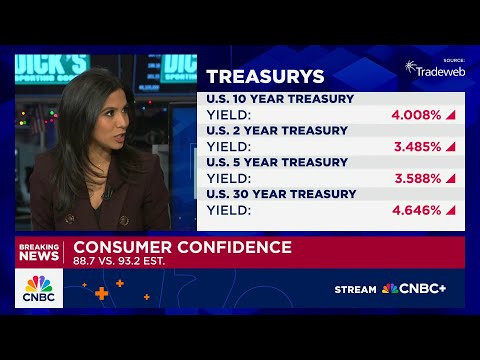
Rising unemployment rate suggests the Fed will cut rates in December, says iCapital's Sonali Basak
CNBC Television· 2025-11-25 16:40
Federal Reserve (The Fed) & Interest Rates - A potential hawkish rate cut in December is considered, driven by core PCE expectations around 310% and unemployment nearing 450% [2][3] - The impact of a 25 basis points rate cut is questioned regarding its effectiveness on the S&P 500 and overall market stimulus [4] - The market is less convinced about further rate cuts into next year until a more dovish Fed stance is observed [3][4] Private Credit Market - Vintage risk in private credit deals from 2021-2022, impacted by poor valuations and changing rate environments, is a key concern for the coming year [6] - The conversation around private credit involves both potential losses/defaults and liquidity issues, with some investors misunderstanding the liquidity of these structures [7] - Default rates in private credit have remained relatively low, averaging between 200% and 350%, depending on the source [11] - More frequent marks, specifically monthly marks, are becoming more common in the private credit market, revealing divergence among different managers [11] - Aggregate credit quality has held up, but concerns around marks and liquidity are more significant questions [12] Economic Indicators & Consumer Credit - Insurance costs and auto/home-related expenses remain high, warranting attention for potential credit quality deterioration [9] - Defaults are expected at the margins, particularly in sectors tied to the lower-income consumer and certain forms of consumer credit [8]
Fed Should Be Moving in 'Dovish Direction,' Miran Says
Bloomberg Television· 2025-11-21 14:35
Governor Martin, good morning. Good morning once again. Thanks for being here. Thanks for having me back.We've got to start with the labor market. Your reflections on what we saw yesterday. Does it lean one way or the other.Yeah, I mean, I think the implications of yesterday were obviously dovish. And if anyone was on the fence, I would hope that this would move them in the direction of cutting. I mean, you saw the unemployment rate edged up a bit.You know, you saw some other indicators like an increase in ...
X @Bloomberg
Bloomberg· 2025-11-20 13:46
RT Bloomberg Opinion (@opinion)@EconBerger “We saw stronger than expected payrolls gains, but we do have the scarier element of the unemployment rate ticking up,” @JonathanJLevin says.How do we make sense all of this? Tune in for live analysis:https://t.co/IDe2ypIzco ...
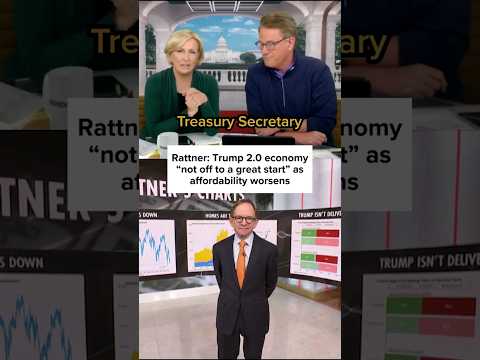
Rattner: Trump 2.0 economy 'not off to a great start' as affordability worsens
MSNBC· 2025-11-16 00:31
Earlier this week, >> it's a vin diagram. >> We had Treasury Secretary Scott Bessen on the show shortly after you did your charts on the affordability crisis. And um let's just say he took exception with your numbers.He brought you up a few times. >> He did. He did.But but I would tell you it's interesting. Uh you agreed with him oh on AI though you disagreed with him on wages in the second term uh of the Trump administration. tell us where you agreed and where you disagreed with uh the Treasury Secretary.> ...
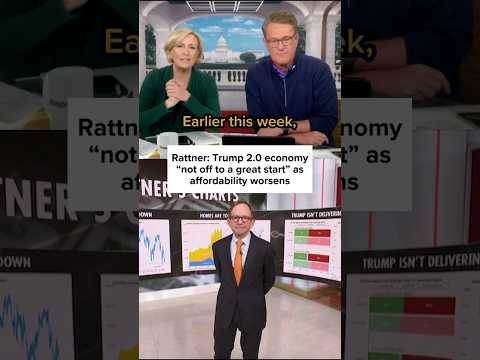
Rattner: Trump 2.0 economy 'not off to a great start' as affordability worsens
MSNBC· 2025-11-13 22:01
Economic Indicators & Sentiment - Youth unemployment rate is at 92% [2] - Consumer sentiment is at its lowest recorded level [2] - Average home buyer age is 59, and first-time buyers average 40 [3] - Presidential approval ratings on the economy are worse than in Trump 10% [3] - 62% disapprove of the handling of the economy [4] Wage Trends & Job Market - During Trump 10%, people at the bottom did relatively better in percentage terms due to a hot economy and low unemployment (below 4%) [5][6] - Currently, the job market is weak with minimal job growth [6] - Wage growth for people at the bottom is slower than for those at the top [6] Affordability Crisis - Home affordability is severely declining [3] Policy Impact - The speaker disagrees with the Treasury Secretary's selective interpretation of data [2][4] - The speaker attributes the wage gains during late Trump 10 to running the economy hot, not necessarily Trump's policies [5] - The current economic situation is described as the opposite of Trump 10 [6]
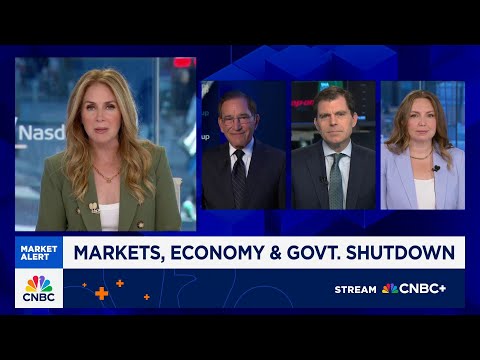
How the government shutdown complicates the Fed's rate cut options
Yahoo Finance· 2025-10-09 21:44
Government Shutdown Impact on Data & Fed Policy - The government shutdown complicates the Fed's decision-making process due to the lack of hard data, including government jobs data and inflation data [1] - The Fed faces a dilemma: whether to rely on existing labor market data with alternative datasets or pause and wait for the release of delayed data [3] - Data delays have ripple effects, potentially impacting the quality of CPI data for October, November, and December [4] - The shutdown leads to murkier data, with a higher percentage of CPI goods being estimated by staff [4] Economic Impact - The shutdown is estimated to drag quarterly GDP by approximately 10 basis points per week [6] - Federal workers are losing approximately $400 million per day in compensation, impacting consumer spending [6] Market Reaction - Markets are likely to react negatively if the Fed pauses due to the government shutdown, as rate cuts have already been priced in [9] - Alternative data sets do not fully compensate for the lack of government data, particularly in gauging the magnitude of economic changes [10][11] - The range of estimates for the September payroll report varies widely, from as high as 60,000 to as low as negative 30,000 [11] Investment Strategy - The government shutdown has not caused dramatic shifts in investment strategies, as underlying earnings remain strong [14] - Q3 earnings growth estimates have ticked up from 8% to 88%, indicating underlying strength in the markets [16]

The Federal Reserve should not have two mandates, says Komal Sri-Kumar
CNBC Television· 2025-10-09 11:06
Federal Reserve Policy & Interest Rates - The Federal Reserve (Fed) considered lowering interest rates, with debate primarily focused on the number of cuts this year, potentially two or three [1] - The Fed decided to lower interest rates by 25 basis points (0.25%) on September 17th [1] - One expert suggests the Fed should not cut interest rates and should have considered hiking them by 0.25% [2] - There are concerns that the Fed's September to December rate cuts last year were premature, based on a potentially flawed assessment of inflation [3] - All 12 voting members cut interest rates by 0.25%, raising questions about the Fed's priorities [4] Dual Mandate & Economic Objectives - The Fed's dual mandate (controlling both inflation and employment) is seen as an inconsistency, hindering its ability to effectively manage either objective [5][6] - The European Central Bank's single objective (inflation) is contrasted with the Fed's dual mandate [6] - The current administration is focused on maintaining a strong economy and low unemployment [7] - There's a divergence between the administration's focus on economic growth and the Treasury Secretary's desire to reduce the Fed's balance sheet, potentially creating conflicting objectives [8] Economic Strength & AI Impact - While growth numbers suggest a strong economy, employment figures may not reflect this strength [9] - The AI sector is significantly supporting the economy, but there are concerns about the sustainability of this boom and the potential for a "hiccup" [10] - AI is expected to be a significant long-term phenomenon, but there will be failures along the way, with potential hype exceeding actual value [12] - A potential failure of some AI companies in the next six months could have a stock market-wide impact [13] - The non-AI economy is underperforming, raising concerns about stagflation (weak economy with rising inflation) [13] Inflation & Monetary Policy - The Fed's 2% inflation target is not being met, with inflation running at 3% [13] - The New York Fed's survey of consumers indicates an increase in inflation expectations from 3.2% to 3.4% over the next year [13] - The Fed should prioritize dollar stability by maintaining a low and stable inflation rate [14][15] - Employment should be the responsibility of the US Treasury [15]

How the government shutdown and furloughs could impact markets and the economy
CNBC Television· 2025-10-02 13:24
Market Impact of Government Shutdown - The market has historically performed reasonably well during government shutdowns [2] - Current market strength is attributed to AI excitement, global rallies, and certainty about interest rates [3][4] - Equity investors may not have the longest attention span, focusing on immediate impacts like the potential for an October Fed rate cut [23] - The equity market is currently placid about the government shutdown, caught up in its own preoccupations [25] Economic Data and Analysis - Government shutdown leads to upgrading the priority and significance of available non-government data [6] - There's a risk associated with relying on non-government data, which may not be as reliable as government data [8] - Economists are focusing on broader themes rather than specific monthly numbers due to data uncertainty [15] - The economic data is deferred, not derailed, but the shutdown highlights changes in the economic profession [17] Debt and Deficits - The US has $375 trillion in debt, a $2 trillion budget deficit, and over $1 trillion a year to service the debt [9] - The government shutdown is fundamentally about spending more money than the country has [10] Impact on Employment - A general rule of thumb is a 01 percentage point impact on the economy for each week of the shutdown [19] - If the shutdown extends beyond October 17th, there could be a significant impact on the October unemployment rate, potentially as high as 48% [19] - The US needs to create 40000 jobs to keep the unemployment rate stable [29]
Fed’s Miran says economic vulnerability calls for rapid cuts #shorts #fed #miran #federalreserve
Bloomberg Television· 2025-09-25 15:06
Monetary Policy Stance - The speaker believes the neutral rate is in the mid-2% range and advocates for a swift adjustment to this level [1] - Policy is becoming tighter daily as fiscal and border policies take effect [5] - The speaker does not foresee an imminent economic collapse or labor market crash [5] Factors Influencing Neutral Rate - Fiscal policy is driving up net national borrowing and decreasing net national savings [3] - Immigration policy has caused a significant shift from positive to negative population growth [3] - These shifts in national savings and population growth have implications for the economy's fundamental structure and the neutral rate [3] Risks of Overly Restrictive Policy - Maintaining an excessively restrictive policy for too long poses downside risks to the economy [6] - Prolonged restrictive policy could lead to a meaningful increase in the unemployment rate and failure to meet the employment mandate [6] - The speaker argues that policy was not as tight as perceived last year, but is now tighter than believed due to the declining neutral rate [4]